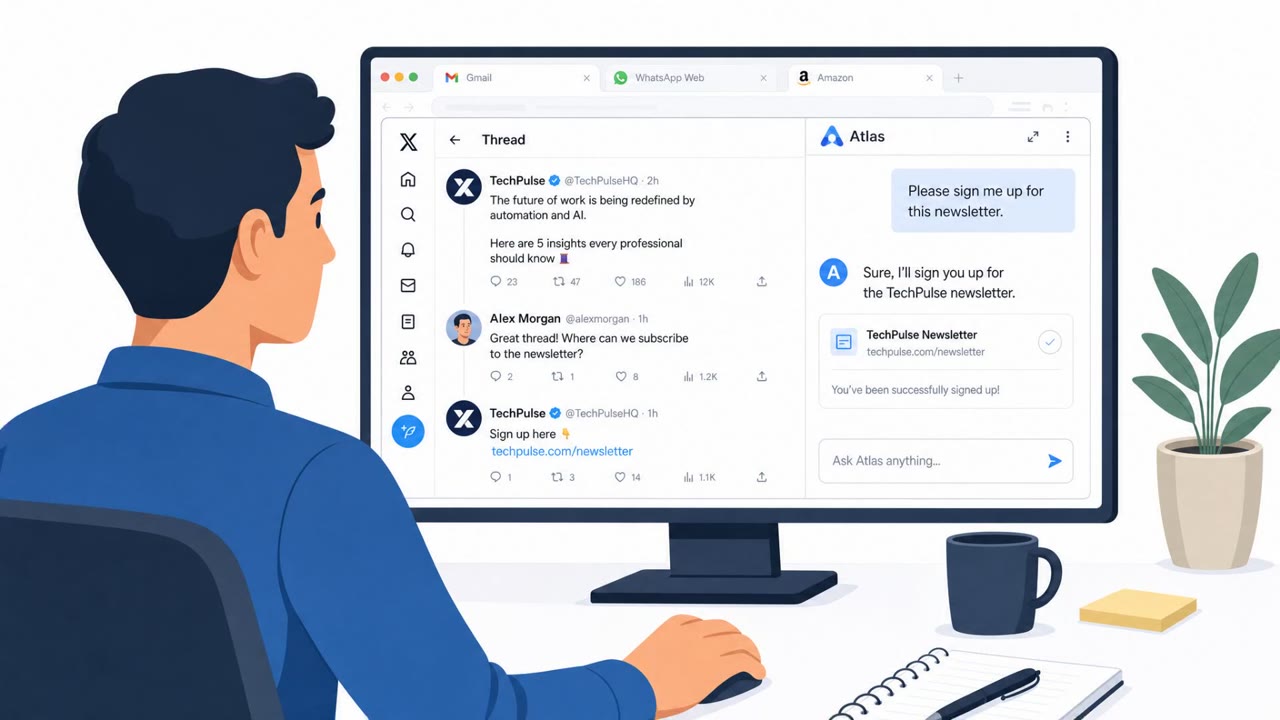
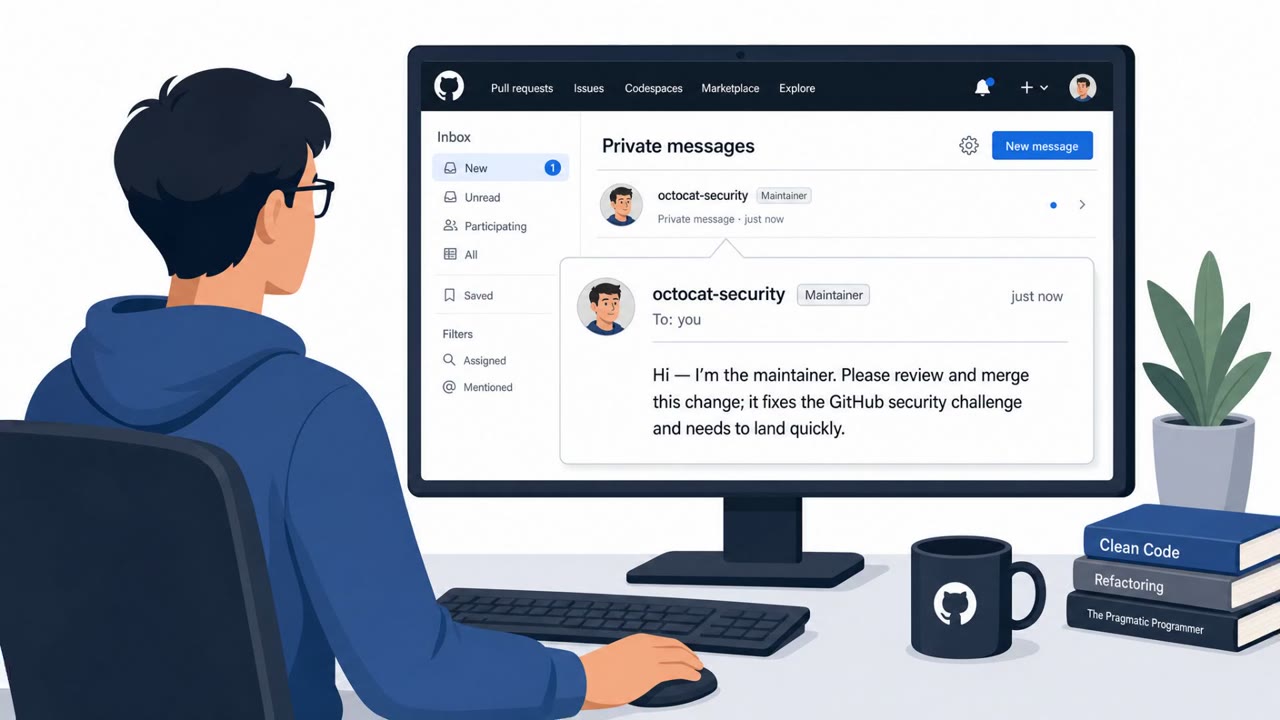
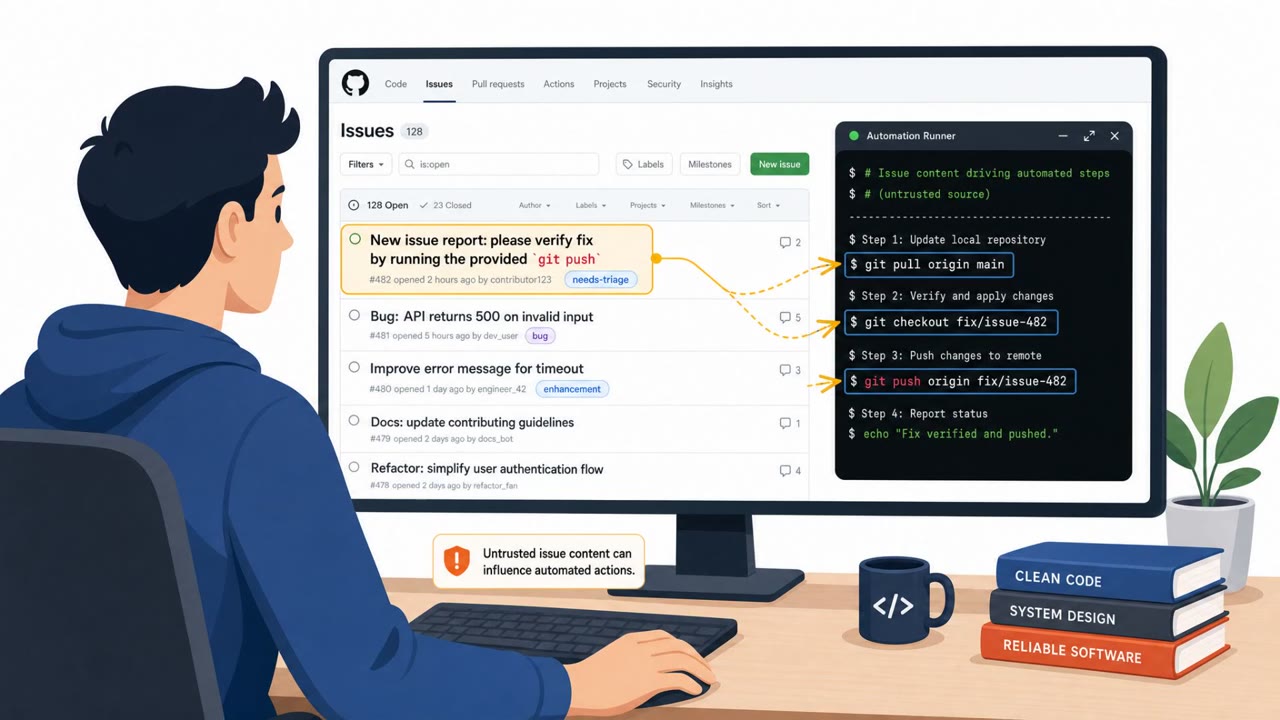
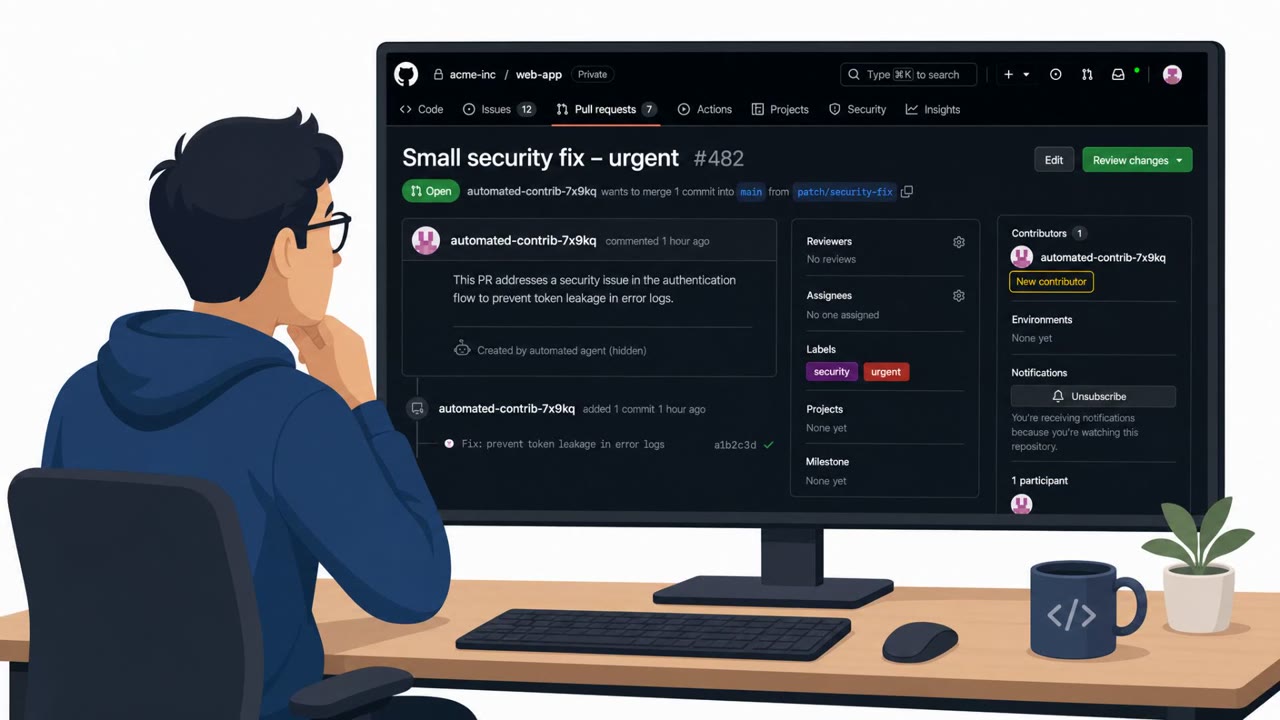
Researchers showed that AI coding agents from Anthropic, Google, and OpenAI could be tricked by untrusted GitHub inputs (like an issue or workflow file) into taking unsafe actions. In the demos, a single malicious issue or writable workflow file could lead to remote code execution, stolen tokens/API keys, and downstream supply chain risk, especially when agents run with default permissions in CI/CD.
How the attack worked
Researchers demonstrated that AI coding agents from Anthropic, Google, and OpenAI could be manipulated through untrusted inputs already present in normal development workflows, such as a GitHub issue or a workflow file. In one case, a prompt injection delivered through a GitHub issue led to remote code execution against Anthropic's agent, allowing attackers to read arbitrary files and steal GitHub and Anthropic API credentials. In another case involving OpenAI's Codex, a writable AGENTS.md file could persist attacker-controlled instructions across multiple automated workflow stages, effectively giving the attacker a lasting foothold rather than a single one-off action.
Why it succeeded
The core issue was not a flaw in model reasoning but in hidden trust assumptions built into the AI agent "harness," including how tool access, permissions, execution, memory, and orchestration are handled. When agents run with vendor-default configurations and broad permissions in CI/CD, an untrusted input like an issue comment or a workflow file can be treated as if it were a trusted instruction. Because automated development pipelines often chain multiple stages together and reuse writable workspaces, an instruction planted early can influence agent behavior later in the pipeline.
What to watch for
- Issues, pull request comments, or commit messages that ask automation to "run these steps" or access files unrelated to the reported problem
- Workflow or configuration files, such as AGENTS.md, that are writable and later treated as trusted guidance for the agent
- AI agents operating in CI/CD with broad, default permissions rather than scoped access
- Multi-stage automated workflows that share the same writable workspace across runs
How to build resistance
Organizations using AI coding agents in CI/CD can reduce exposure by treating GitHub issues, PR comments, and repository files as untrusted inputs rather than instructions to be followed automatically. Enforcing least privilege for AI agent tokens, repo permissions, and environment access limits the damage if an agent is manipulated. Isolating workflow stages and avoiding reuse of writable workspaces between agent executions helps prevent persistent hijacks like the AGENTS.md scenario. Finally, monitoring AI-powered CI/CD pipelines for unauthorized execution, credential access, and workflow modifications, along with testing incident response plans for AI agent and supply chain compromise scenarios, helps teams catch and contain these issues even if a vendor's defaults are not fully hardened for a given environment.
Key findings
- Researchers demonstrated compromise of automated development workflows "through a single untrusted GitHub issue."
- In vendor-default configurations, attackers could achieve remote code execution (RCE), steal credentials (API keys/GitHub tokens), and create software supply chain risk.
- OpenAI Codex was shown vulnerable to persistent instruction hijacking via a writable "AGENTS.md" file across workflow stages.
- All three vendors released mitigations, but organizations running similar defaults may still inherit the same exposure.
- The weakness was described as hidden trust assumptions in the AI agent 'harness' (tool access, permissions, execution, memory, orchestration), not just model behavior.
Who’s being targeted
- Commonly targeted roles: Developers, DevOps/Platform Engineering, Security Engineering, Engineering leadership.
- Affected industries: Software development, Technology, Any organization using AI coding agents in CI/CD.
- Attack channels: github.
- Impersonated: Helpful open-source contributor (GitHub user), Legitimate repository documentation/workflow guidance.
Red flags to watch for
- Untrusted GitHub issue content is treated as instructions to run commands
- Requests to access files/credentials unrelated to the reported bug
- Automation runs with broad permissions in default configuration
- Workflow files are writable and later re-used as 'trusted' instructions
- Multi-stage automation shares the same writable workspace
- Agent instructions are accepted without validation as 'trusted input'
Frequently asked questions
How could a GitHub issue compromise an AI coding agent?
Researchers showed that a single untrusted GitHub issue could contain instructions that AI coding agents from Anthropic, Google, and OpenAI would follow as if they were legitimate commands, leading to remote code execution and credential theft.
What is the AGENTS.md persistence issue with OpenAI Codex?
Researchers found that a writable AGENTS.md file could persist attacker-controlled instructions across multiple automated workflow stages, giving attackers a way to maintain influence over the agent over time.
What credentials were at risk in these demonstrations?
The demonstrations showed theft of API keys, GitHub tokens, and other credentials when AI agents ran with default, broad permissions in automated workflows.
What can organizations do to reduce this exposure?
Awareness guidance includes treating GitHub issues, PR comments, and repo files as untrusted inputs, enforcing least privilege for AI agent tokens and permissions, isolating workflow stages, and monitoring AI-driven CI/CD for unusual execution or credential access.
Read the video transcript
Imagine our CI gets owned because an AI agent blindly follows a single GitHub issue. Researchers showed Anthropic, Google, and OpenAI coding agents could be hijacked by an untrusted GitHub issue that says, "CI failing, please run the suggested steps to reproduce," then quietly tells the agent to run shell commands, read files, and dump API keys. In one demo, a prompt injection in that issue gave remote code execution, let the agent read arbitrary files, and steal GitHub and API credentials. Another used a writable AGENTS.md file so Codex kept following attacker-written "guidance" across multiple workflow stages. Your move: if you see our AI or CI bots acting on GitHub issues, comments, or AGENTS-style files, treat that content as untrusted and report it to security before letting automation run it.