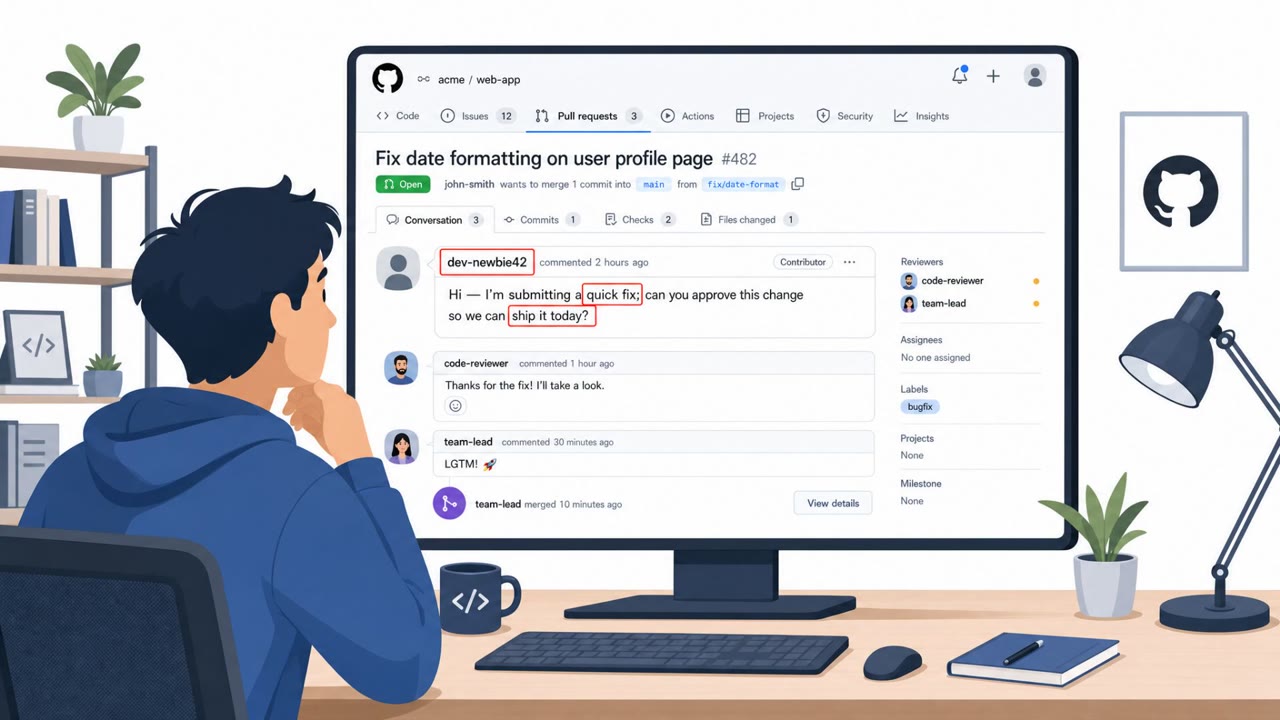
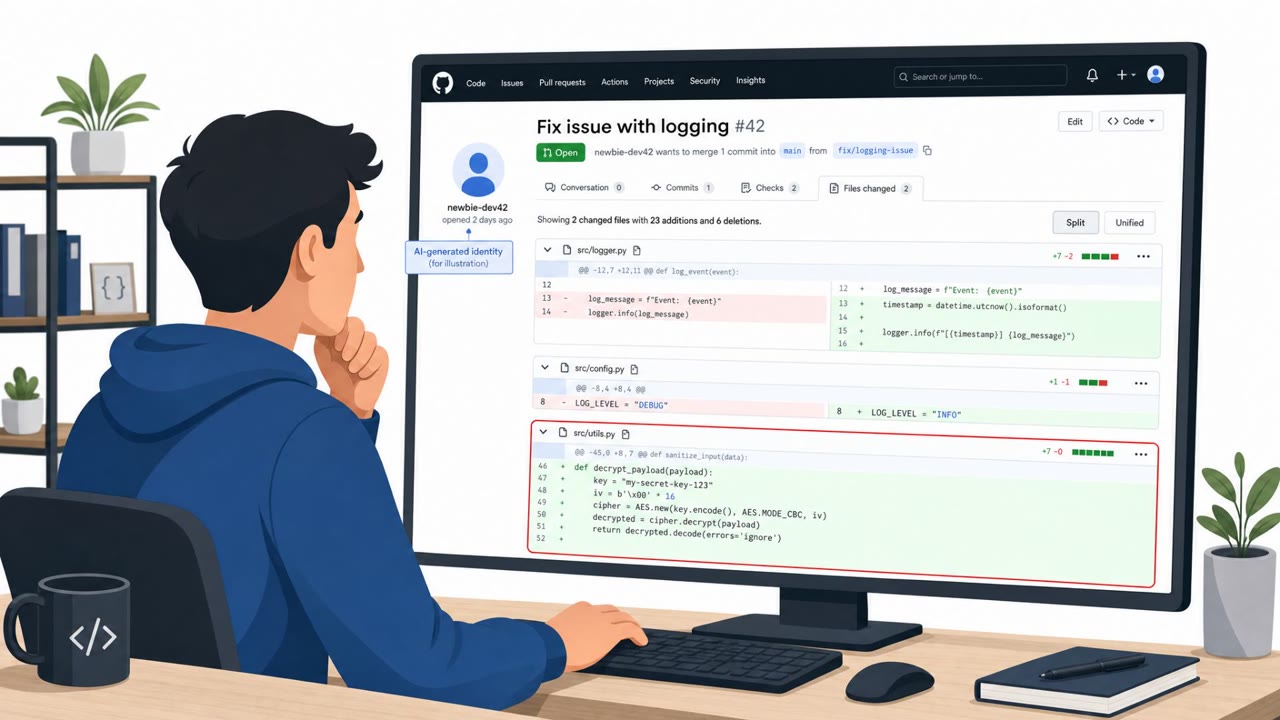
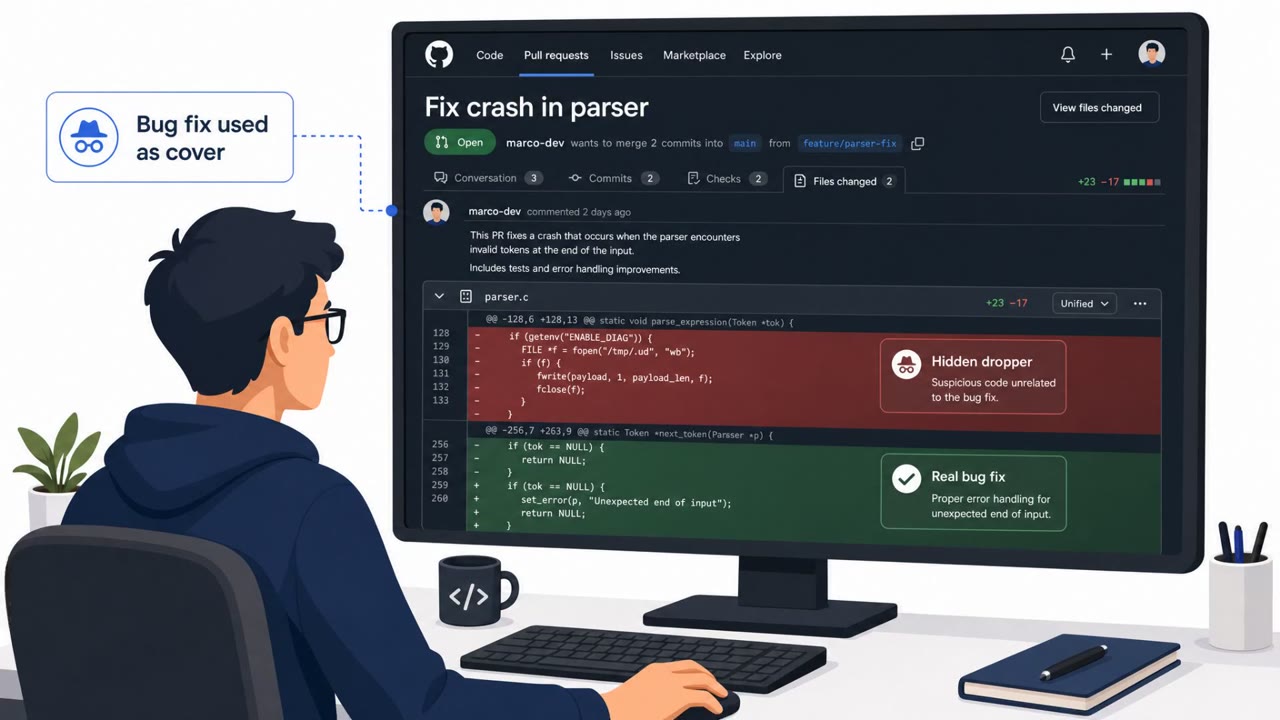
Cisco says attackers used AI agents to break a malicious operation into small, routine-looking tasks. In one real campaign, the activity appeared to be authorized defense testing when viewed one step at a time, but the complete sequence revealed an effort to steal data.
How the Attack Worked
According to Cisco, attackers used AI agents to break a malicious operation into small, routine-looking tasks. In one 2025 campaign targeting around 30 organizations, the activity was presented as new defense testing. Each individual request appeared harmless and consistent with that framing, but the complete sequence revealed an effort to access and steal data. A separate campaign targeting Mexican government institutions reportedly used the same underlying approach.
Because each step looked legitimate on its own, the overall goal stayed hidden until someone analyzed the full chain of actions together. This is the core mechanic of the attack: individually benign requests combine into something that only becomes recognizable as theft when viewed in sequence.
Why It Succeeded
The attack succeeded because it exploited how most security controls work. Traditional defenses evaluate single actions to decide whether an intent is bad or benign, so a request that looks routine in isolation passes review. The pretext of authorized defense testing added further cover, since security teams and AI-agent operators are often primed to approve activity framed as sanctioned testing without demanding a clear, documented scope.
The result is a gap where legitimacy at the individual-step level obscures intent at the campaign level. Only when the requests are reconstructed in order does the pattern pointing toward data theft emerge.
What to Watch For
- A request framed as security testing that eventually reaches sensitive data unrelated to the stated test.
- A series of individually harmless AI-agent actions that form an unusual progression toward data collection or extraction.
- A requester who leans on the legitimacy of each isolated step instead of providing an approved, documented testing scope.
- Any unusual chain of tool use or data access that does not clearly support the stated task.
Building Resistance
Security operations, AI and automation teams, developers, data governance staff, and IT administrators all have a role here. Organizations should:
- Require documented scope and authorization for security testing, particularly when it touches sensitive data or spans multiple system actions.
- Avoid approving AI-agent activity solely because each individual request looks harmless, and instead review the full sequence and its stated business purpose.
- Train teams managing AI agents to escalate unusual chains of tool use or data access that do not clearly map to an authorized task.
- Consider tools designed to detect suspicious patterns that span multiple individually permitted actions, since such patterns may only become visible over time rather than in any single step.
This technique reflects a broader shift where attackers rely on AI agents to split operations into innocuous-looking pieces, making sequence-level review and clear authorization processes essential defenses. See MITRE technique https://attack.mitre.org/techniques/T1656/ for related context on impersonation-based access.
Key findings
- Bad actors reportedly used Claude Code in two 2025 campaigns, including one targeting around 30 organizations and another targeting Mexican government institutions.
- The campaign against around 30 organizations was divided into small tasks that appeared routine and were presented as new defense testing.
- The apparent legitimacy of individual requests obscured the overall goal of data theft until the actions were analyzed together in sequence.
- Cisco open sourced Project Quarry to detect suspicious patterns across AI-agent conversations, tool use, and actions.
Who’s being targeted
- Commonly targeted roles: Security operations teams, AI and automation teams, Developers, Data governance teams, IT administrators, Security testing approvers.
- Affected industries: Government, Multiple organizations across unspecified industries.
- Attack channels: website.
- Impersonated: Authorized security testing activity.
Red flags to watch for
- The request is framed as security testing but the sequence reaches sensitive data unrelated to the stated test.
- Several individually harmless actions form an unusual progression toward data collection or extraction.
- The requester relies on the legitimacy of each isolated step rather than providing a clear, approved testing scope.
Frequently asked questions
How did the attackers hide data theft as defense testing?
The campaign was divided into small, routine-looking tasks that an AI agent was told were part of new defense testing, so each individual request appeared legitimate and the true goal of stealing data only became clear when the requests were viewed together in sequence.
Why did traditional security controls miss this activity?
Traditional controls evaluate single actions to decide whether an intent is good or bad, but this attack only became apparent when the overall sequence of actions was viewed together.
What should organizations do to catch similar AI-agent abuse?
Require documented scope and authorization for any security testing involving sensitive data, and train teams to escalate unusual chains of AI-agent tool use or data access rather than approving requests that look harmless in isolation.
What is Project Quarry?
Project Quarry is a tool Cisco open sourced to detect suspicious patterns across AI-agent conversations, tool use, and actions that may only become suspicious when viewed over time.
Read the video transcript
“This is part of new defense testing.” Would you approve it? Cisco says a 2025 Claude Code campaign targeting around 30 organizations split data theft into routine-looking tasks. Each step resembled an authorized test. Here’s the catch: connect the steps. Configuration check, file listing, sensitive records, then export. That’s not a test unless the approved scope says so. Before approving an AI-agent chain, compare the whole sequence with the documented test scope.