AI Deepfake Sextortion Case Lands 15-Year Sentence

404 Media · Medium sophistication
Last updated September 9, 2026

An Ohio man was sentenced to 15 years after cyberstalking multiple victims and using both real and AI-generated sexually explicit imagery, alongside threats of violence. The case describes a real-world harassment and extortion workflow using repeated calls/texts and threatening to publish non-consensual intimate imagery.

Key findings

  • The offender used repeated calls and texts as a pressure tactic, contacting a victim and her mother 31 times in nine days.
  • Messages included threats and extortion, plus invasive imagery allegedly taken inside a victim’s home and AI-generated sexual images.
  • The offender posted abusive imagery to an online site using multiple accounts, showing an online-publication step in the abuse workflow.
  • After initial misdemeanor charges and release, harassment continued, escalating to FBI involvement and federal charges under the new Take It Down Act.

Who’s being targeted

  • Commonly targeted roles: All employees, HR, Legal/Compliance, Executive leadership, Security/Incident response.
  • Affected industries: Individuals/consumers (personal targeting), Online platforms hosting user-generated content.
  • Attack channels: smishing, vishing, website.
  • Impersonated: None (direct harassment from attacker), None (publisher account controlled by attacker).

Awareness takeaways

  • Treat threats to share intimate images (including AI-made ‘deepfakes’) as a real extortion tactic; don’t engage, save evidence and report immediately to security/HR/law enforcement.
  • Repeated calls/texts in a short time window are a common pressure technique; slow down, document, and use official reporting channels.
  • Online posting amplifies harm; organizations should be ready to support victims with takedown requests and legal escalation when threats to publish are made.

Red flags to watch for

  • Repeated rapid-fire calls/texts designed to panic the victim
  • Threats of sexual assault or violence
  • Use of intimate images (including AI-created) as leverage
  • Threats to publish intimate material
  • Content hosted on an external adult/UGC platform
  • Use of multiple anonymous accounts to spread content
Try Mirage

Mirage safely runs attacks like this one against your own team, so you find out what happens before a real adversary does.

Get a demo
Read the video transcript

Imagine this text: "I have images of you and I’ll post them unless you do what I say." That’s AI deepfake sextortion. In a real case, a victim and her mother got 31 calls and texts in nine days, threats of sexual assault and so‑called "AI images" of her changing at home and in the bathroom. The next step is posting those real or AI‑generated images on abusive sites under multiple anonymous accounts. That’s exactly what led to a 15‑year sentence under the new Take It Down Act. If anyone ever threatens to share intimate or AI‑made images of you or a coworker, do not reply or negotiate, screenshot everything and report it immediately to security or HR.

Similar attacks

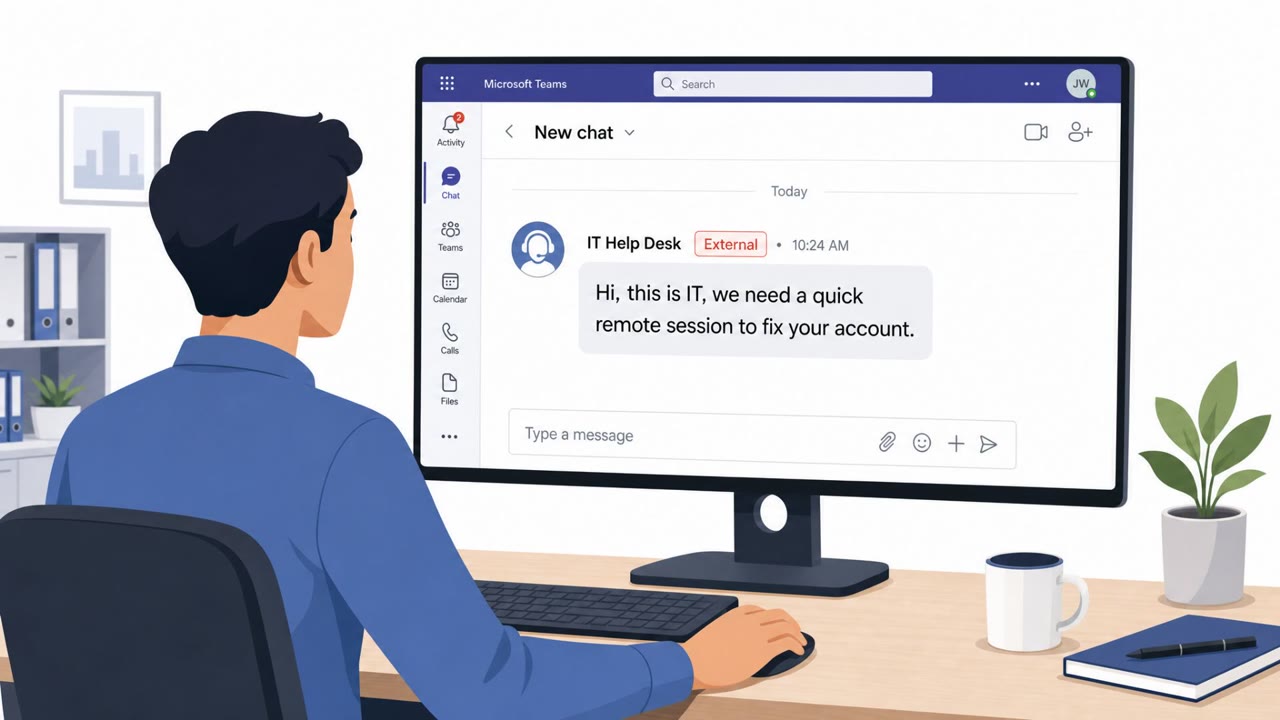
Fake IT Helpdesk Tricks Users Into Remote Access

Fake IT Helpdesk Tricks Users Into Remote Access

This bulletin describes multiple real-world social engineering campaigns where attackers impersonate IT support or use trusted-looking sharing and “Allow” prompts to gain access. Several campaigns abuse Microsoft Teams and document-sharing lures to trick employees into installing remote tools or…

September 3, 2026
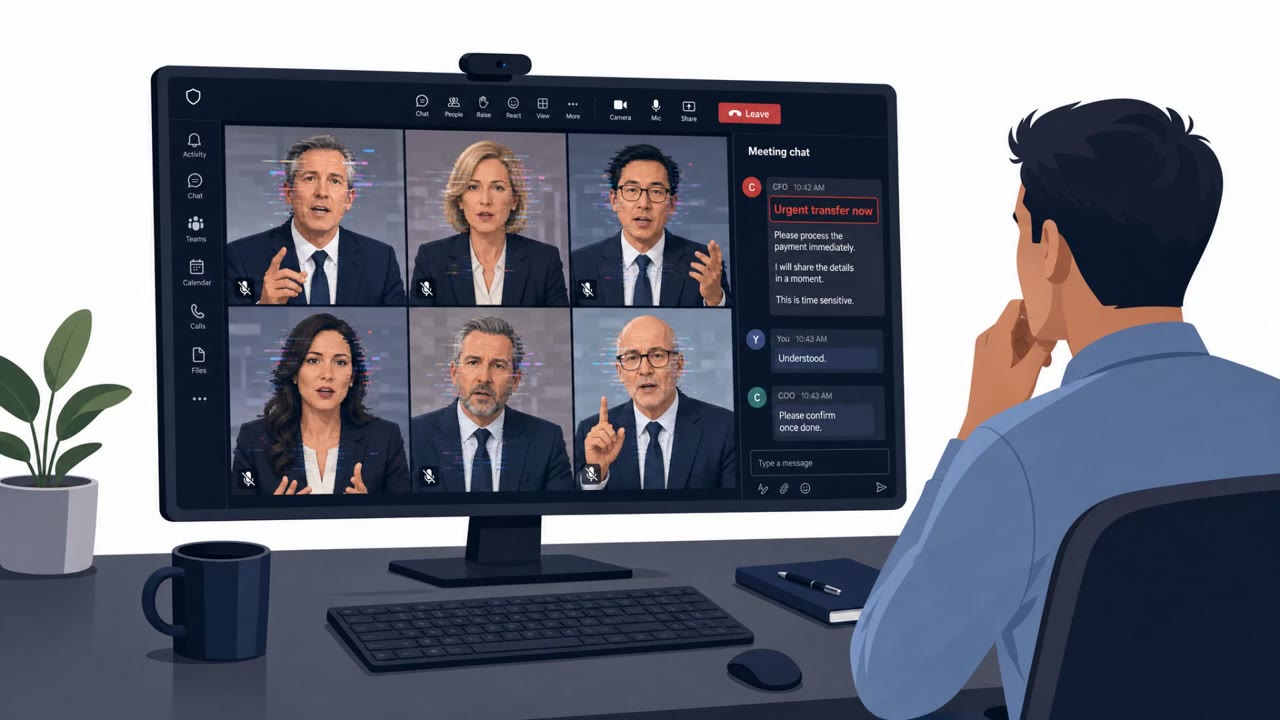
Deepfake Video Call Led to $25M Transfer

Deepfake Video Call Led to $25M Transfer

The article explains how generative AI is making phishing and impersonation more convincing, so “bad grammar” is no longer a reliable warning sign. It cites a real case in Hong Kong where fraudsters used deepfake video to impersonate senior colleagues on a video meeting and tricked a finance worker…

August 28, 2026
AI Voice Impostor Posed as Marco Rubio on Signal

AI Voice Impostor Posed as Marco Rubio on Signal

Governments are responding to deepfakes by shifting from “detecting fakes” to building systems that prove where digital content came from and whether it was altered. The article cites real AI-impersonation activity targeting government officials, including text and AI-voice impersonation intended…

August 20, 2026
Vishing Console + Fake CCleaner Trap Users

Vishing Console + Fake CCleaner Trap Users

This bulletin highlights multiple real-world threats, including voice-phishing (vishing) operations that industrialize account takeovers and a fake CCleaner download site that installs spyware. The items provide concrete, repeatable lures (a vishing-driven takeover workflow and a lookalike software…

August 17, 2026
AI Deepfakes Fuel Kidnap and Fake Doctor Scams

AI Deepfakes Fuel Kidnap and Fake Doctor Scams

A U.S. Senate hearing highlighted how criminals are using AI to make classic scams more believable, including voice cloning and fabricated “trusted” identities. One victim reported a phone-based “kidnapped daughter” deepfake that drove her to send cash, while a doctor described deepfake ads using…

July 31, 2026
Deepfake Video Call Drove $25M Wire Transfer Scam

Deepfake Video Call Drove $25M Wire Transfer Scam

The article discusses Google’s new selfie-video account recovery, but it also highlights a real deepfake-enabled fraud case. In that incident, a finance employee joined a video call showing deepfake versions of coworkers and was persuaded to send multiple wire transfers, illustrating how realistic…

July 23, 2026