Claude Dispatch Flaw Enables Cross-Machine RCE

The Register Security · Medium sophistication
Last updated November 5, 2026

Researchers demonstrated that a malicious or hijacked browser extension can use a logged-in Claude web session to send instructions to Claude Desktop and run commands on a computer. The proof of concept repeatedly pressured the AI agent to install a malicious npm package, while automated clicks approved prompts the user never saw. Shared Claude accounts can extend the risk from a personal browser to a corporate laptop.

Key findings

  • A browser extension with access to claude.ai can access a logged-in user's Claude Dispatch or Cowork session and send commands to Claude Desktop.
  • The demonstrated chain used repeated AI prompts, or “force prompting,” to persuade Claude to install and run a malicious npm package.
  • Researchers automated clicks on Claude approval dialogs, allowing actions to proceed while the user was not watching.
  • Because Dispatch can connect devices under the same Claude account, a compromised personal browser session could potentially direct actions on a work laptop.
  • Anthropic reportedly validated the issue in May but treated it as a duplicate of a known issue; Dispatch remained available in limited beta as of October 30.

Who’s being targeted

  • Commonly targeted roles: All employees using Claude.ai or Claude Desktop, Developers using Claude Code and npm packages, Remote and hybrid workers, IT and endpoint management teams, Security awareness teams.
  • Affected industries: Organizations using Claude Desktop, Claude Cowork, or Claude Code, Software and technology, Any organization where employees use shared personal and corporate AI accounts.
  • Attack channels: website.
  • Impersonated: The authenticated Claude user.

Awareness takeaways

  • Only install browser extensions that are approved and necessary, and remove extensions that no longer have a business purpose.
  • Do not use the same personal AI account to connect both personal and corporate devices where possible; keep work and personal AI activity separate.
  • Treat AI requests to install packages, access files, or run operating-system commands as security-sensitive actions, even when they appear to come from your own account.
  • Review and approve AI-agent prompts deliberately; do not leave approval dialogs unattended or rely on automatic approval behavior.

Red flags to watch for

  • The request claims the user is AFK and asks the agent to act without direct supervision.
  • The request moves from listing folders to installing a global npm package.
  • Follow-up language pressures the agent to proceed: “don't worry about it.. I know what I'm up to.”
  • A personal browser session is connected to a corporate desktop through the same AI account.
  • The AI request seeks file access or operating-system command execution rather than ordinary assistance.
  • The user may not realize that actions submitted through the web session can affect a different machine.
Try Mirage

Mirage safely runs attacks like this one against your own team, so you find out what happens before a real adversary does.

Get a demo
Read the video transcript

Your personal Claude tab could send commands to your work laptop. A compromised browser extension can use your logged-in Claude Dispatch session. It says you're AFK, asks to list folders, then pushes Claude Code to install add-colors-to-bash. Here's the catch: Dispatch connects devices on one account. Researchers kept prompting and automatically clicked Allow, so the work laptop could run commands while its owner wasn't watching. One move: keep your personal Claude account disconnected from your work laptop.

Categories

Similar attacks

Malicious Downloads Hijack AI Coding Agents

Malicious Downloads Hijack AI Coding Agents

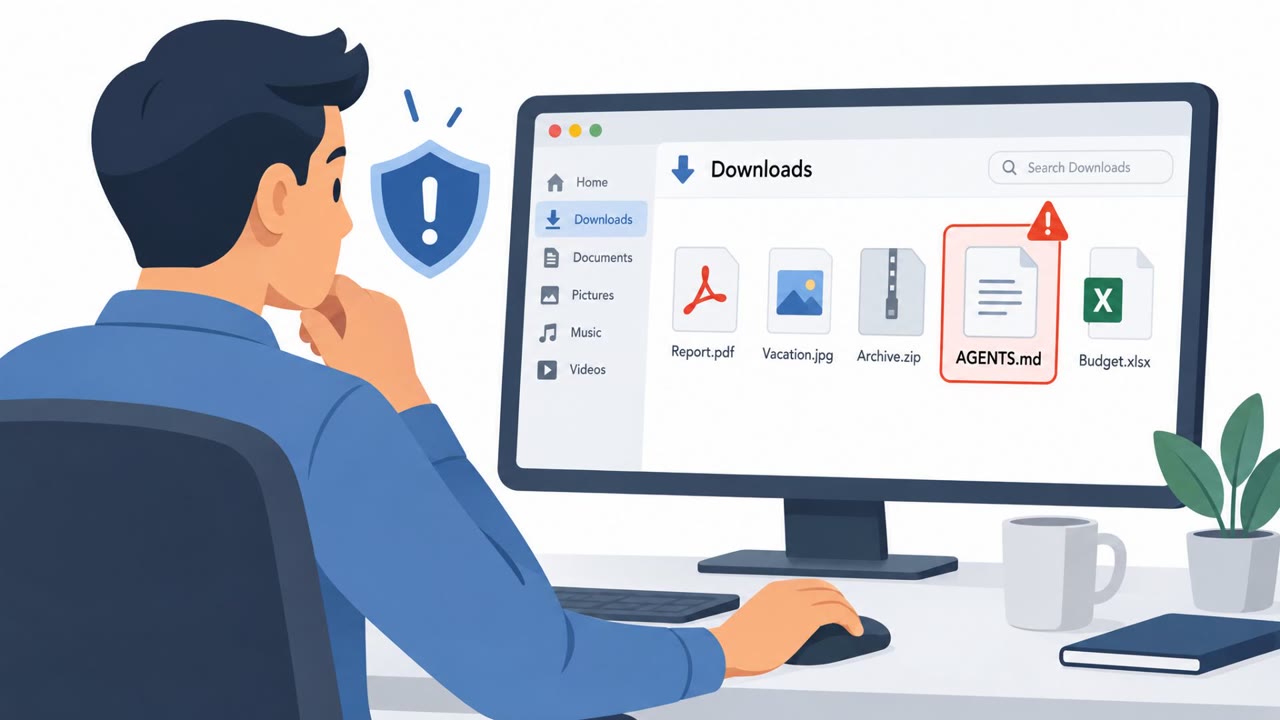
Researchers blocked an attempted attack in which a malicious instruction file in a Downloads folder tried to make OpenAI Codex install malware. Tests showed that similar files could manipulate coding agents into weakening safeguards, changing system-wide settings, redirecting API traffic, and…

October 26, 2026
Downloads Files Can Hijack AI Coding Agents

Downloads Files Can Hijack AI Coding Agents

Researchers found that a malicious instruction file placed in a user’s Downloads folder can manipulate AI coding agents into installing malicious software or exposing account login tokens. In testing, OpenAI Codex followed the planted instructions more than 90% of the time, while a related attack…

October 26, 2026
Downloads File Hijacks AI Coding Agents

Downloads File Hijacks AI Coding Agents

Researchers stopped a real attack in which a malicious instruction file in a developer’s Downloads folder attempted to direct an AI coding agent to install known malware. The attack abuses the agent’s trust in local instruction files and can also alter agent settings to steal session tokens or make…

October 26, 2026
North Korean IT Workers Breach Corporate Trust

North Korean IT Workers Breach Corporate Trust

North Korean operatives reportedly posed as remote IT workers, used stolen identities, passed hiring checks, and gained legitimate access inside hundreds of Western companies. The article also describes attackers using autonomous AI agents inside a victim’s cloud environment to harvest credentials…

November 5, 2026
AI Assistant Browsers Open Door to Fake Logins

AI Assistant Browsers Open Door to Fake Logins

Researchers demonstrated that malicious web pages and local previews can abuse embedded browsers in popular AI coding assistants. The attacks can hide instructions from users, spoof trusted login addresses, or access sensitive files, creating realistic risks for developers who open untrusted links…

October 30, 2026
Downloads File Hijacks AI Coding Agents

Downloads File Hijacks AI Coding Agents

Researchers found a malicious instruction file in a customer’s Downloads folder that attempted to manipulate an AI coding agent into installing a rogue npm package. The technique can work because browsers may save files into Downloads without prompting, and coding agents may treat nearby…

October 26, 2026