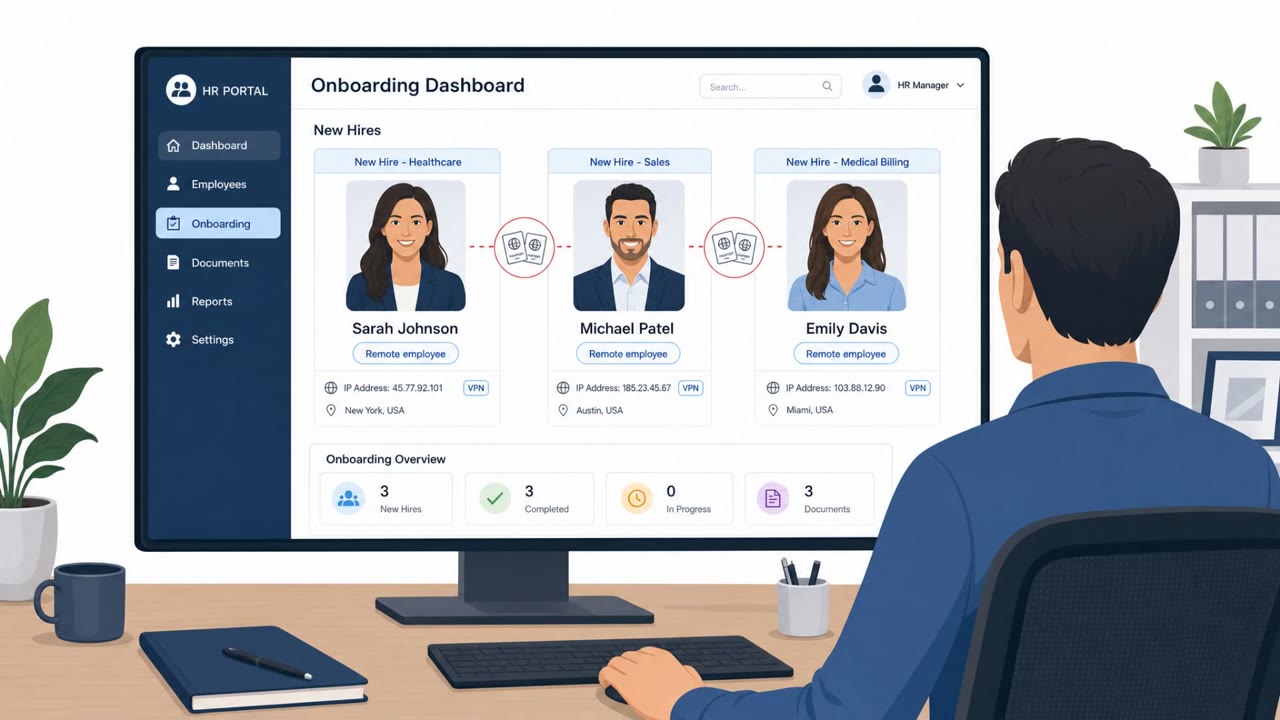
U.S. authorities charged 14 people tied to a North Korea-backed scheme that used stolen or fake identities to get remote IT jobs at more than 70 U.S. companies and funnel about $3 million back to Pyongyang. The operation relied on “laptop farms” in the U.S. to keep employer-issued laptops online while overseas workers secretly accessed them, and it also used paid Americans to stand in for interviews and other verification steps.
How the scheme worked
According to DOJ charges, 14 people were tied to a North Korea backed operation that used stolen or fabricated identities to land remote IT jobs at more than 70 U.S. companies between 2019 and 2025. The scheme funneled about $3 million in pay back to Pyongyang. Once hired, overseas workers relied on U.S. based "laptop farms," homes where facilitators kept employer-issued laptops running so the real workers abroad could access them remotely and appear to be working from inside the country.
The FBI advisory adds another layer: paid U.S. citizens stood in for interviews, drug tests, and account access on behalf of the actual workers. CrowdStrike reported that the group also spoofed device identifiers, including making a video capture card appear as a webcam, and reused disguised devices across multiple jobs.
Why it succeeded
The operation blended into normal remote work patterns rather than standing out. Hiring teams saw what looked like a legitimate candidate completing standard verification steps, not realizing those steps were being outsourced to a paid stand-in. Because the laptop farm setup kept devices online and active in a plausible U.S. location, IT and security teams had little reason to suspect remote access from overseas. The FBI noted that because these habits resemble normal remote work, no single warning sign catches them, which is why layered checks throughout employment matter more than a single verification gate.
What to watch for
- Applicant identity details that don't fully match background checks or submitted documentation
- Shipping addresses or claimed work locations that don't align with where the candidate says they live
- Persistent remote access to company laptops from unexpected locations, or laptops effectively being hosted at a third party's home
- Interview or verification behavior that seems scripted, inconsistent, or designed to avoid camera and identity checks
- Pressure to move quickly through hiring or bypass standard verification steps
Building resistance
Organizations should treat hiring as an ongoing security process, not a one-time gate. That means verifying identity consistently before and after hiring, training HR and recruiting staff to recognize signs of outsourced interviews or onboarding, and giving IT asset management visibility into where and how company laptops are actually being accessed. Because the FBI advisory also described retaliation patterns after termination, including threats against former managers and extortion demands backed by stolen data, companies should have a clear path for routing any post-termination threats directly to legal and security teams rather than treating them as routine HR matters.
Key findings
- Operation used stolen or fabricated identities to obtain remote jobs at “more than 70 companies” (2019–2025) and collect “about $3 million in pay.”
- “Laptop farms” in Texas kept employer-issued laptops running in U.S. homes so overseas workers could access them.
- FBI advisory says North Korean workers now pay U.S. citizens to “appear in interviews, take drug tests, access accounts, and keep company laptops running at home.”
- CrowdStrike reported the group “spoofed device identifiers,” including making “a video capture card appear as a webcam,” and reusing the disguised device across multiple jobs.
- Advisory notes escalation after termination: “threats against former managers,” “demands for payment backed by stolen data,” and “paid helpers sent to intimidate companies in person.”
Who’s being targeted
- Commonly targeted roles: Human Resources, Recruiting/Talent Acquisition, Hiring Managers, IT Service Desk, IT Security/IR, Finance/Payroll, Legal/Compliance.
- Affected industries: Multiple industries (70+ U.S. employers), Technology/IT, Professional services.
- Attack channels: email, website, vishing.
- Impersonated: A legitimate U.S.-based job candidate (stolen or fabricated identity), The ‘candidate’ during hiring verification (stand-in interviewee).
Red flags to watch for
- Applicant identity details don’t fully match background checks or documentation
- Shipping address or working location doesn’t align with where the applicant claims to reside
- Unusual remote-access setup requests or signs the laptop is being accessed by someone else
- Candidate avoids camera/identity verification or provides inconsistent personal details
- Voice/video quality and behavior seems scripted or inconsistent across interactions
- Pressure to move quickly or bypass standard verification steps
Frequently asked questions
How did North Korean workers get hired at U.S. companies?
They used stolen or fabricated identities to apply for and secure remote IT jobs at more than 70 companies between 2019 and 2025.
What is a laptop farm?
It is a setup where facilitators in the U.S. keep employer-issued laptops running at home so overseas workers can remotely access them while appearing to be working locally.
Did anyone help the scheme pass interviews or background checks?
Yes, paid U.S. citizens appeared in interviews, took drug tests, and accessed accounts on behalf of the overseas workers according to an FBI advisory.
What happens if these workers are fired?
The FBI advisory described escalation after termination, including threats against former managers, extortion demands backed by stolen data, and paid helpers sent to intimidate companies in person.
Read the video transcript
North Korea just got caught holding remote IT jobs at more than 70 U.S. companies, using stolen identities and our own laptops. Here’s the play: a “remote IT” applicant, fake U.S. identity, you ship them a laptop. That laptop ends up in a Texas “laptop farm,” kept online in someone’s house while a North Korean worker controls it from overseas. They even pay Americans to stand in for interviews and drug tests, so the face you see isn’t the person actually touching your systems. Red flags: address doesn’t match their story, background details never quite line up, or your laptop shows logins from places they supposedly don’t live. If a remote hire’s identity, location, or laptop use feels off, treat it as a security incident, not just an HR glitch. Your move: pause access and report it to Security immediately.