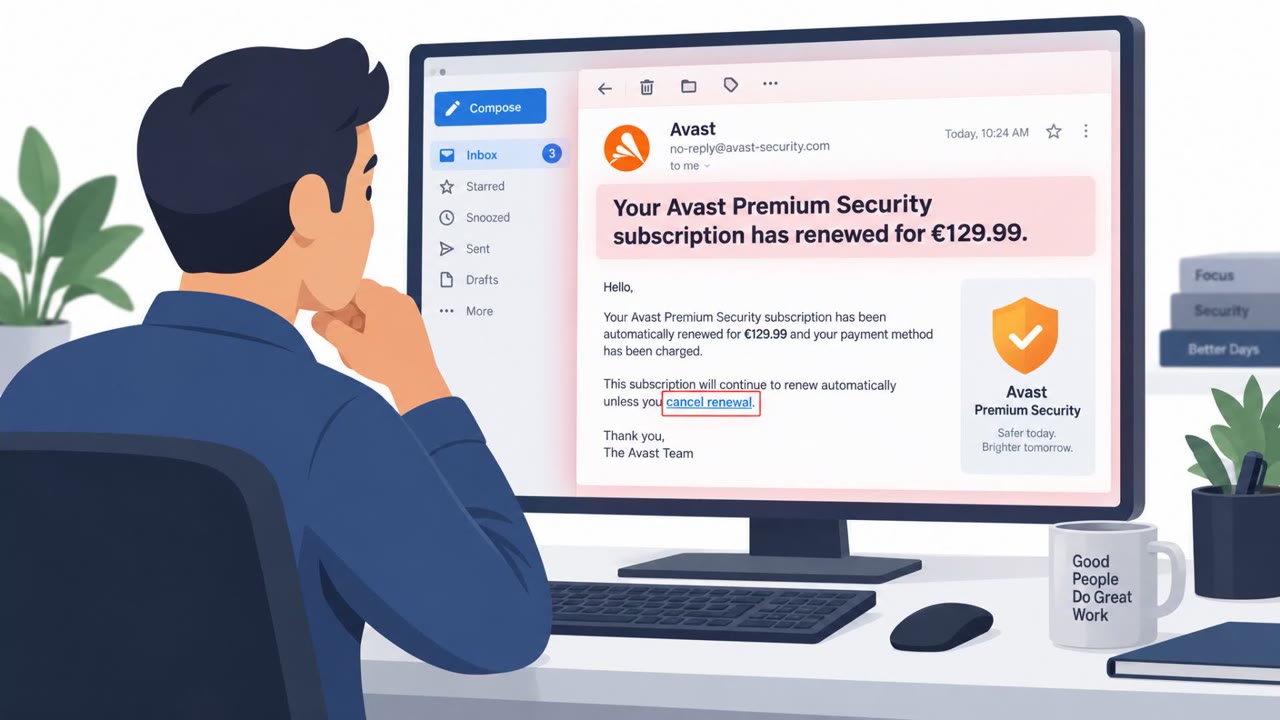
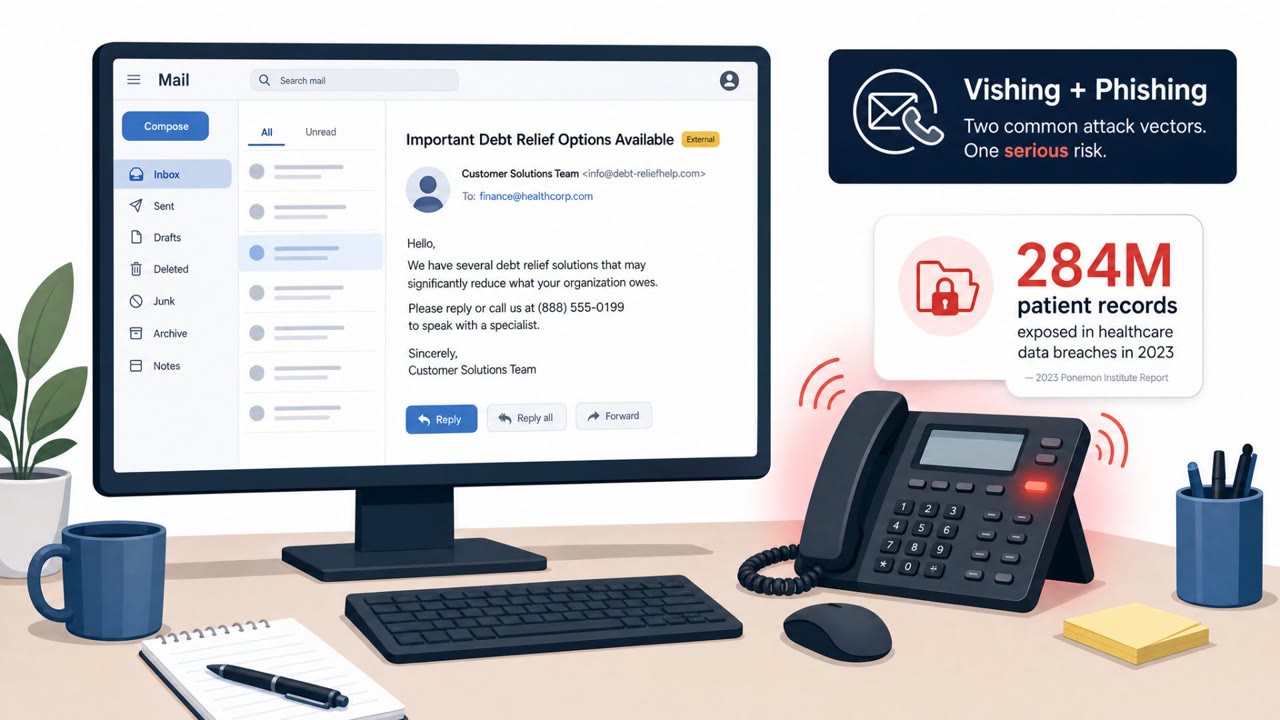
Malwarebytes found a convincing fake “Avast Premium Security” renewal page targeting users in Belgium, claiming a €129.99 renewal and pushing visitors toward a cancellation flow. The real goal is to harvest a victim’s name, email, and mobile number so scammers can call next while posing as support and pressure the victim into installing remote access tools or “reversing” a payment that never happened.
Key findings
- Researchers found a scam page impersonating Avast and targeting Belgium-based users with a fake renewal for €129.99 covering five devices.
- The page uses a cancellation form to collect name, email, and Belgian mobile number, data that feels “harmless” to provide.
- The collected phone number enables a follow-on support-style phone call aimed at getting the victim to install remote access software or assist with a fake refund/payment reversal.
- Malwarebytes notes signs the page may have been built with AI (polished layout, AI-like “handover” comments in code), reducing the usefulness of old “look for sloppy errors” advice.
- A professional-looking page is no longer a reliable indicator of legitimacy because scammers can use AI and copy real logos.
Who’s being targeted
- Commonly targeted roles: All employees, Executives, Finance, IT helpdesk.
- Affected industries: Consumers / general public, IT / cybersecurity software users.
- Attack channels: website, vishing.
- Impersonated: Avast (Avast Premium Security), Avast support staff.
Awareness takeaways
- Treat unexpected ‘subscription renewed’ notices as suspicious, verify directly in the official vendor account or app, not via a cancellation link/form.
- Don’t share your phone number (or other contact details) on cancellation/refund pages you reached via a link, scammers use it to trigger persuasive follow-up calls.
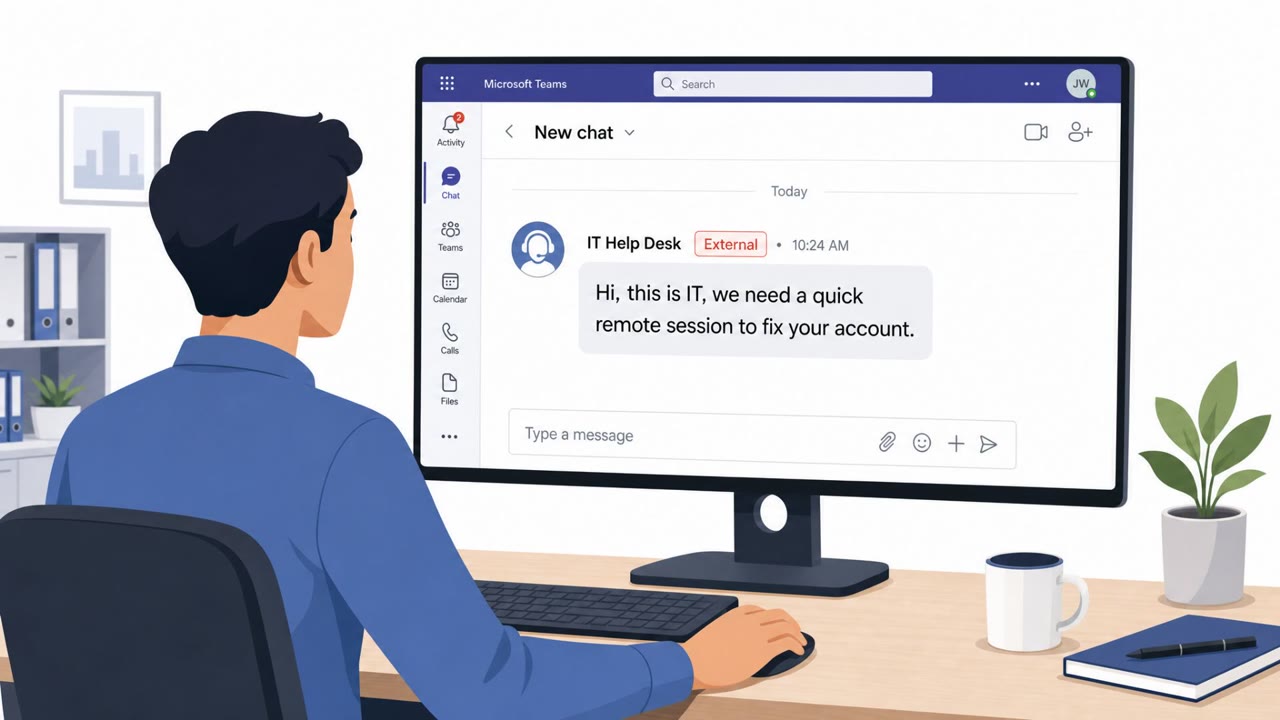
- Be especially cautious if “support” asks you to install remote access tools or help ‘reverse’/refund a charge, stop and verify through a trusted channel.
- Don’t rely on poor grammar or ugly design as the main warning sign, scam pages can look professional now.
Red flags to watch for
- Unexpected renewal claim and urgency to “cancel” something you didn’t buy
- Cancellation process asks for personal contact details instead of logging into your real account
- Branding looks real, but the page is not connected to the vendor
- Caller creates pressure around a charge that ‘already happened’
- Request to install remote access software is disproportionate for a subscription question
- You’re being asked to act on a payment that you cannot verify in your real account/bank
Read the video transcript
You open a page that screams: "Your Avast Premium Security subscription has renewed for €129.99." Panic, right? This fake Avast page targets Belgium and pushes a "cancellation" form: name, email, Belgian mobile. It looks legit, but there is no subscription, no charge, and no link to Avast at all. The "aha" here: that harmless phone number is the whole scam. They use it to call you as fake Avast support, pressure you about this imaginary €129.99, and talk you into installing remote access tools or "reversing" a payment that never happened. If you see an unexpected antivirus renewal like this, do one thing: ignore the page, and check your real subscription or bank directly, never through the cancellation form or a follow-up call.