Amazon says North Korea-linked actors compromised widely used npm packages (including debug and chalk) by tricking a trusted maintainer into signing in through a lookalike npm domain. After gaining that trusted access, the attackers published malicious updates that altered crypto wallet transactions in users’ browsers to steal funds. The same actor is linked by multiple vendors to a separate axios npm compromise, but Amazon is the main source tying North Korea to the earlier debug/chalk incident.
How the attack worked
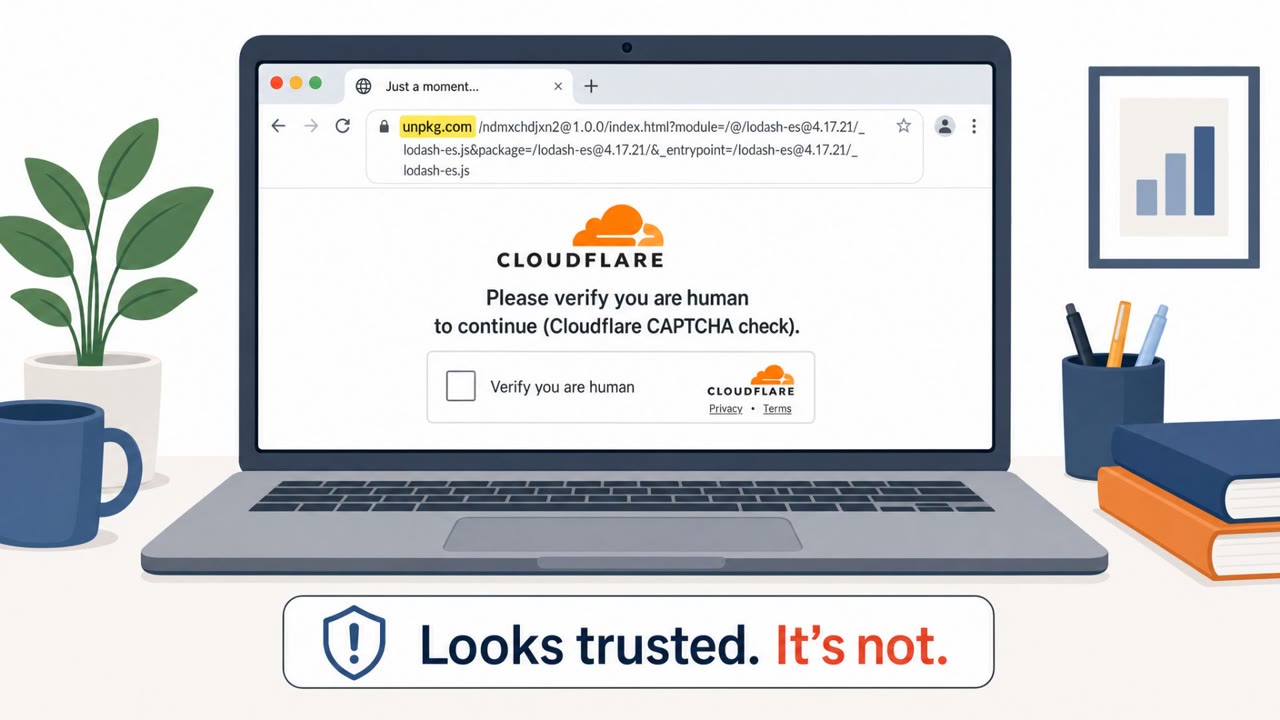
Amazon attributes the compromise of the widely used npm packages debug and chalk to a North Korea-linked actor. The entry point was social engineering rather than a technical exploit: a trusted package maintainer was phished through a lookalike npm domain designed to look like the real sign-in page. Once the attacker captured those credentials, they used the maintainer's legitimate publishing access to push malicious updates into at least 18 packages.
A separate but related incident involved a file named core.js, disguised as the legitimate core-js package inside a repository. This file only activated when it received a specific hash input, at which point it pulled an operating-system-specific second stage from a hardcoded command and control domain, obfuscated using base64 over an XOR cipher.
Why it succeeded
The pattern Amazon describes repeats across multiple campaigns tied to this actor: socially engineer a trusted maintainer, then publish an update. This works because publishing rights are treated as a routine part of a maintainer's job, not as a high-value credential that needs extra scrutiny. A convincing lookalike login page is often enough to bypass a moment of caution, especially when the request looks like a standard re-authentication step.
The payload itself was also built to avoid detection. Researchers at Aikido and Wiz found browser-side code that hooked into fetch, XMLHttpRequest, and wallet APIs to quietly rewrite cryptocurrency transaction addresses before a user signed a transaction. Because it left no persistence on the machine, traditional endpoint detection had little to find.
What to watch for
- Login pages for package registries that use a domain slightly different from the official one
- Unexpected prompts to re-authenticate before routine publishing or release tasks
- Dependency files that mimic well-known library names but appear in the wrong repository
- Obfuscated code, trigger-based logic, or unexplained outbound network calls in a dependency
- Wallet or transaction behavior that changes unexpectedly in the browser
How to build resistance
Defenders can reduce exposure by training developers and maintainers to verify the exact domain before entering registry credentials, and by treating any request tied to publishing rights as high-risk enough to warrant out-of-band verification. Teams should also recognize that supply-chain compromises do not always involve installing malware on a device. Encouraging developers to flag unusual dependency behavior, such as obfuscation or unexpected network calls, before it reaches production gives organizations a chance to catch these updates early rather than after distribution.
Key findings
- Amazon attributes the npm debug and chalk hijack to a North Korea-linked actor (Sapphire Sleet/UNC1069 overlap), after it previously sat in public reporting as crypto theft.
- The entry point pattern described by Amazon is consistent across campaigns: "socially engineer a trusted maintainer, then publish an update."
- In the debug/chalk case, the maintainer was "phished through a lookalike npm domain" and attackers pushed wallet-draining code into "at least 18 packages."
- Aikido and Wiz documented browser-side code that intercepted web requests and wallet APIs to rewrite transaction addresses before signing, with "no persistence on the machine."
- Amazon lists indicators and a trigger-based payload in a separate package (typo-crypto), including a C2 domain and IP: "npmjs[.]store" and "216[.]74[.]123[.]126."
Who’s being targeted
- Commonly targeted roles: Developers, Open-source maintainers, DevOps/Build & Release, Application Security, Engineering leadership.
- Affected industries: Software development, Open source ecosystems, Technology companies using JavaScript dependencies, Cryptocurrency/Web3 users (wallet transactions).
- Attack channels: website.
- Impersonated: npm (fake lookalike domain), Legitimate dependency (core-js) name used as a disguise.
Red flags to watch for
- Login link goes to a lookalike domain instead of the official npm site
- Unexpected request to re-authenticate before performing routine publishing tasks
- Pressure to act quickly to avoid account or package disruption
- Dependency file name mimics a well-known library but is placed unexpectedly inside another project’s repository
- Trigger-based behavior and obfuscation (base64 + XOR) in a dependency file
- Outbound network calls to suspicious infrastructure (new/odd domain or raw IP)
Frequently asked questions
How did attackers compromise the npm debug and chalk packages?
Amazon reported that a trusted maintainer was phished through a lookalike npm domain, and the stolen access was used to publish malicious updates to at least 18 packages, including debug and chalk.
What did the malicious code actually do?
Researchers at Aikido and Wiz documented browser-side code that intercepted fetch, XMLHttpRequest, and wallet APIs to rewrite cryptocurrency transaction addresses before a user signed, without leaving persistence on the machine.
Was there a second, related compromise?
Yes, Amazon described a separate package containing a disguised file named core.js that triggered on a specific hash input and pulled a second-stage payload from a hardcoded command and control domain.
What are the indicators of compromise tied to this campaign?
Amazon listed the network indicators npmjs[.]store and the IP address 216[.]74[.]123[.]126 as part of the infrastructure used in the trigger-based payload.
Read the video transcript
Imagine this: you log into a fake npm site once… and suddenly debug and chalk are pushing wallet‑draining code to millions. Amazon says a North Korea‑linked group phished a trusted maintainer through a lookalike npm domain, then used those credentials to publish malicious updates to at least 18 packages, including debug and chalk. Those updates quietly hooked fetch, XMLHttpRequest, and wallet APIs in the browser to rewrite crypto transaction addresses before you clicked sign, no malware installed, just poisoned JavaScript from a trusted package. Your move: any time you’re asked to re‑sign into npm to keep publishing, ignore the link, open npm in a fresh tab, and check the domain yourself before you type a single character.