The article warns that AI is making impersonation and social engineering more convincing, citing a real 2024 case where Arup was reportedly tricked during a video conference featuring a digitally cloned senior manager. The core lesson is to validate requests through policy and independent verification, not by how “real” a person looks or sounds.
How the Arup Incident Worked
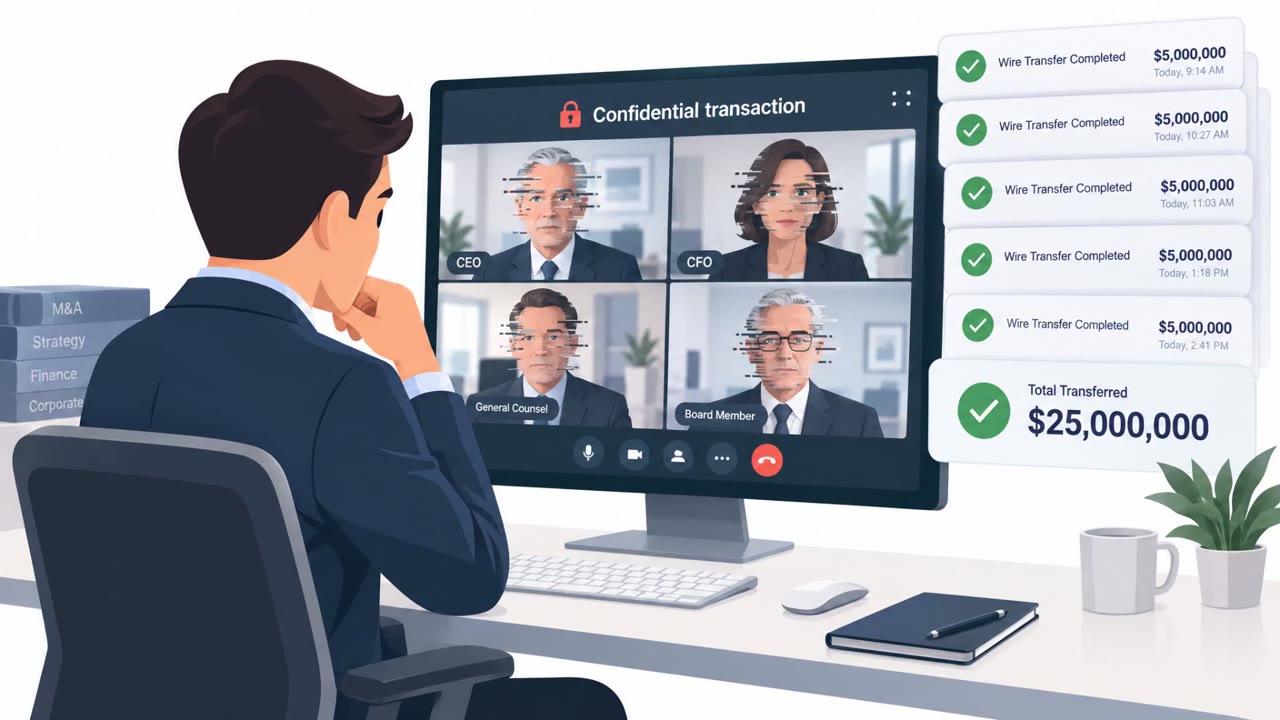
The source article cites the 2024 Hong Kong case involving Arup as a real-world example of deepfake-enabled fraud. Fraudsters reportedly used a digitally cloned senior manager during a video conference to help induce $25 million in transfers. The scenario did not rely on a suspicious email or an obviously fake caller. Instead, it inserted a convincing synthetic figure of authority directly into a legitimate business workflow: a payment approval process conducted over video.
Why This Kind of Attack Succeeds
The article frames deepfakes as trust-substitution tools rather than simple fake videos. That distinction matters because the danger is not the technical trick itself, it is what the trick replaces: the human judgment that normally underlies approval decisions. A synthetic executive in a video call or a cloned voice in a payment workflow can inject synthetic authority into real business processes, particularly around finance, treasury, and accounts payable functions where urgency and hierarchy already shape decision-making.
What to Watch For
Key red flags described in connection with this style of attack include:
- A high-value transfer request made during a call without independent verification
- Pressure to treat a request as normal simply because it appears to come from a senior leader
- Process exceptions, such as bypassing an approved channel or policy step, justified by urgency or authority
These red flags are less about spotting a technical flaw in the video or audio and more about recognizing when a workflow is being pushed outside its normal controls.
Building Resistance to Deepfake-Enabled Fraud
The core lesson from this incident is a shift in how validation questions are framed. Rather than asking whether a call looks or sounds authentic, the recommended question is whether the request is valid under policy, made through an approved channel, and confirmed with independent verification. Practical steps that align with this guidance include:
- Requiring independent callbacks or secondary confirmation for high-value transfers, regardless of how the request was delivered
- Applying dual approval controls to payment workflows so no single video call or voice message can authorize a transfer
- Training finance, treasury, and executive staff that sophisticated social engineering may build trust gradually rather than arriving as an obvious one-off phishing attempt
Because the most effective AI-enabled social engineering is designed to resemble an ongoing relationship rather than a single suspicious message, organizations with payment approval workflows, including engineering and professional services firms, benefit from treating authority and familiarity as insufficient grounds for approving financial transactions on their own.
Key findings
- The article cites a real incident: “The 2024 Hong Kong deepfake fraud involving Arup… reportedly used a digitally cloned senior manager in a video conference to help induce $25 million in transfers.”
- It frames deepfakes as “trust-substitution tools” that insert synthetic authority into real workflows (e.g., payments).
- It recommends shifting validation from “Does this look or sound authentic?” to “Is this request valid under policy… with independent verification?”
Who’s being targeted
- Commonly targeted roles: Finance/Treasury, Accounts Payable, Executives and budget owners, Anyone who approves or initiates payments.
- Affected industries: Engineering and professional services, Any organization with payment approval workflows.
- Attack channels: vishing.
- Impersonated: Senior manager/executive (digitally cloned).
Red flags to watch for
- A high-value transfer request is made during a call without independent verification
- Pressure to treat the request as normal because it appears to come from a senior leader
- Process exceptions (channel/policy bypass) justified by urgency or authority
Frequently asked questions
What happened in the Arup deepfake case?
Fraudsters reportedly used a digitally cloned senior manager during a video conference to help induce $25 million in transfers, according to the 2024 Hong Kong incident cited in the source article.
Why are deepfakes considered trust substitution tools?
The article frames deepfakes as trust substitution tools because they insert synthetic authority into real business workflows, such as payment approvals, rather than simply faking a video.
How should organizations verify payment requests to resist this kind of attack?
The recommended approach shifts the question from whether a request looks or sounds authentic to whether it is valid under policy, made through an approved channel, and confirmed with independent verification.
Which roles are most at risk from deepfake enabled payment fraud?
Finance and treasury staff, accounts payable teams, executives, and anyone who approves or initiates payments are the primary targets described in the source material.
Read the video transcript
Fraudsters reportedly used a digitally cloned senior manager in a video conference to help steal $25 million from Arup. Here’s the trick: the deepfake ‘boss’ joins a normal-looking video meeting, sounds urgent, and tells finance to push through high-value transfers as if it’s just routine business. Deepfakes are trust-substitution tools: they swap in synthetic authority. The red flag isn’t the video quality; it’s a big payment request made on a call, with pressure to skip normal approval steps. If anyone asks for a payment on a call, even your ‘boss’, pause and do one thing: hang up and confirm the request through your normal payment process and an independent callback.