The article describes North Korean operatives posing as legitimate remote IT candidates to get hired, obtain real company credentials, and gain trusted internal access. It cites an FBI investigation into a DPRK remote IT worker at a U.S. federal agency and a research “hire-and-observe” operation that exposed forged identities, AI-assisted interviewing, and suspicious VPN/VPS infrastructure.
Key findings
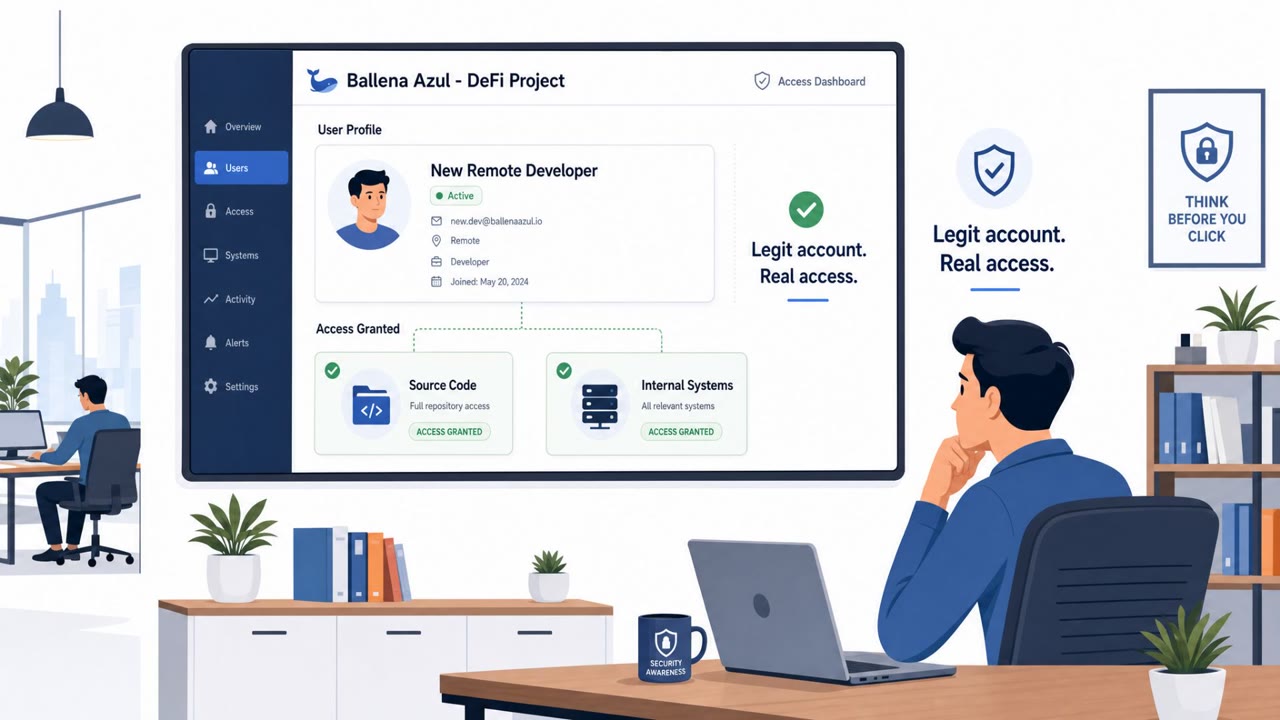
- North Korean operatives apply for remote jobs, pass interviews, and receive legitimate credentials, shifting the risk from “breaking in” to “getting hired.”
- An FBI investigation is referenced involving a DPRK remote IT worker who reportedly worked for a U.S. federal agency.
- Researchers “deliberately hired suspected DPRK developers” and observed their activity using controlled virtual desktops (sandboxes).
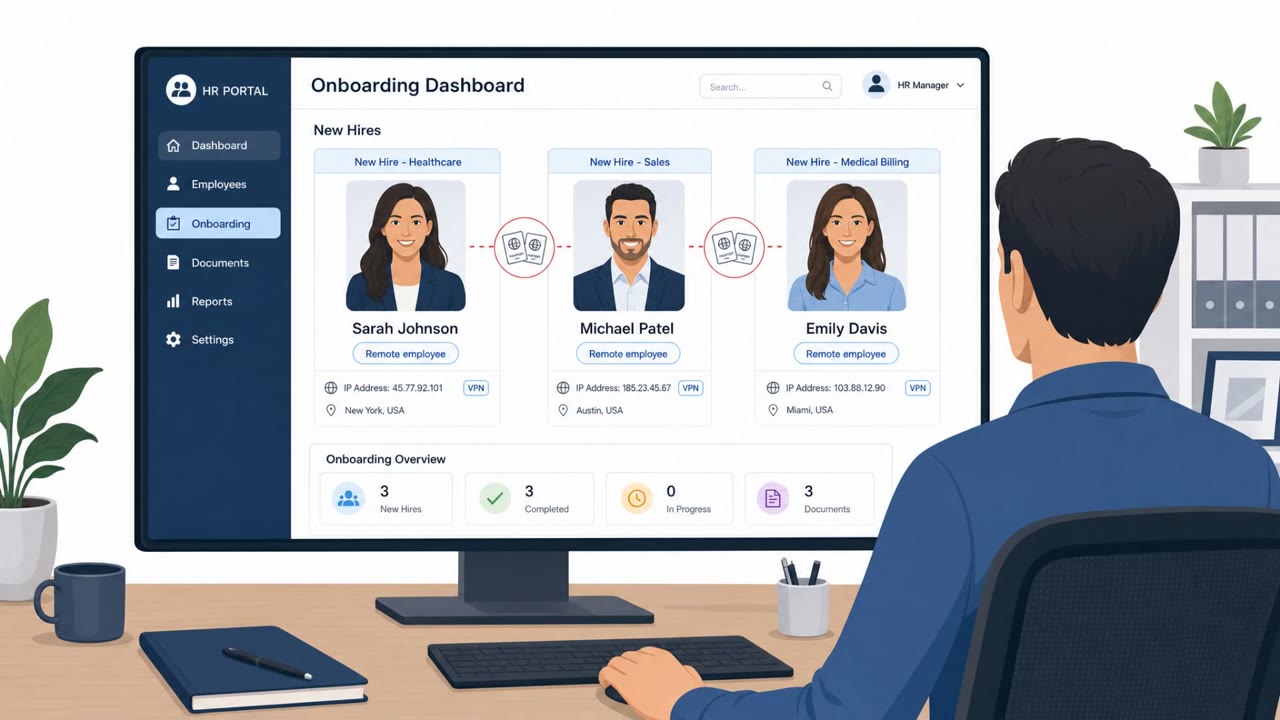
- The investigation observed forged identities, AI-assisted workflows, remote-access tools, and VPN/VPS infrastructure.
- The article lists practical hiring-stage red flags: mismatched identity details, signs of document manipulation, interview behavior suggesting assistance, and location/network mismatches.
- Specific IP indicators and cryptocurrency wallet addresses are provided for defenders to cross-check against logs.
Who’s being targeted
- Commonly targeted roles: Human Resources, Recruiting/Talent Acquisition, Hiring Managers, IT / Identity & Access Management, Security Operations, Engineering Leadership.
- Affected industries: Government, Information Technology, Professional Services, Any business hiring remote IT staff.
- Attack channels: email.
- Impersonated: Legitimate job candidate / remote IT contractor, Remote IT job candidate.
Awareness takeaways
- Treat hiring for sensitive remote roles as a security control: verify identity using multiple independent checks before granting access.
- Train recruiters and hiring managers to look for clusters of small inconsistencies (not a single ‘smoking gun’) and to escalate for deeper verification.
- Validate suspicious location/network signals against what the candidate claims, especially for remote access and VDI usage.
- Operationalize threat intelligence: regularly compare known suspicious infrastructure to logs and alerts rather than doing one-time checks.
Red flags to watch for
- Identity details don’t line up across documents, addresses, or banking information
- Signs the ID/document was altered (metadata/visual inconsistencies/AI manipulation)
- Candidate’s claimed location doesn’t match observed network activity
- Repeated off-screen glances and delayed responses that suggest prompting
- Dependence on live translation and AI tools during interview
- Multiple small inconsistencies that only appear when comparing steps across the process
Read the video transcript
Imagine this: a North Korean developer passes your interview, gets hired, and logs into the same systems we spend millions to protect. This isn’t theoretical, the FBI found a DPRK remote IT worker inside a U.S. federal agency. Researchers even hired suspected DPRK developers linked to Lazarus Group and saw forged IDs, AI-assisted interviews, and VPN and VPS tools hiding where they really were. The giveaway isn’t one big mistake, it’s a cluster of small ones: ID details that don’t quite match the banking info, tiny visual edits on documents, interviews with odd off-screen glances and delayed, AI-polished answers, and login traffic coming from places they never said they lived. If you’re hiring for remote tech work, treat it like a security control: when those little inconsistencies stack up, stop and escalate the candidate for deeper verification before any credentials go live.