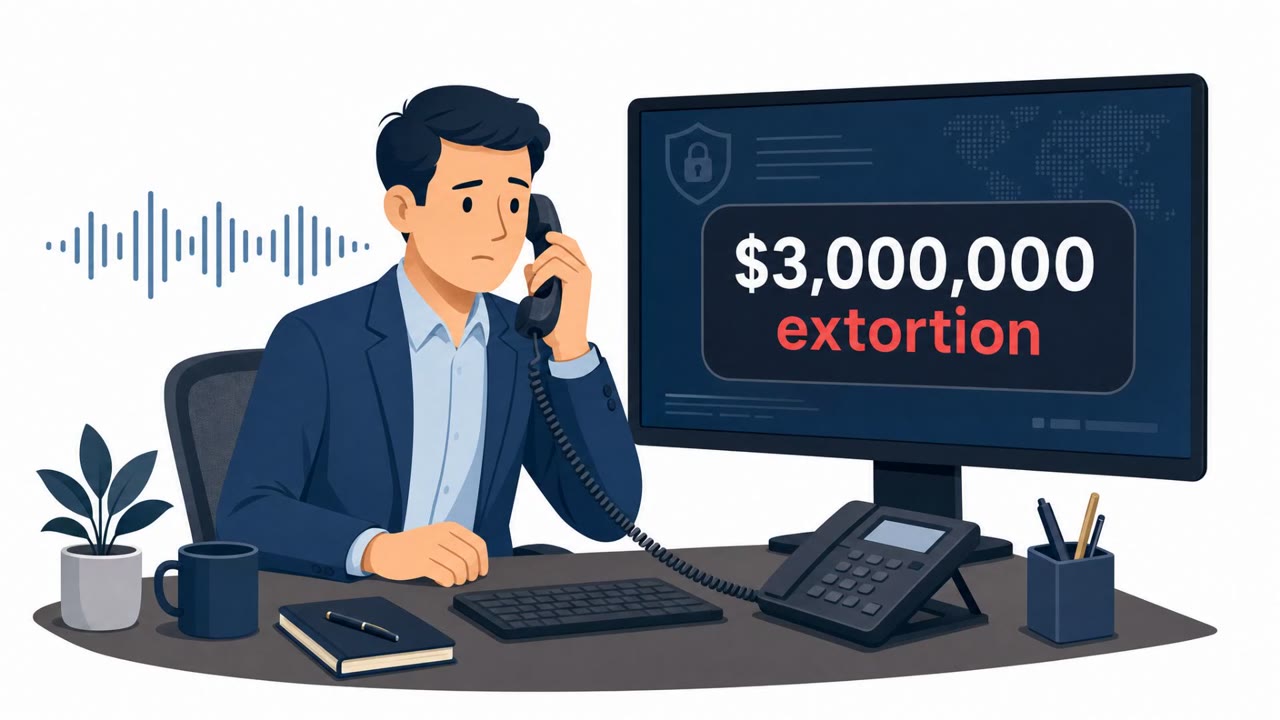
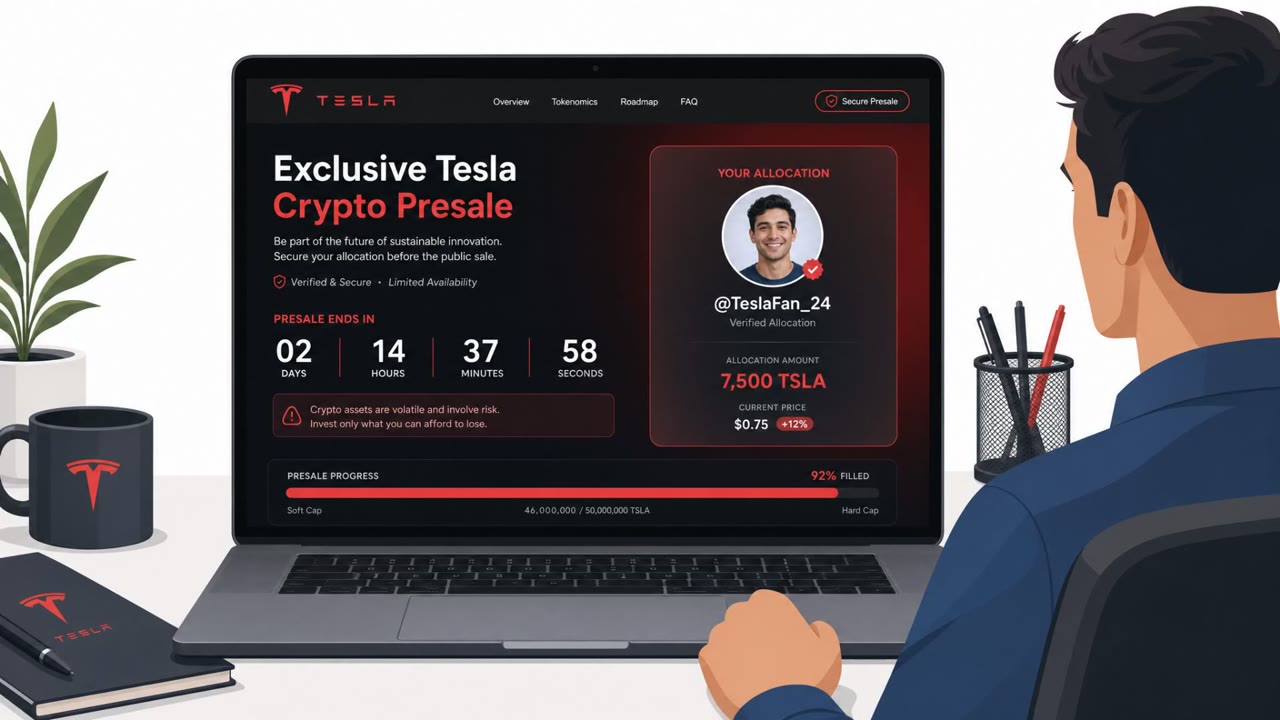
The FBI warns about phone scams where callers impersonate police or federal agents and threaten arrest unless the victim pays immediately. The scams use pressure tactics (keeping victims on the phone, urging secrecy) and push hard-to-trace payments like prepaid cards, crypto, wire transfers, or cash to a courier.
Key findings
- FBI reports impersonation-scam losses of more than $1.6B (Jan 2025–Jul 2026).
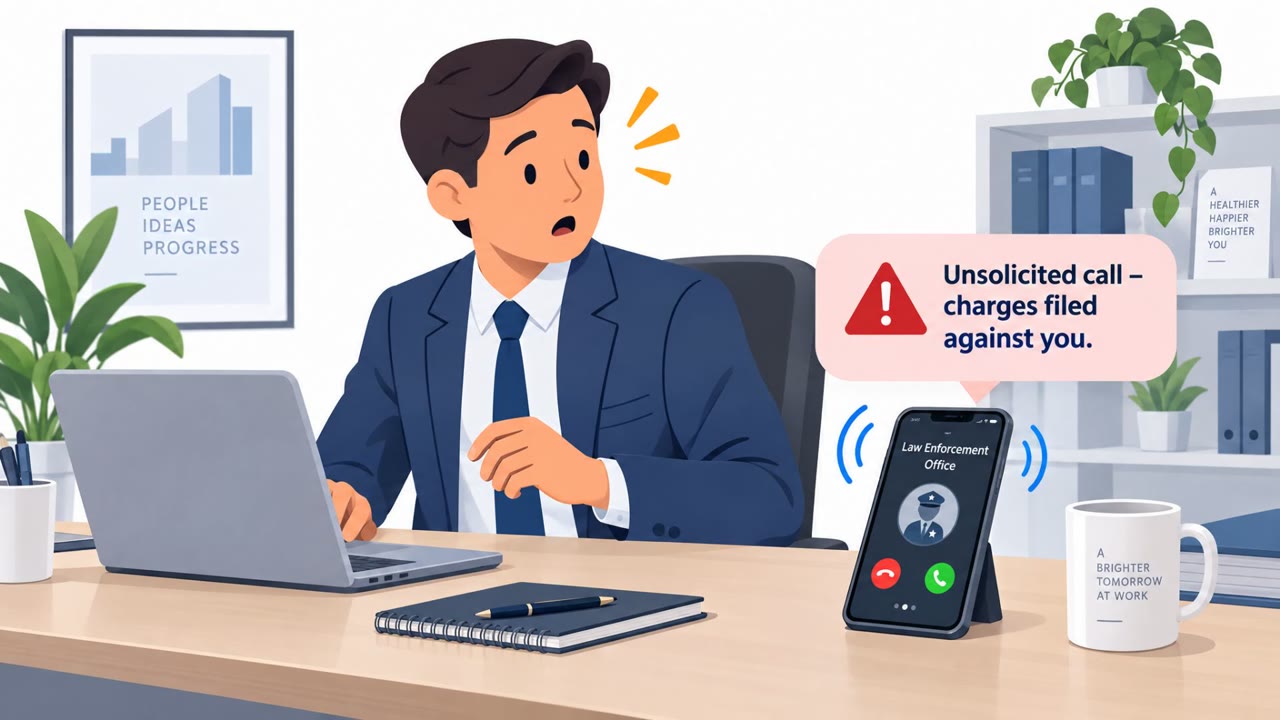
- Callers impersonate law enforcement/government, accuse victims of crimes or missed jury duty, and threaten arrest unless paid immediately.
- Scammers use pressure tactics: urgency, aggression, isolation (don’t tell anyone), and keeping victims on the phone.
- Payment methods commonly demanded: prepaid cards, wire transfers, cryptocurrency, or cash via courier.
- Some scammers spoof real government phone numbers/names (including IC3), and some use fake uniforms/mock government sets.
- Medical practitioners and immigrants/international students are specifically targeted with tailored threats.
Who’s being targeted
- Commonly targeted roles: All employees, Executives, Finance/Payroll (anyone who can move money), Medical practitioners/clinical staff, Student services/international programs.
- Affected industries: Healthcare, Education (international students), General public/consumers.
- Attack channels: vishing.
- Impersonated: Police officer or federal agent (law enforcement/government official), Court officer / law enforcement official, State medical board / licensing authority / law enforcement.
Awareness takeaways
- Treat any call demanding immediate payment to avoid arrest or legal trouble as a scam until independently verified.
- Never pay government- or law-enforcement-related ‘fees’ using prepaid cards, cryptocurrency, wire transfers, or courier cash.
- If someone claims to be an official, hang up and verify using publicly available contact information (not the number they give you).
- Watch for manipulation tactics like urgency, secrecy, and being kept on the phone, these are common scam behaviors.
Red flags to watch for
- Threats of immediate arrest/prosecution if you don’t pay right now
- Pressure to stay on the phone and not tell anyone
- Requests for unusual payment methods (prepaid cards/crypto/courier cash)
- Unexpected threat of an arrest warrant tied to payment
- Demand for immediate payment over the phone
- Caller discourages verification or contact with others
- High-pressure demand tied to professional license revocation
- Payment demanded immediately (often via nonstandard methods)
- Caller resists verification through official channels
Read the video transcript
“This is Agent Miller. You’re tied to a criminal investigation and there’s an arrest action pending unless you resolve this now.” This is a vishing scam the FBI says has cost over $1.6 billion. Fake cops or federal agents threaten arrest, keep you on the phone, and push you to pay right now with prepaid cards, wire transfers, crypto, or even cash to a courier. They’ll say you missed jury duty or are linked to a crime, threaten arrest or prosecution, order you not to tell anyone, and insist you stay on the line while you pay to "remove charges" or "assist an investigation." Here’s the rule: if a caller threatens arrest and demands immediate payment, hang up, then call the real agency using a number you find yourself.