Fake Bid PDFs Lead to Microsoft Credential Theft

Cofense · Medium sophistication
Last updated October 27, 2026

A real credential-phishing campaign used a project bid invitation and a password-protected PDF to target employees involved in sales and contract work. The PDF led victims through a convincing fake document-sharing site and then to a counterfeit Microsoft sign-in page that sent entered credentials to the attackers.

Key findings

  • The campaign used the business urgency of a project bid invitation to make recipients more likely to open the message and attachment.
  • The email used a password-protected PDF, which can prevent email security tools from inspecting malicious content inside the file.
  • The unlocked PDF contained a OneDrive-styled button labeled "View" or "Download" that linked to a non-OneDrive domain.
  • The phishing site maintained the bid-document narrative with a fake shared drive containing apparently contract-related files.
  • After victims clicked "Download Selected," the site requested their email address and redirected them to a fake Microsoft sign-in page.
  • The initial sender may be a legitimate but compromised email account, making sender-address checks alone insufficient.

Who’s being targeted

  • Commonly targeted roles: Sales, Business Development, Proposal Management, Procurement, Account Management, Finance, All Microsoft 365 users.
  • Affected industries: Professional services, Sales organizations, Business development, Procurement and contracting, Organizations responding to project bids.
  • Attack channels: email, website.
  • Impersonated: Prospective customer or contracting organization, Microsoft sign-in and a shared document platform.

Awareness takeaways

  • Treat unexpected bid invitations as high-risk until the opportunity is verified through a known business contact or established procurement channel.
  • Do not assume a password-protected attachment is safe; confirm why it was sent and verify it before opening or enabling any links inside it.
  • Before clicking a document-sharing button or entering credentials, inspect the destination domain and ensure it matches the service being claimed.
  • A familiar or legitimate-looking sender address does not prove a message is safe, because attackers may send phishing from compromised accounts.

Red flags to watch for

  • The deadline uses an impossible date: "August 35, 2026."
  • The attachment is password-protected, preventing normal email scanning and inspection.
  • The supposed OneDrive button links to a non-OneDrive domain.
  • The site asks for an email address after the user has already reached a supposed shared-document page.
  • The Microsoft sign-in page uses lastingonlineexperiences[.]de rather than a Microsoft domain.
  • The credentials are submitted to a separate attacker-controlled server.
Try Mirage

Mirage safely runs attacks like this one against your own team, so you find out what happens before a real adversary does.

Get a demo
Read the video transcript

A new project bid sounds promising. Due August thirty-fifth? That’s not a date. The password-protected PDF hides its link from email scanners. Its OneDrive-style 'View' button actually points to slotpastimaxwin50jt dot online, not OneDrive. Next comes a fake drive of contract files. 'Download Selected' asks for your email, then opens a Microsoft lookalike at lastingonlineexperiences dot de for your password. Even a familiar sender could be compromised. Before opening an unexpected bid PDF, confirm the invitation with your known business contact.

Similar attacks

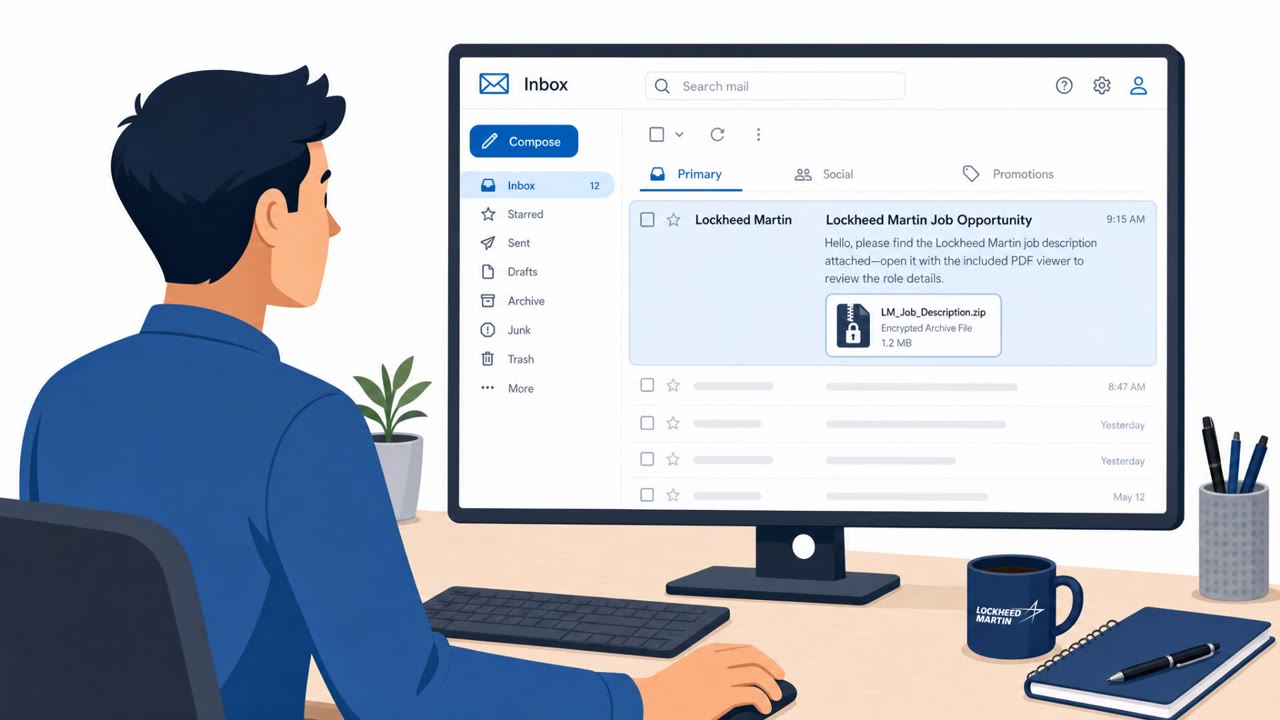
Fake Lockheed Jobs Used to Deliver Lazarus Zero-Day

Fake Lockheed Jobs Used to Deliver Lazarus Zero-Day

Check Point says North Korea’s Lazarus Group targeted defense and aerospace professionals using convincing fake job offers that led victims to download trojanized PDF software. The campaign used a Windows zero-day (now patched as CVE-2026-68820) to gain full control and hide from security tools,…

August 13, 2026
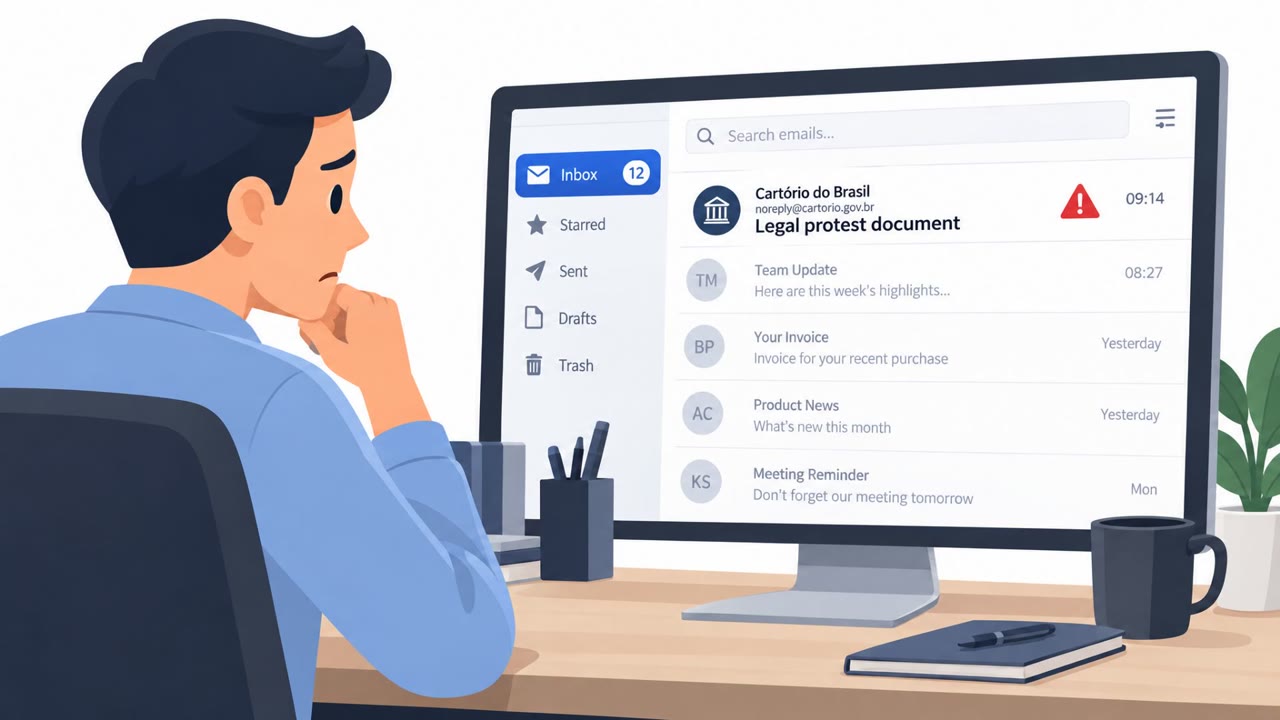
Fake Legal Notices Hide Malware in VLC and VMware

Fake Legal Notices Hide Malware in VLC and VMware

Three real malware campaigns targeted people in Brazil and Portugal with fake legal notices, invoice pages, and finance-themed documents. Victims were directed to scripts, installers, or an ISO file that abused trusted VLC, VMware, and Microsoft utilities to load malicious code. The most useful…

October 27, 2026
Booking.com Scams Put Travelers and Hotels at Risk

Booking.com Scams Put Travelers and Hotels at Risk

EU regulators are investigating Booking.com over phishing, fraudulent listings, and impersonation scams affecting travelers and accommodation partners. The article describes several real campaigns, including fake Booking.com messages that sought payment details from customers and complaint-themed…

October 22, 2026
Fake Calendar Invites Fuel Phishing Surge

Fake Calendar Invites Fuel Phishing Surge

Attackers are using fake calendar invitations to bypass normal email defenses and lure people into credential theft or malware downloads. The invites may appear in a user’s calendar even when the related phishing email is quarantined, making unexpected meeting entries a new route for account and…

October 20, 2026
China-Linked Phish Uses Fake Gmail Preview

China-Linked Phish Uses Fake Gmail Preview

A China-linked espionage group (UAT-11587) targeted Asian government and policy organizations using highly tailored phishing emails and realistic decoy documents. After a click, malware ultimately installed the “Antino” backdoor, which then hid its command-and-control traffic inside normal…

October 3, 2026
CSuite Phish Steals M365 Sessions, Installs RMM

CSuite Phish Steals M365 Sessions, Installs RMM

Researchers observed a real phishing campaign (“CSuite”) heavily targeting U.S. organizations using familiar business-themed lures (DocuSign, Adobe, Zoom/Meet, Dropbox, Microsoft 365). After a victim engages, the attackers either steal Microsoft 365 sessions (enabling mailbox takeover and fraud) or…

September 30, 2026