Researchers linked an Iran-aligned campaign to recruitment-themed social engineering that tricked a targeted Iraqi software engineer into downloading a fake "Dubai Airports" careers portal and then opening a trojanized Visual Studio coding test. The lure abused normal developer workflows so malware ran as soon as the project was opened, while attackers hid command-and-control traffic inside GitHub activity to look like normal cloud use.
How the attack worked
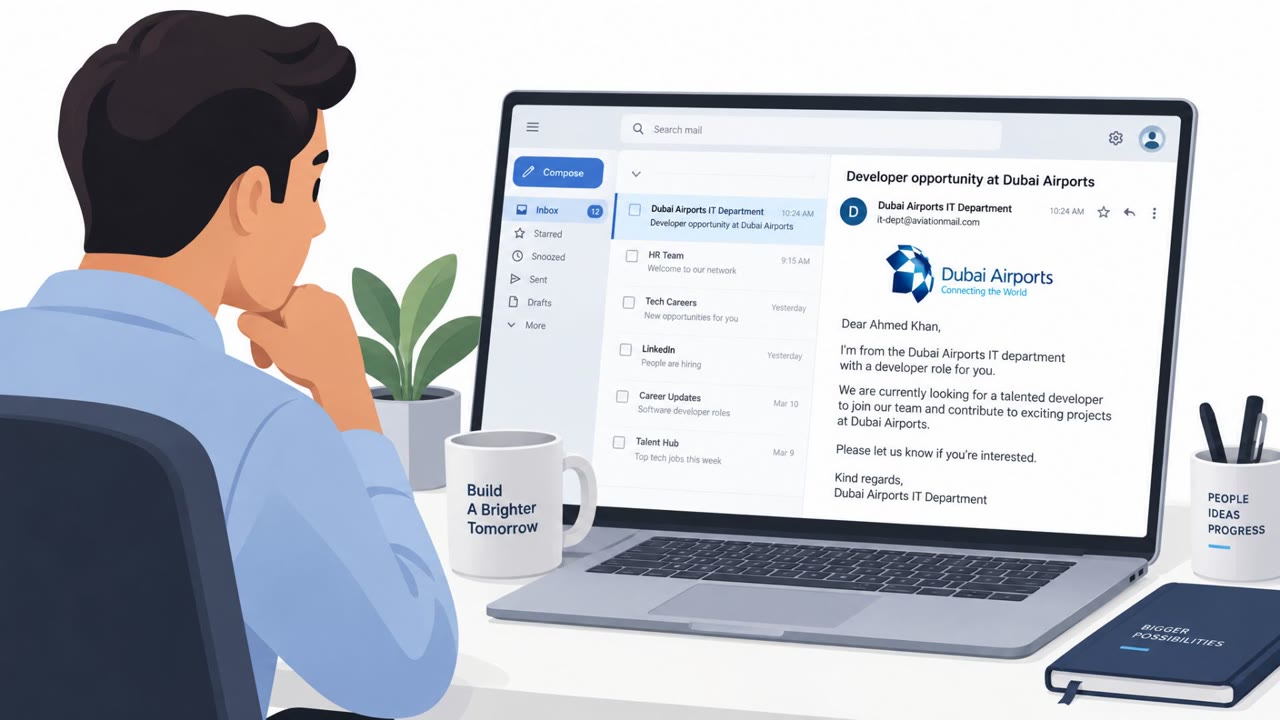
The campaign began as a recruitment lure. Attackers impersonating the Dubai Airports IT department approached a targeted software engineer in Iraq with a job offer for a development role. As a mandatory first step, the target was told to download and install a file named Dubai Airport Careers, which deployed an offline site posing as a careers portal. To access the supposed assessment, the target had to log in using credentials supplied by the fake recruiters, which made the experience feel like a genuine hiring process.
The second stage escalated the attack. The threat actor sent a weaponized Microsoft Visual Studio project archive disguised as a coding assessment, framed as a Flight Management System bug-fix task from a supposed senior manager. The infection began the moment the target opened the project in their development environment, even before any attempt to compile the code, abusing background checks performed by the development tool itself.
Why it succeeded
This attack worked because it exploited normal developer and hiring workflows rather than obvious technical flaws:
- The pretext (a real-sounding job offer) made the target willing to install software and enter credentials without suspicion.
- The use of a coding assessment as a delivery mechanism fit naturally into expected recruitment steps for engineering roles.
- Execution occurred silently through legitimate developer tooling, with no need to trick the victim into running an obviously suspicious file.
- Command-and-control traffic was disguised inside GitHub APIs, issues, and comments, making it blend in with ordinary cloud and developer activity.
What to watch for
- Unsolicited recruitment outreach that requires installing software or a portal before any formal interview process.
- Requests to log into a job portal using credentials provided by the recruiter rather than ones you create yourself.
- Coding assessments delivered as downloadable project archives instead of through established, trusted testing platforms.
- Unusual GitHub API, issue, or comment activity that does not match normal developer collaboration patterns.
How to build resistance
Organizations and individuals in engineering and hiring roles can reduce exposure by treating recruitment channels as a legitimate attack surface. Verify recruiters and companies through trusted, independent contact paths before downloading anything. Avoid installing standalone career portal applications or opening project archives sent directly by recruiters, and instead use isolated test environments with security review for any coding challenges. Because developer tools can trigger execution just by opening a project, project files should be treated as potentially executable content rather than static documents. Security teams should also monitor for abnormal patterns in platforms like GitHub, since attackers may hide command traffic inside what looks like ordinary cloud and developer activity.
Key findings
- Attackers impersonated the “Dubai Airports IT department” as part of a fake recruitment process aimed at a specific target in Iraq.
- The lure used a fake offline “careers portal” plus a weaponized Microsoft Visual Studio project archive disguised as a coding assessment.
- Malware execution started when the victim opened the developer project, before compiling, by abusing background checks performed by the development tool.
- GitHub APIs/issues/comments were misused to make command-and-control traffic look like legitimate cloud activity and provide fallback communications.
- The campaign infrastructure was also linked to a May–June 2026 credential-harvesting/phishing operation targeting an Israeli entity using “conflict-themed lures.”
Who’s being targeted
- Commonly targeted roles: Software Engineering / Developers, IT, Security Operations (SOC), HR / Talent Acquisition, Hiring Managers.
- Affected industries: Aviation, Telecommunications, Critical infrastructure, Government/Strategic entities.
- Attack channels: email, website.
- Impersonated: Dubai Airports IT department (recruiters / hiring team), Senior manager, Dubai Airports IT department.
Red flags to watch for
- Asks you to install a file to view a job portal/assessment
- Uses recruiter-supplied login credentials rather than your own account creation
- Brand-name impersonation (Dubai Airports IT) to build trust
- Unexpected Visual Studio project archive sent as an “assessment”
- Pressure to open/run project files from an unverified sender
- Recruitment process involves executing local developer artifacts instead of using a trusted platform
Frequently asked questions
How did the fake Dubai Airports recruiter attack work?
Attackers impersonated the Dubai Airports IT department with a fake job offer, asking the target to install a file called Dubai Airport Careers that loaded an offline fake careers portal requiring recruiter-supplied login credentials.
What made the malware run before the victim did anything obvious?
The infection began the moment the target opened a weaponized Visual Studio project archive disguised as a coding assessment, before any attempt to compile the code.
How did the attackers hide their command-and-control traffic?
They misused GitHub APIs, issues, and encrypted comments to rotate command-and-control servers, making the traffic look like legitimate enterprise platform activity.
Who should be most concerned about this type of attack?
Software developers and engineers are the primary targets, but IT, security operations, and HR/hiring teams should also be aware since the lure abuses the recruitment process itself.
Read the video transcript
You get an email: “Dubai Airports IT” wants to hire you as a developer. Sounds amazing, right? They say, “As a mandatory first step, download and install ‘Dubai Airport Careers’ to access our portal,” then send a Visual Studio “Flight Management System” project as your coding test. Here’s the twist: the malware runs the moment you open that Visual Studio project, no compile, no run, while its traffic hides inside normal-looking GitHub API calls. If any recruiter asks you to install a careers app or open a project archive, stop and verify the job through official company contacts before you touch the files.