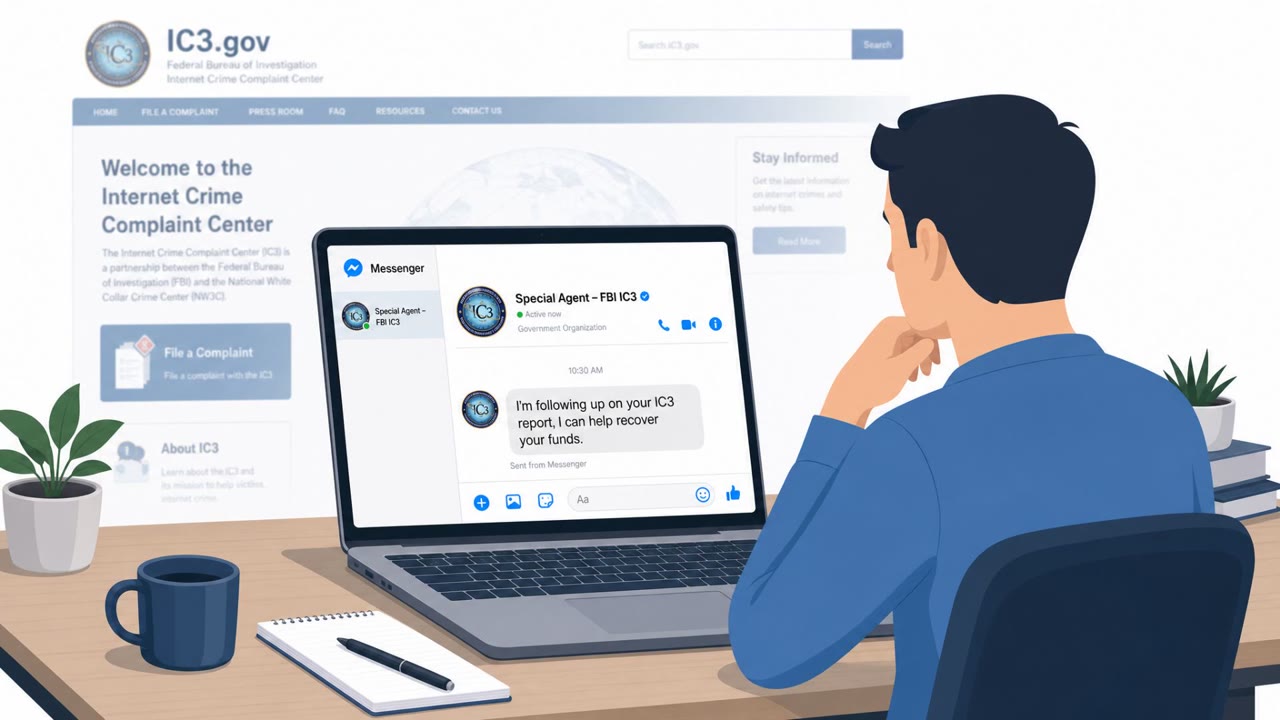
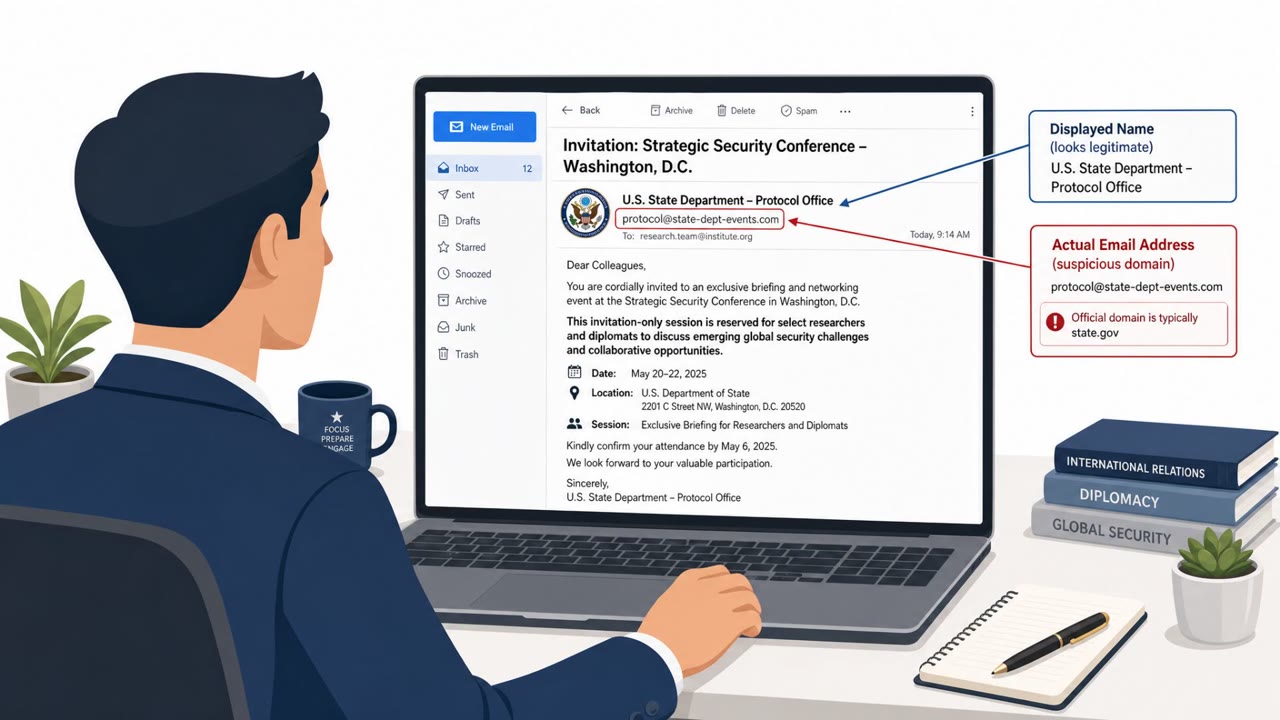
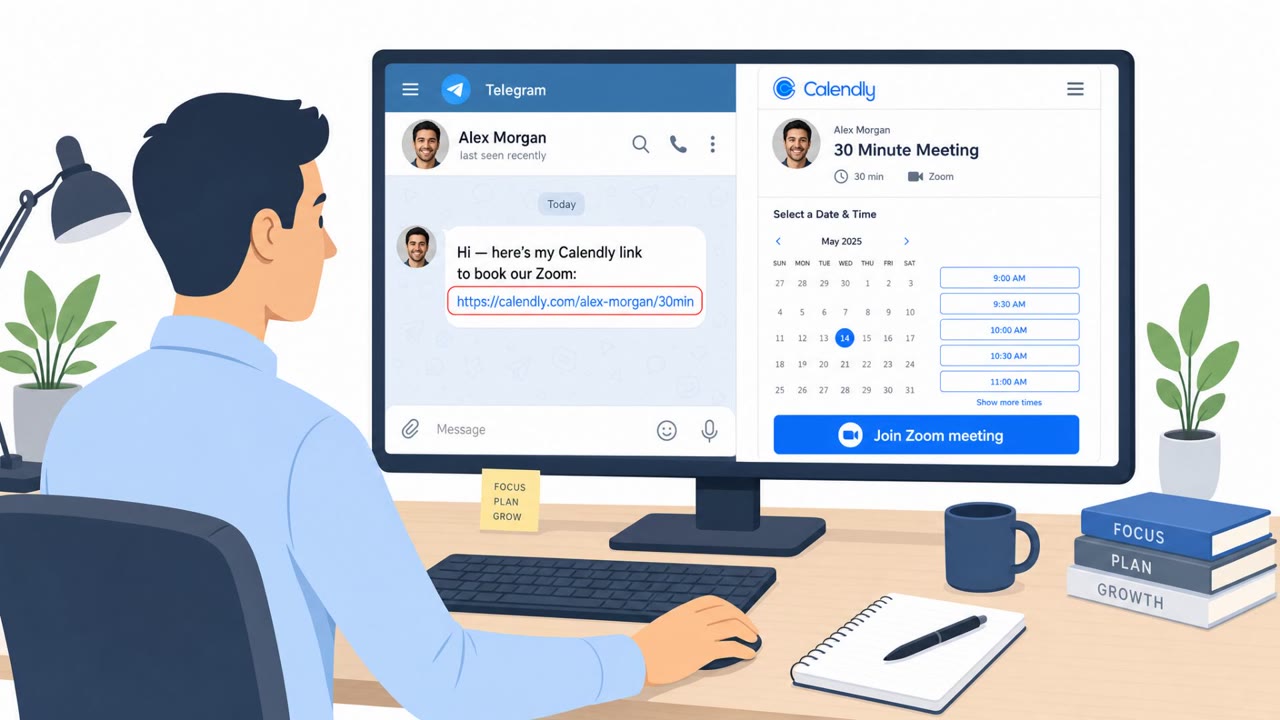
The FBI warns scammers are impersonating FBI/IC3 staff and re-targeting people who already lost money to fraud. The scammers use emails, phone calls, social media messages, and even AI-generated videos to push victims to spoofed IC3 websites or to hand over more personal and financial information, or send more money.
How the scam unfolds
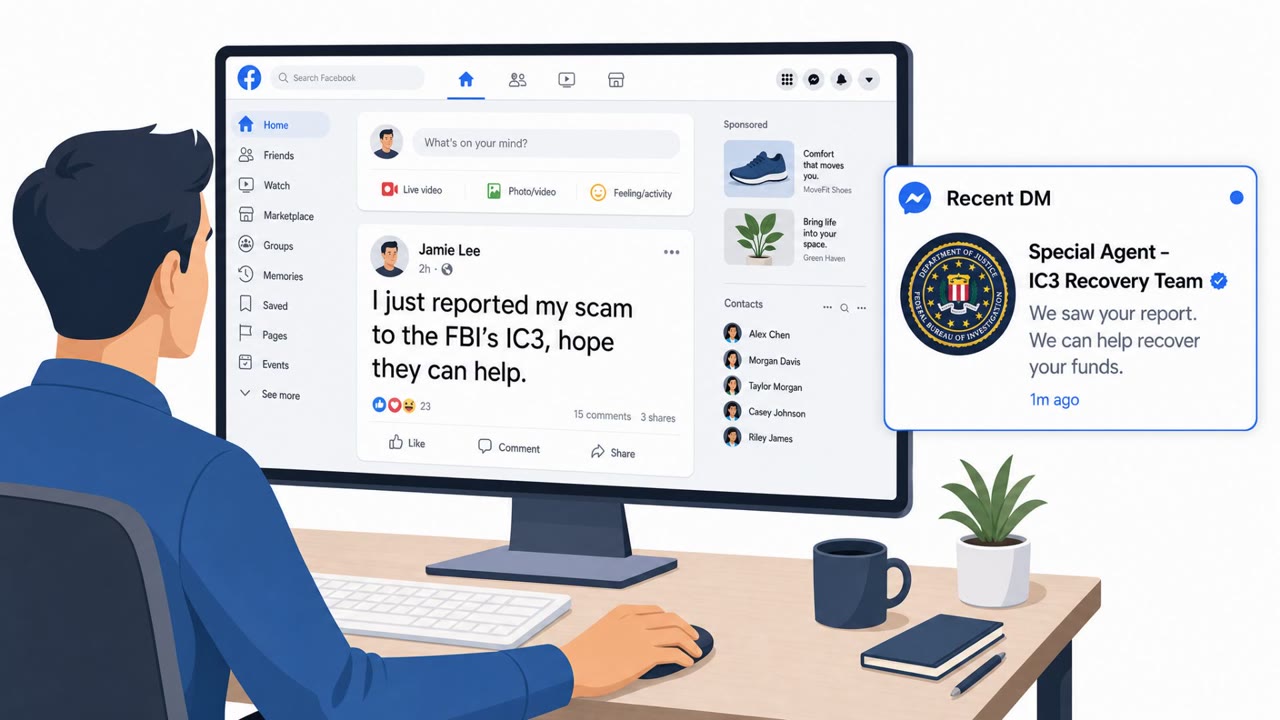
This scheme, sometimes called a recovery or double-dip scam, specifically targets people who have already reported being defrauded to IC3. Scammers pose as FBI agents or IC3 representatives and reach out across email, phone calls, social media ads, and online forums. Once a victim engages, the conversation typically shifts to messaging apps such as Facebook Messenger or Telegram, where the scammer builds trust before making an ask.
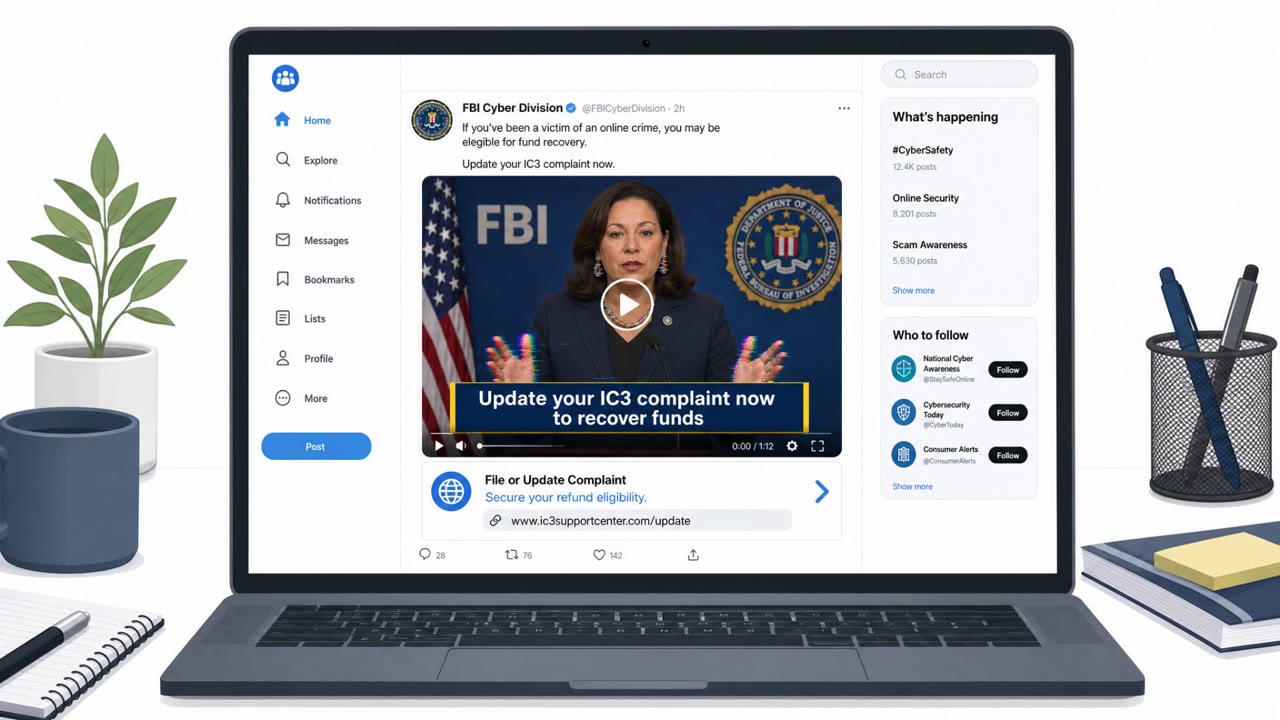
One version of the pretext involves an impersonator offering to help update an existing IC3 complaint and sending a link for the victim to submit additional details, a link that may lead to malicious code or a data-collection form. A second version uses AI-generated video of a supposed senior FBI official directing victims to a fraudulent IC3 website that mimics the real one, complete with a complaint form asking for name, phone number, email, scam category, and estimated financial loss. After submission, the fake site provides a reference number and promises follow-up contact, reinforcing the illusion of legitimacy.
Why it succeeds
The scam works because it exploits people at a moment of vulnerability, those who already lost money and are eager for resolution or restitution. Cloned voices and spoofed caller ID make phone conversations sound more convincing, and AI-generated video adds a visual layer of authority that is harder to dismiss than a plain email. The multi-channel approach, starting on one platform and migrating to encrypted messaging apps, also mirrors normal customer support behavior, which can lower a victim's guard.
What to watch for
- Being contacted about an IC3 complaint through social media, messaging apps, or forums rather than a channel the victim initiated
- Unsolicited links to "update" a complaint or provide additional financial information
- A complaint website whose address does not clearly end in .gov
- Any video or call urging quick action to recover funds
- Requests for payment via cryptocurrency, gift cards, or wire transfers to recover stolen money
Building resistance
Organizations and individuals can reduce exposure by reinforcing a few consistent habits. IC3 has no social media presence and does not directly contact complainants by phone, email, social media, or online chat. Anyone filing or updating a complaint should type ic3.gov directly into their browser rather than clicking links or following sponsored search results. Most importantly, any request for payment to "recover" stolen funds should be treated as fraudulent regardless of how official the caller or video appears. Sharing these specifics with finance teams, fraud support staff, and previously victimized employees can help blunt the second wave of this attack.
Key findings
- Scammers impersonate FBI personnel and claim they can help with IC3 complaints or recover stolen funds, but the goal is to steal more information or money.
- Victims are contacted across multiple channels (email, phone calls, social media ads, online forums), then moved to messaging apps like Facebook Messenger or Telegram.
- One described tactic: an impersonator ‘FBI agent’ sends a link to ‘update the complaint’; the link may lead to malicious code or a data-collection form.
- Another tactic uses AI-generated videos of a supposed senior FBI official directing victims to a fraudulent IC3 website that mimics the real site.
- The spoofed complaint form asks for personal details and loss information, then provides a reference number and promises follow-up contact.
- FBI/IC3 emphasize IC3 has no social media presence and will not contact complainants directly via phone/email/social media/chat to recover funds, nor request payment (crypto/gift cards/transfers).
Who’s being targeted
- Commonly targeted roles: All employees, Finance, Executives, Customer support / fraud teams.
- Affected industries: Individuals/Consumers, Government (impersonated law enforcement), Financial services (payment/transfer fraud).
- Attack channels: telegram, website, vishing.
- Impersonated: FBI agent / IC3 representative, Senior FBI official / IC3 website, Law enforcement officer (FBI/IC3 representative).
Red flags to watch for
- Being contacted via messaging apps for an IC3 complaint update
- Unsolicited link to ‘update’ a complaint
- Request for additional financial details beyond what you already filed
- Complaint site not clearly ending in .gov
- Video ‘endorsement’ pushing users to a specific site
- Site provides a reference number but links don’t work normally (loop back to home)
- Any demand for payment to recover funds
- Payment requested via cryptocurrency or gift cards
- Caller ID/voice seems ‘official’ but contact method is inconsistent with IC3 process
Frequently asked questions
What is the fake FBI IC3 recovery scam?
Scammers impersonate FBI or IC3 personnel and contact people who already lost money to fraud, offering to help update a complaint or recover funds, but the real goal is to steal more information or money.
How do scammers contact victims in this scheme?
Victims are reached through email, phone calls, social media ads, or online forums, then moved to messaging apps like Facebook Messenger or Telegram to build trust before pushing a malicious link or payment request.
Does the FBI or IC3 ever ask for payment to recover stolen funds?
No. The agency will never request payment to recover stolen funds, and requests for cryptocurrency, gift cards, or transfers should be treated as fraudulent.
How can someone verify they are on the real IC3 website?
People filing a complaint should type ic3.gov directly into their browser and confirm that the address ends in .gov, avoiding sponsored search results and links from unknown contacts.
Read the video transcript
You report a scam to IC3, feel relief… then an “FBI agent” DMs you saying they can get your money back. This is the scam: they move you to Facebook Messenger or Telegram, posing as FBI or IC3, and send a link to “update your complaint” or watch an AI video of a senior FBI official. Their fake IC3 site mimics the real form, asks for your name, contact, and loss amount, spits out a reference number, and promises a call, just to hit you again for more info or money. Aha: IC3 will NOT DM, text, or call you to recover funds or ask for payment. If anyone claims they’re IC3, stop, close it, and type ic3.gov yourself to check.