Scammers quickly set up fake piracy pages for Christopher Nolan’s “The Odyssey” to trick people into either clicking a fake browser “Fix It Now” warning or downloading a “movie” that is actually a Windows program. The goal is to route victims through malicious advertising redirects or get them to run malware disguised as a video file. The scams rely on user action (clicking or running a file), not on software vulnerabilities.
How the scam operates
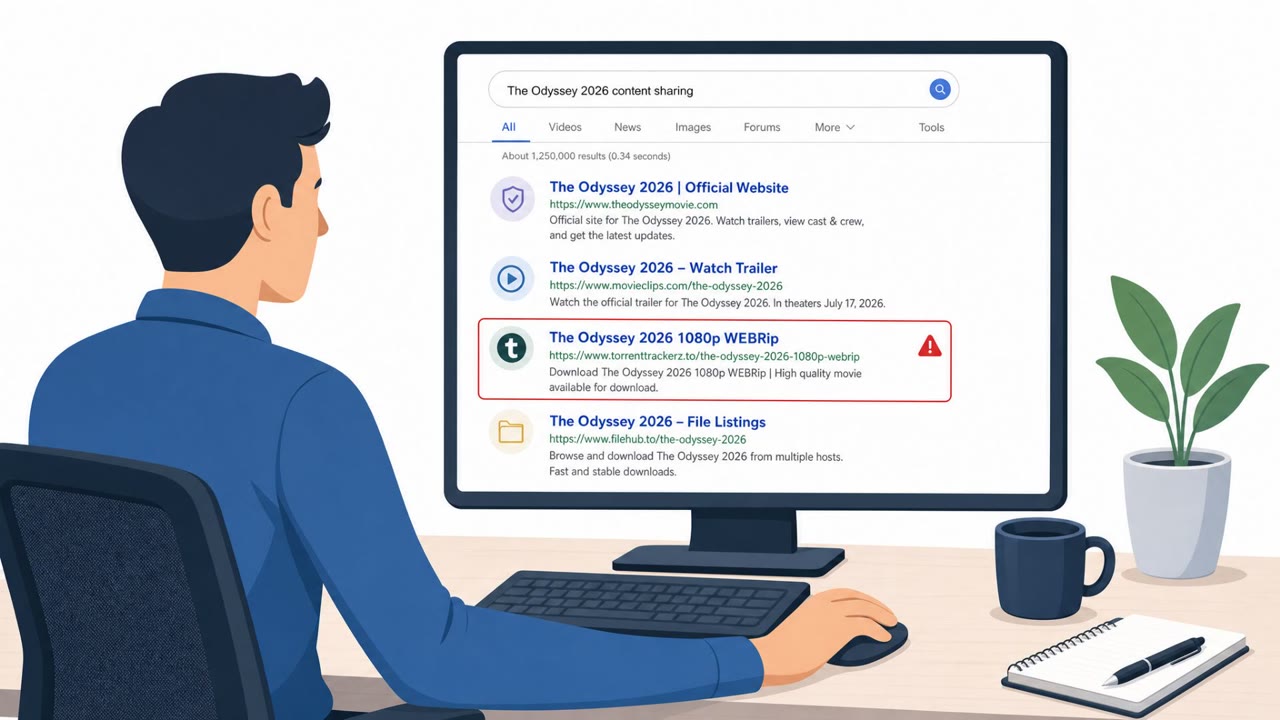
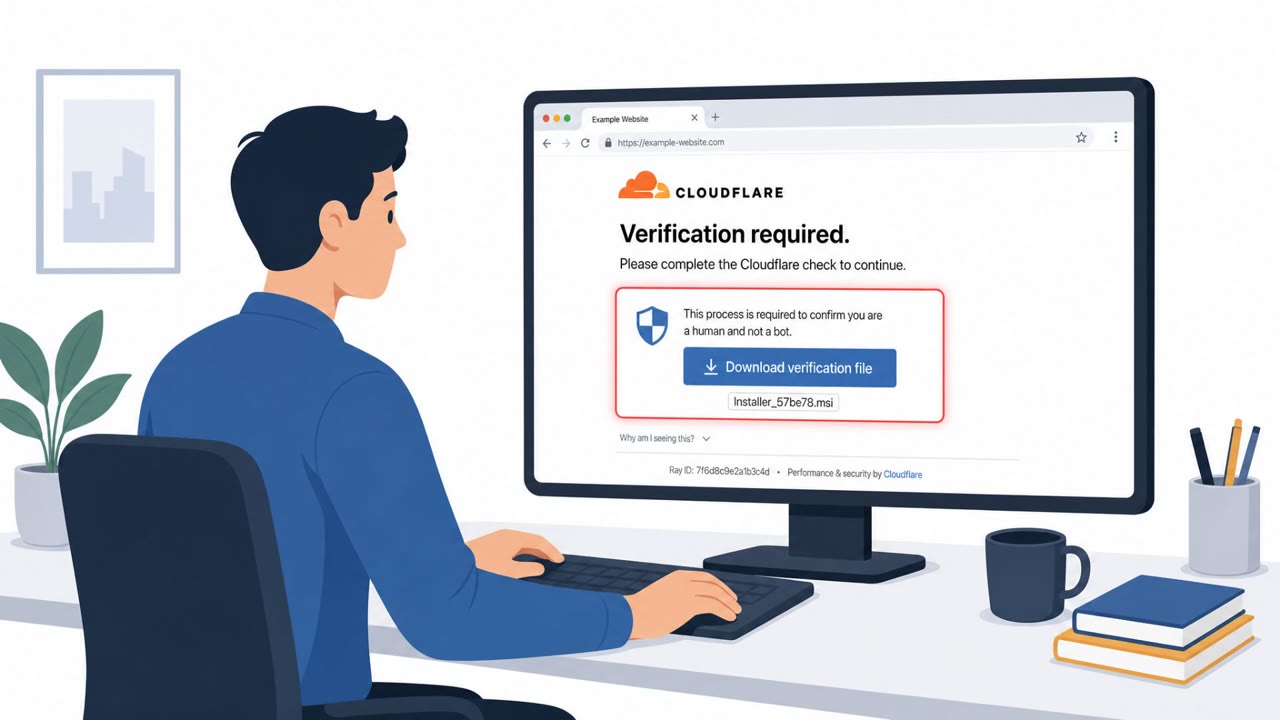
Within hours of a major movie release, scammers stood up cloned piracy sites offering The Odyssey for download. Two separate lures appeared on these sites. The first was a fake browser pop-up claiming a Browser Issue Detected, warning that a missing component was blocking full access and prompting a prominent Fix It Now button. The second offered a file labeled as a WEBRip release that, once downloaded, turned out to be a Windows .exe rather than a video file, complete with the familiar VLC orange traffic cone icon to make it look harmless.
Why the pretext works
The fake warning was not a real browser or system alert, it was rendered inside the webpage itself, designed to mimic a legitimate notification. The Fix It Now button was prominent while the safer Close and Continue Browsing option was small and easy to miss. On the download side, the scam borrows trust from a widely recognized media player icon, since VLC is one of the most common players people associate with harmless video files. The campaign also appeared across multiple cloned sites with identical pop-up designs, suggesting a coordinated effort timed to searches for a high-profile release rather than a one-off page.
What to watch for
- Pop-ups that claim your browser is missing a component and demand you click a repair button
- High-pressure call-to-action buttons paired with a much smaller, less visible safe option
- Downloads advertised as movies that end in .exe instead of .mkv, .mp4, or .avi
- Familiar-looking icons, such as VLC's, attached to files that are actually programs
- Assuming a high seeder count on a torrent proves the file is safe
Building resistance
The attack relies entirely on user action, clicking a fake fix button or double-clicking an unknown executable, rather than exploiting a software flaw. Because of this, awareness is the main defense. Employees should be reminded that legitimate browser or system alerts do not appear as part of a webpage, and that no movie file should ever need to run as a program. If a fix-it prompt is clicked or an unknown file is executed, the affected device should be disconnected from the network, scanned for malware, and kept away from banking, email, or other sensitive accounts until confirmed clean. Passwords for important accounts should be changed from a separate, trusted device as a precaution. Since the payload behind these lures can vary by campaign, including trojans, infostealers, loaders, or ransomware, treating any suspicious click or download as a potential compromise is the safest default response.
Key findings
- Fake browser pop-ups on cloned torrent sites claimed a “missing component” and pushed users to click “Fix It Now,” which routed them into malvertising redirects.
- A separate lure offered a file that looked like a movie download but was actually a Windows executable (an .exe) disguised with a VLC icon.
- The cloned websites and identical pop-up overlay across multiple sites suggested a coordinated campaign targeting searches for a major new movie release.
- The end payload could vary by campaign, including trojans, infostealers, loaders, or ransomware.
Who’s being targeted
- Commonly targeted roles: All employees, End users on managed laptops/desktops, IT helpdesk (for handling reports of fake browser warnings and suspicious downloads).
- Affected industries: General consumers / end users, Media and entertainment (piracy ecosystem), Any organization with employees using personal or work devices for downloads.
- Attack channels: website.
- Impersonated: Web browser/system warning (rendered inside a webpage), Torrent/uploader presenting a legitimate ‘WEBRip’ release.
Red flags to watch for
- The warning is actually part of the webpage (not a real browser/system alert)
- High-pressure “Fix It Now” button with a less prominent safe option
- Clicking leads to ad redirects and unrelated downloads/support prompts
- The download ends in “.exe” (a program), not “.mkv/.mp4/.avi”
- Misleading icon (VLC cone) suggests it is a video
- Odd metadata unrelated to media playback (e.g., strange file description)
Frequently asked questions
How does the Odyssey piracy scam trick users?
It uses cloned torrent sites with a fake browser pop-up claiming a missing component, plus a fake movie download that is actually a Windows .exe file disguised with a VLC icon.
What happens if you click Fix It Now on the fake warning?
Clicking the button routes visitors through one or more advertising redirects rather than fixing anything, since the warning is part of the webpage itself.
How can you tell a movie download is actually malware?
Legitimate movie files use video containers like .mkv, .mp4, or .avi, so any download ending in .exe is not a movie even if it displays a familiar icon like VLC's.
What should someone do if they ran the fake movie file?
Disconnect the computer from the network, run a full malware scan, avoid sensitive activity on that device, and change important passwords from a separate trusted device.
Read the video transcript
Hunting for a free download of Christopher Nolan’s “The Odyssey”? That’s exactly what this scam is waiting for. On cloned piracy sites, a fake browser pop-up screams “Browser Issue Detected,” claims a missing component, and shoves a huge “Fix It Now” button in your face. The other trick: a file advertised as “The Odyssey 2026 1080p WEBRip-LAMA” downloads as an .exe with a VLC cone icon. Aha moment: movies don’t come as .exe programs, ever. If any site says your browser needs a component or fix, don’t click it, close the tab. That one move kills this entire Odyssey scam.