AI Slop Weakens TA4903 Phishing Lures

Infosecurity Magazine · Medium sophistication
Last updated November 13, 2026

Proofpoint says the BEC and phishing group TA4903 has used AI-generated email lures and phishing websites while impersonating US government entities. Rather than making the campaign more convincing, AI use reportedly introduced mismatched email subjects and attachments, blank message bodies, and repetitive website designs that can make the attacks easier to spot.

Key findings

  • TA4903 historically impersonated US government entities in BEC and phishing campaigns aimed at organizations in multiple sectors.
  • Proofpoint observed AI-generated emails whose body text did not match the subject line or attachment, and in some cases had blank message bodies.
  • The group reportedly uses AI coding tools to create phishing websites that are simplistic and visually repetitive, making them easier to recognize.
  • The article argues that AI increases campaign speed and scale but does not automatically make attacks more sophisticated or effective.

Who’s being targeted

  • Commonly targeted roles: All employees, Finance and accounts-payable staff, Executive assistants, Employees who handle government correspondence, IT and security teams.
  • Affected industries: Organizations across a range of sectors.
  • Attack channels: email, website.
  • Impersonated: US government entity.

Awareness takeaways

  • Treat a mismatch between an email subject, its body, and its attachment as a warning sign; do not open files or follow links until the request is independently verified.
  • Be cautious of government-themed messages that push employees toward an unfamiliar web portal. Verify the request through known official contact details or a bookmarked government site.
  • Teach employees that polished grammar is not proof that a message is legitimate, and poor grammar is not the only phishing signal to look for.
  • Encourage employees to inspect unfamiliar login or document sites for generic layouts, repeated formatting, and other signs that the page may not be an official service.

Red flags to watch for

  • The email body does not match the subject line or attachment.
  • The message body may be blank or unusually generic.
  • The linked site has a simplistic, repetitive design and formatting.
Try Mirage

Mirage safely runs attacks like this one against your own team, so you find out what happens before a real adversary does.

Get a demo
Read the video transcript

A government notice lands in your inbox. Looks official? TA4903 sends government-themed emails pushing you to open an attachment or visit a portal. AI helps produce them fast, but sometimes the pieces don’t fit. That’s the tell: the subject says one thing, the attachment says another, or the body is blank. The linked site may repeat the same generic layout. Before opening anything, verify the notice using a government contact you already know.

Similar attacks

Chinese Spy Phish + Airmen BEC Sentenced

Chinese Spy Phish + Airmen BEC Sentenced

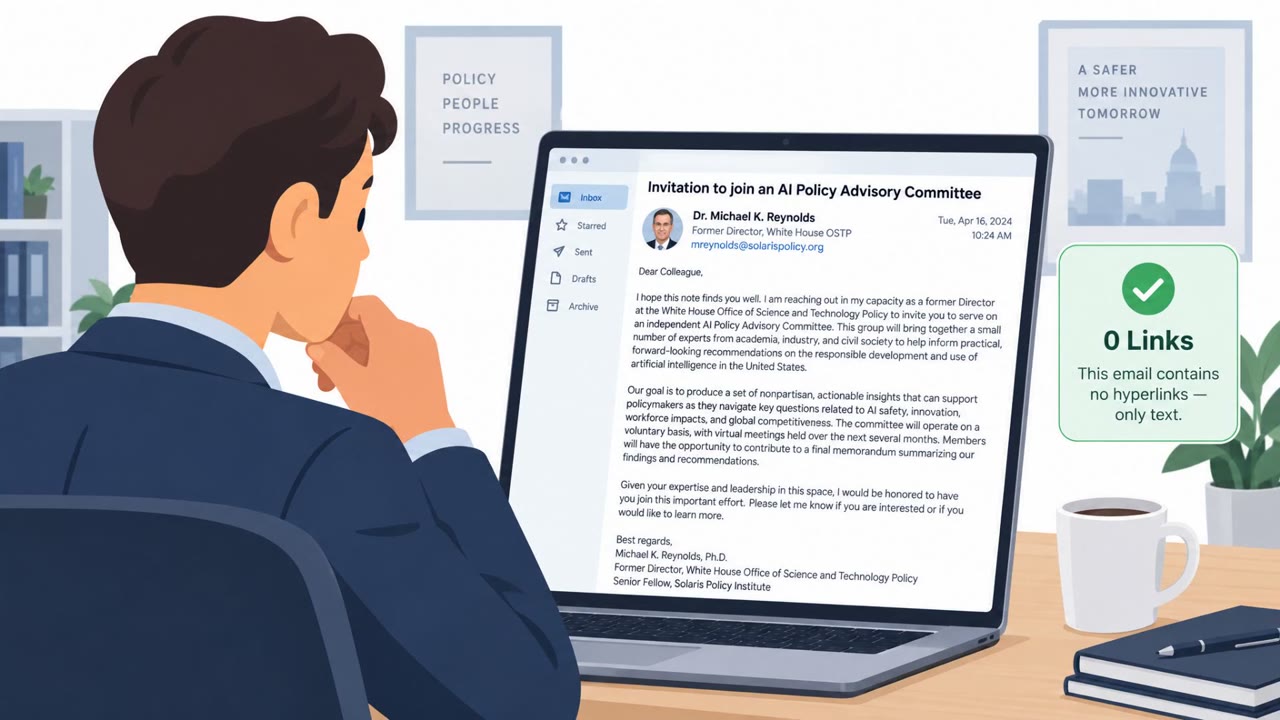
A China-aligned group (TA419) impersonated well-known U.S. figures to lure AI policy experts into a fake OneDrive/Microsoft 365 login that could steal session cookies even when MFA is enabled. Separately, two U.S. airmen were sentenced for a multi-year business email compromise scheme where they…

October 2, 2026
TA419 Poses as White House to Steal Cloud Logins

TA419 Poses as White House to Steal Cloud Logins

A China-aligned espionage group (TA419) targeted U.S. AI policy experts by impersonating well-known public figures and sending credible policy-related invitations. After victims replied, the attackers sent shortened links that led to a fake OneDrive login designed to capture passwords, MFA codes,…

October 2, 2026
Fake AI Advisory Invites Steal M365 Logins

Fake AI Advisory Invites Steal M365 Logins

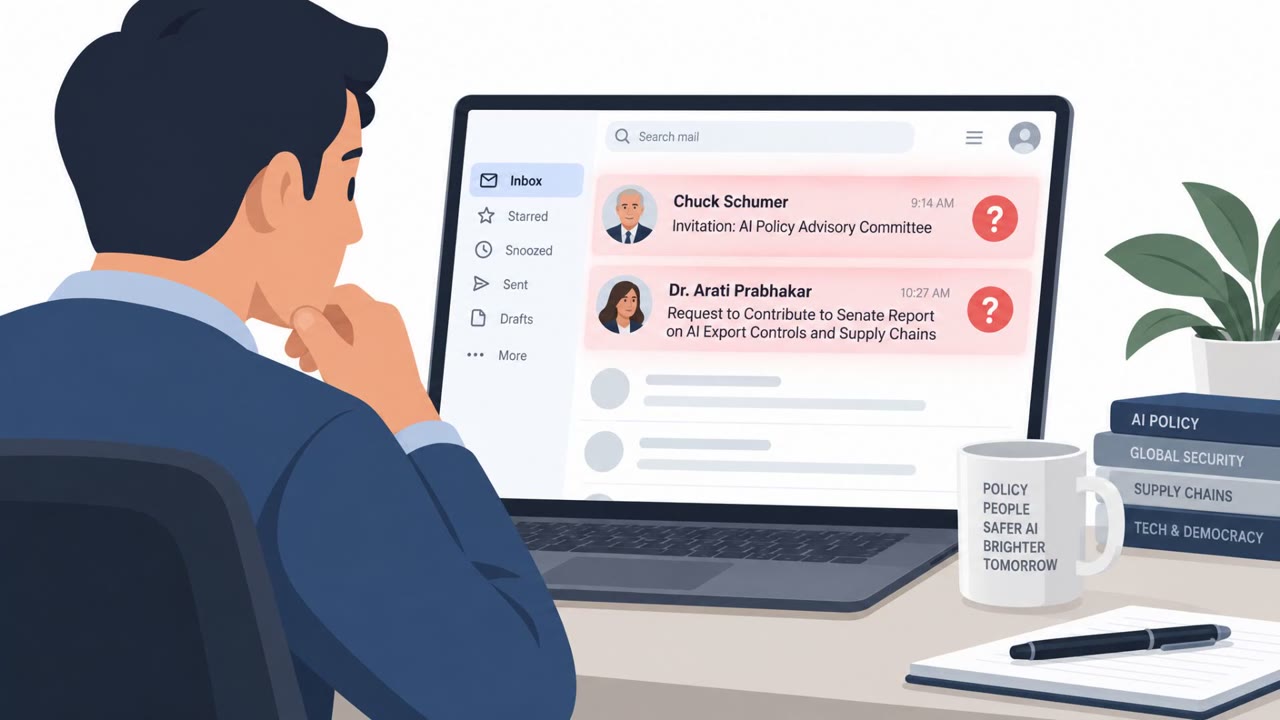
Researchers say a China-aligned group (TA419) impersonated well-known AI policy figures and an Anthropic executive to lure US AI policy experts into replying to emails about a fake advisory committee or Senate report. Once a target engaged, the attackers sent shortened links that led through a fake…

October 1, 2026
Fraudulent Gov Email and Passkey Lures Hit Orgs

Fraudulent Gov Email and Passkey Lures Hit Orgs

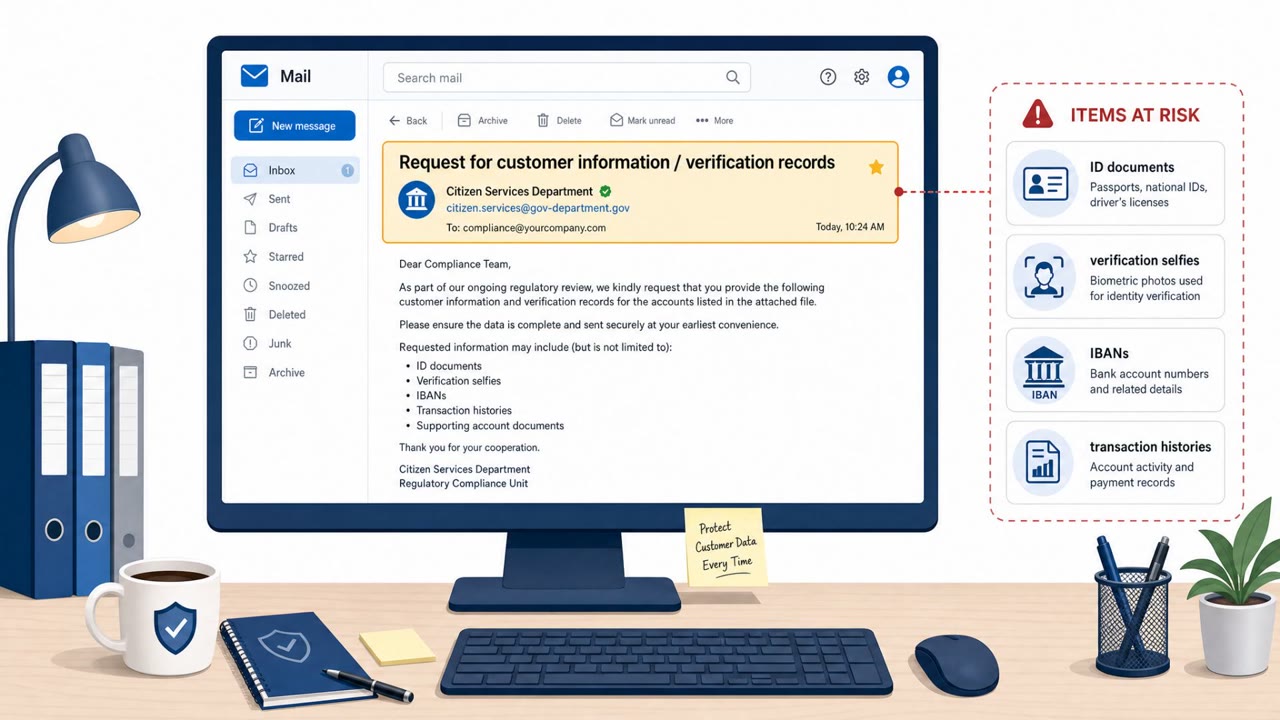
The bulletin describes real-world social engineering where staff were tricked into disclosing sensitive data or access. In one case, Revolut employees responded to fraudulent information requests sent from a real government-domain email account, exposing extensive customer records. Separately,…

September 14, 2026
Phishers Exploit Microsoft 365 Outage Alerts

Phishers Exploit Microsoft 365 Outage Alerts

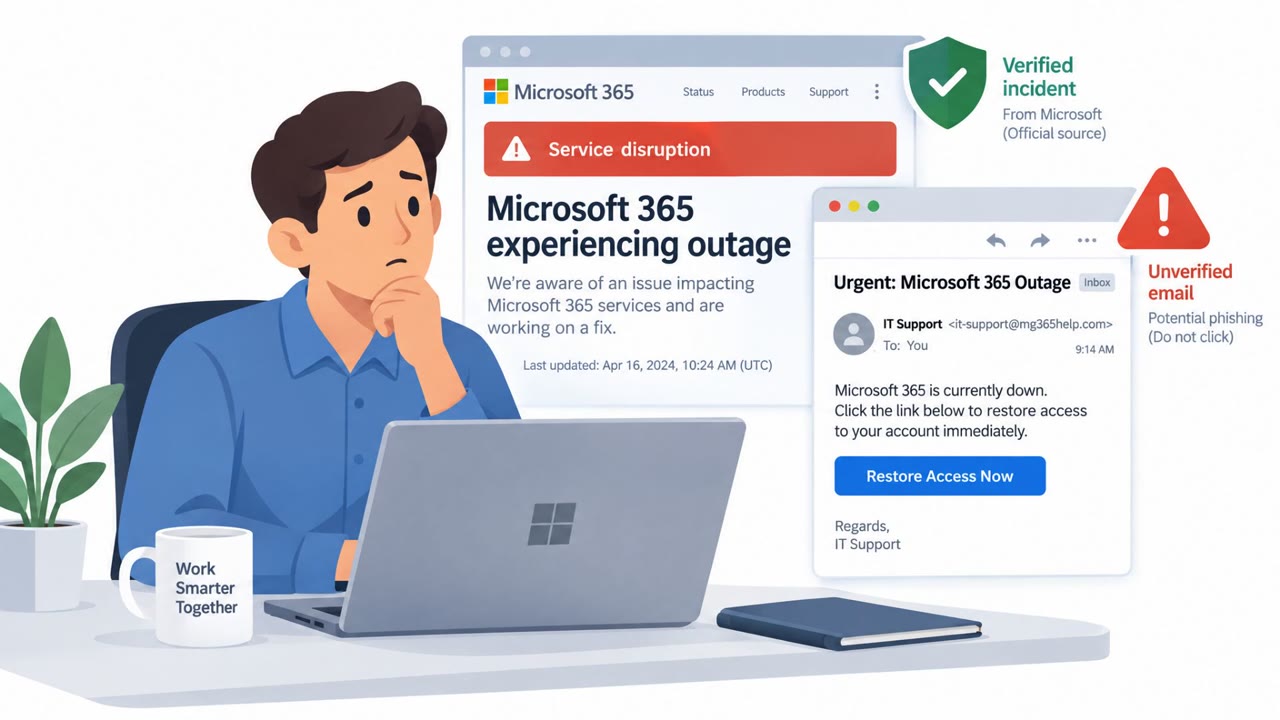
Attackers exploited a real Microsoft 365 outage by sending fake service-health emails that appeared to be Microsoft notifications. The messages warned recipients that emails delayed during the outage would be deleted within 24 hours unless they clicked a link, likely to steal credentials.

November 16, 2026
Fake Meetings and Listings Trap Victims

Fake Meetings and Listings Trap Victims

This weekly roundup describes several real-world social-engineering attacks with practical lures that can be used in awareness training. Attackers used a fake Teams scheduler to capture a sign-in approval, fake Zillow pages to persuade apartment hunters to run a copied command, and fake Zoom or…

November 15, 2026