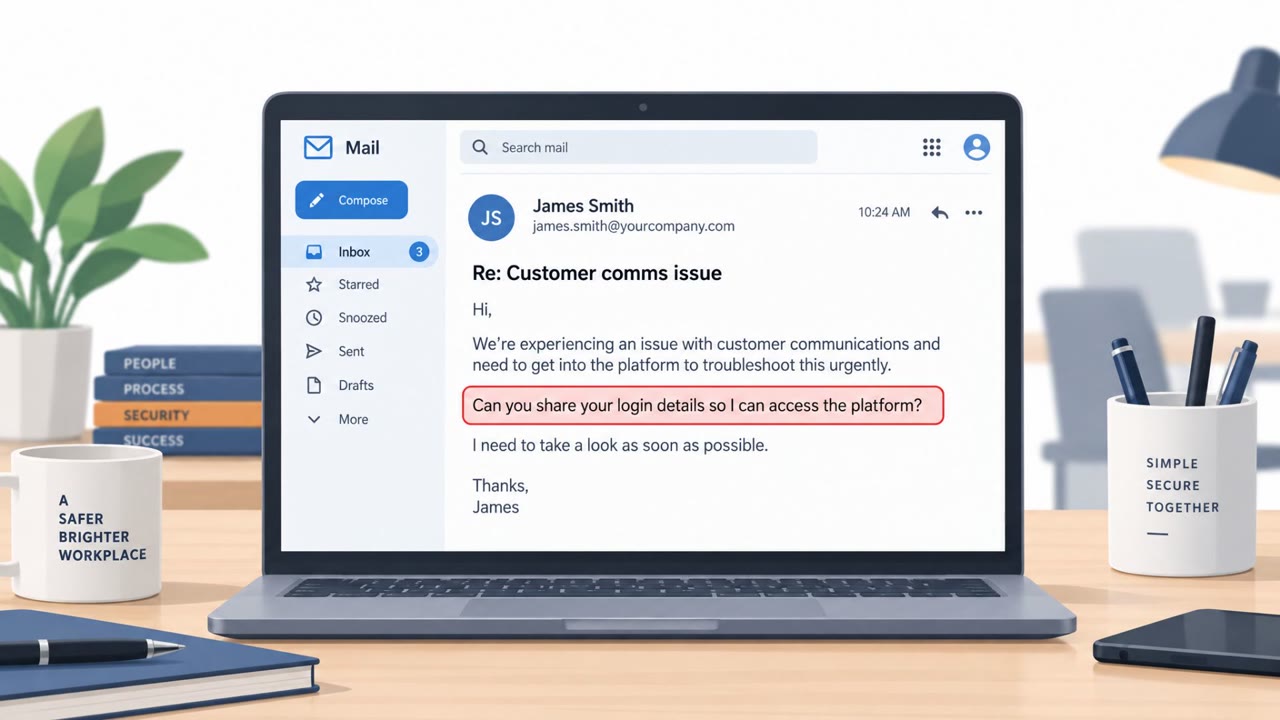
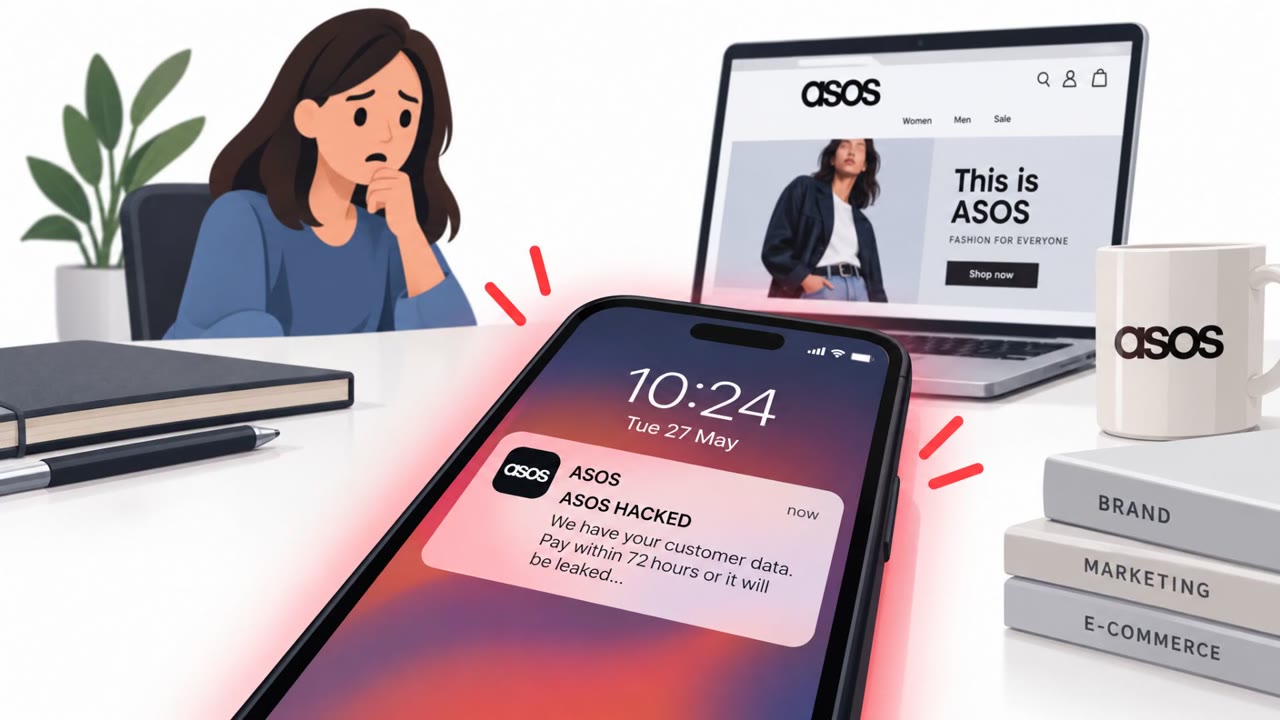
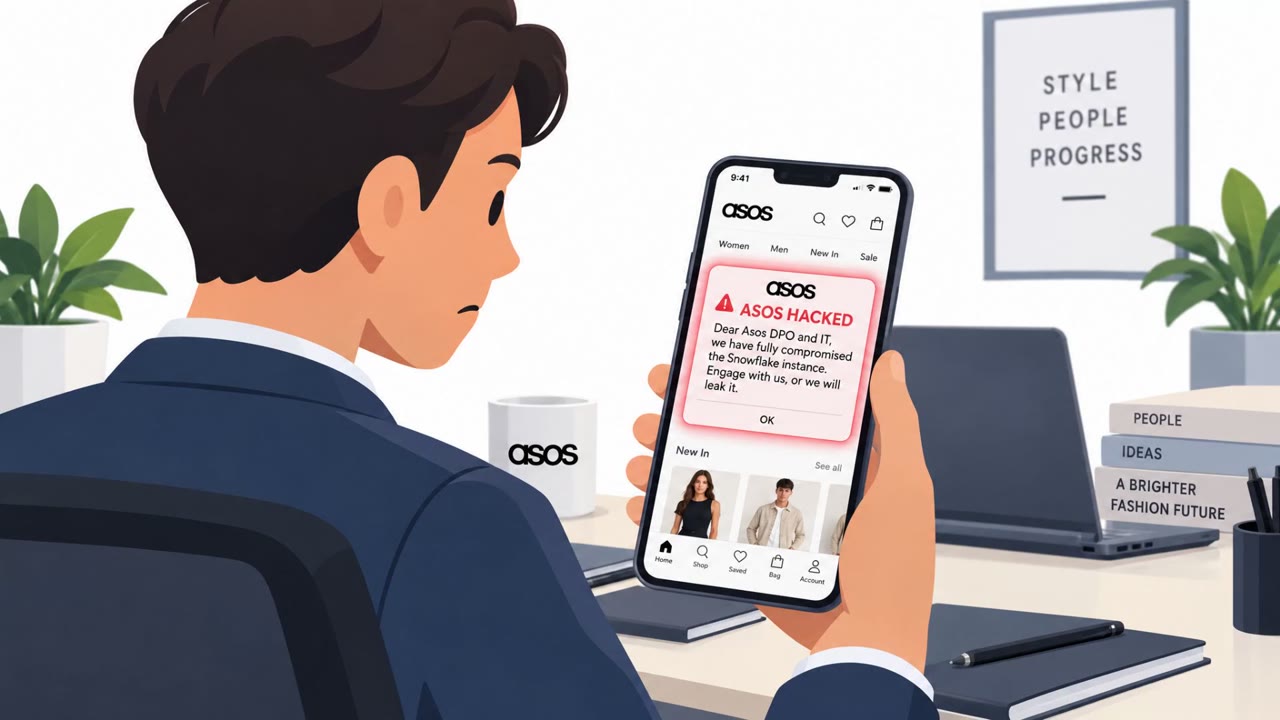
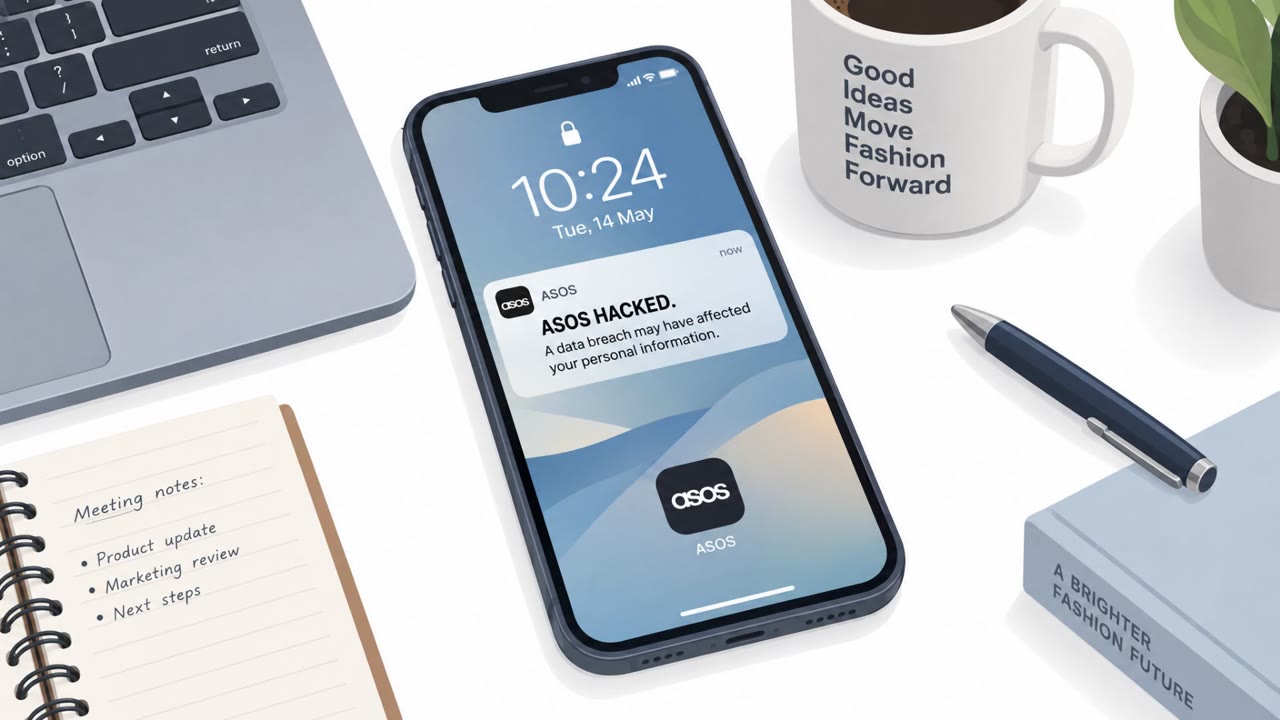
ASOS confirmed attackers got into customer-data systems after tricking an employee into handing over login credentials. Stolen data reportedly included not only names and contact details, but also customers’ shopping searches, which could enable highly convincing follow-on scams and phishing. Attackers also sent an in-app push notification to customers claiming ASOS had been hacked and reportedly demanded a ransom.
Key findings
- ASOS said attackers accessed customer information after “tricking an employee into handing over login credentials.”
- Attackers used stolen credentials to access data on third-party platforms used by ASOS.
- BBC reporting (based on a sample) says exposed data included names, addresses, phone numbers, emails, dates of birth, and website searches.
- Attackers sent a push notification through the ASOS app alleging the company had been hacked.
- Attackers reportedly demanded a ransom and gave ASOS two weeks to make contact.
Who’s being targeted
- Commonly targeted roles: All employees (credential handling), Customer Service, Marketing / CRM teams, IT / Identity & Access Management, Incident Communications / PR, Customers (external awareness messaging).
- Affected industries: Retail / e-commerce, Customer marketing / personalization platforms.
- Attack channels: email, website.
- Impersonated: Internal IT / platform support (unspecified), ASOS (via compromised/abused ASOS app notifications).
Awareness takeaways
- Train staff to never share passwords or “confirm” credentials in response to unsolicited requests, verify via known internal channels.
- Coach customers and frontline teams that a personalized message (name, order/search history) is not proof it’s legitimate, always verify via the official app/website.
- Warn against being redirected to unofficial channels (e.g., Telegram) during incidents; use official support paths only.
- Prepare crisis communications so customers hear quickly from the company, reducing the chance they trust attacker-sent notifications.
Red flags to watch for
- Unexpected request to provide or confirm credentials
- Urgency around restoring access
- Login request tied to a third-party platform rather than normal SSO process
- Breach notification coming from criminals first rather than ASOS support channels
- Requests to move to Telegram
- Unusual links or pressure to act immediately
Read the video transcript
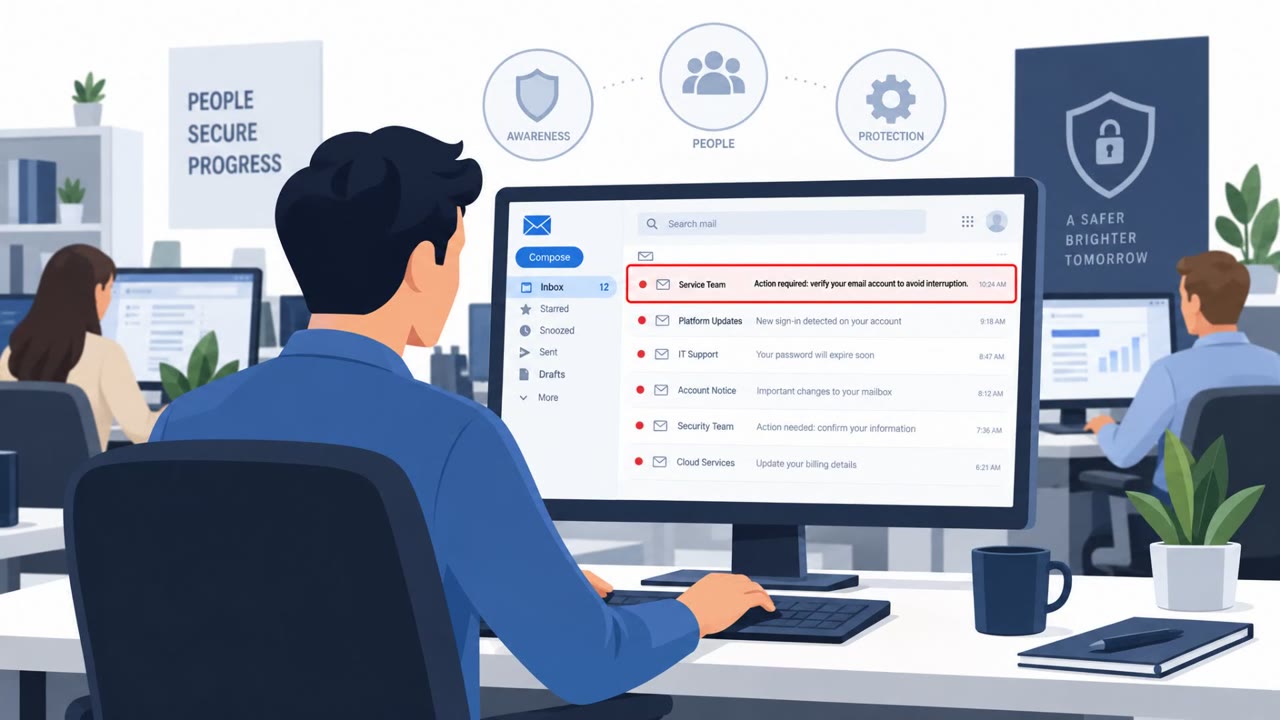
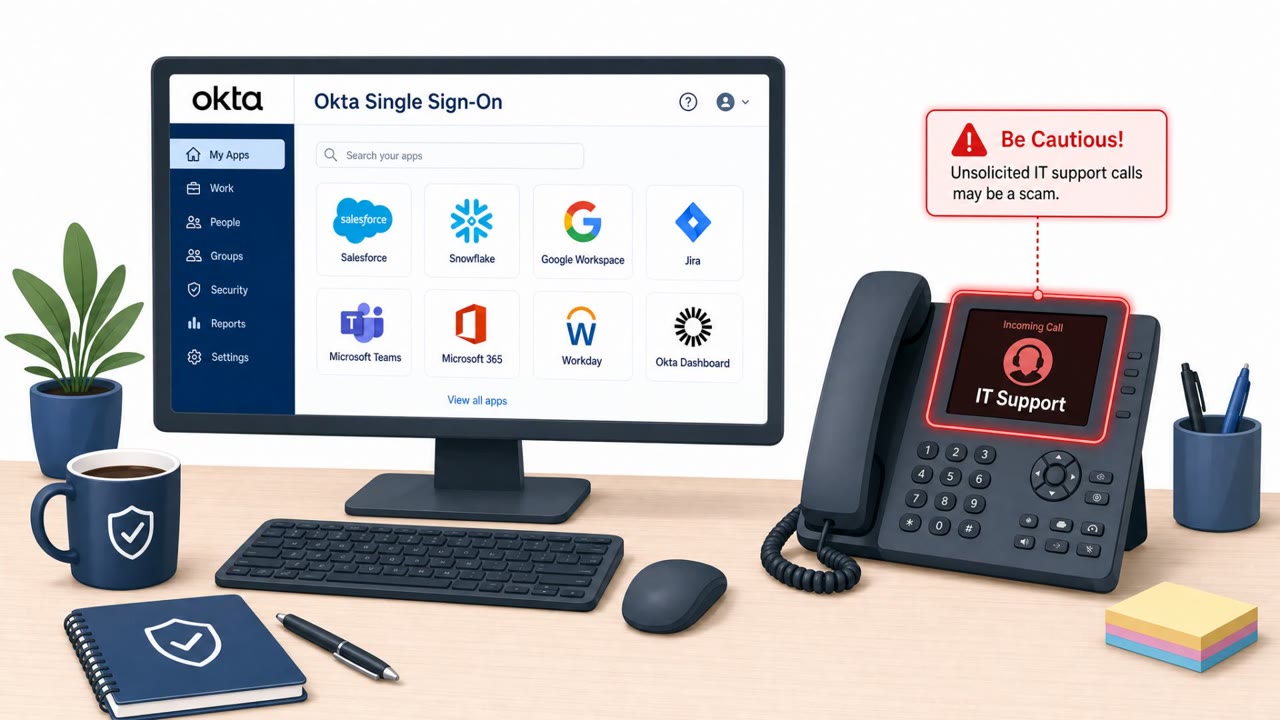
ASOS was breached because one employee typed their password into the wrong page. That’s it. They got an email: 'Action required: confirm your login to restore access.' Clicked, saw a login page, and entered their corporate username and password. Those stolen details unlocked ASOS’s third-party platforms and customer data. Attackers then used that one login to pull names, addresses, even search history like 'reclaimed vintage' or 'ASOS petite', perfect fuel for ultra-personalized phishing. They even pushed an in-app alert: 'ASOS has been hacked, see details and next steps' with a link to Telegram. If you ever get an email or alert asking you to 'confirm your login' or move to Telegram, stop. Don’t click, open our official app or site yourself, and verify there.