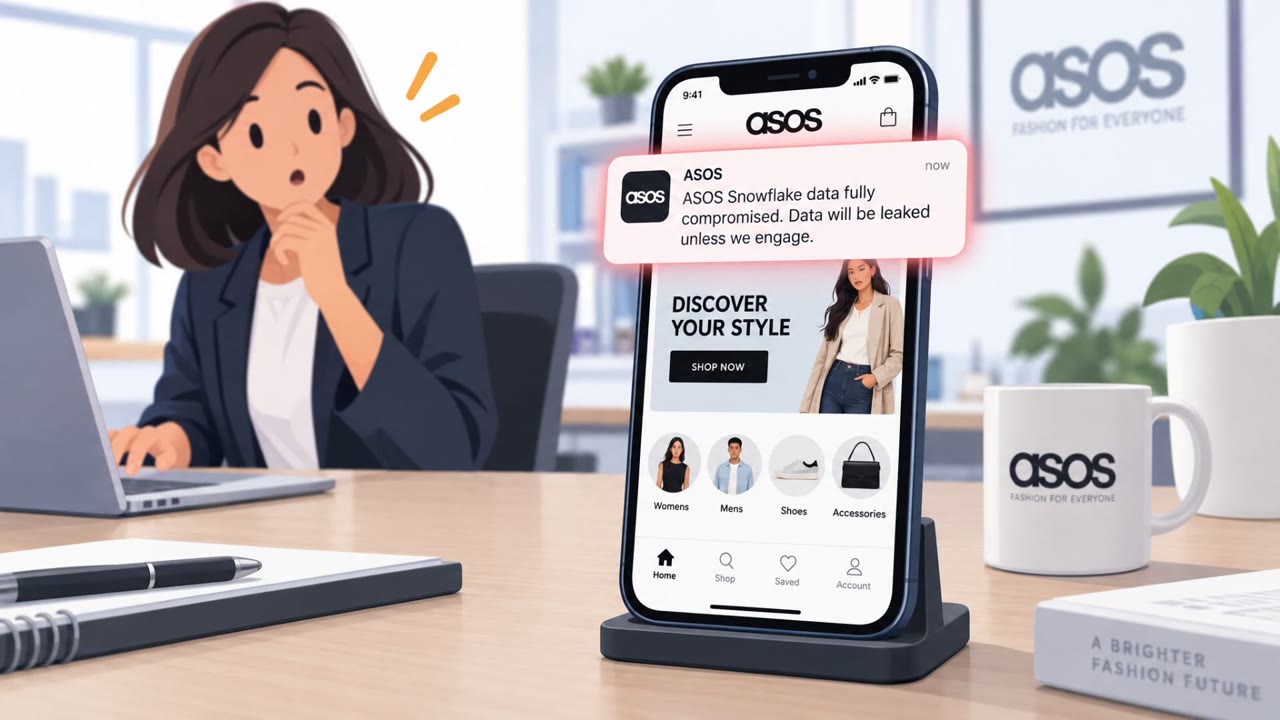
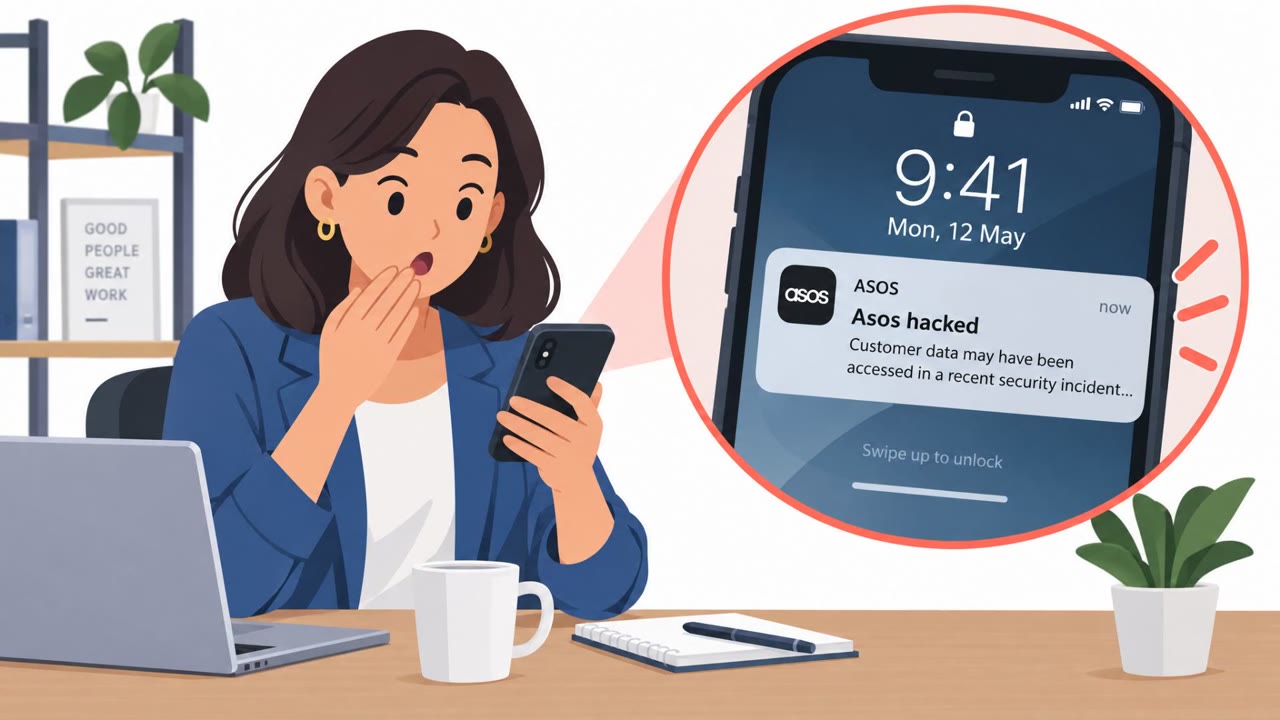
Attackers used social engineering to access an ASOS employee account connected to Snowflake, then used ASOS’s own app notification system to broadcast an extortion message directly to customers. The incident also involved suspected large-scale customer data theft, which increases the risk of highly convincing follow-on phishing using stolen personal details.
How the attack worked
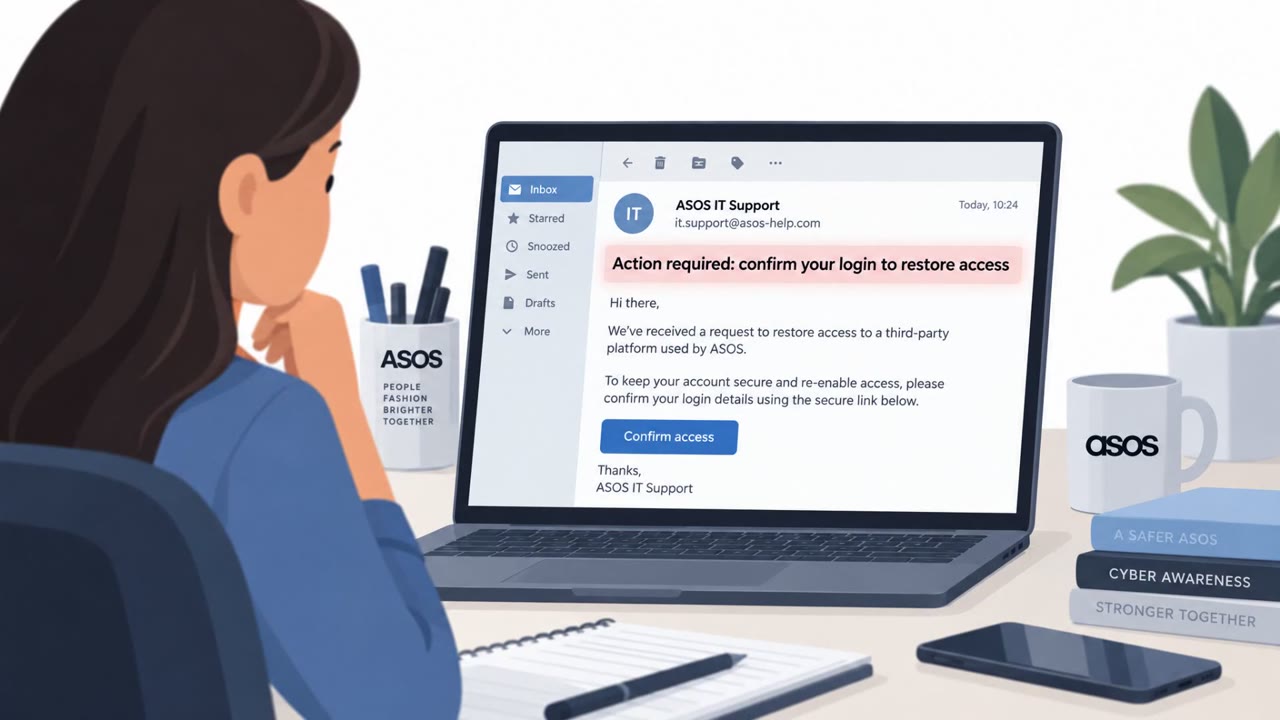
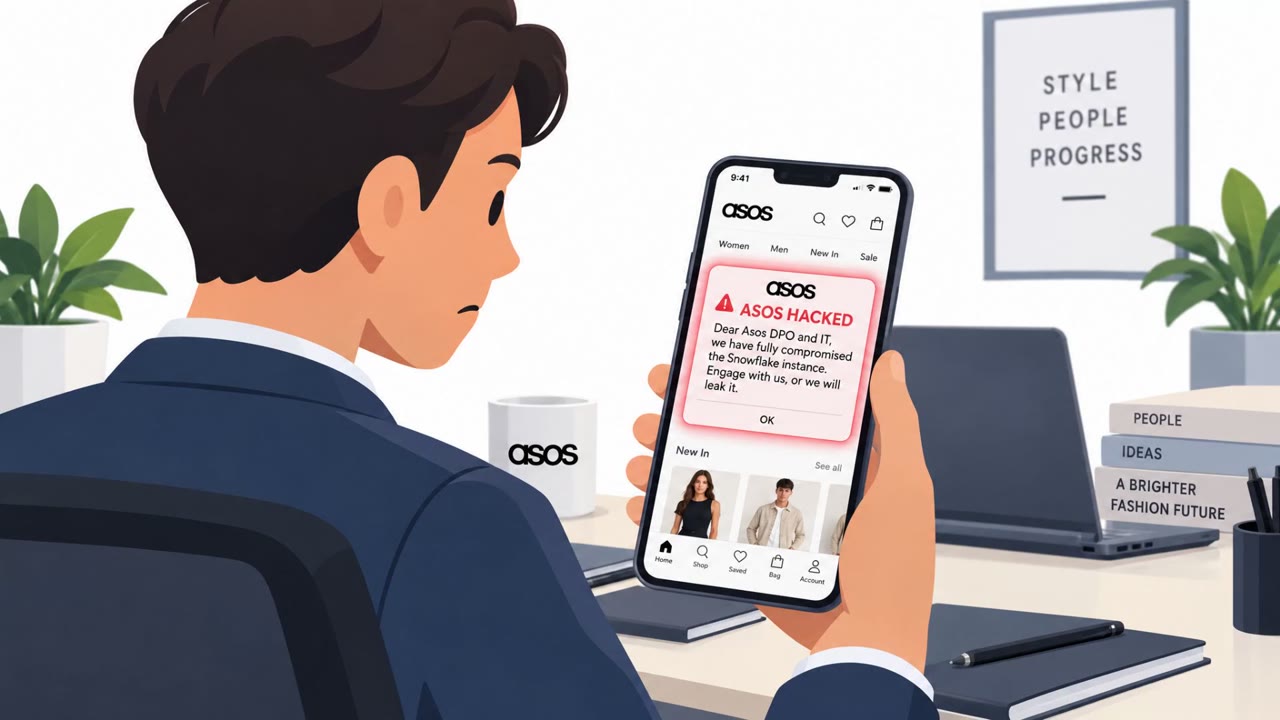
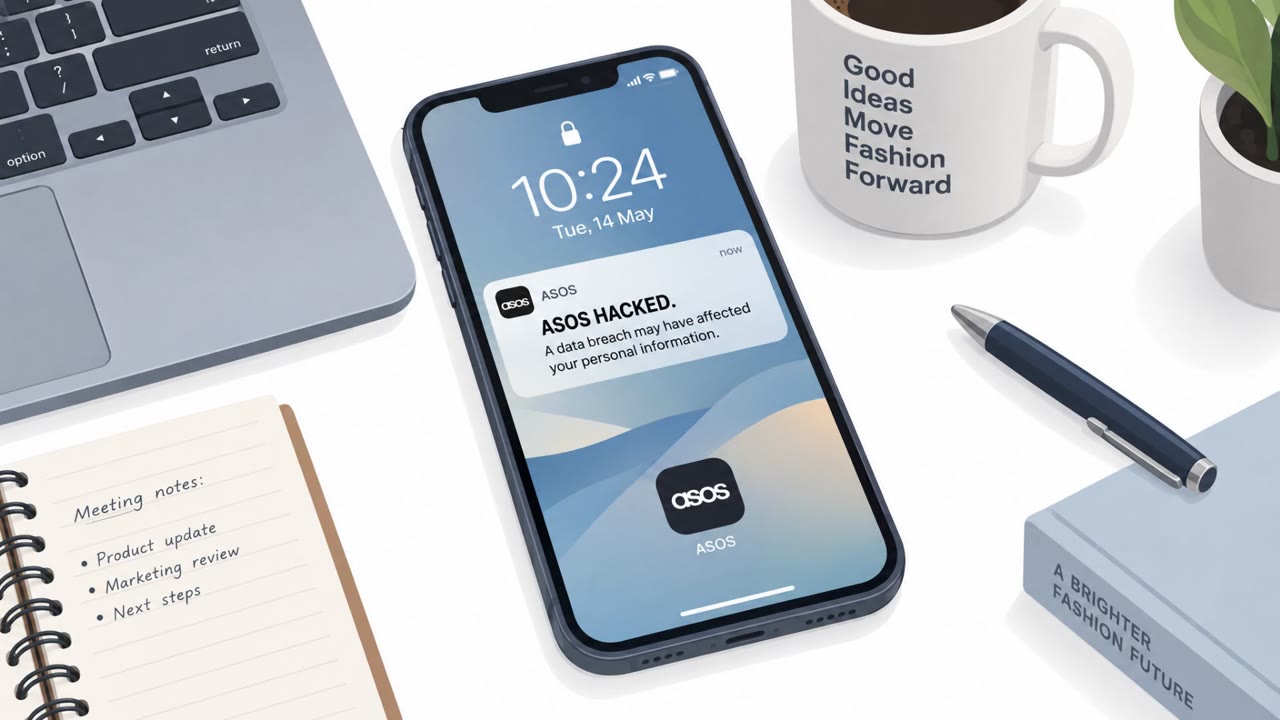
The incident began with a classic social engineering move: attackers impersonated a trusted contact to trick an ASOS employee into handing over login credentials. That access led to an account on Simon AI, a platform integrated natively into Snowflake, which ASOS used as cloud infrastructure. From there, attackers reportedly accessed customer data and, in an unusual twist, used ASOS's own app notification system to send an extortion demand directly to customers. The push notification was titled "ASOS HACKED" and read, in part, a message addressed to ASOS's DPO and IT team demanding engagement or threatening a data leak.
Why it succeeded
The core failure point was trust. An employee responded to what appeared to be a legitimate request from a known contact, without the kind of verification that would normally catch credential theft attempts. Once inside, the attackers had access to a sensitive data platform, and crucially, they also had access to customer-facing communication tools. Using those tools to deliver the extortion message turned an internal security incident into a public pressure campaign, since customers receiving an alarming notification directly from a trusted brand app amplifies urgency and reputational stakes far beyond a typical ransom note sent only to the company.
What to watch for
- Unexpected requests for credentials or access help from someone claiming to be a trusted contact, especially when urgency is involved
- Push notifications, emails, or SMS messages from a brand that contain alarming or threatening language, particularly if the content seems addressed to internal roles like IT or a DPO rather than customers
- Any outreach claiming to be from a company asking for additional personal information or claiming an account is locked, following news of a breach
Building resistance
Organizations should treat customer communication channels, such as in-app notifications, email, and SMS platforms, as high-value targets that need the same access controls and monitoring as core data systems. Access requests that invoke a "trusted contact" should be verified through a separate, known channel before credentials or access help are provided. Staff should be trained to recognize that urgency and familiarity are common manipulation tactics. Finally, because stolen personal details can fuel more convincing follow-on phishing, customers and frontline support teams should be warned in advance not to engage with unsolicited messages claiming to be from the company, particularly ones asking for further verification or claiming an account has been locked.
Key findings
- ASOS customers received an official app push notification titled “ASOS HACKED” containing an extortion demand.
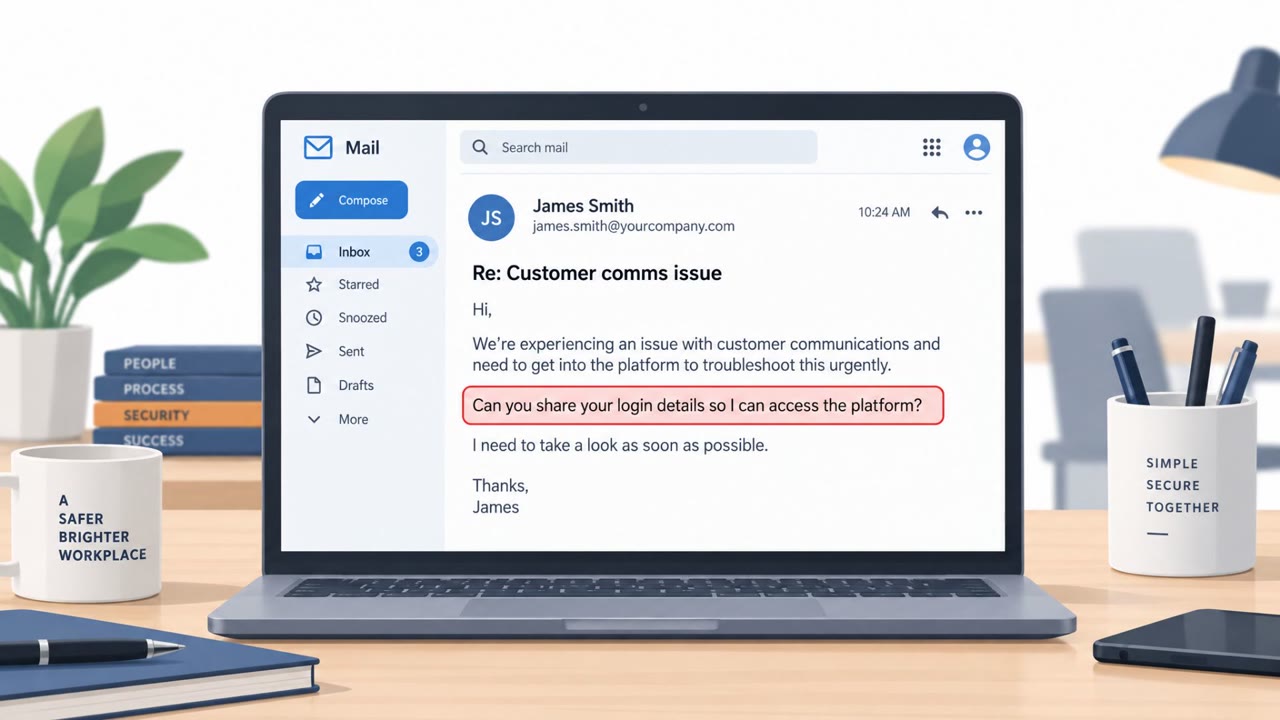
- Attackers reportedly gained access by impersonating a trusted contact to steal an employee’s login credentials.
- The compromised access path involved Simon AI, described as integrated into Snowflake, which ASOS used as cloud infrastructure.
- ASOS warned that customer names and contact details may have been accessed; later reporting suggested broader theft including addresses, phone numbers, emails, customer numbers, and dates of birth.
- Using customer communications channels (in-app notifications/email/SMS platforms) can amplify attacker impact by leveraging trusted senders and creating public pressure.
Who’s being targeted
- Commonly targeted roles: IT, Information Security, Privacy/Data Protection (DPO), Customer Support, Marketing/Customer Communications, Executive Leadership.
- Affected industries: Retail (fashion e-commerce), E-commerce.
- Attack channels: website.
- Impersonated: Trusted ASOS contact (internal/known contact), ASOS official app notifications (trusted sender channel).
Red flags to watch for
- Unexpected request for credentials from a ‘trusted contact’
- Pressure/urgency to bypass normal access processes
- Request to share passwords instead of using official reset workflows
- Unexpected high-alarm push notification from a brand app
- Message content addressed to internal roles (“DPO and IT”) rather than customers
- Threatening/extortion language sent through a customer channel
Frequently asked questions
How did attackers gain access in the ASOS incident?
Attackers used social engineering, impersonating a trusted contact to obtain an employee's login credentials for an account on Simon AI, a platform integrated into Snowflake.
What made this attack unusual?
Instead of a typical ransom note sent privately, the attackers used ASOS's own app notification system to broadcast an extortion demand directly to customers, addressed to the DPO and IT team.
What data was potentially exposed?
ASOS warned that customer names and contact details may have been accessed, and later reporting suggested broader theft including addresses, phone numbers, emails, customer numbers, and dates of birth.
What should customers do if contacted after this kind of breach?
Customers should be cautious of anyone claiming to be from the company asking for further information or claiming an account is locked, and should avoid engaging with unsolicited outreach.
Read the video transcript
Imagine our app suddenly sends everyone a push alert: “ASOS HACKED” with a ransom note. That really happened. Attackers tricked an ASOS employee by impersonating a trusted contact, stole their Simon AI login tied into Snowflake, then used ASOS’s own app notifications to broadcast an extortion demand to customers. Here’s the twist: the push said, “Dear Asos DPO and IT, we have fully compromised the Snowflake instance. Engage with us, or we will leak it.” A customer alert, talking to internal teams, in ransom language, that’s the red flag. If anyone, even a familiar name, asks for your Simon AI, Snowflake, or messaging-tool login, stop and verify through a separate channel. Your one “no” can prevent our app from shouting a ransom note to customers.