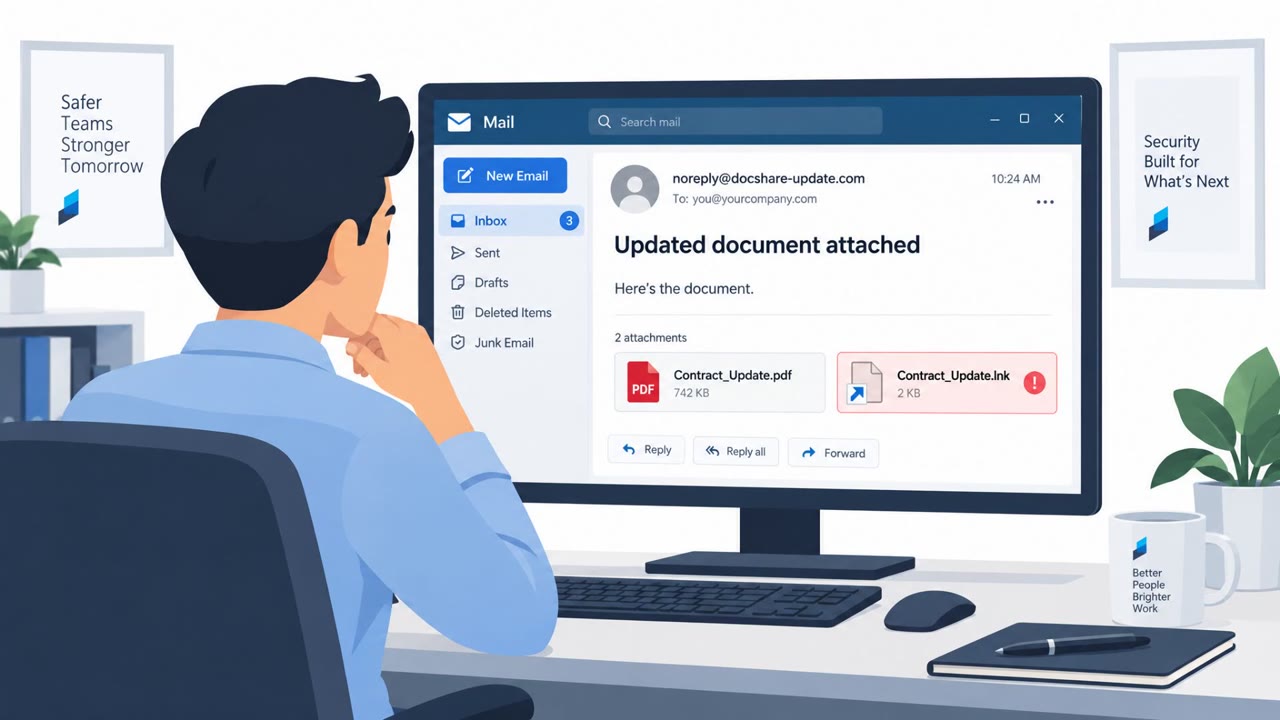
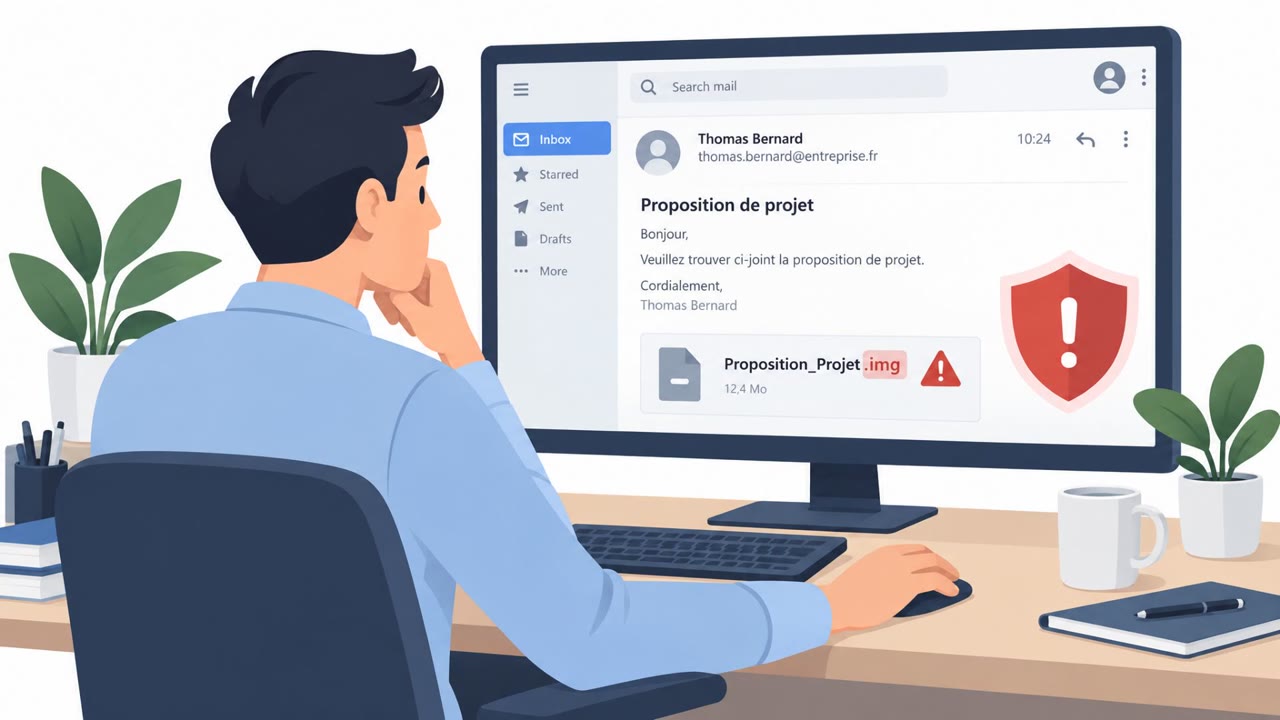
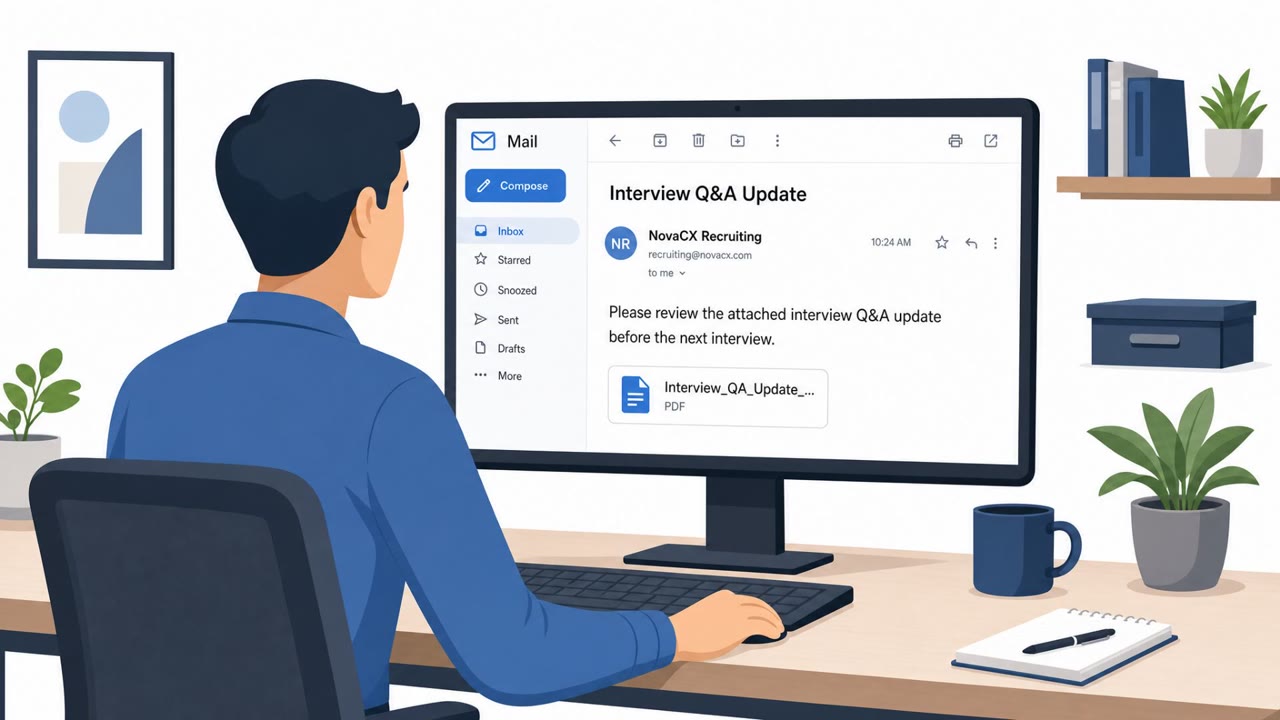
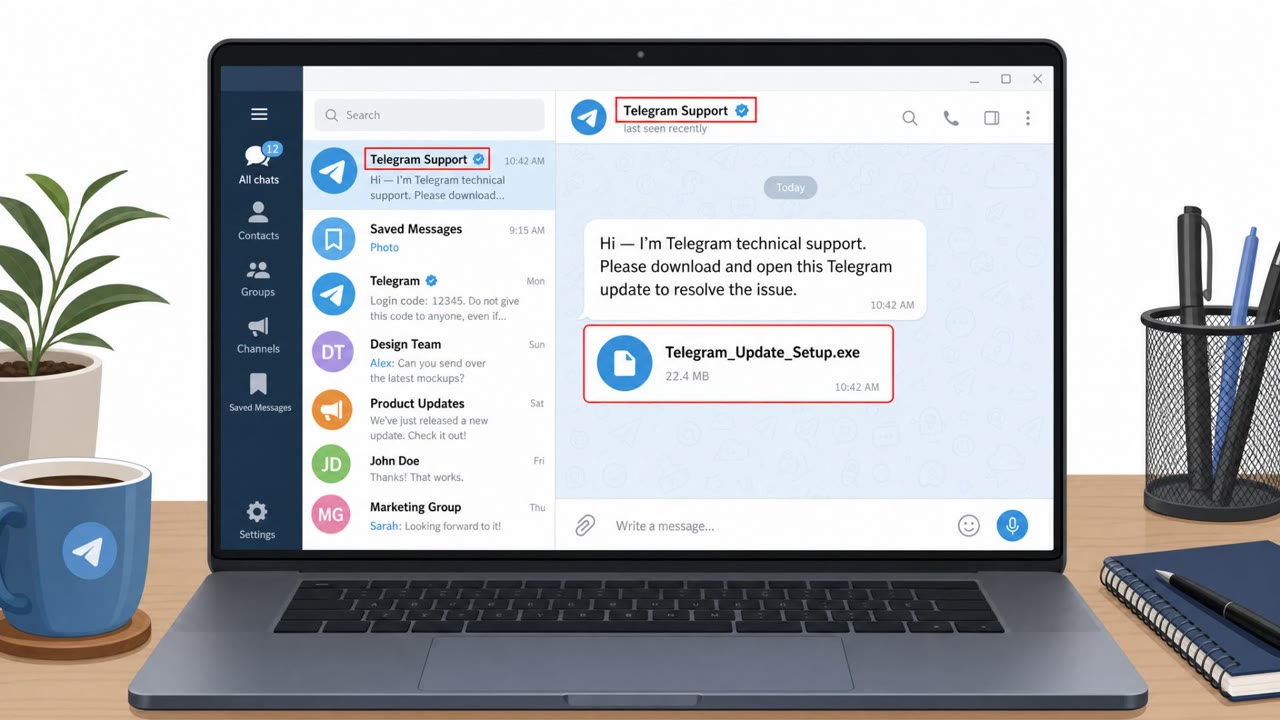
Researchers described a real malware campaign where victims are tricked into opening a document-themed attachment that ultimately installs a remote access trojan (RAT). The infection chain uses a PDF that leads to a disk image containing a Windows shortcut (LNK) disguised as a Word document, which launches hidden PowerShell to run the malware. Once installed, the RAT uses Discord for command-and-control and can steal data and run commands on infected machines.
Key findings
- Malware campaign delivers a Rust-based RAT that uses Discord as command-and-control.
- Initial lure is document-themed: a PDF that contains a disk image with a Windows shortcut (LNK) masquerading as a Word document.
- Opening the LNK shows a decoy document while a hidden PowerShell process runs to decode/execute the payload.
- A Nim-based loader drops a Rust DLL and a PowerShell deployment script to temporary files.
- The script attempts to move the DLL into a protected Microsoft Edge directory to bypass Windows User Account Control (UAC).
- Attackers likely use DLL search-order hijacking to load the malicious DLL.
- The RAT performs recon (system/process/network info) and captures screenshots; operators can run commands, manage processes/files, and conduct surveillance.
- Data can be compressed into ZIP archives and exfiltrated via Ngrok; Discord channels may be used per victim.
Who’s being targeted
- Commonly targeted roles: All employees, Executive assistants, Finance, HR, Operations, IT/Security (monitoring and incident response).
- Attack channels: email.
- Impersonated: Unknown sender posing as a business contact sharing a document.
Awareness takeaways
- Treat ‘document-in-a-document’ attachments (PDFs that contain disk images/shortcuts) as highly suspicious and report them before opening.
- Be alert for decoy documents that open normally while something else runs in the background; report unexpected PowerShell or security prompts after opening attachments.
- Legitimate platforms can be abused by attackers, unusual use of Discord/Ngrok by business endpoints should be investigated.
Red flags to watch for
- A PDF that contains (or prompts you to open) a disk image or shortcut file instead of a normal document
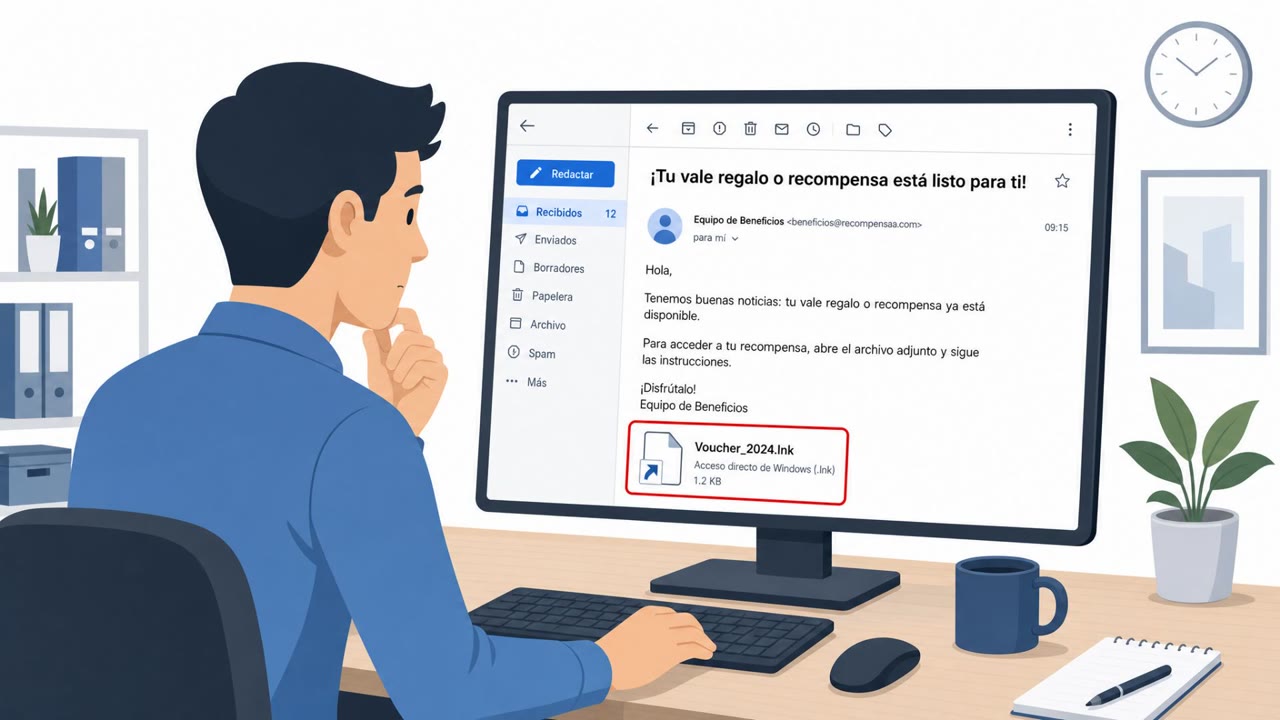
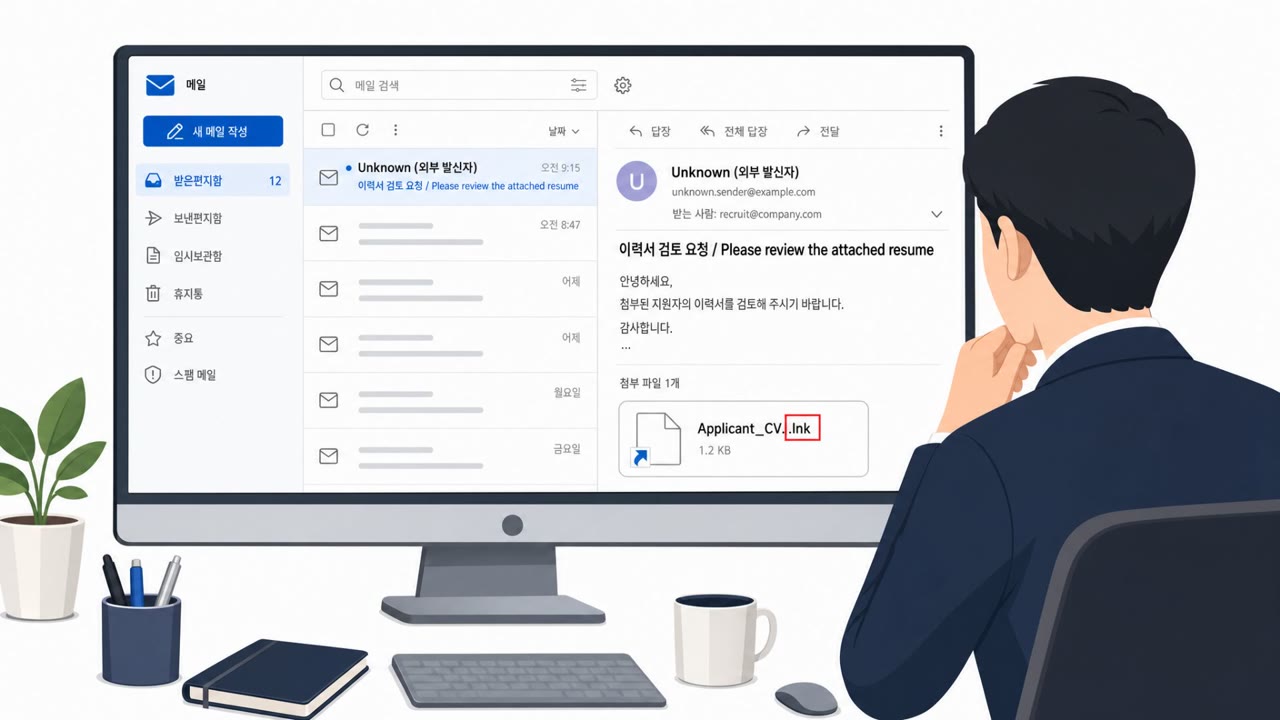
- A Windows shortcut (LNK) masquerading as a Word document
- Decoy document displays while hidden PowerShell runs in the background
Read the video transcript
You get an email: "Document for review" with a PDF attached. Looks boring, right? This one turns your PC into a Discord remote control. You open the PDF, it shows a "Word document" inside. But that file is really a Windows shortcut, an LNK, hiding in a disk image. Click it, and a decoy doc pops up while hidden PowerShell quietly drops a Rust RAT that talks over Discord. Behind that decoy, the loader moves a Rust DLL into a Microsoft Edge folder to sneak past UAC, hijacks how Windows loads it, then starts grabbing system info and screenshots, zipping your files and sending them out through Discord and Ngrok. If a PDF ever makes you open a disk image or "Word" file that’s really a shortcut, stop. Don’t click it, report the email and attachment to Security immediately.