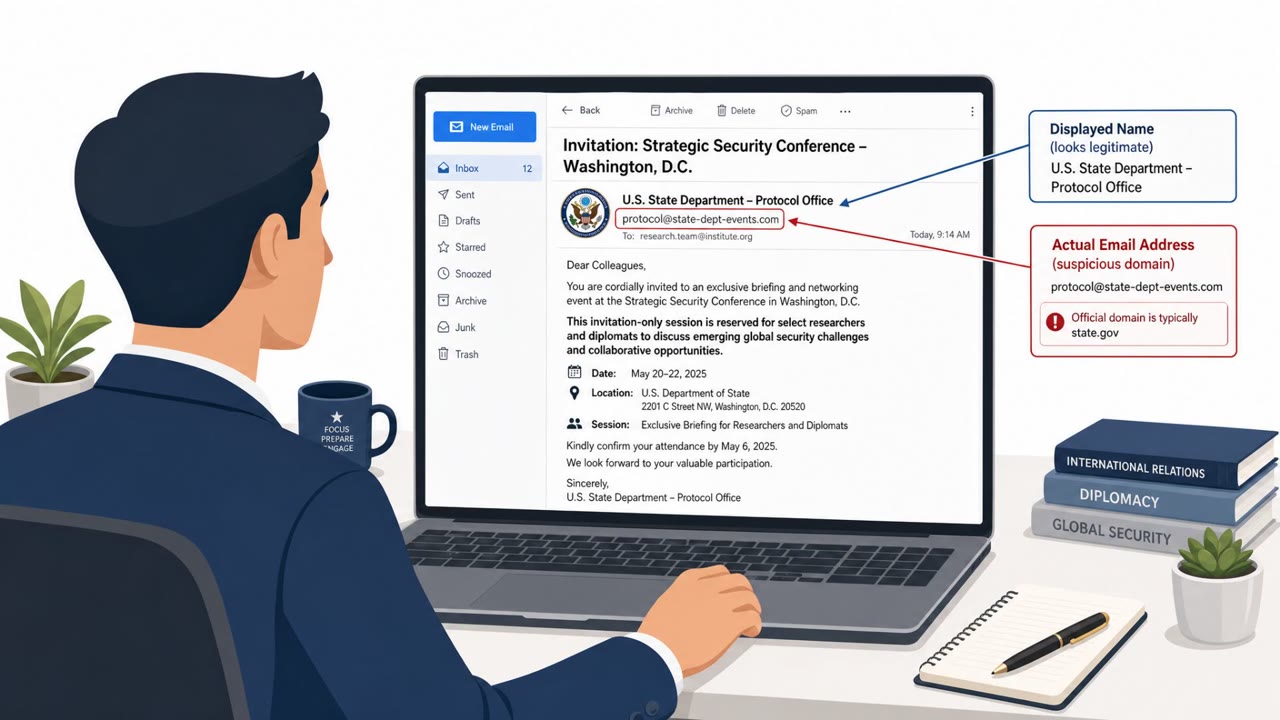
A scammer impersonated the Democratic National Committee chair and convinced a staffer to send nearly $29,000. The DNC detected the issue within minutes, but only recovered part of the funds. This is a classic business email compromise (BEC) pattern: a trusted executive identity is used to pressure staff into making a payment.
What Happened
A scammer impersonated the chairman of the Democratic National Committee and emailed a staffer with an urgent payment request. The staffer, believing the message came from a senior leader, sent nearly $29,000 to an account provided in the email. The DNC identified the problem within minutes and alerted its bank, Wells Fargo, but only recovered $7,000 of the funds. The organization later described the loss to federal regulators as a misdisbursement caused by outside fraud and said it would take further steps to prevent a repeat.
Why the Attack Succeeded
This incident follows a classic business email compromise pattern. A few factors made it effective even against a staff that reportedly receives fraud training:
- Unexpected urgency and pressure from someone believed to be a senior leader
- Payment instructions delivered only through email, with no mention of a callback to a known phone number
- A request involving an unusual or first-time recipient account for a time-sensitive transfer
The attack did not rely on technical sophistication. It relied on the natural instinct to comply quickly with a request that appears to come from someone in authority, especially when framed as urgent and routine.
Who Is at Risk
This type of scam targets anyone who can initiate or approve payments, including finance and operations staff, executive assistants, and leadership teams. Political and campaign organizations across parties have reportedly faced similar BEC-style fraud attempts, suggesting this is a recurring risk pattern for the sector rather than an isolated case.
What to Watch For
Defenders should be alert to:
- Emails claiming to be from executives that request immediate, unusual payments
- Requests that discourage verification or emphasize speed over process
- Any change to standard payment recipients or account details, especially near deadlines
Building Resistance
Organizations can reduce exposure to this kind of fraud by treating any emailed money-movement request, particularly one attributed to an executive, as high risk until verified through a separate, trusted channel such as a phone call to a known number rather than a reply to the email itself. If a fraudulent transfer is suspected, speed matters: notifying the bank and internal finance or security teams quickly, as the DNC reportedly did within minutes, can improve the odds of recovering funds, even if only partially. Finally, incidents like this are a reason to revisit training and tighten approval steps, since even staff with existing fraud training and security protocols can still be targeted successfully by a well-timed impersonation attempt.
Key findings
- An attacker impersonated the DNC chairman and persuaded a staffer to send nearly $29,000.
- The DNC identified the problem within minutes and contacted its bank, but recovered only $7,000.
- The incident was documented to regulators as a misdisbursement caused by outside fraud and triggered additional prevention steps.
- Political committees across parties have been targeted with similar BEC-style fraud.
Who’s being targeted
- Commonly targeted roles: Finance, Operations, Executive assistants, Leadership staff, Anyone who can initiate or approve payments.
- Affected industries: Political organizations, Campaign organizations.
- Attack channels: email.
- Impersonated: Democratic National Committee chairman.
Red flags to watch for
- Unexpected urgency and pressure from a senior leader
- Payment instructions delivered only over email (no known-number callback verification mentioned)
- Unusual or first-time recipient/account for a time-sensitive transfer
Frequently asked questions
How did the DNC BEC scam work?
An attacker impersonated the DNC chairman in an email to a staffer and pressured them into sending nearly $29,000 to an outside account.
Did the DNC recover the stolen funds?
The DNC caught the issue within minutes and contacted its bank, Wells Fargo, but only recovered $7,000 of the nearly $29,000 sent.
Why do executive impersonation scams like this succeed?
They rely on urgency and authority from a trusted leader, and the payment instructions were delivered only over email without a verified callback.
What should organizations do to prevent similar losses?
Verify any emailed payment request through a known, trusted channel such as a phone call to a verified number, and tighten approval steps after any incident.
Read the video transcript
Picture this: an email that looks like it’s from your chair, “I need you to handle a quick payment for me today.” That exact scam hit the Democratic National Committee. Someone impersonated chair Ken Martin and a staffer sent nearly twenty-nine thousand dollars, only seven thousand was recovered. The red flags were there: unexpected urgency from a senior leader, payment instructions only over email, and a first-time account for a rushed transfer, classic business email compromise. Your move: if any email asks you to move money, stop and call the sender on a known number before you touch the transfer.