The article describes real-world recruitment scams where criminals impersonate HR/recruiters and contact jobseekers with unsolicited “remote” work offers, often steering victims to WhatsApp. It includes a full example message that claims to be from a legitimate company and promises high daily earnings for simple tasks, a lure that can lead to fraud or account theft.
Key findings
- A scam message example impersonates a real UK marketing firm (The Goat Agency) and pitches easy remote work with unusually high daily earnings.
- The scam’s call-to-action is to move the conversation to WhatsApp (“please contact us via WhatsApp”).
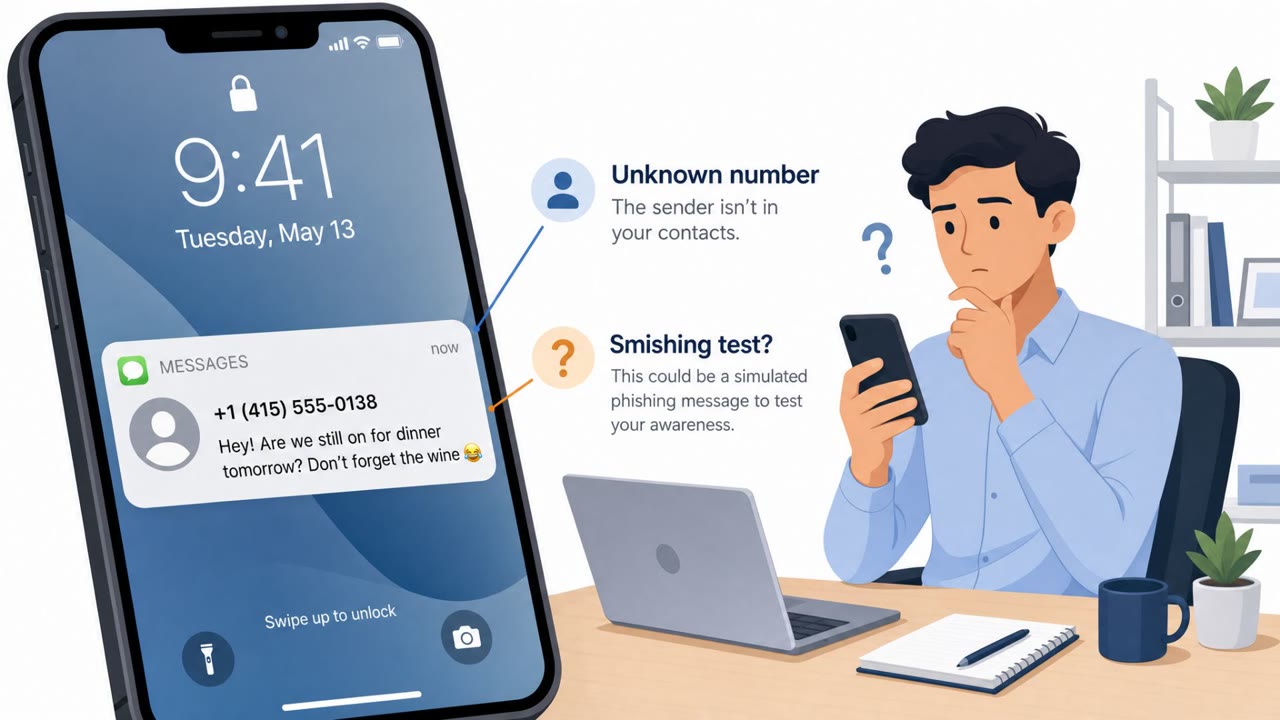
- The article notes scams can also begin with automated phone calls that push recipients to add a number on WhatsApp.
- Jobseekers applying broadly may have a harder time recognizing unsolicited recruiter messages, making scams seem more plausible.
Who’s being targeted
- Commonly targeted roles: All employees (general awareness), HR / Talent acquisition, Early-career hires / interns, Finance (fraud awareness for payroll/onboarding scams).
- Affected industries: Consumers / Job seekers, Recruitment / Hiring, Marketing (impersonated brand).
- Attack channels: smishing, whatsapp, vishing.
- Impersonated: HR team at (impersonated) The Goat Agency, Unspecified recruiter (automated calling system).
Awareness takeaways
- Keep a simple log of job applications so you can quickly verify whether a recruiter contact matches a real application you made.
- Verify the recruiter independently using official company contact details, don’t trust logos, names, or a real job posting alone.
- Treat unsolicited job offers (especially those pushing WhatsApp) as high-risk until proven legitimate.
- Do not send money or deposits to “unlock earnings,” and pause before sharing sensitive information or installing software from recruitment links.
Red flags to watch for
- Unsolicited outreach about a job you "never applied for"
- Pressure to move to WhatsApp instead of official company channels
- Unrealistic compensation for minimal work ("Daily earnings range from £500 to £1,000")
- Robocall/automated call about a job you didn’t apply for
- Instruction to shift to WhatsApp immediately
- Vague role description ("supposed part-time work")
Read the video transcript
You’re job hunting and this text pops up: “Hello! I’m a representative from the HR team at goatagency…” It says they reviewed your CV, offers “remote online opportunity” doing product reviews, and promises £500 to £1,000 a day, then: “If you’re interested, please contact us via WhatsApp.” Here’s the trap: you never applied there, they push you off SMS or even an automated call straight onto WhatsApp, and the pay is wildly unrealistic for simple tasks. That combo is a recruitment scam pattern. One move: before replying or adding them on WhatsApp, check your job log, if you never applied to that company, treat it as a scam and delete the message.