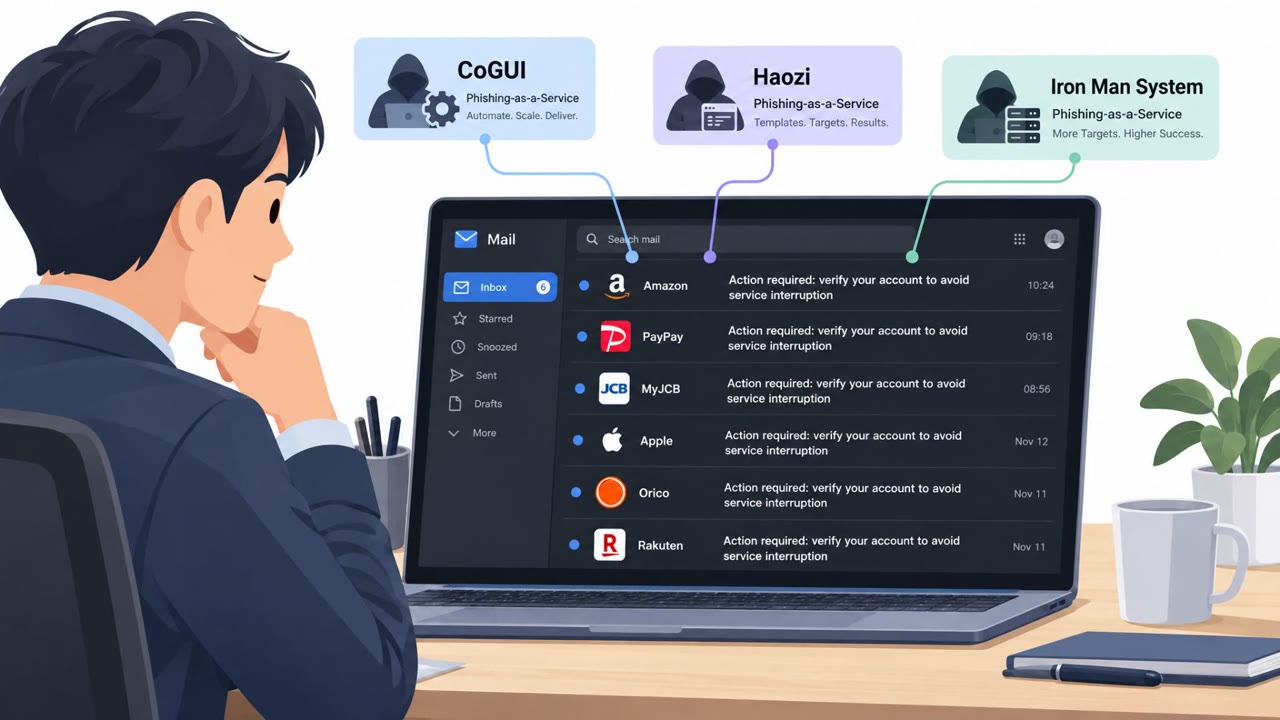
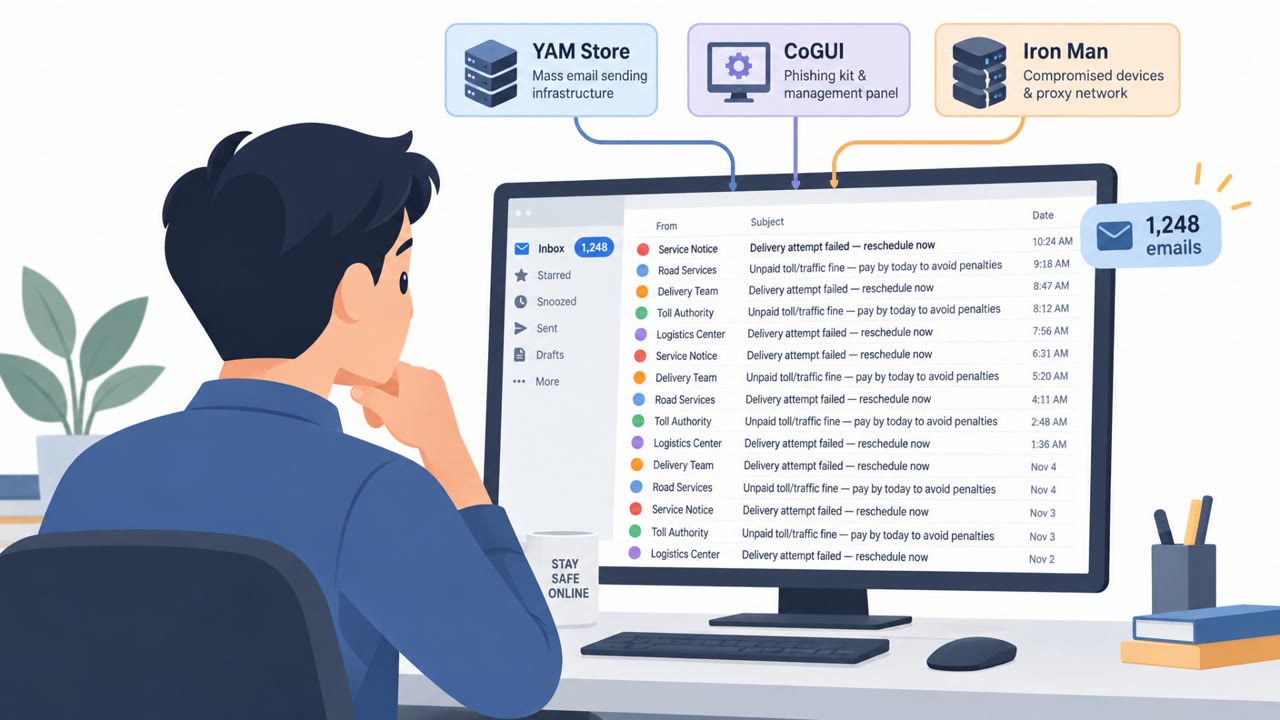
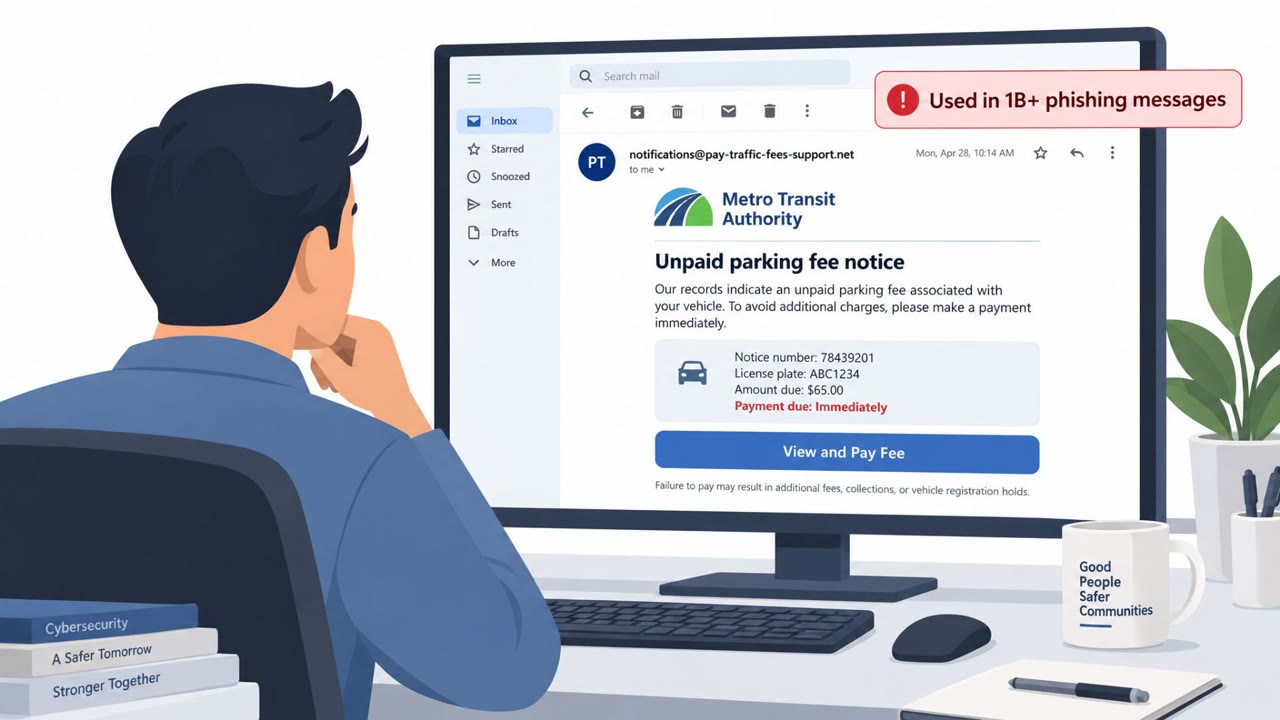
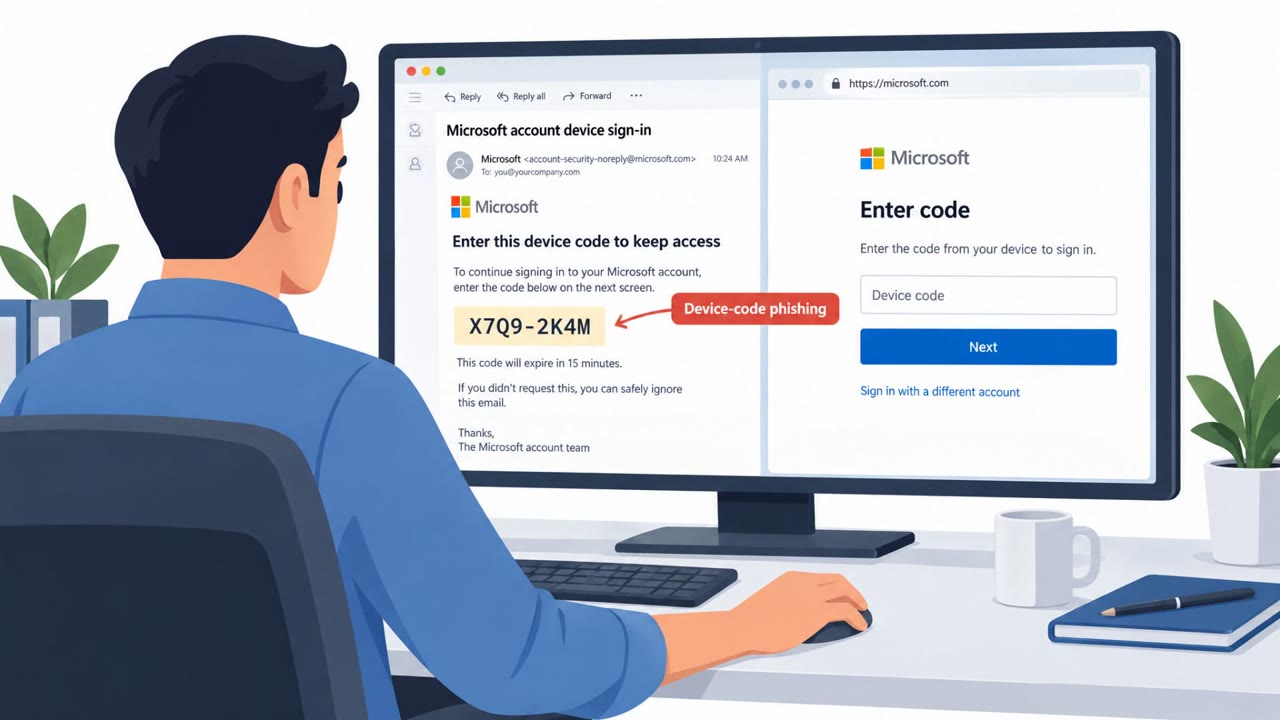
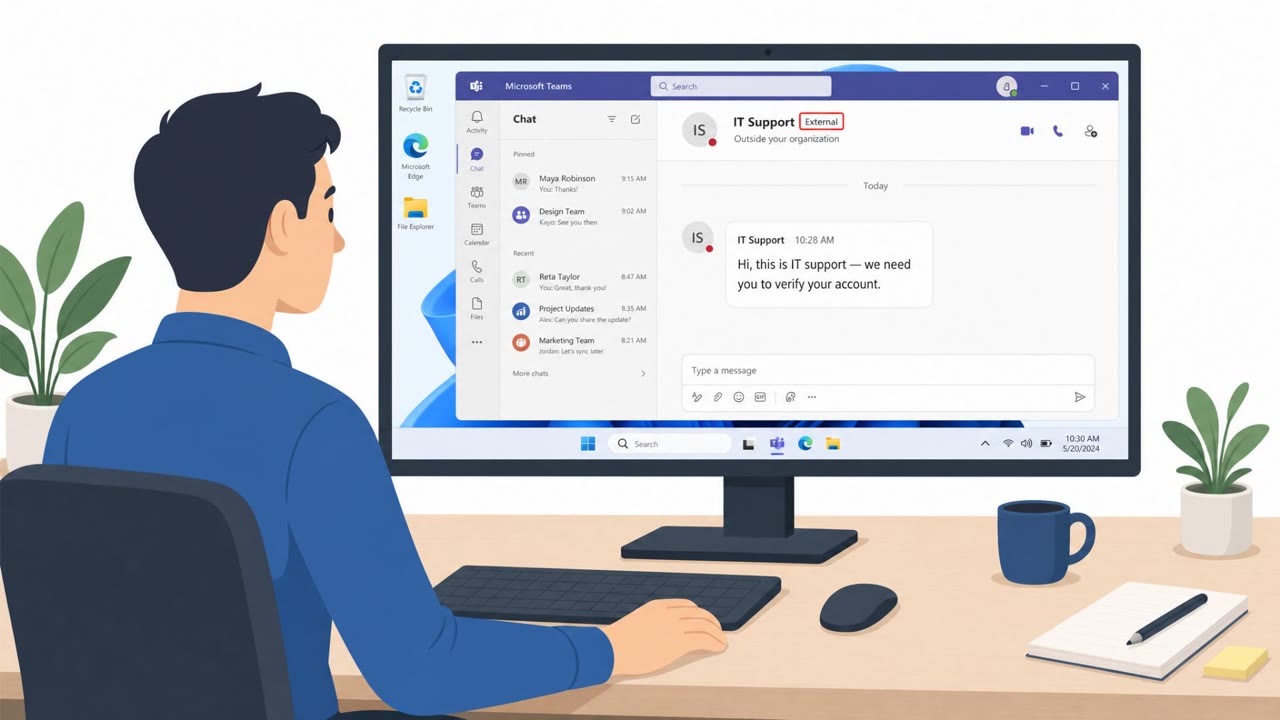
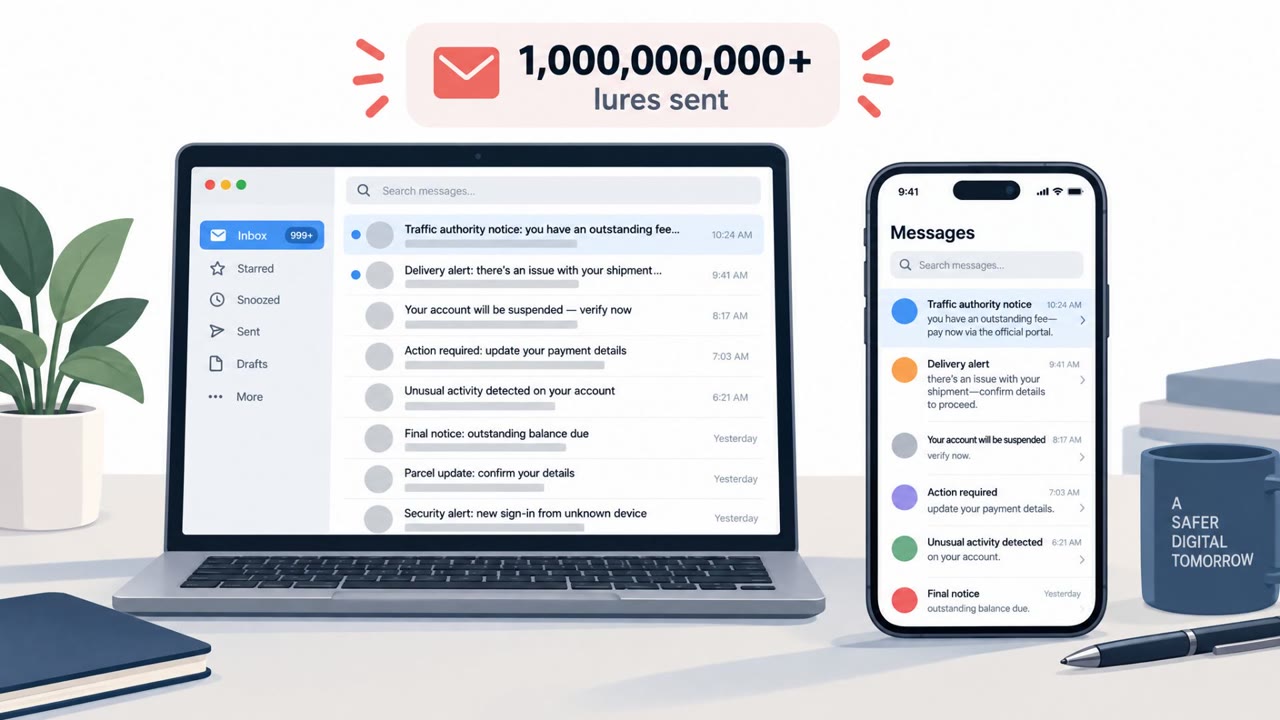
Microsoft says it uncovered and disrupted an underground marketplace (“YAM Store”) that sold phishing kits and access to cloud accounts, enabling massive global phishing and SMS scam campaigns. The operation allegedly supported over a billion scam messages since January 2026 and targeted 75,000+ organizations across multiple countries and industries. The kits used realistic brand-impersonation templates to steal passwords, payment details, and verification codes, with operators monitoring victims in real time.
Key findings
- Microsoft and Resecurity identified YAM Store (tracked by Microsoft as Storm-3119) selling phishing kits and cloud account access used for global phishing/scam campaigns.
- Microsoft groups the phishing-kit developers behind CoGUI/NX/FA, Haozi/Phoenix, and Iron Man System as Storm-2990.
- The ecosystem allegedly enabled “more than one billion phishing emails and SMS messages” targeting “over 75,000 organizations since January 2026.”
- Phishing kits provided country-tailored templates that impersonated trusted brands and organizations to harvest credentials and other sensitive data.
- Operators sold access to compromised or fraudulently obtained Microsoft and Google cloud environments so campaigns could run from infrastructure that looked legitimate.
- The kits supported real-time victim monitoring, including Telegram notifications when victims entered passwords, payment data, or verification codes.
- Microsoft and partners seized/redirected supporting domains, disabled 20,000+ accounts, and blocked 100,000+ impersonation/fraud domains.
Who’s being targeted
- Commonly targeted roles: All employees, Finance and accounting, Procurement, Executives and assistants, IT/helpdesk, Customer-facing teams.
- Affected industries: Healthcare, Financial services, Wholesale distribution, Information technology, Education (cloud accounts referenced), Nonprofits (cloud accounts referenced).
- Attack channels: email, website, smishing.
- Impersonated: Mainstream tech/streaming/brokerage brand (brand-impersonation template), Bank, government agency, retailer, or delivery service (local-language template).
Awareness takeaways
- Treat unexpected ‘verify/sign in’ requests as suspicious, even when the page looks like a well-known brand.
- Never share passwords, payment details, or verification codes via links received in unsolicited emails or texts; use official bookmarks/apps instead.
- Be extra cautious when messages appear to come from legitimate cloud services, attackers may be using real-looking infrastructure to blend in.
- Report suspected phishing quickly; large-scale operations can be disrupted when defenders can seize domains and disable accounts.
Red flags to watch for
- Unexpected login/verification request that pressures you to sign in immediately
- Lookalike site designed to mimic a known brand, potentially with unusual URL/hosting
- Requests for verification codes or extra steps that feel out of place (e.g., fake CAPTCHA, repeated prompts)
- Unsolicited SMS asking you to verify an account via a link
- Message pushes you to act quickly and provide sensitive details
- Verification codes requested in a context that doesn’t match normal processes
Read the video transcript
Since January, one underground shop called YAM Store helped send over a billion fake login messages. You get an email: 'Action required: Your account needs verification, sign in to continue.' The link opens a perfect copy of a big-name login page, but it’s actually a YAM Store kit running on a Microsoft or Google cloud account they bought. Here’s the nasty part: the moment you type your password, payment info, or a verification code, the kit pings the buyer on Telegram in real time, so they can jump into your account before you even close the tab. If any email or text tells you to 'verify' by clicking a link, don’t. Open the official app or type the site address yourself and sign in there instead.