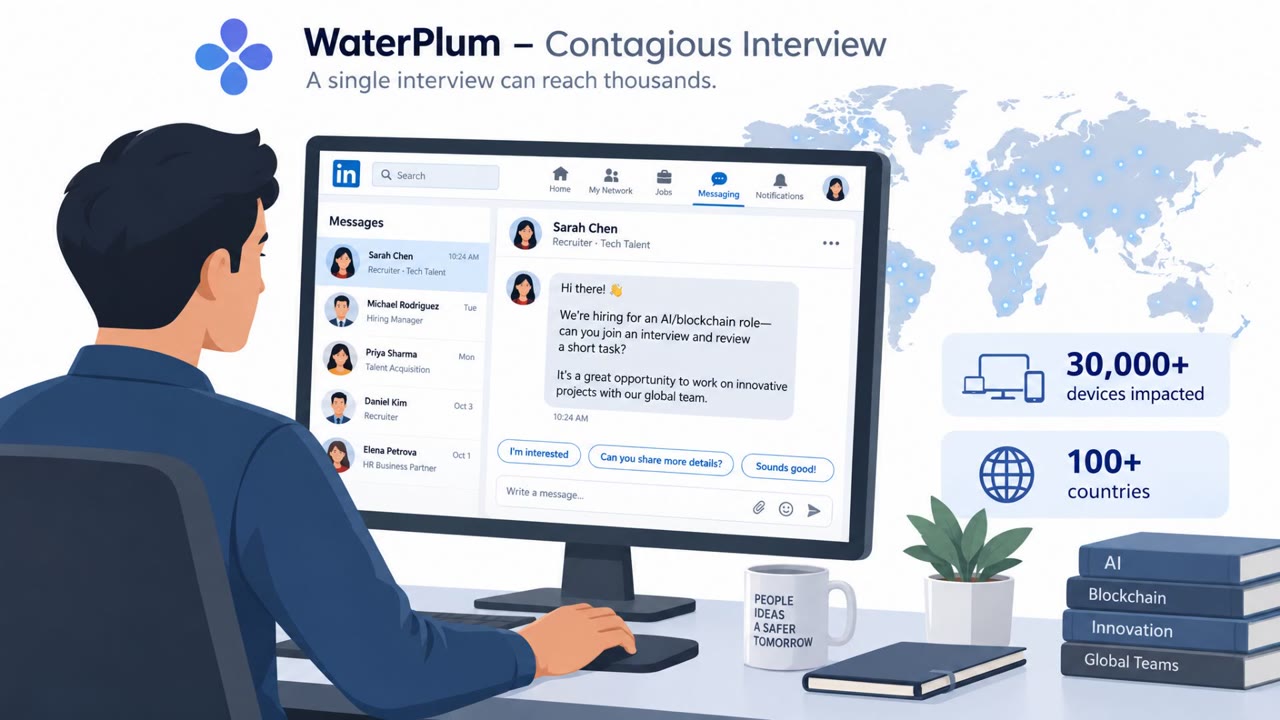
Researchers say the Iran-linked group Nimbus Manticore posed as recruiters on LinkedIn and job platforms to send developers “technical challenge” ZIP files that secretly installed cross-platform remote access trojans. The lures used urgency (short test windows) and realistic developer workflows (run a Node.js project) so targets would infect their own workstations while thinking they were completing an assessment.
How the attack worked
A threat group tracked as Nimbus Manticore approached software engineers on LinkedIn and other job platforms while posing as recruiters, including a talent acquisition specialist at a major technology company. Targets were invited to complete a technical assignment and were sent a ZIP archive, such as one named Front Technical Challenge, hosted on AWS. Inside was a realistic Node.js project for a task management tool, with instructions to fix bugs in the frontend code within a set time limit.
The twist was in the details the candidate was told to leave alone. Instructions specifically asked candidates not to modify the server component, describing it as bug free. In reality, that file contained the malicious code, including a trojanized npm package bundled directly in the archive rather than published to a public registry. When the candidate ran the project as instructed, the package silently launched a background implant that connected to attacker infrastructure and supported file access, process listing, and shell commands.
A related variant delivered a different implant through another developer assessment archive, this one including a PDF tutorial. The tutorial prompted the target to click Continue and enter a rotating six digit one time password, framed as part of a one hour assessment session.
Why it succeeded
The lure worked because it mirrored an entirely normal developer workflow: download a project, install dependencies, run the code, fix bugs. Candidates had no reason to suspect that following the stated instructions, including avoiding a specific file, was itself the trap. Bundling a malicious package inside node_modules instead of a public registry also helped it blend in with legitimate project dependencies.
What to watch for
- Unsolicited recruiter outreach that pushes you to download and run a ZIP project rather than use an official hiring portal
- Assignment instructions that discourage reviewing or modifying specific files
- Time pressure, such as short assessment windows or one time passcodes supplied by the sender rather than generated by your own account
- Bundled dependencies included directly in the archive instead of installed through normal package management
Building resistance
Engineering and recruiting teams can reduce exposure by verifying recruiter identities and hiring steps through official company channels before any code is downloaded or run. Take-home coding challenges should be reviewed or sandboxed before execution, with particular attention to any file candidates are told not to touch. Reporting unusual recruiter behavior, unexpected OTP prompts, or compressed deadlines to IT security helps catch this pattern early, since urgency and restricted review are the core mechanisms these lures depend on.
Key findings
- Attackers posed as recruiters on LinkedIn/job platforms and sent “trojanized coding challenge archives” to developers.
- A ZIP file named “Front-Technical-Challenge.zip” hosted on AWS was presented as an engineering job assignment; the malware was hidden inside the provided Node.js project.
- The project instructions told candidates not to modify “server.js,” but that file contained the malicious import that launched the implant.
- NodeRabbit communicated with Azure-hosted C2 domains (three listed) and supported commands for file access, process listing, and running shell commands.
- PollCat was delivered via another developer assessment ZIP and included a PDF tutorial that prompted the user to click Continue and enter a rotating six-digit OTP, creating urgency.
- Persistence varied by OS (Windows Run key/scheduled tasks, Linux cron, macOS launch agent), and some variants mimicked legitimate updaters (e.g., Edge update / Intel Driver & Support Assistant).
Who’s being targeted
- Commonly targeted roles: Software Engineers, Developers, Engineering Managers, Talent Acquisition / Recruiting teams, IT Helpdesk / Security Operations (for reporting and response).
- Affected industries: Software development / engineering teams, Technology companies, Organizations in the Middle East and Africa (critical sectors referenced by researchers).
- Attack channels: linkedin, website.
- Impersonated: Talent acquisition specialist at a major technology company, Coding test / take-home assignment materials, Developer assessment portal / tutorial for the coding test.
Red flags to watch for
- Unsolicited recruiter approach pushing you to download a ZIP project
- Assessment materials delivered as an archive rather than via an official hiring portal
- Instructions that discourage normal review of key files (e.g., “don’t modify server.js”)
- Bundled dependencies inside the ZIP (node_modules included) rather than standard installs from trusted sources
- Claims that a key file is “bug-free” and should not be modified
- Hidden execution from cache/tmp paths when you run the project
- OTP provided by the sender (not generated by your own account/app)
- High-pressure “one-hour session” urgency to run code immediately
- Assessment instructions that don’t fully match the delivered application
Frequently asked questions
How did attackers deliver malware through fake job offers?
Attackers posed as recruiters on LinkedIn and job platforms and sent developers ZIP files framed as technical coding challenges, with malware hidden inside a Node.js project bundled in the archive.
What made the fake coding test convincing?
The archive included realistic project files like a task management tool, instructions to fix frontend bugs, and a warning not to modify a specific server file, which is where the malicious code was actually embedded.
What urgency tactics were used to pressure targets?
One variant included a PDF tutorial prompting the target to enter a rotating six-digit OTP and complete the challenge within a one-hour window, pushing candidates to run the project quickly without scrutiny.
How can development teams reduce this risk?
Verify recruiter identities and hiring processes through official company channels, review any bundled dependencies or unexpected packages in take-home projects, and sandbox or code-review assessment archives before running them.
Read the video transcript
You get a LinkedIn message from a “talent acquisition specialist” at a big tech company: three hours to finish a coding test, ZIP file attached. You unzip Front-Technical-Challenge from AWS: a Node.js project with a Taskflow app, bundled node_modules, and instructions saying, “Find bugs in the frontend, but don’t modify server.js, it’s bug‑free.” That “bug‑free” server.js secretly imports a trojanized package that launches a remote access tool in the background. Behind the scenes, NodeRabbit and PollCat call out to Azure-hosted command servers, can read your files, list processes, run shell commands, and even stick around as a fake Edge updater, Intel driver helper, or a cron job or launch agent. One variant even pops a PDF that forces you to enter a rotating six‑digit OTP and finish in under an hour to keep you rushing. If any recruiter sends you a ZIP coding test to run locally, especially with bundled node_modules or “don’t touch server.js” rules, pause and forward it to security before you unzip or run anything.