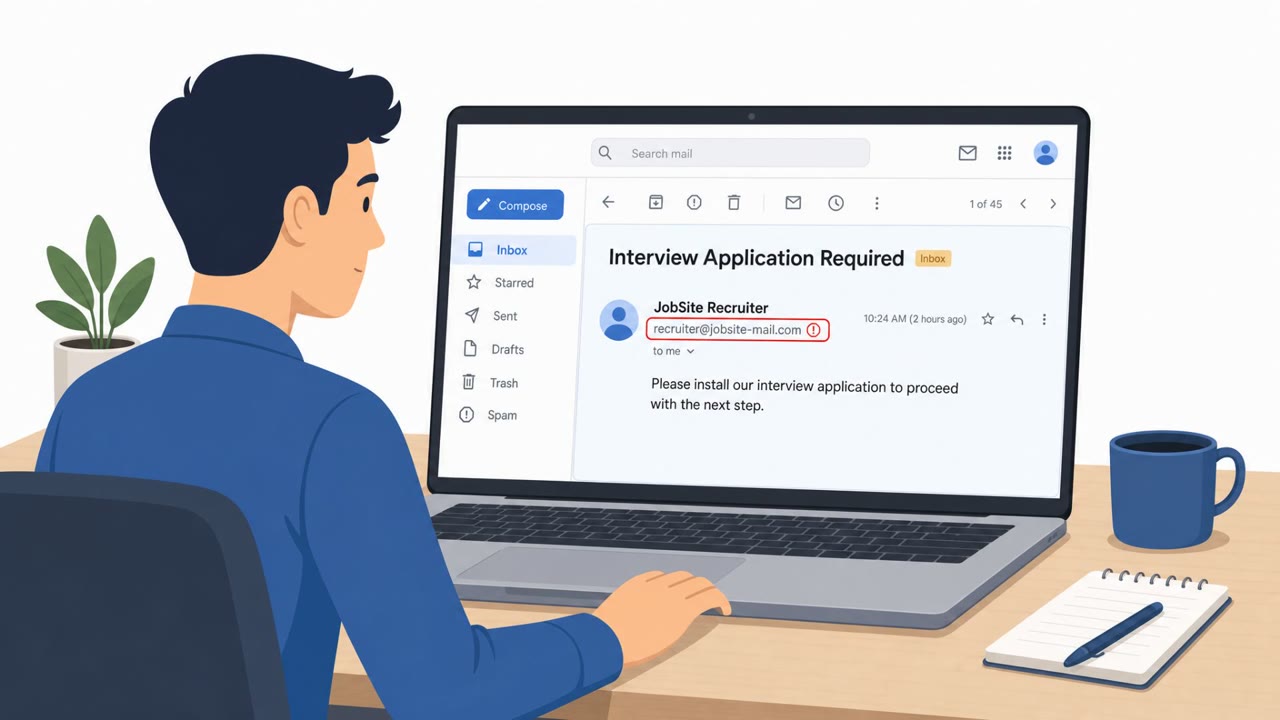
Proofpoint observed real phishing campaigns using government-themed lures to trick people into downloading ZIP files that install malware. The campaigns used a “crypter” service called Cruciferra to help common remote-access and data-stealing malware evade detection. Financial services, healthcare, and government organizations were frequently targeted.
How the attack worked
Proofpoint identified multiple phishing campaigns that used a crypter service called Cruciferra to disguise remote-access and information-stealing malware from detection tools. The campaigns did not rely on a single lure. Instead, attackers used several distinct pretexts to reach victims across different sectors:
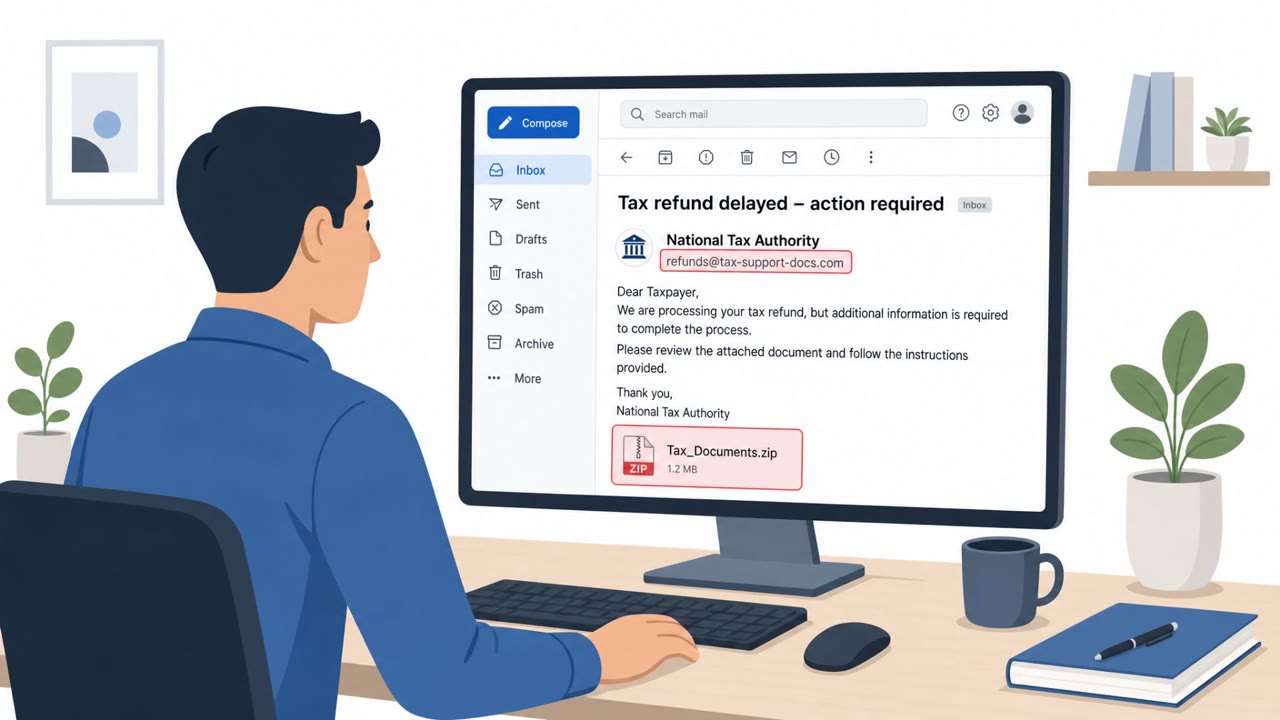
- Fake Income Tax Department notifications impersonating government tax authorities, pointing recipients to lookalike portals
- Messages abusing U.S. Social Security Administration branding to prompt file downloads
- Hospitality-themed emails claiming to document bed bug complaints from guests
In each case, the goal was the same: get the recipient to download a ZIP archive or visit an attacker-controlled site that kicked off the infection chain, ultimately installing malware such as AsyncRAT, XWorm, or zgRAT.
Why it succeeded
These campaigns leaned on believable, high-stakes themes rather than purely technical tricks. A tax notice, a benefits message, or a customer complaint all create a sense of obligation or urgency that pushes people to act quickly instead of scrutinizing the request. Financial services, healthcare, and government organizations were frequently targeted, likely because staff in these sectors regularly handle official notices, benefits paperwork, and customer correspondence, making these lures feel routine.
Once a recipient clicked through and downloaded the archive, Cruciferra's evasion techniques were designed to help the resulting malware avoid detection, meaning the social engineering step, not the malware's sophistication, was the point of failure that mattered most.
What to watch for
- Unexpected tax, benefits, or government notices sent by email rather than through official channels you initiate
- Links that lead to a landing page prompting a ZIP archive download to view a
Key findings
- Proofpoint observed Cruciferra used across “multiple phishing campaigns” to deliver RATs and information-stealing malware.
- Lures included impersonating tax authorities with “fake Income Tax Department notifications,” U.S. Social Security Administration branding, and hospitality-themed “bed bug complaints.”
- Victims were pushed to attacker-controlled sites or to download “malicious archives” (ZIP files) that started the infection chain.
- Frequently targeted sectors included “financial services, healthcare, and government.”
- Cruciferra’s evasion features (e.g., BYOVD and Process Ghosting) are designed to make malware harder to detect after a user is tricked into running it.
Who’s being targeted
- Commonly targeted roles: All employees, Finance/Accounting, HR/Benefits, Customer Service/Front Desk, Healthcare administrative staff, Public sector staff.
- Affected industries: Financial services, Healthcare, Government.
- Attack channels: email, website.
- Impersonated: Government tax authority / Income Tax Department, U.S. Social Security Administration, Hotel guest / customer (complaint).
Red flags to watch for
- Unexpected tax notice sent via email
- Link goes to a lookalike portal/attacker-controlled site
- You are prompted to download a ZIP archive to view a ‘notification’
- Government branding used to create urgency/trust
- Unusual request to download/open a file from an email
- Message does not match normal SSA communication channels
- Emotional/urgent complaint designed to prompt quick action
- Unsolicited download request
- Archive/file leads to software installation steps rather than readable documents
Frequently asked questions
What is Cruciferra and how does it work?
Cruciferra is a crypter service that attackers use to help remote-access and information-stealing malware evade detection after a victim opens a malicious file, using evasion features like BYOVD and Process Ghosting.
What lures were used in these phishing campaigns?
Campaigns impersonated government tax authorities with fake Income Tax Department notifications, the U.S. Social Security Administration, and hospitality complaints about bed bugs, all designed to get recipients to download ZIP archives.
Which industries were most affected?
Financial services, healthcare, and government organizations were frequently targeted in these campaigns.
What malware did these campaigns ultimately deliver?
The infection chains led to remote-access and information-stealing malware including AsyncRAT, XWorm, and zgRAT after victims downloaded the malicious archives.
Read the video transcript
You get an email: “Income Tax Department Notification – Action Required.” Looks official, government logo, bold red deadline. You click. It opens a lookalike tax portal that tells you: download a ZIP file to see your notice. That ZIP runs Cruciferra, quietly loading malware like AsyncRAT or XWorm on your machine. Proofpoint’s seen this over and over: fake Income Tax Department emails, Social Security "Important Notice" messages, even bed bug complaint themes, all pushing you to a site or ZIP download that starts the Cruciferra infection chain. If any government-branded email tells you to download a ZIP or file, don’t click it, go to the official site yourself and log in there instead.