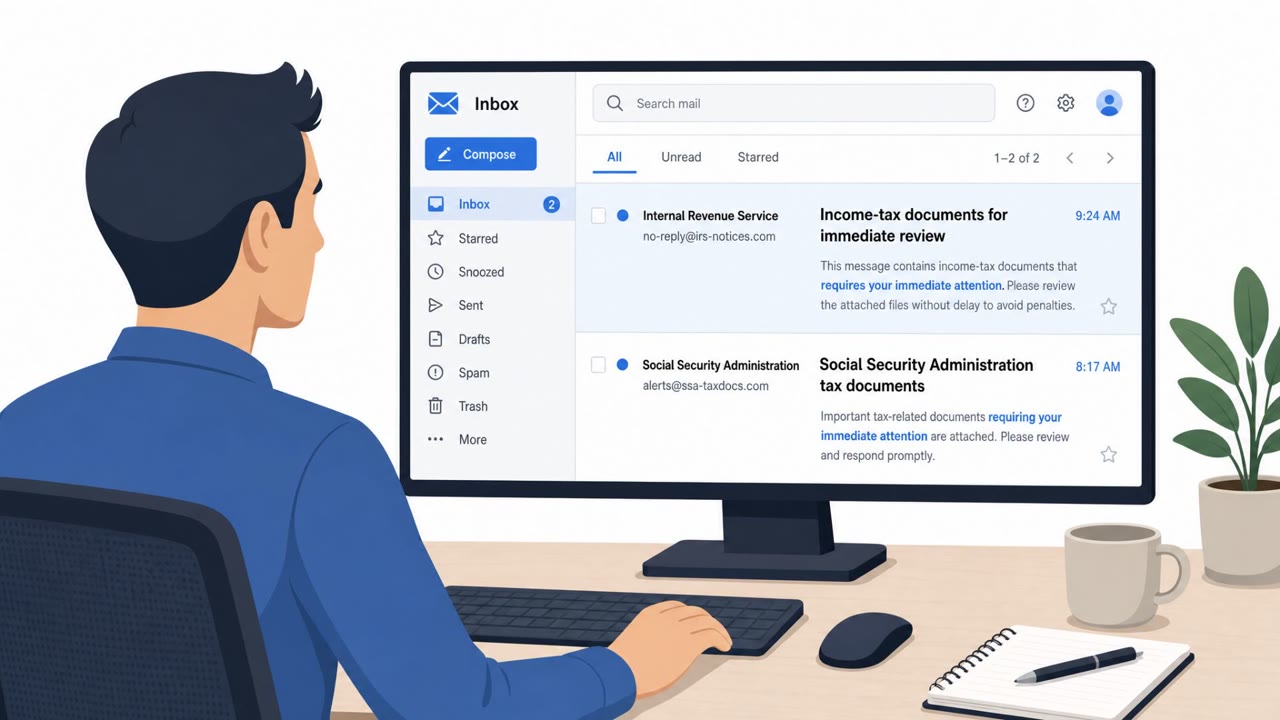
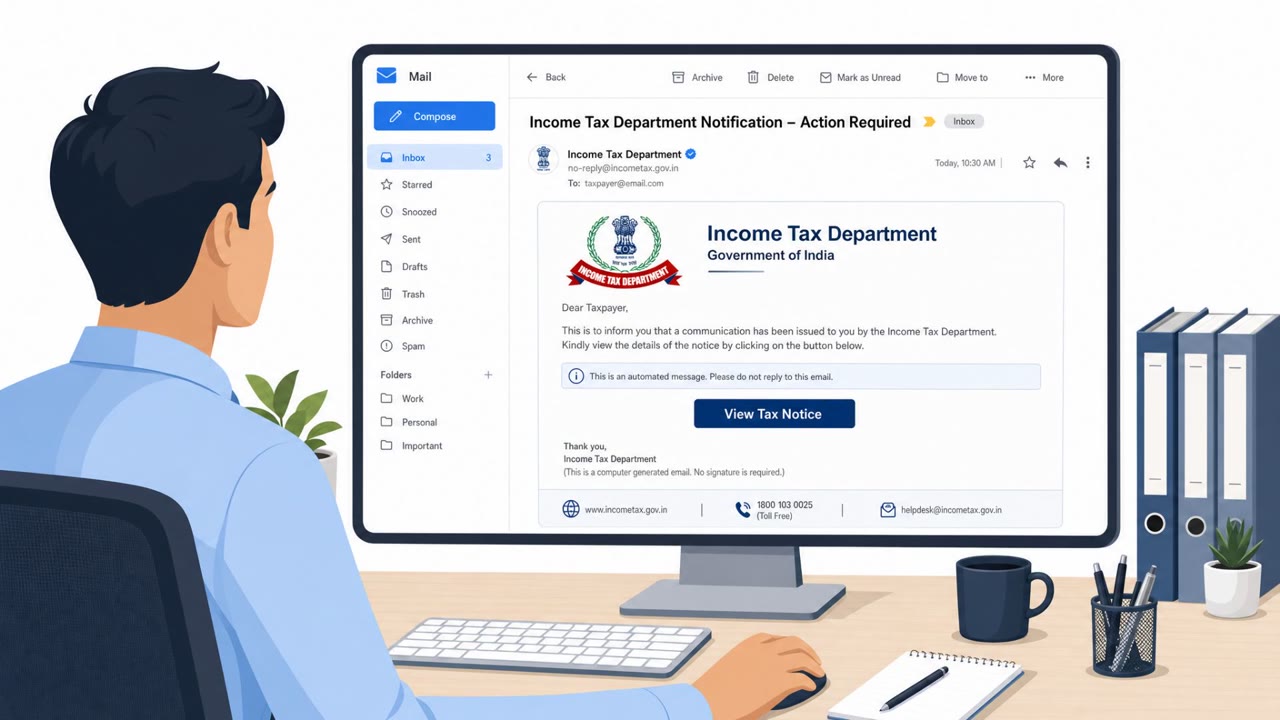
Researchers report multiple real-world email phishing campaigns that used tax and government-benefit themes to trick people into downloading malware. The campaigns used a “crypter” service called Cruciferra to hide malicious files and help malware run while avoiding detection. Targets included taxpayers and finance teams, as well as organizations in hospitality/travel, and multiple regulated sectors.
How the attack worked
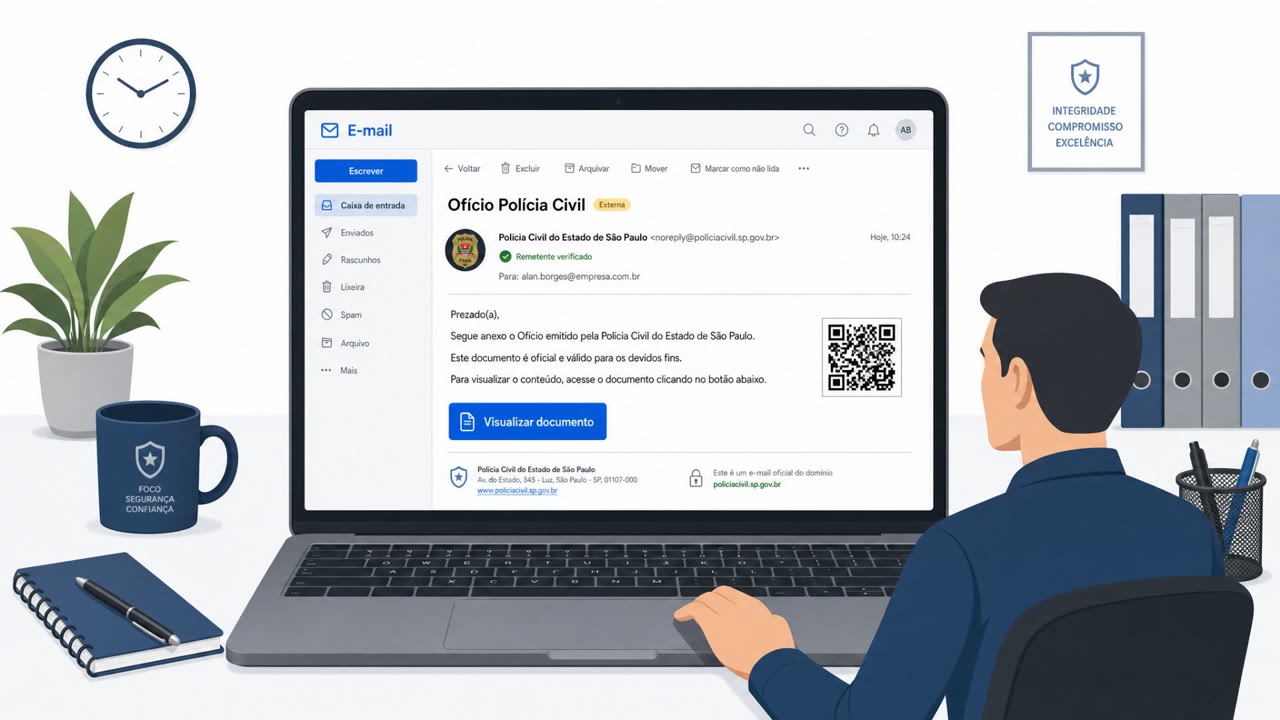
Researchers identified multiple unrelated phishing campaigns that shared a common tool: a crypter service called Cruciferra used to obscure malicious files and help malware run while avoiding detection. Phishing was the primary initial access vector across these campaigns, and messages could reach hundreds to thousands of recipients per run. One cluster used tax-themed lures that directed victims to attacker-controlled landing pages hosting ZIP files, with four such campaigns identified between April and early June 2026. Other campaigns impersonated the U.S. Social Security Administration to deliver malware, and separate messages used bed bug and guest complaint themes to target hospitality and travel organizations.
Why it succeeded
Each lure relied on a believable, high-stakes pretext rather than technical sophistication in the initial email. Tax notices and government agency messages exploit authority and urgency, pushing recipients to act before verifying the source. The hospitality-focused complaint lure worked because it mimicked an operational scenario, a guest complaint, that front desk and guest services staff are trained to respond to quickly. In all cases, the call to action was simple: click a link or open a file, which is a familiar and low-friction request that doesn't immediately signal danger.
What to watch for
- Unexpected tax notices urging download of a ZIP file rather than viewing documents through an official portal
- Emails impersonating government agencies like the SSA, especially those pressuring quick action
- Guest or customer complaint emails referencing incidents like bed bugs, particularly when they include unexpected attachments or links
- Messages using compressed file formats to disguise malicious content
- High-volume phishing campaigns spread across industries including financial services, healthcare, government, education, and manufacturing
Building resistance
Organizations can reduce risk by training finance and tax staff to verify refund or filing notices through known official channels rather than links in email. HR and payroll teams should be taught to treat unsolicited SSA-themed messages with skepticism and confirm authenticity independently, such as by calling a trusted number. Hospitality and guest services staff benefit from awareness that complaint-themed messages can be a malware delivery vector, especially when they push toward opening files or links outside normal complaint channels. Because these campaigns are opportunistic and can be sent at scale, a fast, low-friction reporting process for suspicious messages helps limit how far any single campaign spreads before it's contained.
Key findings
- Cruciferra is a crypter service used by multiple unrelated criminal clusters to deliver RATs and information-stealers.
- Campaigns using Cruciferra relied on phishing as the primary initial access vector and could reach “hundreds and thousands of messages per campaign.”
- A China-linked cluster (TA4922) used tax-themed lures sending victims to attacker-controlled landing pages hosting ZIP files to deliver malware; four campaigns were identified between April and early June 2026.
- Other observed lures included emails impersonating the U.S. Social Security Administration and “bed bugs and guest complaints” themes targeting hospitality/travel.
- Targets span financial services, healthcare, government, education, and manufacturing.
Who’s being targeted
- Commonly targeted roles: Finance, Tax, HR, Payroll, Hospitality front desk, Guest services, General employees.
- Affected industries: Financial services, Healthcare, Government, Education, Manufacturing, Hospitality and travel.
- Attack channels: email, website.
- Impersonated: Tax authority / income tax department (tax-themed lure), U.S. Social Security Administration (SSA), Guest / travel customer (complaint submission).
Red flags to watch for
- Unexpected tax notice urging you to download a ZIP file
- Link leads to an attacker-controlled landing page (not an official portal)
- Compressed file (ZIP) used for “documents”
- Government-agency impersonation
- Unsolicited message pushing you to open content
- Urgency/authority-based pressure
- Unexpected complaint with a prompt to open files/links
- Emotional pressure (reputation damage, urgent incident)
- Generic sender identity inconsistent with real guest communication channels
Frequently asked questions
What is Cruciferra?
Cruciferra is a crypter service used by multiple unrelated criminal clusters to hide malicious files and help malware evade detection while delivering RATs and information-stealers.
What lures were used in these phishing campaigns?
Observed lures included tax-themed messages directing victims to download ZIP files, emails impersonating the U.S. Social Security Administration, and messages about bed bug and guest complaints aimed at hospitality and travel organizations.
Who was targeted by these campaigns?
Targets spanned financial services, healthcare, government, education, manufacturing, and hospitality and travel, with roles including finance, tax, HR, payroll, and hospitality front desk staff.
How large were these campaigns?
The activity is assessed to be opportunistic, reaching anywhere between hundreds and thousands of messages per campaign.
Read the video transcript
Imagine this hits your inbox: “Your tax refund is delayed, download the attached ZIP to review your filing.” Behind emails like this is a malware loader called Cruciferra. It hides RATs and info-stealers inside files, pushed by tax lures, fake SSA notices, even “bed bugs and guest complaints” to hotels, sent in bursts of hundreds or thousands. Here’s the trick: the email link sends you to a lookalike site, definitely not the real portal, hosting a ZIP file. You think you’re grabbing tax documents or SSA info; you’re actually pulling down malware wrapped by Cruciferra. Your move: if any tax, SSA, or complaint email wants you to download a ZIP or open a file, stop, don’t click. Go to the official website or phone number you already trust and confirm it there, then report the email.