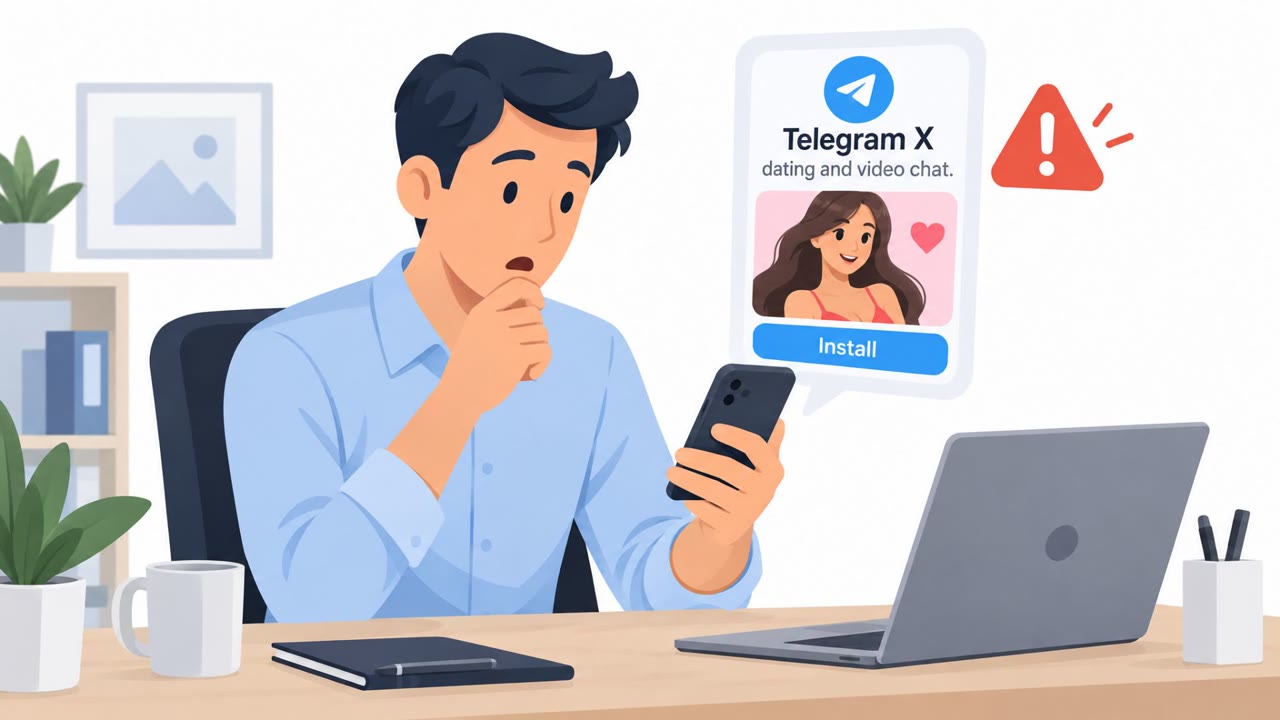
The MR ROBOT malware service rents customized fake Android banking apps to criminals targeting Indian bank customers. Victims are lured through fake Play Store-style pages and links in messaging apps, then tricked into installing apps that can steal banking details, intercept one-time passwords, and redirect bank verification calls.
How the attack worked
MR ROBOT is a malware-as-a-service platform that gives affiliates the ability to generate customized Android apps impersonating specific Indian banks. Each affiliate receives its own application ID, allowing the operation to scale across many fake bank apps at once. Victims are reached through fake Play Store-style pages and links shared in messaging apps, with lures that go beyond banking to include utility bills, telecom services, traffic fines, and government services. One storefront, a Telegram bot called APK Shield, offered around 36 different lure apps covering these categories.
Once installed, the malware shows fake screens designed to harvest banking credentials, card details, PINs, and identity information. It also intercepts text messages carrying one-time passwords, giving attackers the ability to bypass OTP-based verification. In addition, the malware can silently enable call forwarding, which can redirect a bank's fraud-check callback to a number the attackers control instead of the legitimate customer.
Why it succeeded
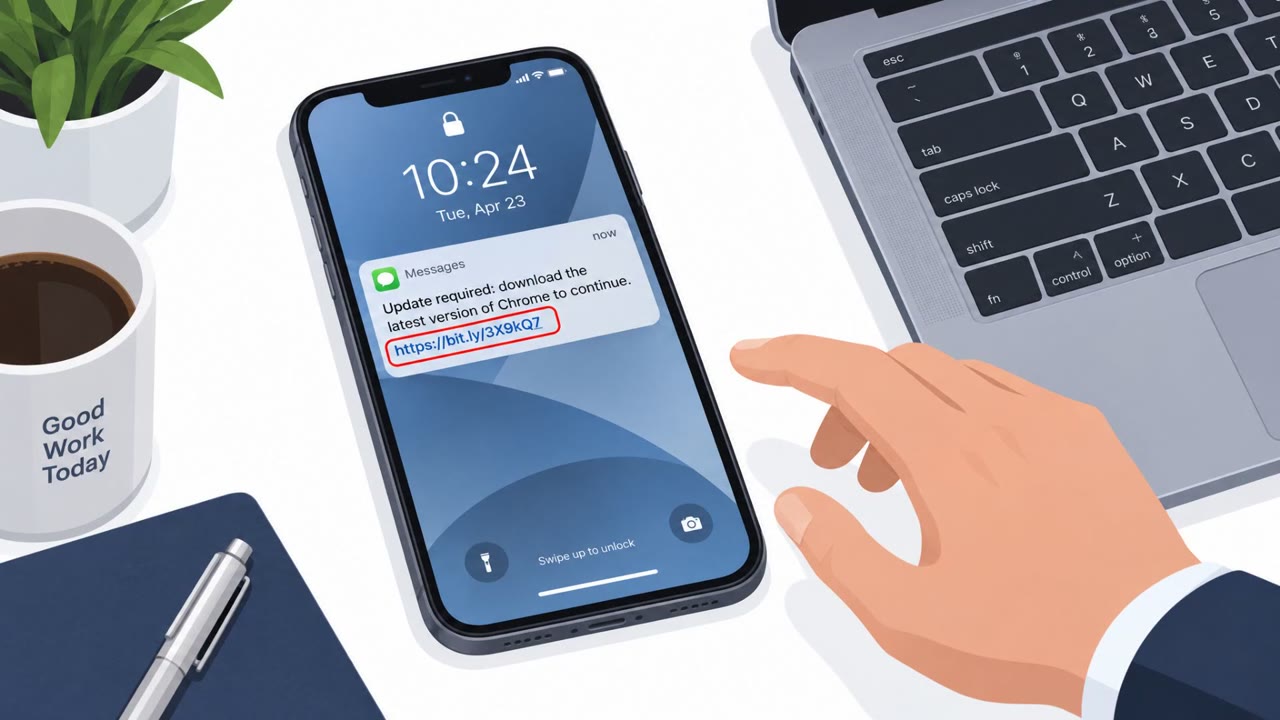
The lures worked because they mimicked something people expect to see and trust: an app update notice, a utility bill, or a government notice arriving through a familiar channel like text or WhatsApp. The fake Play Store-style download pages added a layer of visual legitimacy without requiring victims to use the real app store at all. By expanding beyond banks into utilities, telecom, traffic fines, and government services, the operation increased the number of plausible scenarios where a target might expect an app-installation prompt.
What to watch for
- An app-installation link arriving through text, WhatsApp, or Telegram rather than an official app store
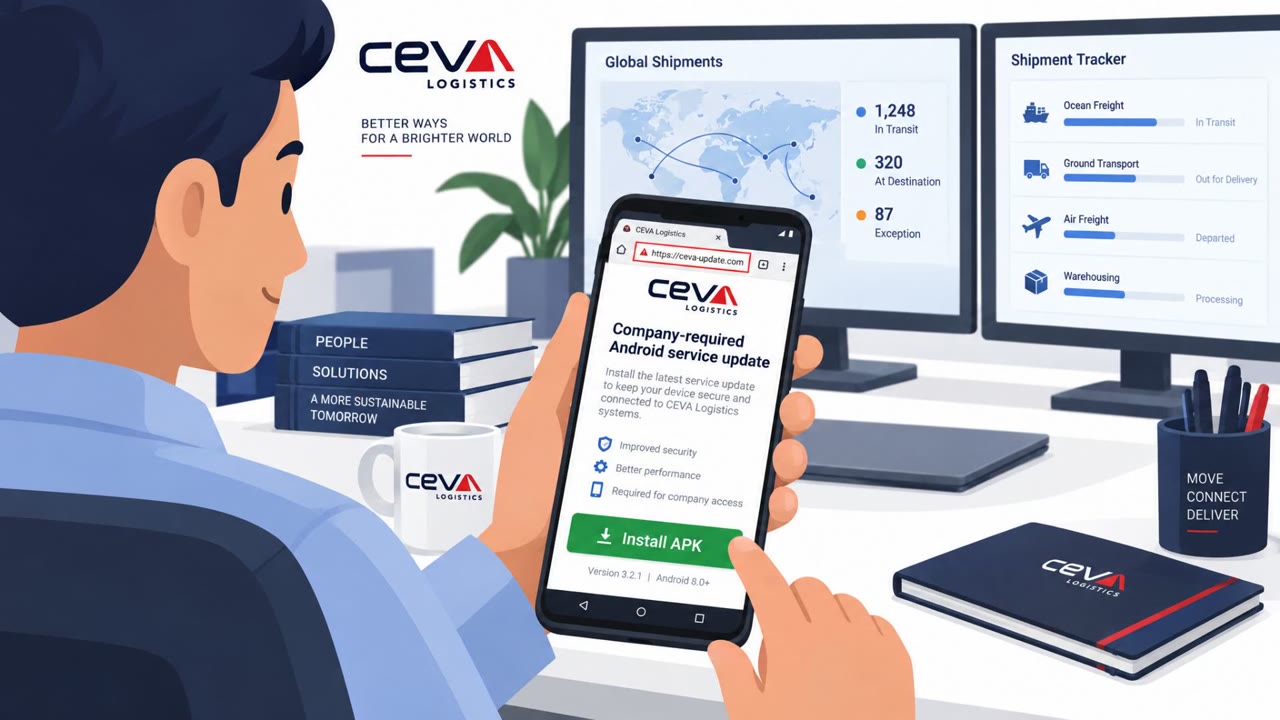
- A download page that imitates the Play Store but does not open the real store
- An unexpected bill, fine, or government notice paired with a request to install an app
- An app requesting banking credentials, card numbers, PINs, or one-time passwords after installation
How to build resistance
Organizations and individuals can reduce exposure by reinforcing a few consistent habits. Banking, utility, and government apps should only be installed from the official app store or a verified organizational website, never from a link sent through a messaging app. Any unexpected app-installation request tied to a bill, fine, or notice deserves scrutiny before anything is downloaded. Credentials, card details, PINs, and OTPs should never be entered into an app obtained from an unverified link. Finally, if a bank's fraud or verification call seems unusual or fails to reach a customer as expected, the safest response is to call the bank back using a trusted number from its official website or the back of a card rather than relying on an inbound call.
Key findings
- MR ROBOT is a malware-as-a-service platform that lets affiliates generate Android apps impersonating specific Indian banks.
- Lures are delivered through fake Play Store-style pages and messaging-app links, including links related to banks, utilities, telecom services, traffic fines, and government services.
- The malware can capture banking credentials, card information, PINs, identity details, and text-message one-time passwords.
- It can silently enable call forwarding, potentially redirecting bank fraud-check calls to attacker-controlled numbers.
- One tracked affiliate collected 5,407 text messages from 153 infected devices; about 4,000 messages came from banking and telecommunications short codes.
Who’s being targeted
- Commonly targeted roles: Retail banking customers, Mobile banking users, Customer service teams, Fraud prevention teams, Telecommunications customers, Utility customers.
- Affected industries: Banking, Telecommunications, Utilities, Government services.
- Attack channels: smishing, website.
- Impersonated: An Indian bank, A utility provider, telecom service, traffic authority, or government service.
Red flags to watch for
- The app is offered through a link rather than the official app store.
- The sender asks the customer to install a banking app from a text or messaging app.
- The download page only imitates the Play Store rather than opening the official store.
- An unexpected bill, fine, or government notice arrives with an app-installation link.
- The message directs the recipient to install an Android package instead of using an official website or app store.
- The app requests banking credentials, card details, PINs, or one-time passwords.
Frequently asked questions
What is MR ROBOT malware?
MR ROBOT is a malware-as-a-service platform that lets affiliates generate Android apps impersonating specific Indian banks, which are then used to steal banking details and intercept one-time passwords.
How are victims tricked into installing the fake apps?
Victims are lured through fake Play Store-style pages and links sent via messaging apps, with lures impersonating banks, utility providers, telecom services, traffic fines, and government services.
What can the malware actually do once installed?
It can capture banking credentials, card information, PINs, and identity details, intercept text-message one-time passwords, and silently enable call forwarding to redirect bank fraud-check calls.
How can someone avoid falling for this type of attack?
Install banking, utility, and government apps only from the official app store or a verified website, and never install an app sent through a text message, WhatsApp, or Telegram link.
Read the video transcript
“Your bank mobile app needs updating.” Got that text? The link opens a page that looks like Google Play, but isn’t. Install its bank-branded app, and MR ROBOT can grab your login, PIN, and text-message OTPs. Here’s the twist: it can also forward your bank’s fraud-check call away from you. The giveaway? An “app update” delivered by text, WhatsApp, or Telegram. Need the app? Skip the message link. Open your phone’s official app store and find it there.