A real, ongoing phishing campaign is tricking recipients into opening malicious archives that appear to contain harmless TrueType font files (.ttf) but actually hide a Lua-based loader. Once executed, the loader uses stealthy, mostly in-memory techniques to install remote access trojans and credential-stealing malware such as Remcos and Agent Tesla.
How the Attack Worked
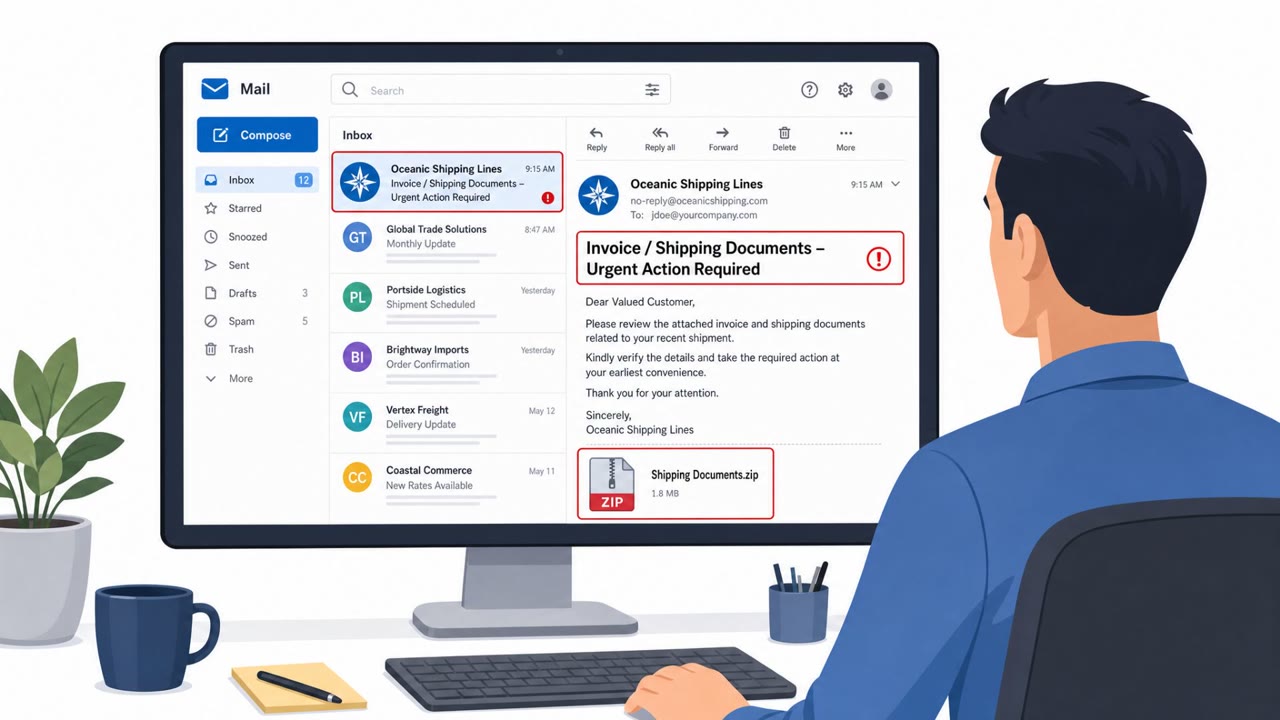
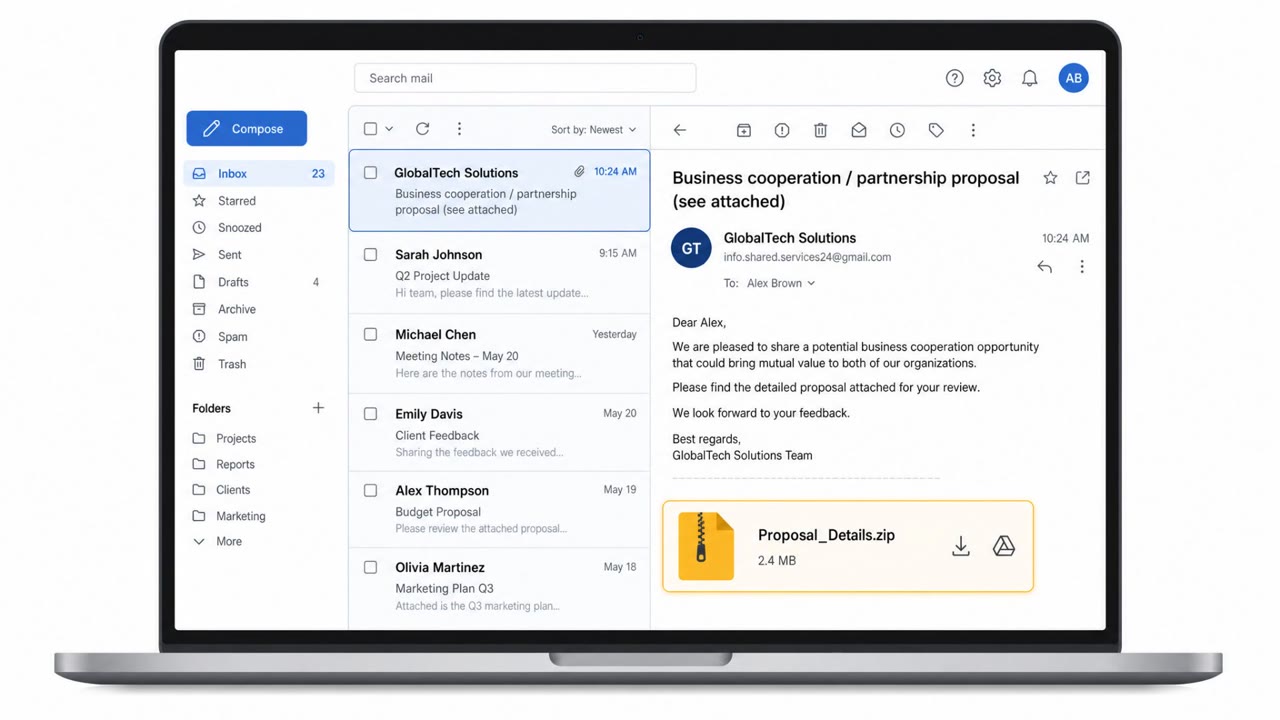
This campaign relied on phishing emails carrying payment-themed prompts and business-cooperation lures, often impersonating well-known companies to build trust with the recipient. Victims were pushed to open malicious archive attachments that appeared to contain a harmless TrueType font file. In reality, the file used a fake .ttf extension while the operating system treated it as a script rather than a font.
Once executed, the script ran heavily obfuscated JavaScript designed to defeat manual and automated analysis. It set up persistence through a scheduled task and used fileless, largely in-memory execution to lower its visibility to security tools. From there, the loader delivered a range of payloads including Remcos, Agent Tesla, XWorm, and a Snake Keylogger variant, all geared toward stealing credentials and maintaining long-term access.
Why It Succeeded
The campaign succeeded by combining a believable business pretext with a file-type trick that most people would not question. Payment and cooperation themes are common in Finance, Accounts Payable, Procurement, and Executive Assistant workflows, so an attachment referencing a payment or settlement did not stand out as unusual on its own. Layering that pretext with a file disguised as a font, an object type rarely scrutinized in day-to-day email handling, gave the payload a second layer of cover. The heavy obfuscation and in-memory execution further reduced the odds that security tooling would flag the activity before credentials were exposed.
What to Watch For
- Unexpected archive attachments tied to payment or business-cooperation requests
- A ".ttf" or other font file appearing inside a business or payment-related email
- Attachments that open in a scripting engine rather than a standard document or image viewer
- Requests to "double-click" or run a file to view payment details, rather than opening a normal PDF or document
Building Resistance
Organizations can reduce exposure by training employees, especially those in Finance, Accounts Payable, and Procurement roles, to treat unexpected archive attachments as high-risk and to verify sender requests through a known-good channel before opening anything. Staff should be reminded that file extensions and names are not proof of what a file actually is, and unusual types like ".ttf" appearing in a business context are worth reporting.
Because the ultimate goal of this kind of loader chain is credential theft, limiting the damage stolen credentials can cause matters as much as preventing the initial click. Enforcing least privilege and requiring re-authentication for sensitive systems and actions helps ensure that even if a credential is compromised, its usefulness to an attacker is limited.
Key findings
- Attackers used phishing emails with “payment-themed prompts” and “business-cooperation lures” to push malicious archives.
- The malware loader masqueraded as a TrueType font by using a “fake .ttf extension,” but the file was treated as a script.
- The chain used heavy JavaScript obfuscation, persistence via a scheduled task, and fileless/in-memory execution to reduce detection.
- Observed payloads included Remcos, Agent Tesla, XWorm, and “Best Private LOGGER” (classified as a Snake Keylogger variant).
- The attacker’s objective appears to be stealing credentials and maintaining persistence on victim systems.
Who’s being targeted
- Commonly targeted roles: Finance, Accounts Payable, Procurement, Executive Assistants, All Employees.
- Affected industries: Cross-industry (global campaign).
- Attack channels: email.
- Impersonated: A well-known company (impersonation in email branding/name).
Red flags to watch for
- Unexpected payment-themed message urging you to open an archive attachment
- A “.ttf” font file included in a business/payment workflow (unusual attachment type)
- Attachment contains scripts (e.g., JavaScript) or opens in scripting engines rather than a document viewer
- Archive attachment that contains a .js file or other executable content
- Files with misleading names/extensions intended to look harmless
- Requests to run/open files rather than view a standard PDF/document
Frequently asked questions
How did attackers disguise the malware as a font file?
The malicious loader was given a fake .ttf extension so it looked like a legitimate TrueType font, but it was actually treated as a script when executed.
What malware was delivered through this campaign?
Observed payloads included Remcos, Agent Tesla, XWorm, and a Snake Keylogger variant referred to as "Best Private LOGGER," all aimed at credential theft and persistence.
What lures were used to get victims to open the attachment?
Attackers used payment-themed prompts and business-cooperation lures, often impersonating well-known companies, to convince recipients to open malicious archives.
How did the malware avoid detection?
The chain used heavy JavaScript obfuscation, a scheduled task for persistence, and fileless or mostly in-memory execution to reduce the chance of detection.
Read the video transcript
You get an email: “Payment cooperation details, see attached.” Inside the ZIP? A random .ttf font file. Here’s the trick: that “font” isn’t a font at all. It’s a Lua-based script, smuggled in with a fake .ttf extension to quietly drop Remcos, Agent Tesla, and other credential-stealing malware. Double-click it, and a heavily obfuscated JavaScript chain kicks off in the background, copies itself into a system folder, sets a scheduled task, and lives mostly in memory while it hunts for passwords. If you ever see a payment or cooperation email with a ZIP and a weird .ttf or script inside, stop and forward it to the security team, don’t open the archive at all.