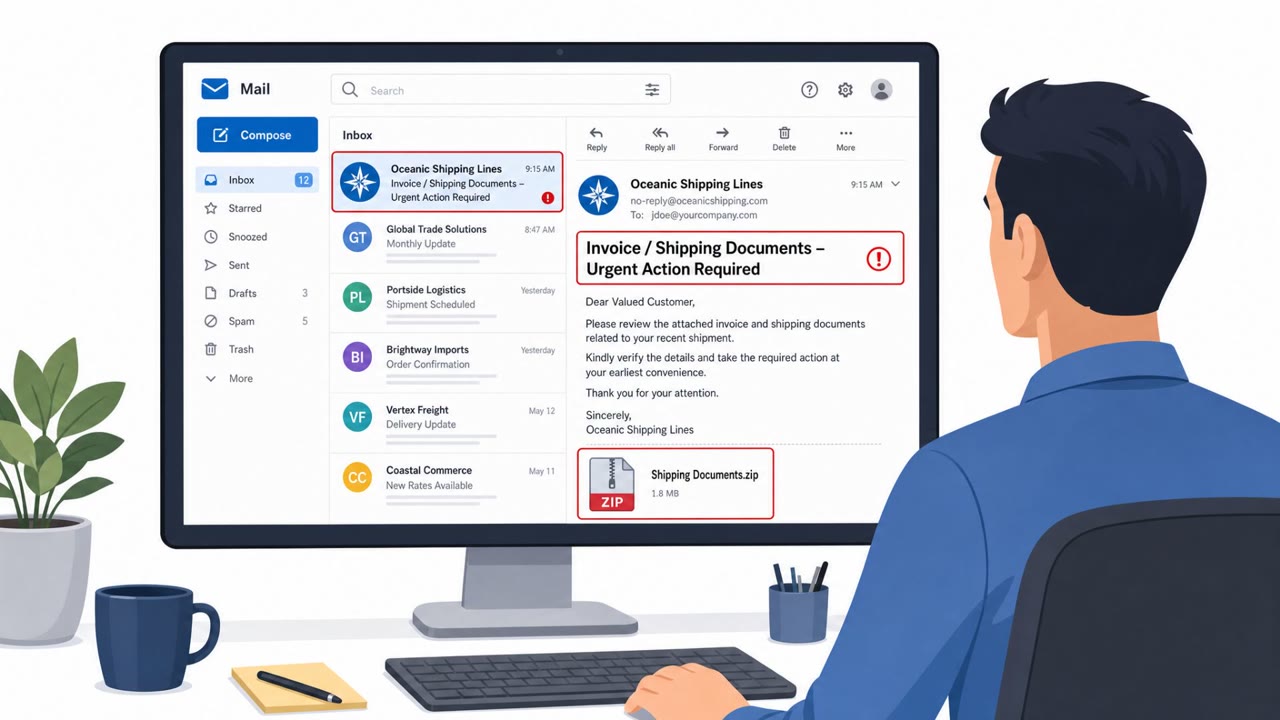
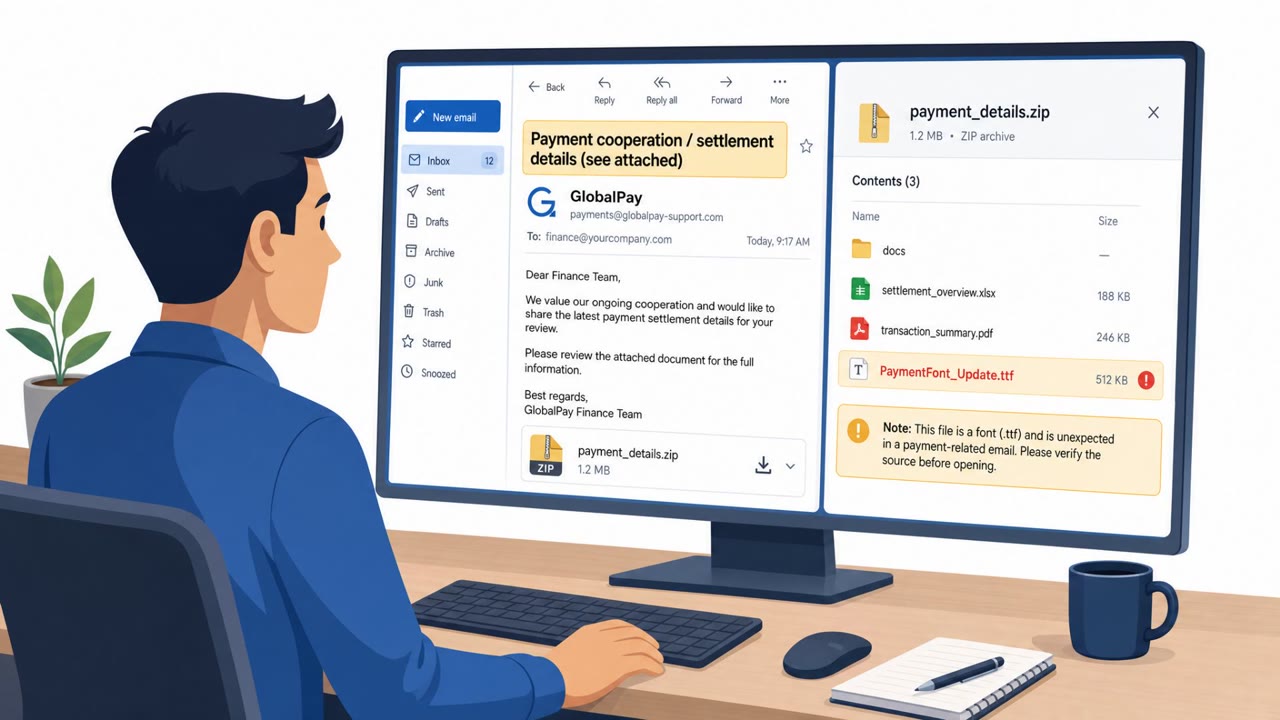
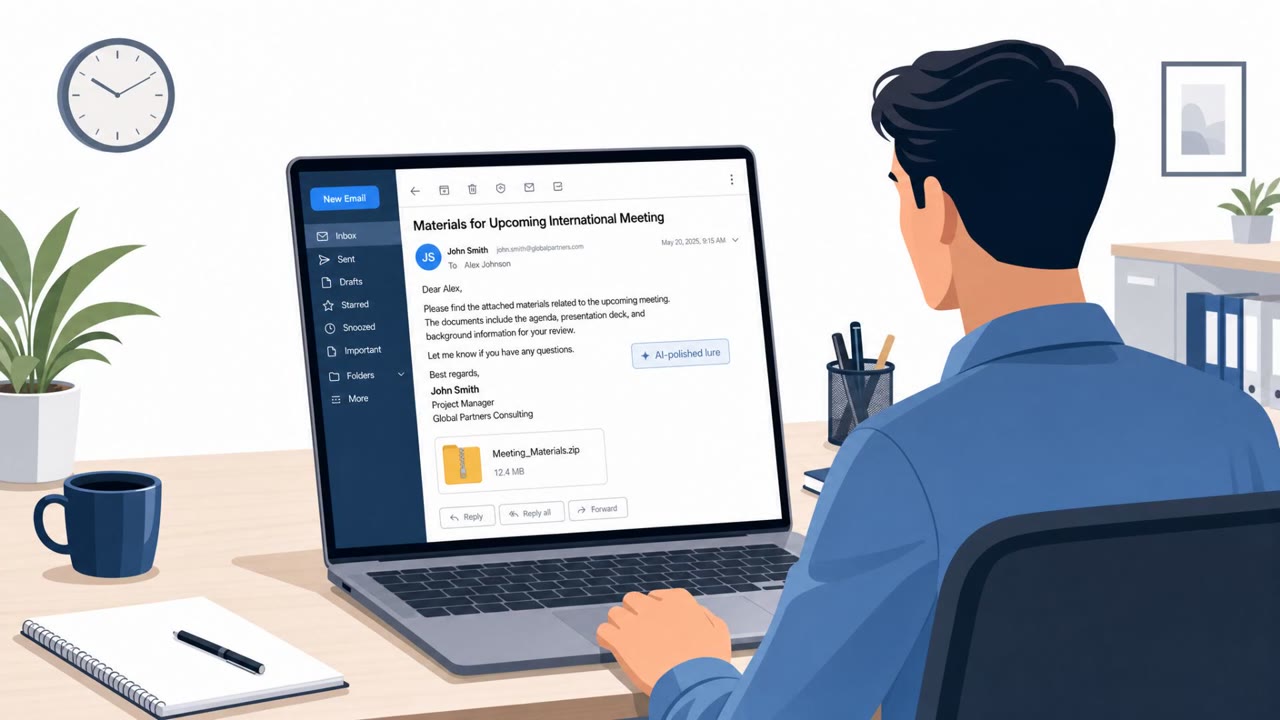
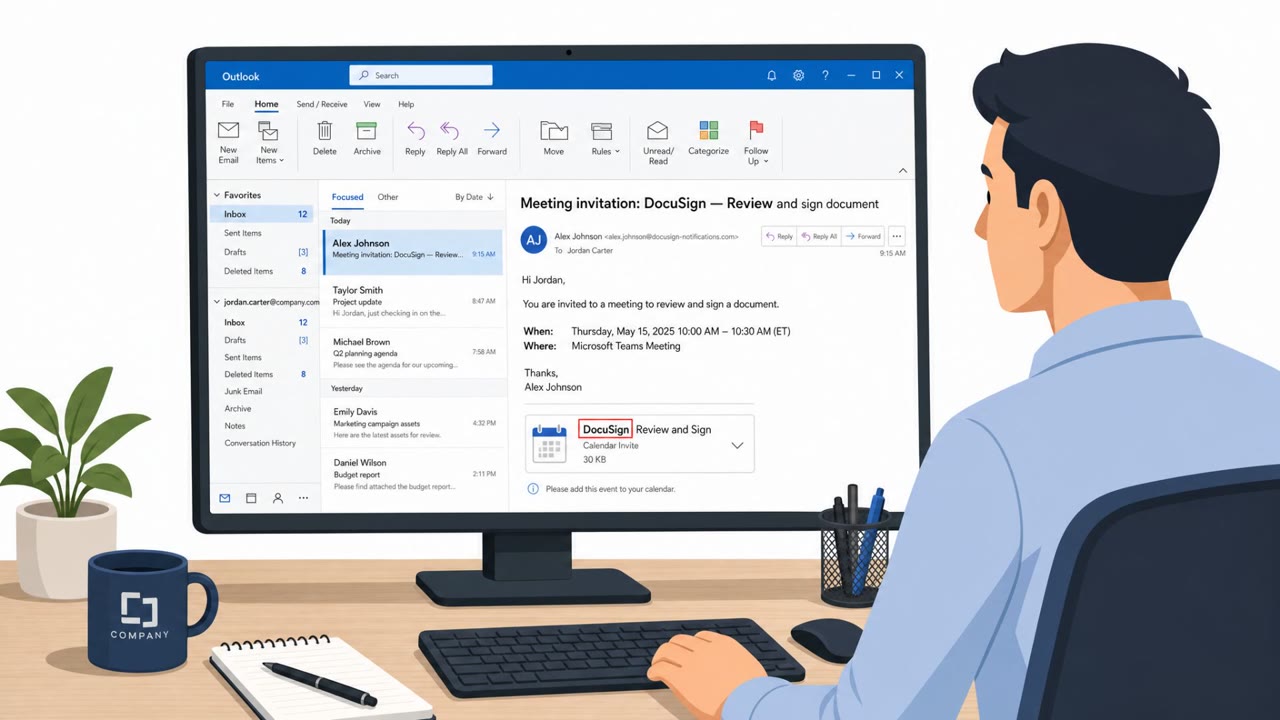
Researchers report a real, ongoing phishing campaign where attackers impersonate well-known companies and send business or payment-themed emails that trick recipients into opening a compressed attachment. Inside is heavily obfuscated script and a file disguised as a TrueType font (.ttf) that ultimately installs credential-stealing malware and remote-access tools on Windows systems.
How the attack worked
This phishing campaign impersonates well-known companies and uses business cooperation or payment themed emails to convince recipients to open a compressed archive attachment. Inside the archive is heavily obfuscated JavaScript/JScript that establishes persistence and then drops either a legitimate AutoIt executable or a LuaJIT interpreter, along with a malicious script packaged inside a file with a .ttf extension. That fake font file is actually a Lua-based loader that runs multiple layers of de-obfuscation before decrypting and executing shellcode directly in memory, a fileless approach that helps it evade detection. The end result is deployment of remote access tools and infostealers, including Agent Tesla, Remcos, XWorm, and a Snake Keylogger variant.
Why it succeeded
The campaign relies on a combination of brand impersonation and a familiar business pretext, either a partnership proposal or a payment/invoice notice, to get a recipient to open a compressed attachment without hesitation. Because the payload is hidden inside a file disguised as a font, it exploits an assumption that file extensions reflect actual file type or intent. As one source in the reporting put it, security controls cannot treat a file extension as proof of file type or intent. The technical sophistication of the loader chain only matters because a person first opens the email and the attachment.
What to watch for
- Unexpected compressed (ZIP/RAR) attachments tied to business cooperation or payment requests
- Generic outreach that pushes urgency to open an archive rather than review details in the email body
- Attachment contents that do not match their stated purpose, such as a "font" file behaving like an executable
- Emails impersonating well-known companies using vendor, customer, or partnership language
How to build resistance
Organizations should treat unexpected compressed attachments as high-risk, particularly when tied to business cooperation or payment themes, and encourage verification through a known contact method before opening. Training should focus on the human decision point rather than only technical detail, since the most sophisticated evasion techniques still depend on someone opening an email that looks trustworthy and acting on it. Limiting what stolen credentials can reach through least privilege, requiring re-authentication for sensitive systems, and monitoring for anomalous session behavior can reduce the impact if a phishing email does succeed. Relevant MITRE ATT&CK techniques referenced in this campaign include spearphishing attachment (T1566.001), user execution of a malicious file (T1204.002), obfuscated files or information (T1027), and JavaScript-based scripting execution (T1059.007), which map to detection and response opportunities across the kill chain.
Key findings
- A global phishing campaign impersonates well-known companies and uses business cooperation or payment-related themes to get recipients to open compressed archives.
- The attachment chain includes heavily obfuscated JavaScript/JScript and a Lua-based loader disguised as a .ttf font file.
- The loader uses layered de-obfuscation and “fileless” in-memory execution to deploy RATs and infostealers.
- Observed payloads include Agent Tesla, Remcos, XWorm, and a Snake Keylogger variant (“Best Private LOGGER”).
- The end goal is credential theft and maintaining long-term access (persistence) on Windows systems.
Who’s being targeted
- Commonly targeted roles: All employees, Finance / Accounts Payable, Sales / Business Development, Procurement, Executive Assistants.
- Attack channels: email.
- Impersonated: A well-known company (brand impersonation), A well-known company (vendor/customer impersonation).
Red flags to watch for
- Unexpected compressed attachment for a routine business request
- Generic “business cooperation” outreach that pushes you to open an archive
- Attachment contents don’t match what they claim to be (e.g., a “font” file used as a loader)
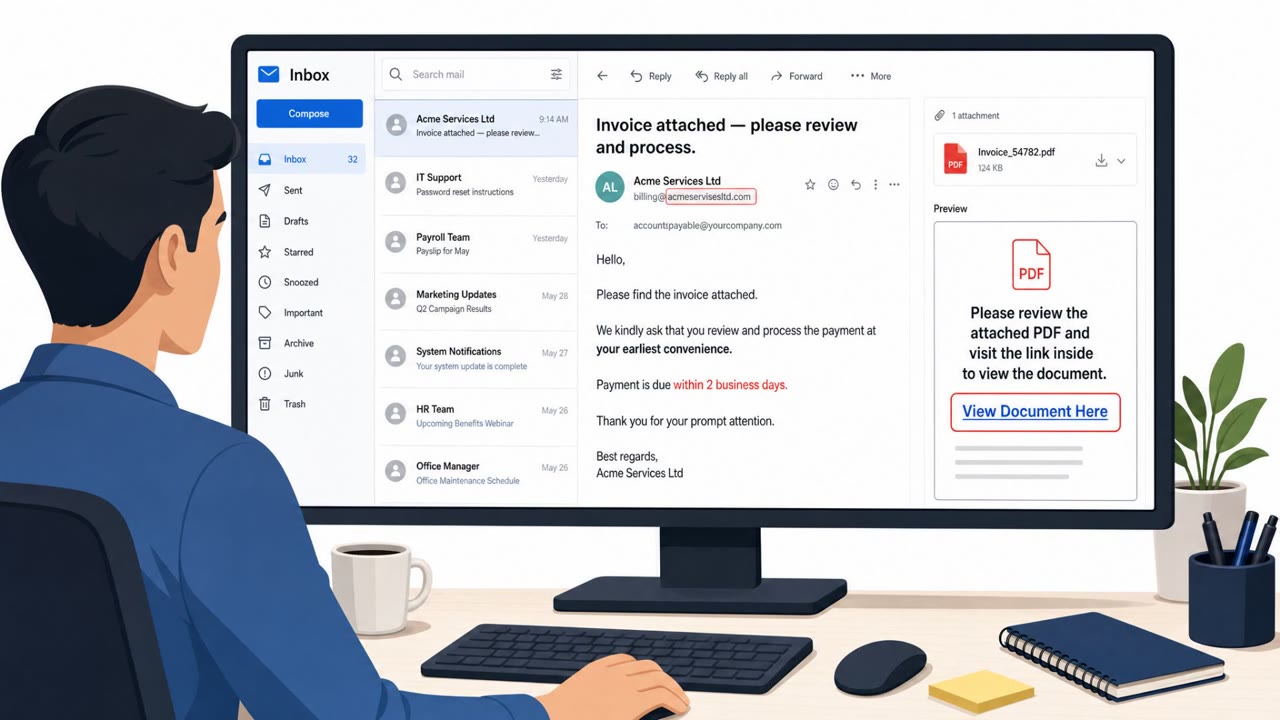
- Payment urgency paired with a compressed archive attachment
- Sender claims to be a known company but uses an unusual attachment format/workflow
- File extension and file behavior don’t match (e.g., .ttf used as executable content)
Frequently asked questions
How does the fake font file attack work?
Victims open a compressed attachment from a phishing email that claims to be about business cooperation or payment. Inside is obfuscated script that drops a file disguised as a .ttf font, which is actually a Lua-based loader that decrypts and runs shellcode in memory.
What malware gets installed after the font file loader runs?
Observed payloads include Agent Tesla, Remcos, XWorm, and a Snake Keylogger variant called Best Private LOGGER, all used for credential theft and persistent access on Windows systems.
Why does a .ttf extension bypass suspicion?
File extensions are not proof of file type or intent. A font file extension looks harmless to most employees and can slip past assumptions built into everyday email handling.
Who is most at risk from this phishing campaign?
Finance, accounts payable, sales, business development, procurement and executive assistant roles are commonly targeted because the pretexts center on payment requests and business cooperation.
Read the video transcript
You get an email: "Business cooperation / partnership proposal" from a big-name company, with a ZIP attached. Inside that ZIP is a script and a file that looks like a TrueType font, .ttf. But this "font" is actually a Lua-based loader that quietly drops Agent Tesla, Remcos, XWorm, even a Snake Keylogger variant. Here’s the trick: the email looks like normal business, cooperation or payment, big brand name, but the workflow is weird. Real partners don’t send surprise ZIPs where a "font" file runs like a program. If you get a "business cooperation" or "payment" email with a ZIP, stop. Don’t open the archive, call or message your known contact at that company and confirm first.