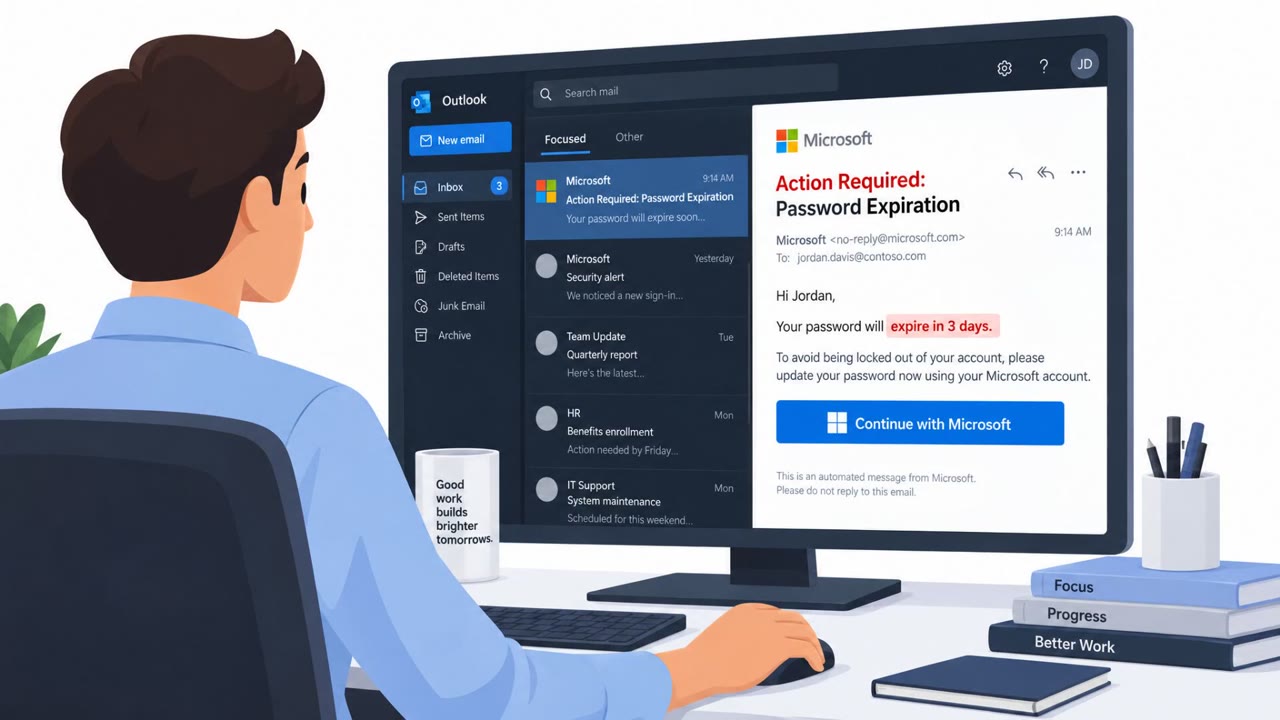
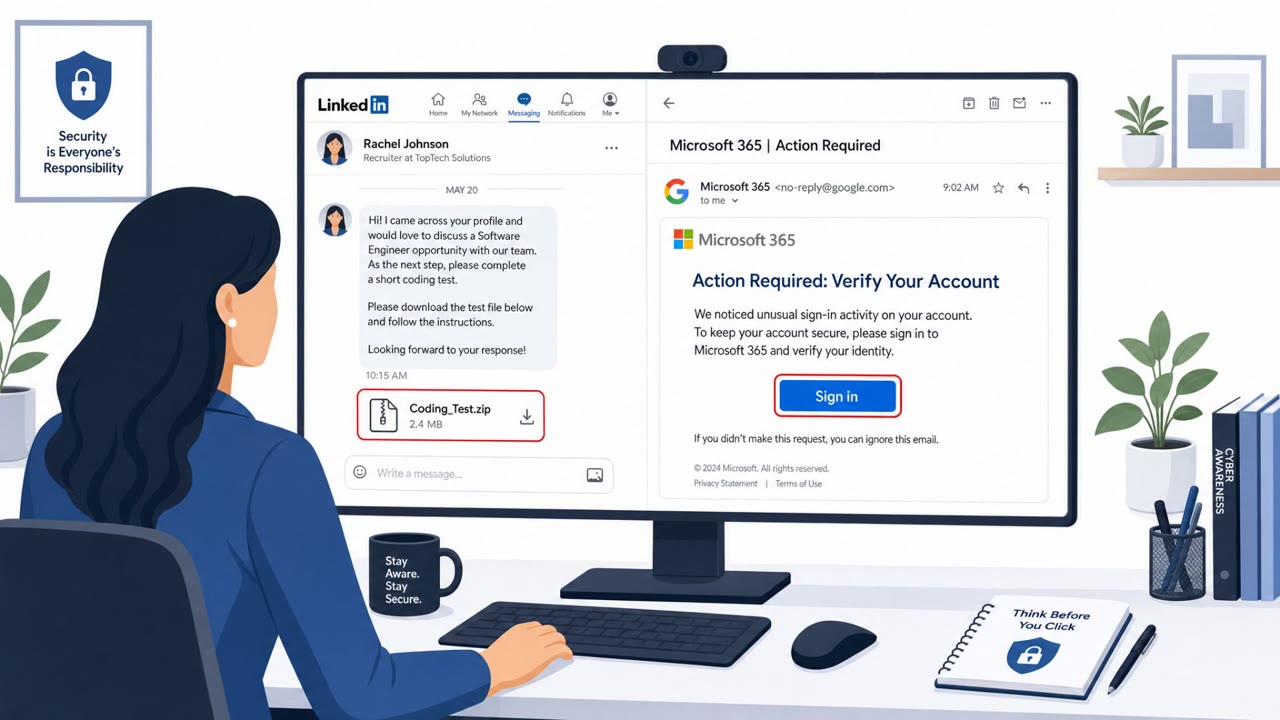
Researchers describe BraZetsu, a Windows malware framework used by an initial-access broker to turn infected PCs into "access for sale" on a criminal marketplace. While the malware itself is technical, the article includes real-world delivery details pointing to phishing: victims are tricked into opening a PDF and visiting a malicious website that drops a script and ultimately runs an EXE payload.
Key findings
- BraZetsu is positioned as an initial-access toolkit that helps sell access to infected Windows systems via an underground "access-as-a-service" marketplace.
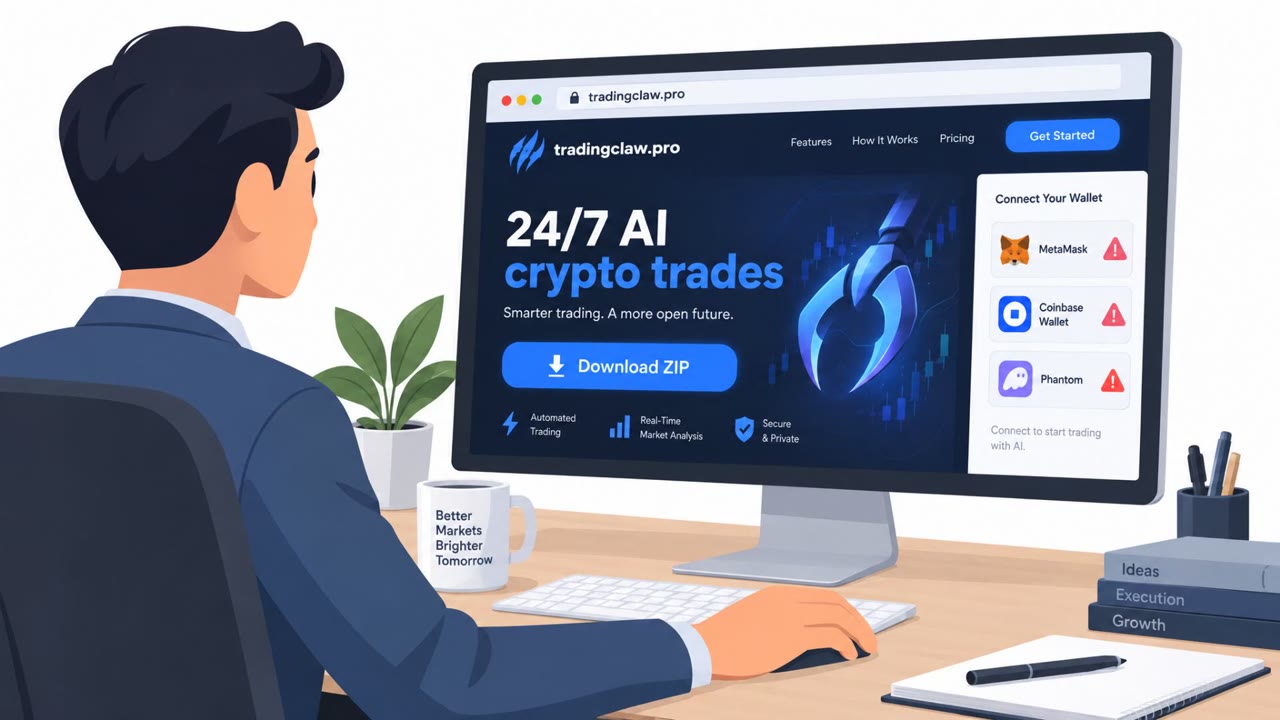
- The likely infection route is social engineering, starting with a loader that masquerades as Microsoft Edge and is downloaded from a specific domain.
- A related, documented campaign (Ousaban) used an email-delivered phishing PDF to push victims to a malicious site that checks geography (Spain/Portugal) before dropping a VBS script and then an EXE payload.
- The article also references other real lure themes used in the region, including invoice-themed attachments and phishing that impersonates judicial summons.
Who’s being targeted
- Commonly targeted roles: Finance, Accounts Payable, Treasury, Procurement, Legal, HR, Executive Assistants, All employees in Spain/Portugal/Brazil operations.
- Affected industries: Financial services, E-commerce, Corporate / general business, Industrial, Law enforcement / government.
- Attack channels: email, website.
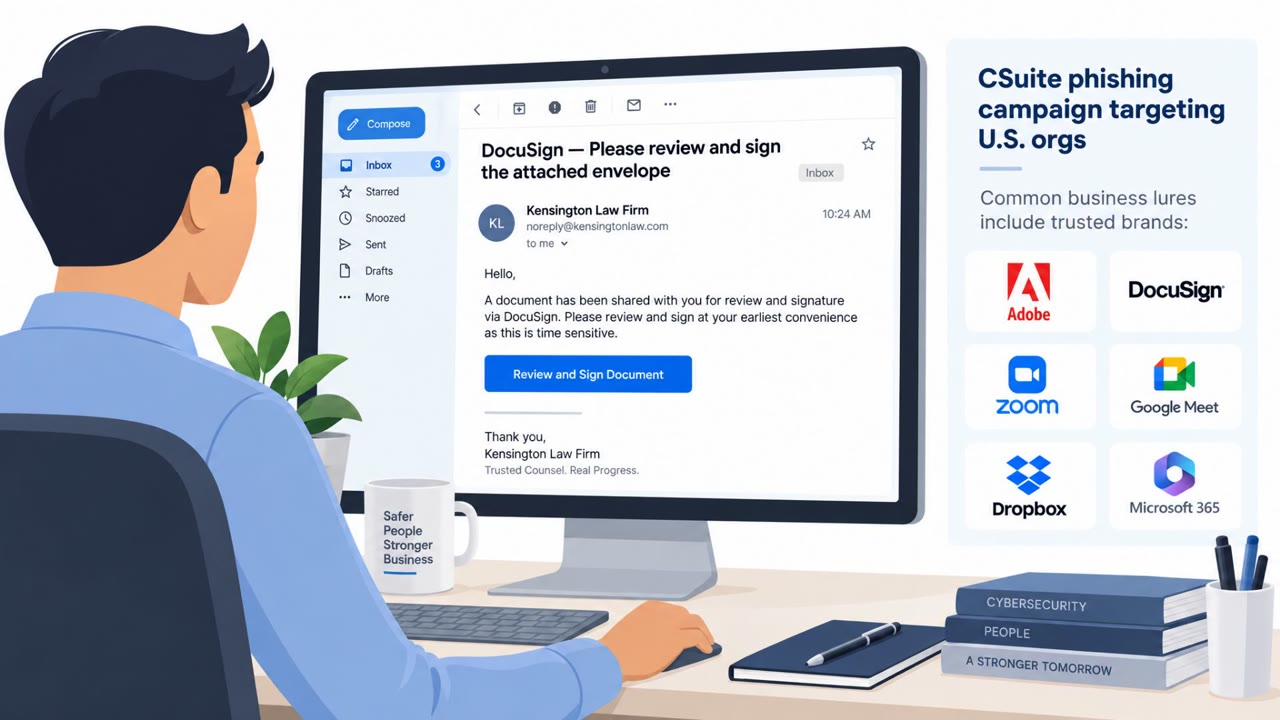
- Impersonated: A business sender requesting the user view a PDF (phishing), Billing/Invoice sender (vendor or accounts receivable), Court / judicial authority.
Awareness takeaways
- Treat PDFs that push you to click a link and download another file as highly suspicious; report instead of proceeding.
- Block and report unexpected script downloads (e.g., .VBS) and do not run files downloaded from a website prompted by an email.
- Be extra cautious with common business lures (invoices, legal notices) and verify via known contact methods before opening attachments.
Red flags to watch for
- PDF pushes you to a website to view the ‘real’ content
- Website checks your location/environment before offering a download
- Unexpected script/file download (e.g., VBS) to ‘continue’
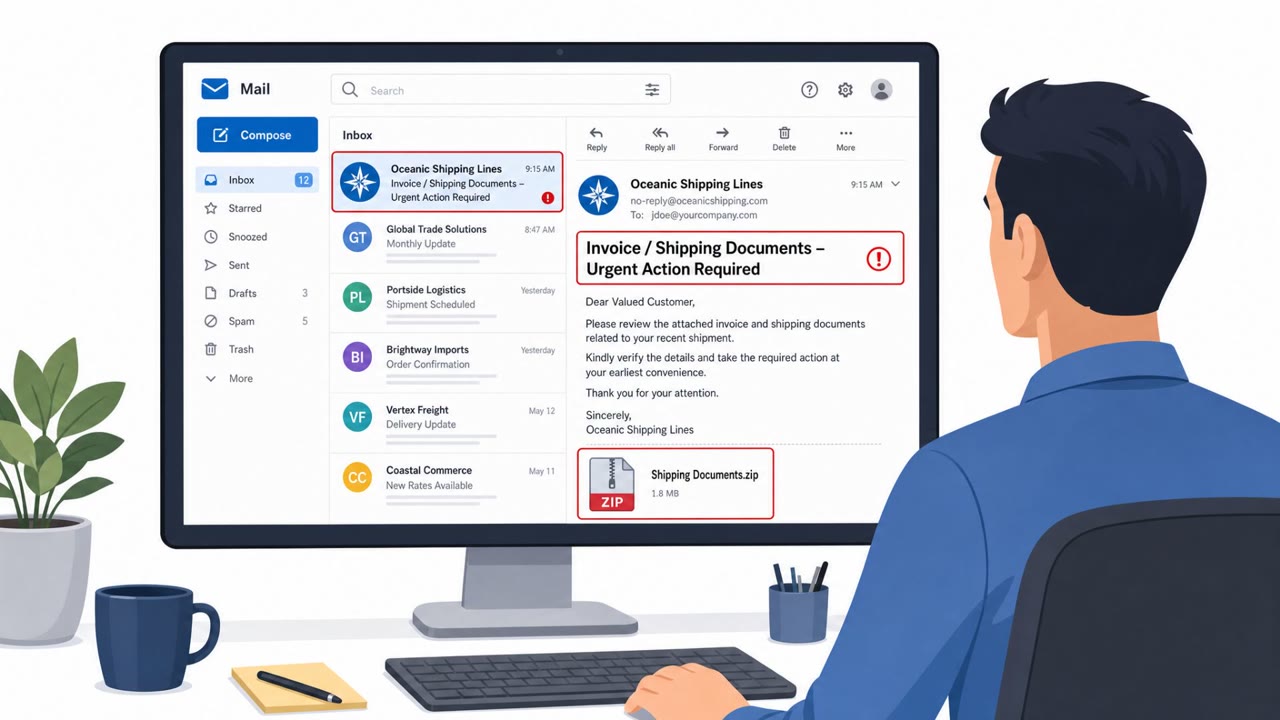
- Unusual attachment type for invoices (SVG)
- Pressure to open and process quickly
- Sender/domain doesn’t match the usual vendor records
- Unexpected legal threat delivered by email
- Urgent/serious tone pushing immediate action
- Attachment/link not from an official, verifiable domain
Read the video transcript
You get an email: “Invoice attached, please review and process.” Looks normal, right? The attached PDF says, “Click here to view the full document online.” Behind that click is BraZetsu, a Windows malware toolkit used to turn your computer into "access for sale" on underground markets. The phishing PDF sends you to a fake site that scans your environment, then, if you’re in the right region, drops a VBS script and finally an EXE payload. Here’s the tell: a so-called invoice PDF or SVG that doesn’t actually show the document, but pushes you to a website, which then tries to download a script, like .VBS, to "continue." That’s not how real invoices or Edge updates work. If a PDF or invoice email sends you to a site that wants you to download or run a script or EXE, stop. Don’t open it, report the email and the file to Security immediately.