RFQ Emails Used to Trick Staff Into Login Theft

Help Net Security · Medium sophistication
Last updated October 16, 2026

Researchers observed a surge in short "request for quotation" (RFQ) emails that look like routine business inquiries to sales and procurement teams. After the victim replies, attackers send a follow-up link disguised as project documents or a procurement portal that leads to a fake Microsoft 365/Google login page to steal credentials and sometimes MFA or session tokens.

Key findings

  • Fortra tracked a "12-fold increase" in malicious emails mentioning “RFQ” between Oct 2025 and Sep 2026.
  • In "nearly 73%" of cases, the lure led to a credential-stealing page.
  • Attack flow: a minimal initial RFQ message prompts a reply, then the attacker sends an external link posing as "project drawings," an "RFQ package," a "secure file transfer," or a "procurement portal."
  • Phishing pages commonly impersonate "Microsoft 365" or "Google Workspace" sign-ins and may capture "MFA approvals, one-time passcodes, cookies or session tokens."
  • Emails came from "664 different sender domains," limiting the effectiveness of blocklists/reputation alone.
  • Compromised mailboxes can be used for follow-on fraud like "payment-redirection fraud" and "invoice manipulation."

Who’s being targeted

  • Commonly targeted roles: Sales, Procurement, Customer-facing teams, Finance (AP/AR), Executive assistants.
  • Affected industries: Any industry with sales, procurement, and customer-facing teams.
  • Attack channels: email, website.
  • Impersonated: A buyer/purchasing manager/procurement specialist at another company, Procurement portal / secure file transfer for the supposed RFQ.

Awareness takeaways

  • Treat unexpected RFQ-style inquiries as a known phishing pattern, especially when the first email is vague.
  • Be cautious of follow-up links claiming to be “project drawings,” “RFQ package,” or “procurement portal,” especially when they lead to a Microsoft 365/Google login prompt.
  • Don’t rely only on blocklists or sender reputation checks; verify the requester through trusted channels when possible.
  • Assume mailbox compromise can lead to broader business fraud (invoice/payment changes) and respond quickly to suspected account takeover.

Red flags to watch for

  • Message is unusually short and provides almost no project details
  • Sender is unfamiliar but asks for business action immediately
  • The request is framed as an opportunity to lower suspicion
  • External link arrives only after you reply, pressuring you to trust the conversation
  • Link leads to a login prompt for Microsoft 365/Google Workspace unrelated to the sender’s organization
  • Login page asks for MFA/one-time passcodes or triggers approval prompts unexpectedly
Try Mirage

Mirage safely runs attacks like this one against your own team, so you find out what happens before a real adversary does.

Get a demo
Read the video transcript

You get a new email: “Can you confirm availability to quote on an upcoming project (RFQ)?” Looks routine, right? Here’s the trick: after you reply, they send a link to “project drawings” or an “RFQ package” that opens a fake Microsoft 365 or Google sign-in to steal your login and even MFA codes. This isn’t rare: one report saw a 12-fold jump in RFQ emails, and in nearly 73 percent the link led to a credential-stealing page that can be used later for payment-redirection or invoice fraud. If an RFQ email is vague and then sends a link that makes you log in to view “project drawings” or an “RFQ package,” stop and forward it to the security team for verification before you sign in.

Similar attacks

Fake AI Tools Steal Logins and Push Malware

Fake AI Tools Steal Logins and Push Malware

A weekly incident roundup describes multiple real-world attacks where criminals used "AI" branding to trick people into handing over passwords/MFA codes or running harmful PowerShell commands. The write-up includes two practical, repeatable social-engineering workflows: fake AI-platform login pages…

October 15, 2026
Chinese Spy Phish + Airmen BEC Sentenced

Chinese Spy Phish + Airmen BEC Sentenced

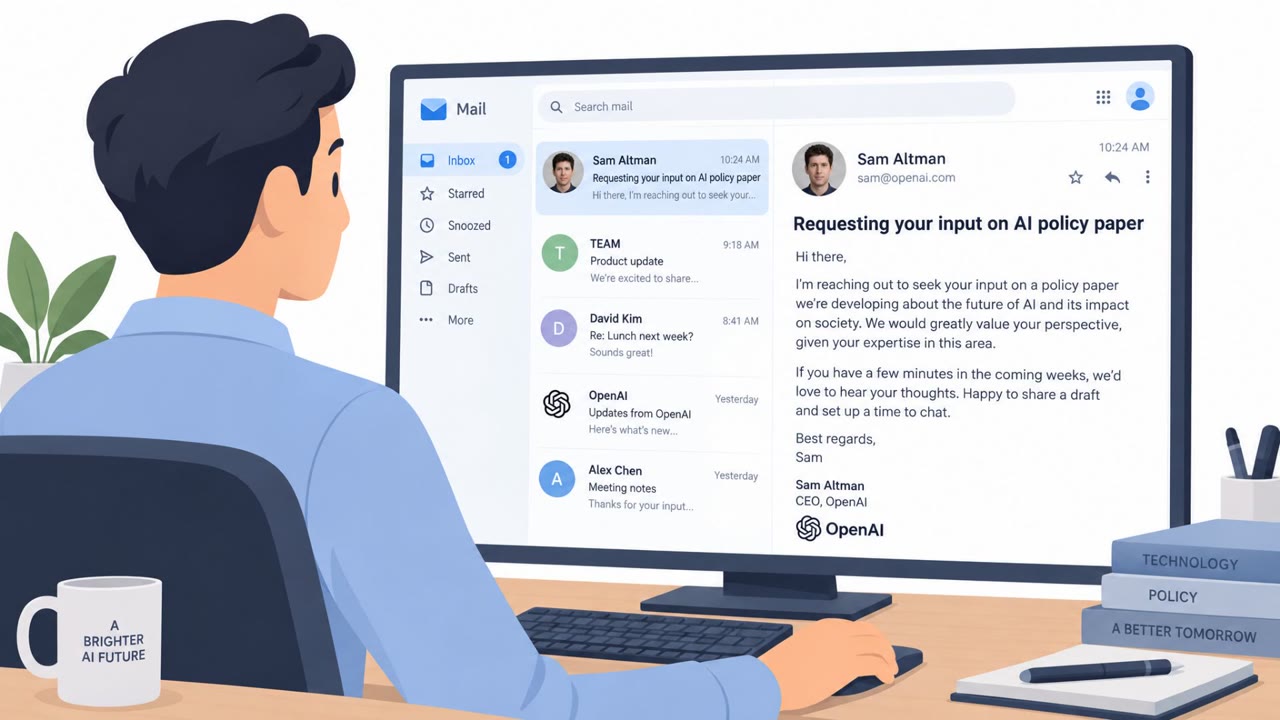
A China-aligned group (TA419) impersonated well-known U.S. figures to lure AI policy experts into a fake OneDrive/Microsoft 365 login that could steal session cookies even when MFA is enabled. Separately, two U.S. airmen were sentenced for a multi-year business email compromise scheme where they…

October 2, 2026
Fake ChatGPT Invoice Email Steals Logins

Fake ChatGPT Invoice Email Steals Logins

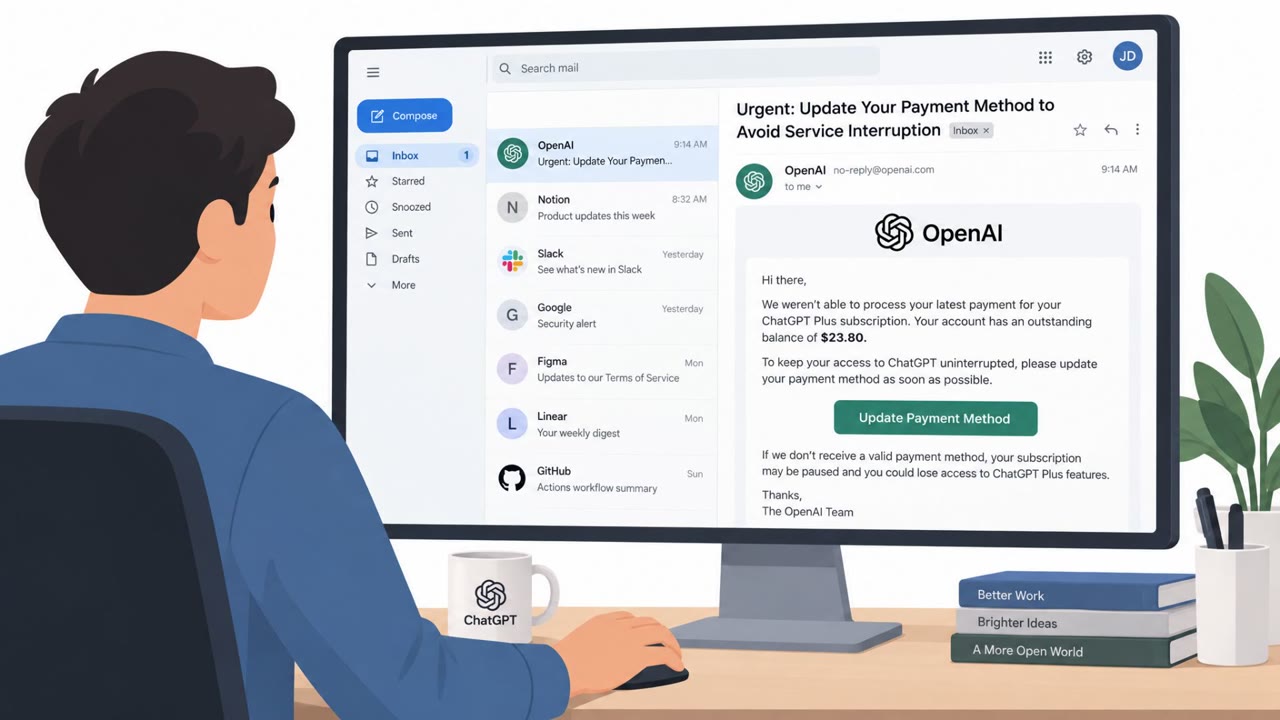
Attackers are sending fake ChatGPT billing emails that pressure people to “update payment” within 48 hours to avoid service interruption. The message links to a convincing look‑alike ChatGPT login page via a Google redirect, aiming to steal OpenAI credentials.

September 18, 2026
DocuSign Share Lure Steals Microsoft 365 Sessions

DocuSign Share Lure Steals Microsoft 365 Sessions

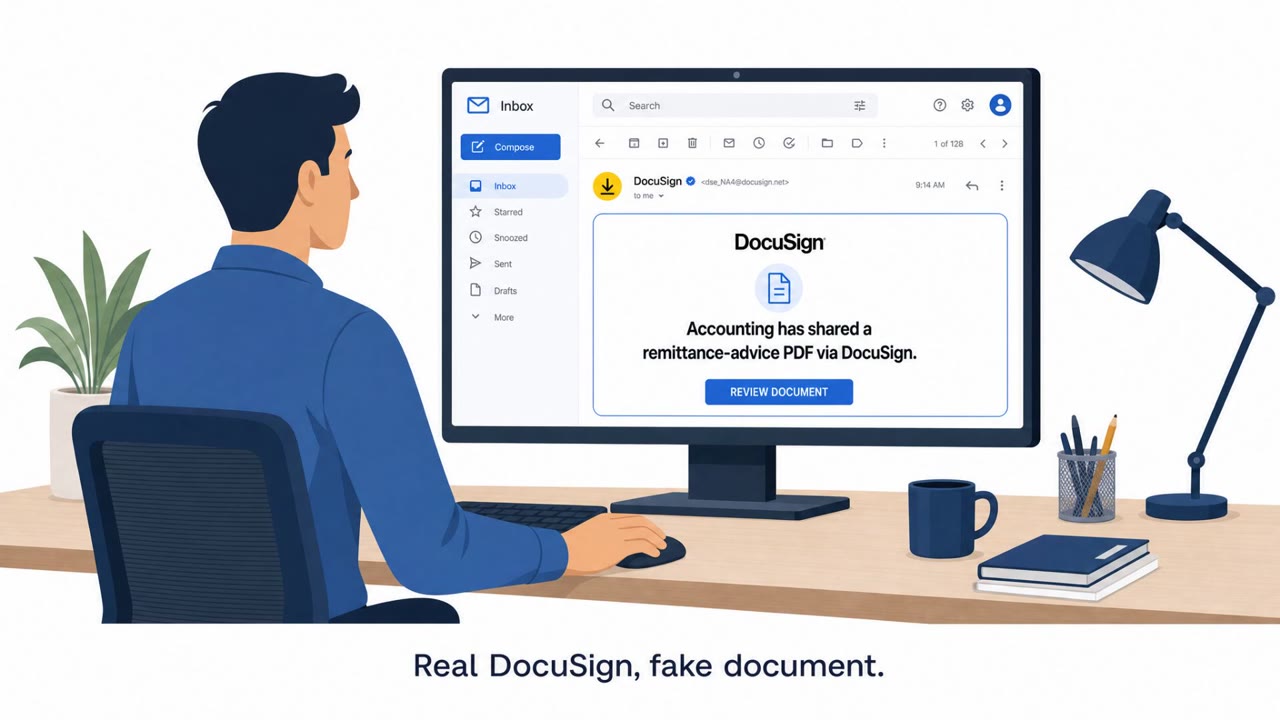
Researchers described an active phishing operation using real DocuSign notifications to trick employees into opening a fake “remittance-advice” document and clicking a hidden malicious link. The attack routes victims through legitimate Microsoft/Google pages before landing on an…

August 28, 2026
Phishing Link Could Plant a Rogue ChatGPT Agent

Phishing Link Could Plant a Rogue ChatGPT Agent

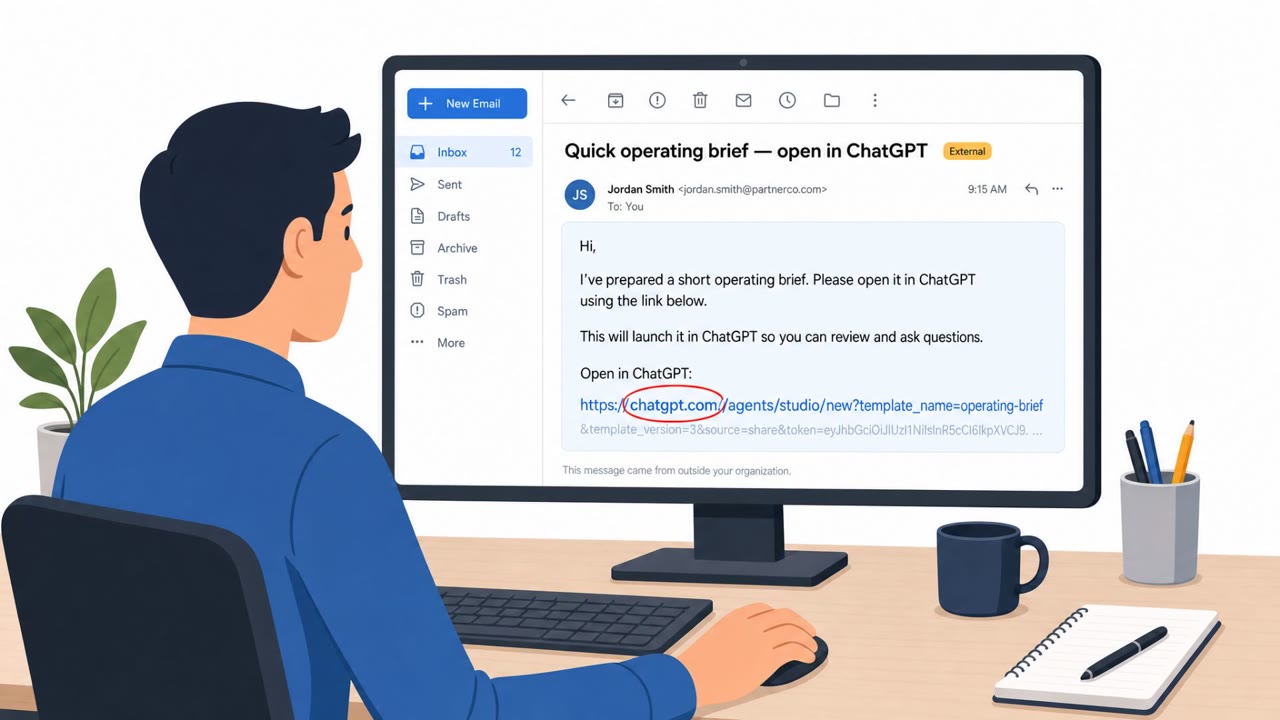
Researchers described a now-patched flaw ("AgentForger") where a single benign-looking ChatGPT link could silently create and publish an attacker-controlled Workspace Agent inside a company. If an employee was already logged in and had connected apps (like email, Drive, Slack, or Teams), the agent…

July 24, 2026
Fake Google Ads “Sync” Alert Steals Credentials

Fake Google Ads “Sync” Alert Steals Credentials

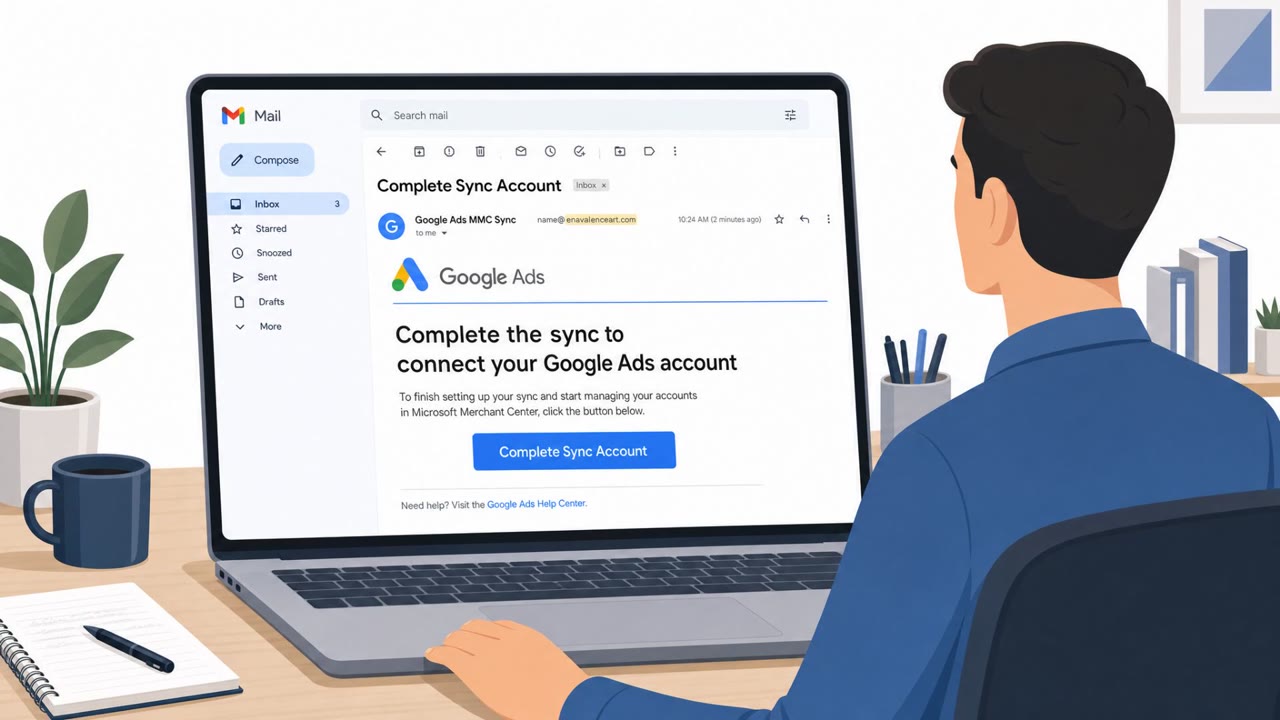
Cofense observed a real phishing campaign impersonating Google Ads Sync Accounts (MMC) with a fake “maintenance/system upgrade” notice. The email pressures recipients to click “Complete Sync Account,” sending them through lookalike sites and a fake Google sign-in pop-up that captures credentials.…

July 21, 2026