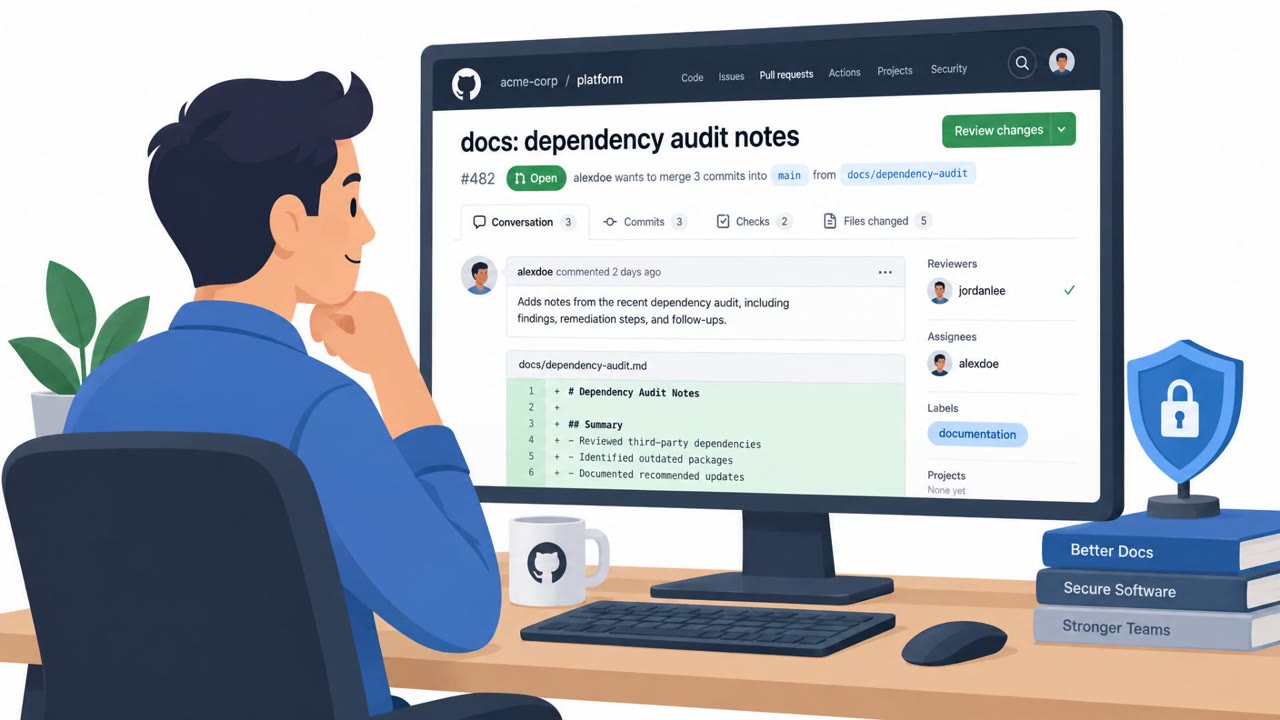
The wfx-loot campaign used stolen developer GitHub accounts to reach tens of thousands of repositories. Attackers used a believable pull-request title, "docs: dependency audit notes," and malicious GitHub Actions workflows to search for and steal tokens, cloud credentials, and API keys. The incident shows why a single developer account can become a route into many connected projects and automated systems.
Key findings
- The wfx-loot campaign involved 4,837 compromised GitHub accounts and activity across 61,764 repositories.
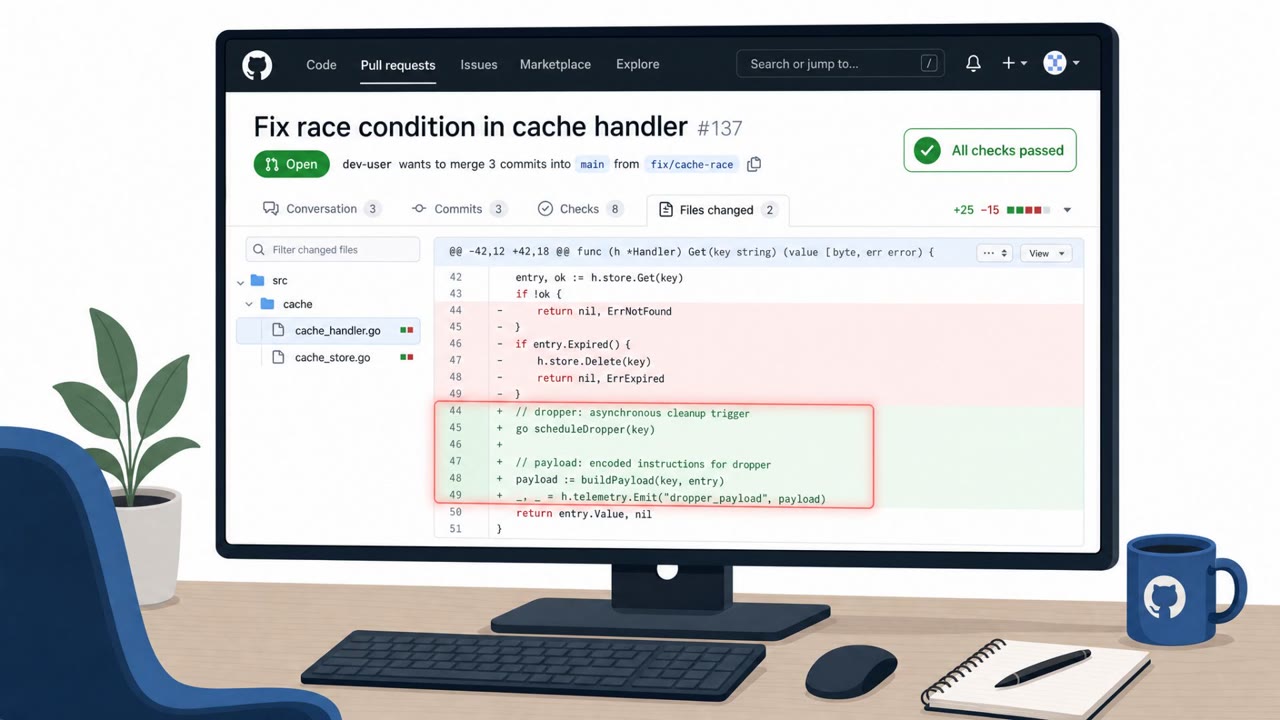
- Attackers used stolen developer credentials to examine repository permissions and add malicious GitHub Actions workflows.
- A suspicious pull request titled "docs: dependency audit notes" was associated with attacker efforts to identify targets.
- The malware sought GitHub access tokens, cloud credentials, and API keys for AI services.
- SafeDep reported malicious commits in 8,093 repositories.
- The initial source of the stolen credentials has not been confirmed.
Who’s being targeted
- Commonly targeted roles: Developers, GitHub repository maintainers, Open-source maintainers, DevOps engineers, CI/CD administrators, Cloud administrators, Application security teams.
- Affected industries: Software development, Open-source software projects, Technology organizations using GitHub and CI/CD workflows, Organizations with cloud-based development pipelines.
- Attack channels: github.
- Impersonated: A GitHub contributor or developer performing a dependency audit.
Awareness takeaways
- Treat unexpected pull requests about audits, documentation, or CI maintenance as potentially risky when they include workflow or automation changes. Review the full change set before merging.
- Developers should protect GitHub accounts as high-value business accounts, because one compromised account may grant access to multiple employer and open-source repositories.
- Repository owners should investigate suspicious activity promptly and rotate tokens, API keys, and cloud credentials if a malicious workflow may have run.
- Use least-privilege access and tightly control workflow secrets so a stolen developer account cannot expose an entire development environment.
Red flags to watch for
- The pull request uses a vague audit-related title without a clear business reason or supporting details.
- New or unexpected GitHub Actions workflow files are included with what appears to be a documentation change.
- Branches or commits use unusual names such as "wfx-docs," "ci-check-[4 digits]," or "ci: refresh build cache."
Read the video transcript
A docs pull request can steal secrets. Seriously. In wfx-loot, stolen GitHub accounts reached 61,764 repositories. A routine-looking audit PR could hide a GitHub Actions workflow that searches for tokens, cloud credentials, and AI API keys. Here's the tell: why does a docs update change automation? Watch for vague audit notes, a 'wfx-docs' branch, or 'ci: refresh build cache' commits. Before merging that PR, open the full change set and inspect every workflow change.