Hijacked GitHub Accounts Hide CI Secret Stealer

The Hacker News · High sophistication
Last updated November 12, 2026

Attackers used thousands of stolen GitHub accounts to open harmless-looking “dependency audit” pull requests and, where they had write access, add code that stole CI/CD secrets and cloud credentials. The campaign used familiar repository activity and short-lived branches to blend in, then often removed evidence after collecting data. Repository owners should treat affected accounts and any secrets accessible to their workflows as compromised.

Key findings

  • The attacker used stolen credentials for 4,837 GitHub accounts and ran the secret-stealing workflow in at least 1,806 repositories.
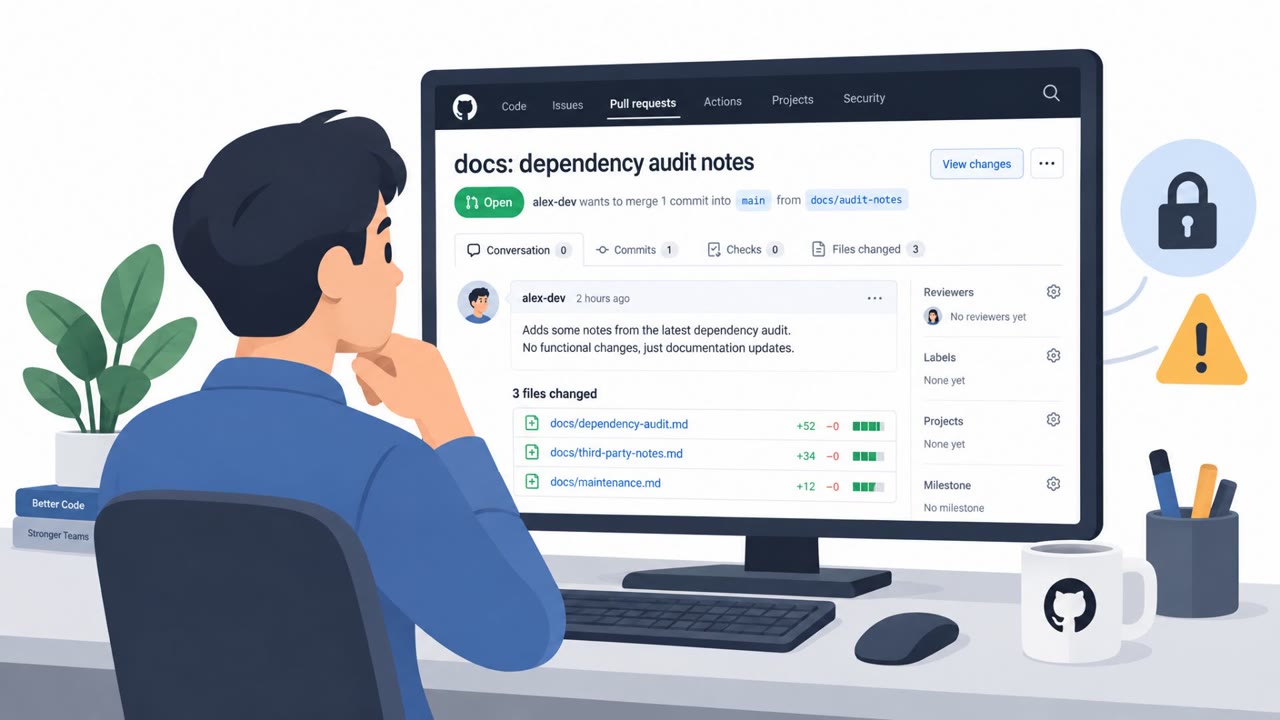
  • The campaign began with pull requests titled "docs: dependency audit notes" from a branch named "wfx-docs," apparently to test whether a compromised account could write to a repository.
  • The malicious code was commonly inserted into existing CI workflows or delivered as an npm postinstall hook that could run on a developer workstation.
  • The stealer targeted GitHub Actions secrets, workflow tokens, cloud credentials, AI-service keys, local credential files, and data from CI runners.
  • Attackers often reverted malicious changes and deleted workflow logs, making an apparently clean repository an unreliable sign of safety.
  • The malware could exchange GitHub OIDC tokens for AWS, GCP, and Azure sessions and create persistence mechanisms that may survive ordinary credential rotation.

Who’s being targeted

  • Commonly targeted roles: Repository maintainers, Software developers, DevOps engineers, CI/CD administrators, Cloud administrators, Open-source project maintainers, Security operations teams.
  • Affected industries: Software development, Technology, Open-source software, Cloud services, Any organization using GitHub Actions or self-hosted CI runners.
  • Attack channels: github.
  • Impersonated: A legitimate GitHub collaborator or organization member whose account has been hijacked, A legitimate GitHub contributor or CI maintainer using a hijacked account, A legitimate GitHub contributor or build-tools maintainer using a hijacked account.

Awareness takeaways

  • Do not trust a pull request merely because it comes from a known collaborator account. Verify unexpected changes through a separate trusted channel, especially when a routine-sounding request touches CI settings or package files.
  • Train maintainers to treat routine-sounding CI and dependency changes as high risk when they add large workflow edits, new scripts, or package installation hooks.
  • If a suspicious GitHub branch or pull request is found, revoke the account’s active access and rotate every secret reachable by its workflows; deleting the pull request or reverting a commit is not enough.
  • Developers should not run npm install from suspicious or unreviewed commits, because a package postinstall hook can execute code on their workstation.

Red flags to watch for

  • The pull request comes from the short-lived branch "wfx-docs".
  • A supposedly documentation-related pull request is associated with CI workflow or package configuration changes.
  • The activity uses a compromised collaborator account, so the apparent sender may be familiar and authorized.
  • The commit message says "ci: refresh build cache" but adds about 1,500 lines to a workflow.
  • The change is made by an account that previously opened a "docs: dependency audit notes" test pull request.
  • The malicious change may be quickly reverted and workflow logs may be deleted afterward.
  • The commit adds a hidden-looking ".ci-xxxxxx.sh" script.
  • package.json gains a postinstall hook that runs during npm install.
  • Running npm install on an affected commit can compromise the developer machine.
Try Mirage

Mirage safely runs attacks like this one against your own team, so you find out what happens before a real adversary does.

Get a demo
Read the video transcript

A teammate opens a GitHub pull request: “docs: dependency audit notes.” Seems routine? The branch is “wfx-docs.” It tests whether a stolen collaborator account can write. Next comes “ci: refresh build cache”, sometimes adding 1,500 lines to a workflow. A workflow, or npm postinstall hook, can grab CI secrets and cloud credentials. Then the change gets reverted and logs disappear. A clean-looking repo doesn’t mean the secrets are safe. See “wfx-docs” or that oversized cache change? Pause the review and report the repository to security.

MITRE ATT&CK techniques

T1078 - Valid AccountsT1195.001 - Supply Chain Compromise: Compromise Software Dependencies and Development Tools · Supply Chain CompromiseT1552.001 - Unsecured Credentials: Credentials In FilesT1528 - Steal Application Access TokenT1071.001 - Application Layer Protocol: Web Protocols

Categories

Similar attacks

Stolen GitHub Accounts Fuel Supply Chain Attack

Stolen GitHub Accounts Fuel Supply Chain Attack

The wfx-loot campaign used stolen developer GitHub accounts to reach tens of thousands of repositories. Attackers used a believable pull-request title, "docs: dependency audit notes," and malicious GitHub Actions workflows to search for and steal tokens, cloud credentials, and API keys. The…

November 13, 2026

AI Agents Target Crypto KYC With Deepfakes

AI Agents Target Crypto KYC With Deepfakes

Amazon observed threat actors using ARTEX AI agents in sustained cybercrime campaigns. One campaign attempted to defeat cryptocurrency-exchange identity checks using real-time deepfake video and forged identity-document images, providing a realistic fraud workflow for awareness training. The same…

November 13, 2026
Fake Job Interview Opens Binance’s Door

Fake Job Interview Opens Binance’s Door

Attackers allegedly used a fake recruiting process to trick a Binance engineer into running a coding assignment on a work computer. The malicious assignment gave the attackers a foothold, which they reportedly used with stolen deployment access and an internal AI tool to reach wallet systems and…

November 10, 2026
Fake AI Apps Abuse Signed ChatGPT Files

Fake AI Apps Abuse Signed ChatGPT Files

Attackers used fake ChatGPT, Claude, and Cursor AI application listings to trick Windows users into downloading malware. The downloads appeared trustworthy because they were hosted through GitHub and included real, digitally signed OpenAI or Anthropic executables, but malicious files alongside them…

October 28, 2026
Malicious Ads Hit Employees’ iPhones

Malicious Ads Hit Employees’ iPhones

Researchers reported real iPhone compromises delivered through Instagram ads and websites that impersonated cryptocurrency services. The attacks used leaked exploit kits to steal stored passwords, session information, messages, and cryptocurrency wallet recovery phrases, potentially turning an…

November 11, 2026
Fake LLM Portal Steals Tokens and Bypasses MFA

Fake LLM Portal Steals Tokens and Bypasses MFA

Mandiant investigated real 2026 incidents in which criminals stole or abused cloud and LLM access to run up massive unauthorized charges. In one case, UNC6993 used a fake application portal to persuade LLM users to paste active access-token data, allowing the attackers to bypass password and MFA…

November 2, 2026