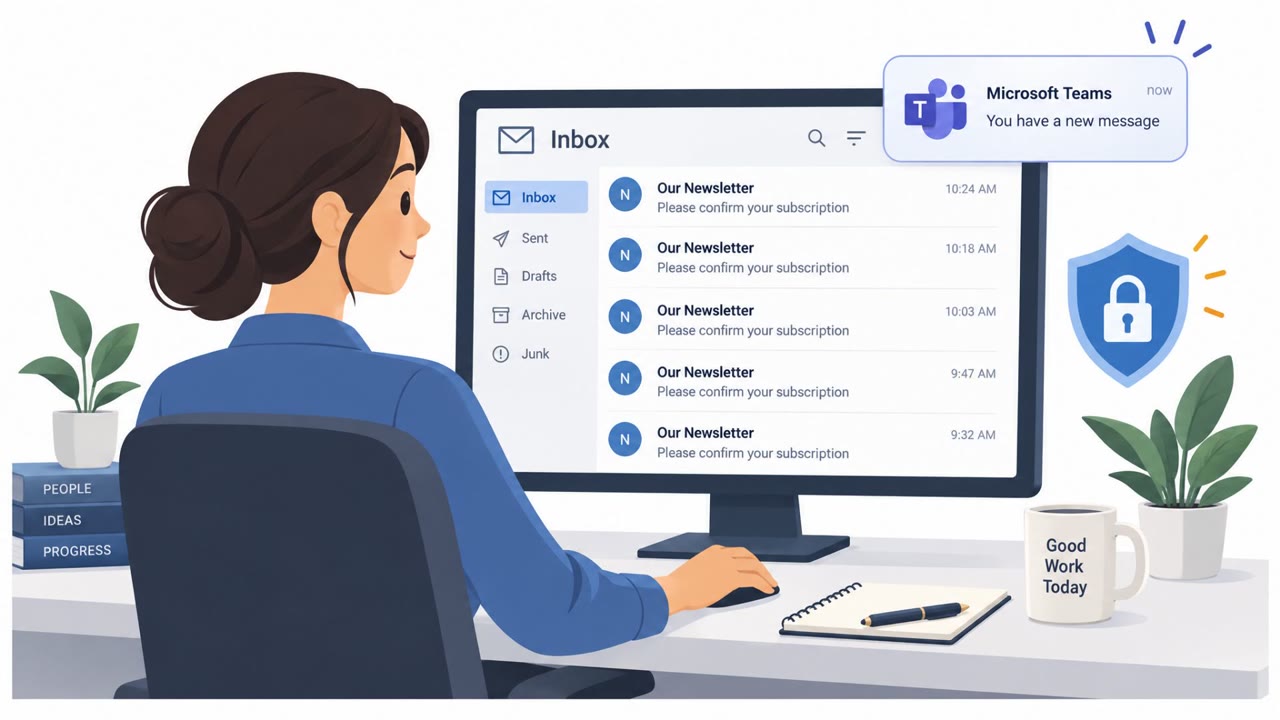
Teams Help Desk Scam Led to Domain Takeover

Microsoft Security · High sophistication
Last updated October 30, 2026

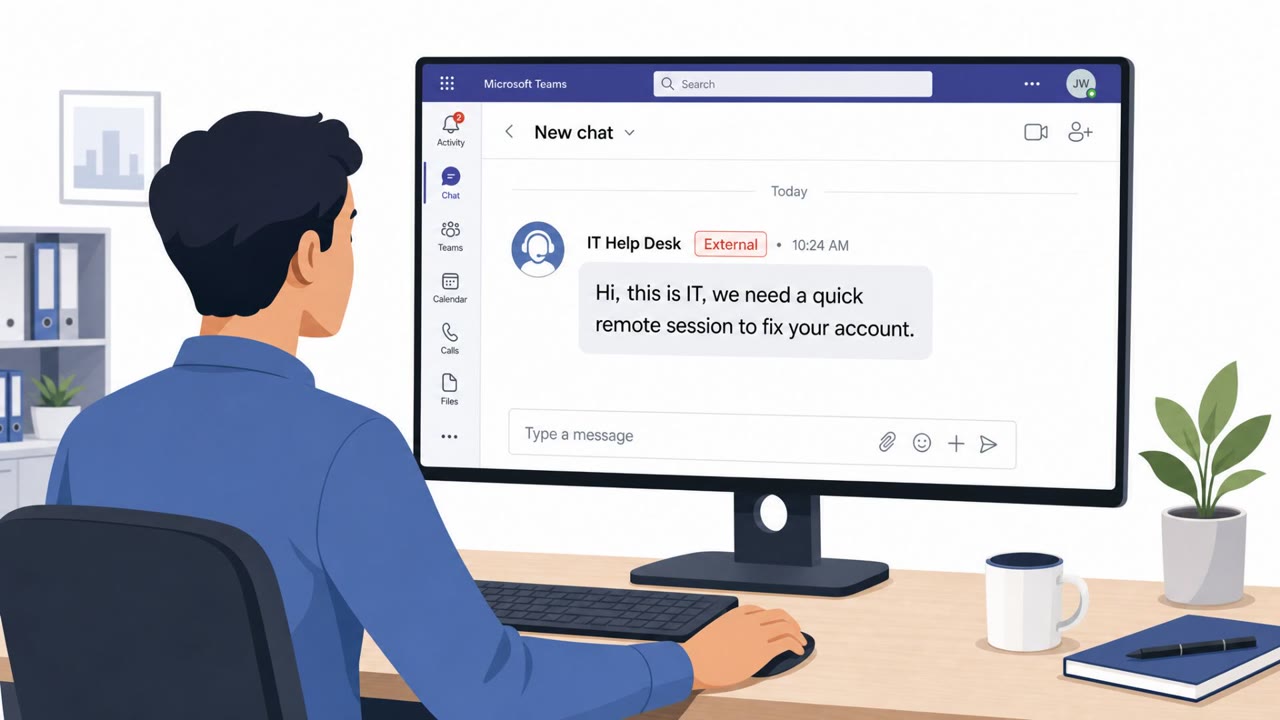
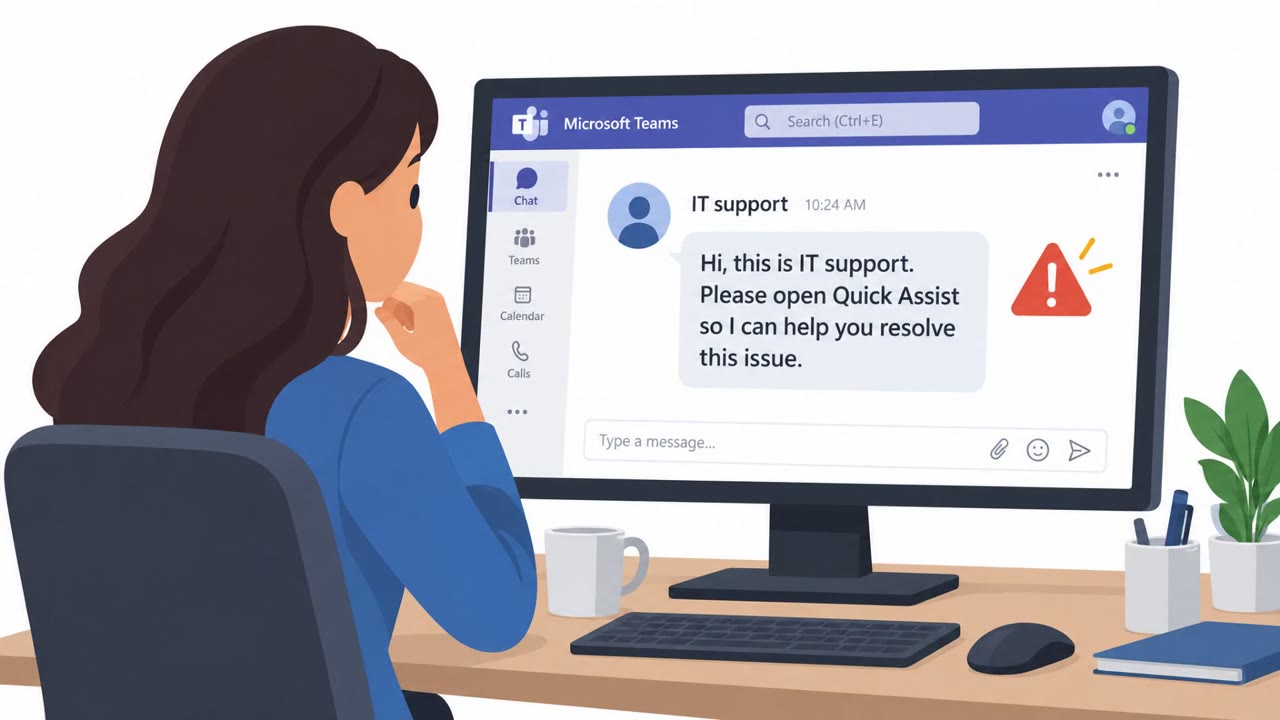
Microsoft investigated two real intrusions in which attackers impersonated IT support staff through Microsoft Teams messages and calls. They persuaded users to open Quick Assist and share a connection code, then used the remote session to pursue high-impact access to privileged accounts and domain systems. The incidents show that an unexpected support request in Teams can become a serious identity and data-loss event.

Key findings

  • Attackers used Microsoft Teams messages and calls to impersonate IT or help desk personnel.
  • Users were persuaded to open Quick Assist and provide a connection code, giving attackers interactive remote access.
  • After gaining access, attackers copied an archive to the workstation, extracted it into a user-profile staging folder, and ran scripts using portable Python, Bun, JavaScript, or Java runtimes.
  • In one case, attackers abused an ESC1-vulnerable certificate template to obtain certificates for privileged accounts and performed DCSync.
  • In the second case, attackers used PetitPotam and an NTLM relay to AD CS Web Enrollment (ESC8) to obtain a certificate for a domain-controller account.
  • One excluded privileged account remained usable despite automated containment and was later used to access a file server and send data to an external SFTP destination.
  • The incidents did not exploit a Microsoft Teams vulnerability; they depended on human manipulation and insecure Active Directory Certificate Services configurations.

Who’s being targeted

  • Commonly targeted roles: All employees, Remote workers, Microsoft Teams users, IT help desk personnel, System administrators, Identity and access management teams, Privileged account holders.
  • Affected industries: Organizations using Microsoft Teams, Quick Assist, and Active Directory Certificate Services, Enterprise environments.
  • Attack channels: teams, vishing.
  • Impersonated: Internal IT or help desk personnel.

Awareness takeaways

  • Treat unexpected Teams support messages and calls as suspicious, especially when the contact is external. Verify the request through the official IT service desk or a known internal contact before responding.
  • Never provide a Quick Assist connection code or approve remote control for an unsolicited caller, even if the caller claims to be IT support.
  • Report unexpected remote-support sessions immediately. A legitimate-looking support interaction can be used to install tools and access sensitive company systems.
  • Security teams should ensure privileged accounts are not excluded from automated containment, because a single available privileged identity can preserve the attacker’s access path.

Red flags to watch for

  • The Teams contact is marked "External" or "Scam suspected."
  • The caller unexpectedly asks the employee to initiate a remote-control session.
  • The contact uses a support-oriented display name or an organization-themed external tenant name to appear familiar.
  • The support interaction was not requested by the employee.
  • A remote session is followed by unexpected archive files or new KB-prefixed folders in the user's profile.
  • A supposedly routine support session results in programs running from Downloads or another user-writable folder.
Try Mirage

Mirage safely runs attacks like this one against your own team, so you find out what happens before a real adversary does.

Get a demo
Read the video transcript

“IT support” calls you on Teams. You never asked for help. They say, “Open Quick Assist and give me the connection code.” Once connected, they can control your computer and run files from Downloads. That’s the trap: the code isn’t a support ticket. It hands over your screen. In these cases, that opening led to privileged account access and data theft. Unexpected Teams support request? Don’t share the code. Contact your IT service desk yourself.

Similar attacks

Fake Teams IT Support Pushes Remote Access

Fake Teams IT Support Pushes Remote Access

Attackers used external Microsoft Teams chats to impersonate internal IT support and convince employees to grant remote access to their Windows computers. In many cases, they first flooded inboxes with subscriptions or confirmation emails, then offered fake assistance and persuaded victims to use…

October 27, 2026
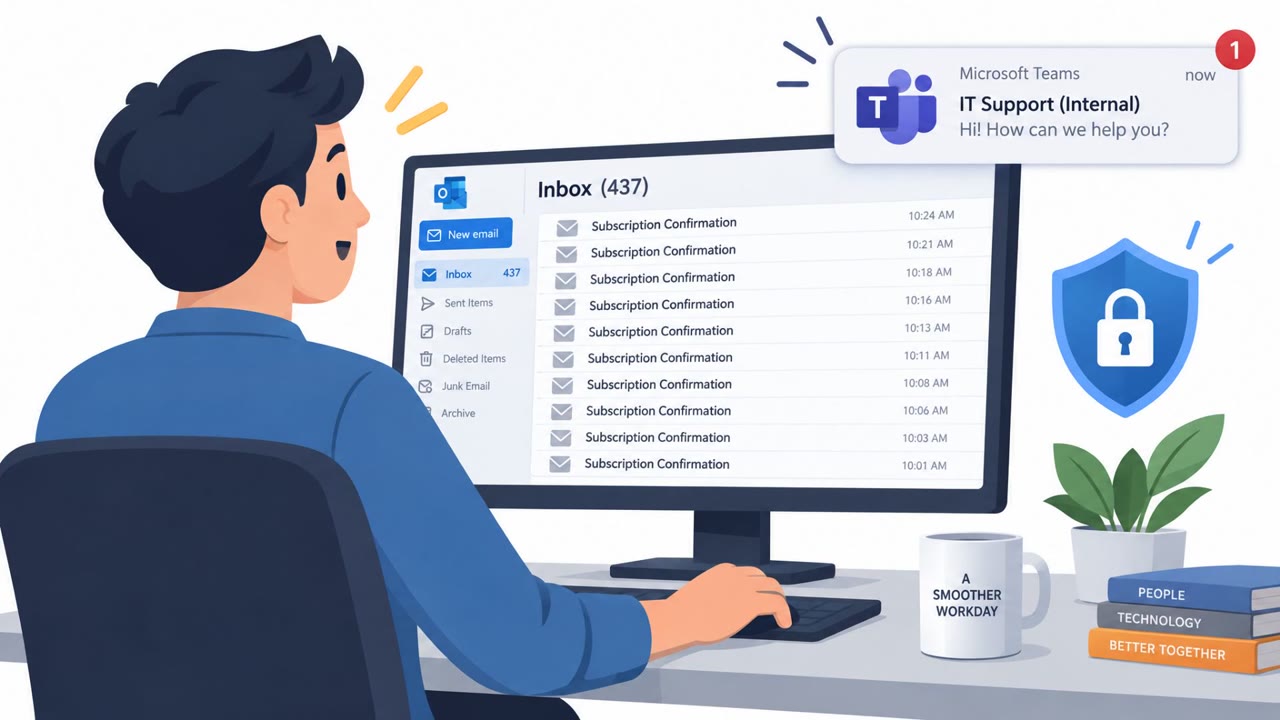
Fake Teams Support Chats Open Door to Ransomware

Fake Teams Support Chats Open Door to Ransomware

Attackers are using Microsoft Teams external chat to pose as internal IT support staff, often after overwhelming employees with email subscription messages. They persuade victims to join a voice call, approve remote-control tools, or run commands, with some incidents ending in malware infections…

October 27, 2026
Fake IT Helpdesk Tricks Users Into Remote Access

Fake IT Helpdesk Tricks Users Into Remote Access

This bulletin describes multiple real-world social engineering campaigns where attackers impersonate IT support or use trusted-looking sharing and “Allow” prompts to gain access. Several campaigns abuse Microsoft Teams and document-sharing lures to trick employees into installing remote tools or…

September 3, 2026
Fake Teams IT Support Opens Door to Data Theft

Fake Teams IT Support Opens Door to Data Theft

Attackers posed as internal IT or help-desk staff in Microsoft Teams, then persuaded employees to open Quick Assist and share its connection code. That remote access let the attackers abuse insecure certificate settings, gain privileged access, and in one case copy company data to an external…

November 2, 2026
Iranian Actors Lure Targets via Telegram/WhatsApp

Iranian Actors Lure Targets via Telegram/WhatsApp

UK, US, and Dutch authorities reported Iranian state-linked cyber actors using social messaging apps like Telegram and WhatsApp to build trust with dissidents, activists, and journalists. The actors then convince targets to open “legitimate-looking” files (fake apps or documents like MRI results)…

September 15, 2026
Fake IT Support Drives Pix Fraud in Brazil

Fake IT Support Drives Pix Fraud in Brazil

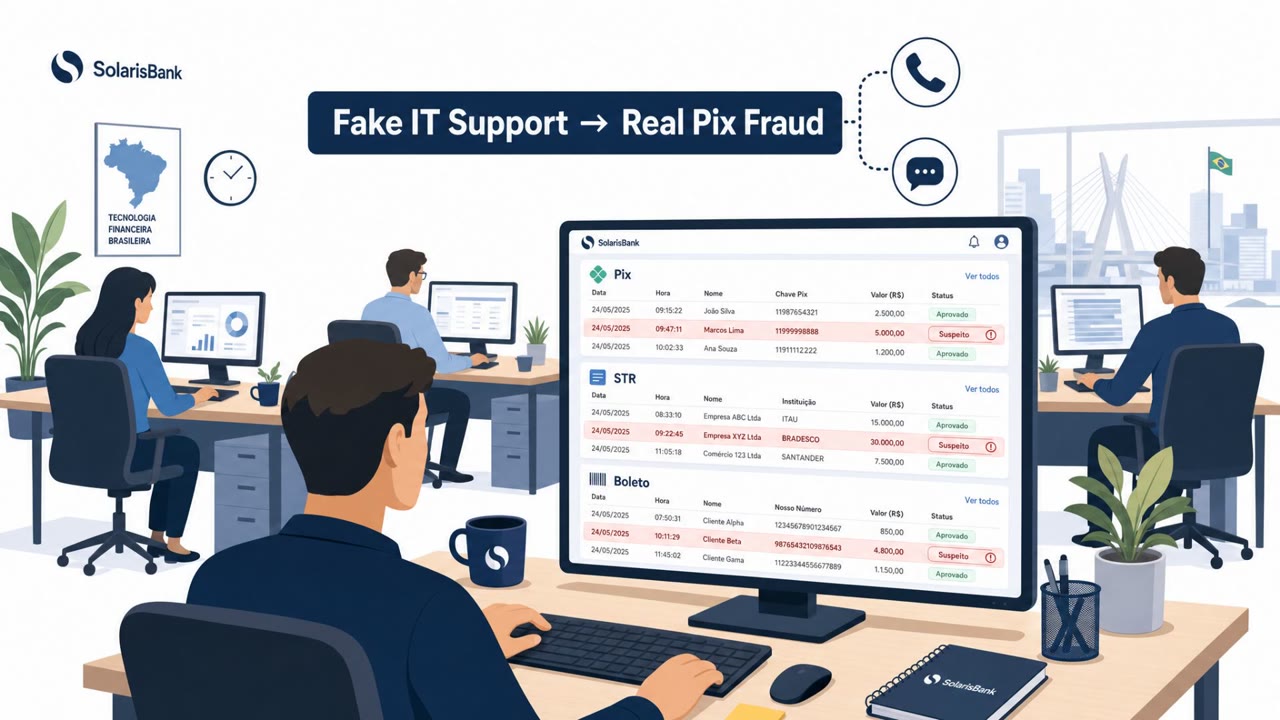
A financially motivated group called Breeze Comet targeted Brazilian financial and retail organizations by impersonating IT support and convincing staff to install remote-access tools. After gaining access, the attackers moved into internal payment systems (like Pix/STR/Boleto) and executed…

September 1, 2026