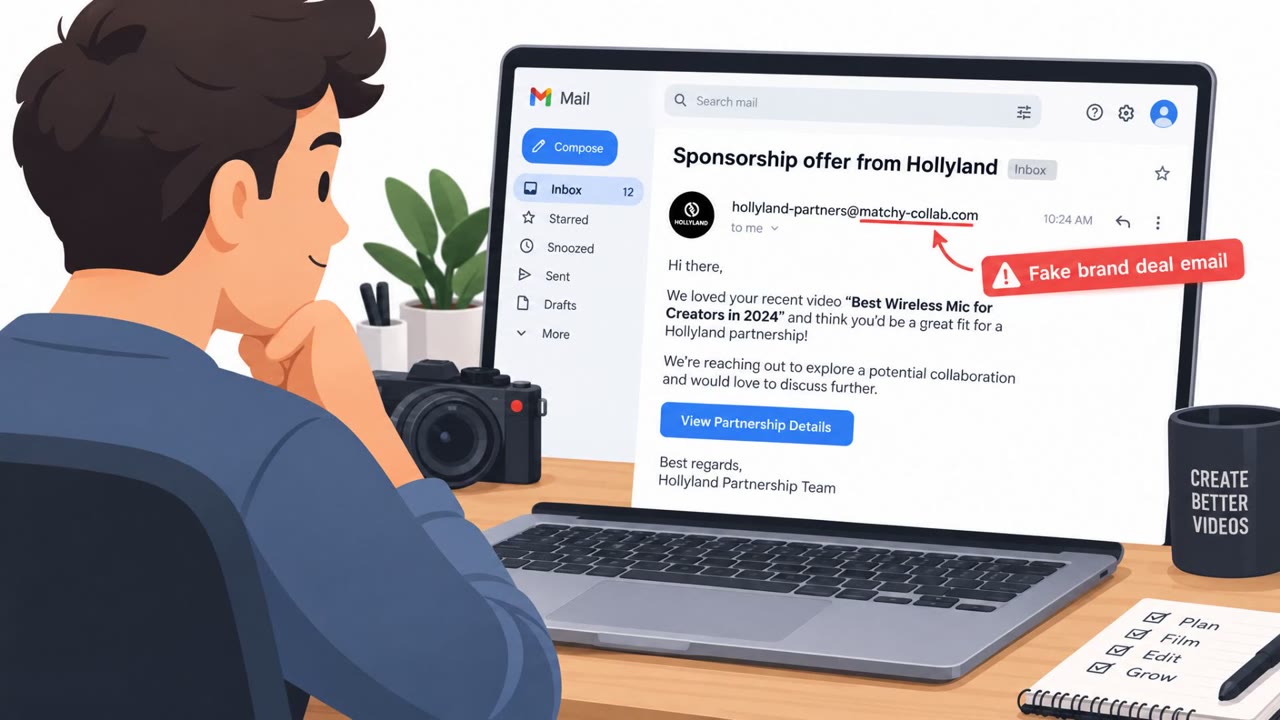
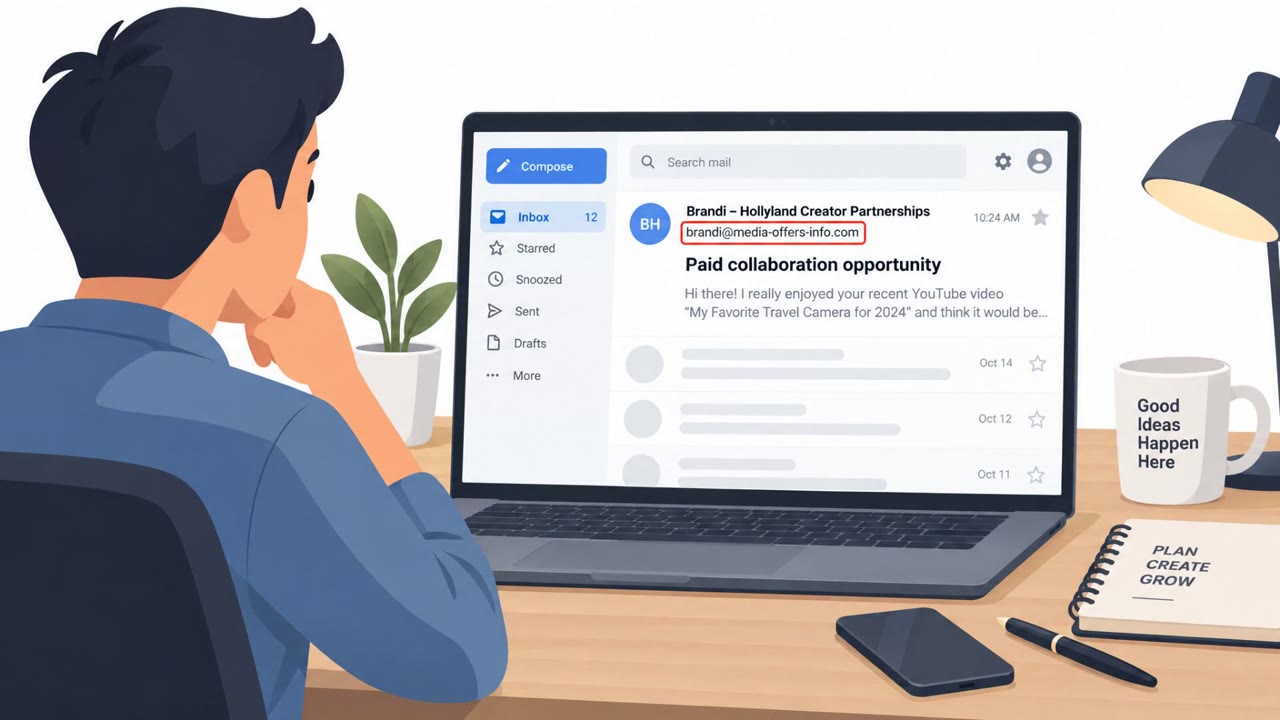
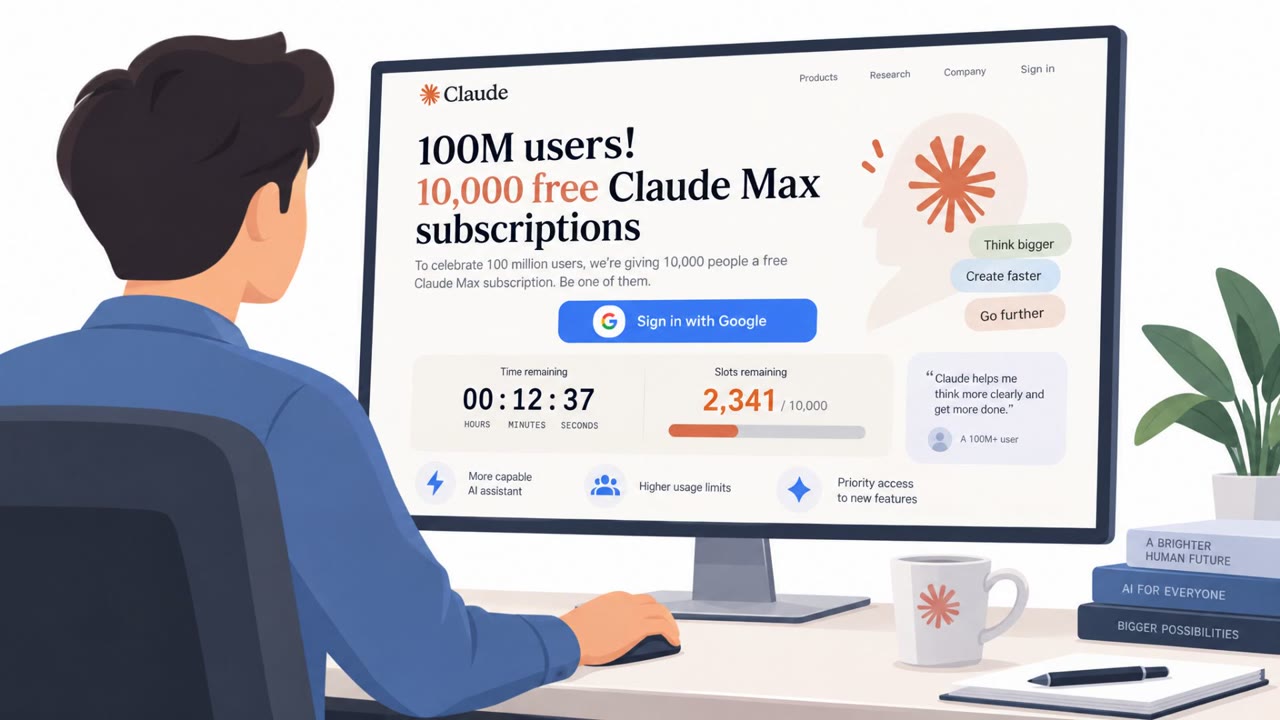
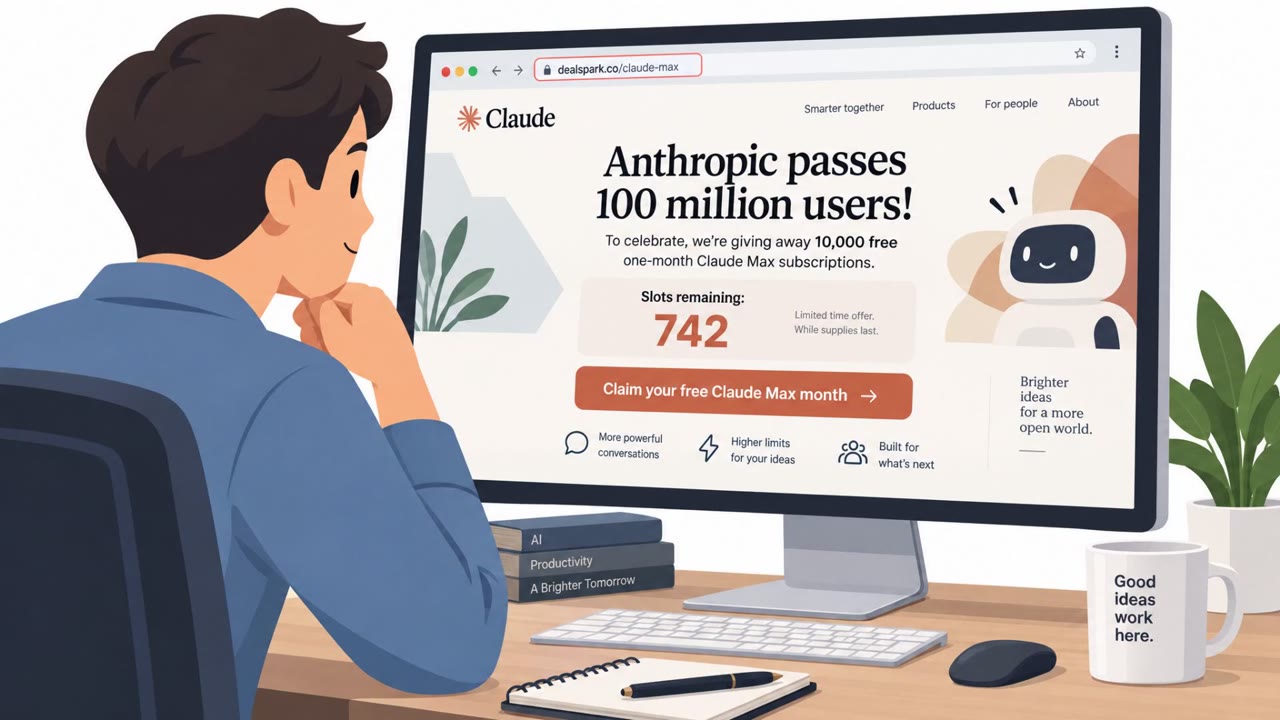
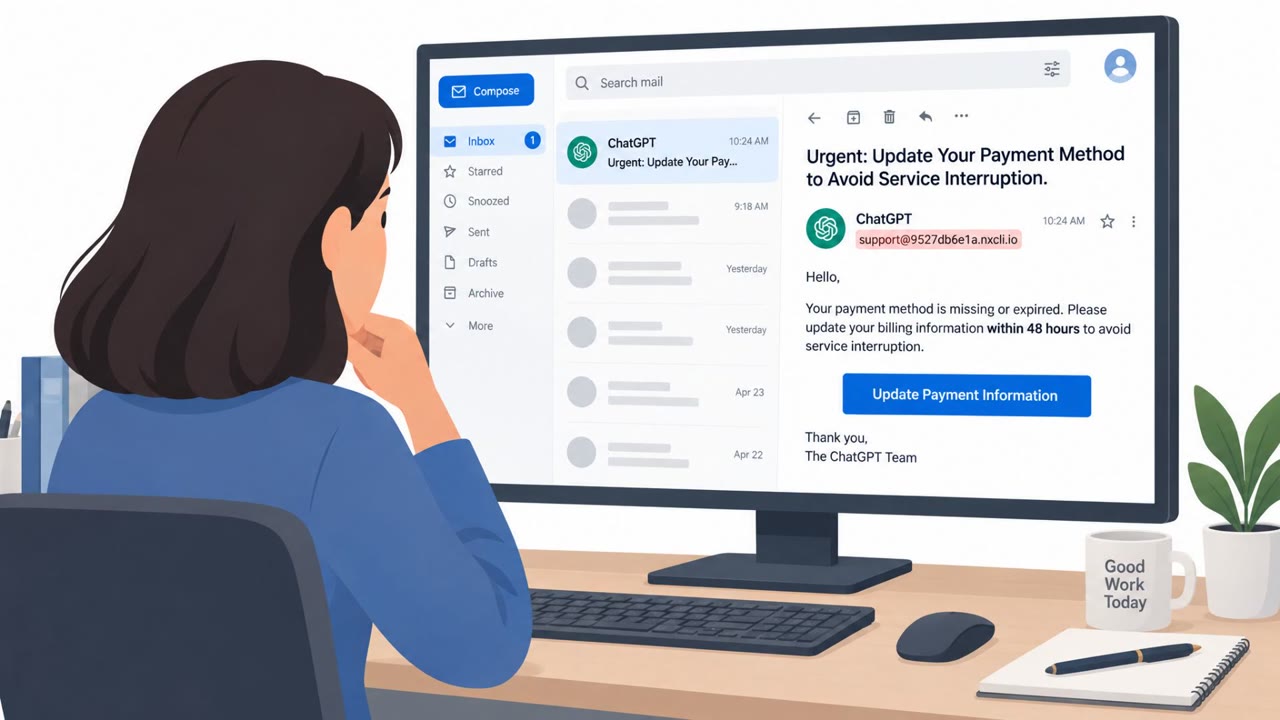
Scammers are targeting YouTube creators by posing as brands offering sponsorships and sending personalized emails that reference the creator’s videos. Victims are directed to a convincing fake collaboration platform and then prompted to sign in with Google, putting their accounts at risk.
How the Attack Worked
This campaign targets YouTube content creators by impersonating brands offering sponsorship partnerships. The attackers send personalized emails that reference the creator's own videos, a detail designed to make the outreach feel authentic and tailored rather than mass-produced. Once a creator responds or clicks through, they are funneled to a fake collaboration platform built to resemble a legitimate brand partnership portal. The process mirrors a routine sponsorship negotiation right up until the final step, when the victim is prompted to sign in with their Google credentials to "continue" or "verify" the deal.
Why It Succeeded
The effectiveness of this scheme comes down to personalization and sequencing. Referencing a creator's actual content gives the email a sense of social proof, implying the sender has genuinely watched their work and has a real reason to reach out. The fake platform itself is described as convincing, lowering suspicion before the credential request even appears. By placing the Google sign-in step at the very end of what looks like a normal brand deal workflow, the attackers exploit the momentum of the interaction. Creators are focused on evaluating a business opportunity, not scrutinizing a login prompt that seems like a routine verification step.
Who Is at Risk
- Content creators and individual channel owners
- Social media and account managers
- Marketing teams involved in brand partnerships
- Anyone with access to brand or corporate Google accounts
Because sponsorship outreach is a normal part of running a channel, this attack blends easily into everyday workflows for people in content and media roles, making it harder to dismiss outright.
What to Watch For
- Unsolicited sponsorship emails that reference specific videos or content, used to build false trust
- A request to sign in with Google credentials after clicking through from an email, especially on a third-party site
- Pressure to complete a "routine" verification step before a deal can proceed
- Collaboration platforms that look polished but were not previously known to the creator
Building Resistance
Treat any unsolicited sponsorship outreach as high-risk, even when it accurately references your work, and verify the brand through known, official contact channels before clicking any links. Never enter Google credentials after following a link from an email; instead, navigate directly to Google or the platform in question using a bookmark or by typing the URL. Teams managing public-facing accounts, including creators and marketing staff, should be trained specifically to recognize convincing fake collaboration platforms designed to harvest login credentials, since the lure here depends on looking routine rather than obviously suspicious.
Key findings
- Attackers impersonate brands offering sponsorship partnerships to target creators.
- Emails are personalized and reference the creator’s own videos to build trust.
- Victims are funneled to a fake collaboration platform and asked to log in with Google credentials.
Who’s being targeted
- Commonly targeted roles: Content/Creator teams, Marketing, Social media/account managers, Anyone with access to brand or corporate Google accounts.
- Affected industries: Online media and content creation, Marketing and influencer management.
- Attack channels: email, website.
- Impersonated: A brand seeking sponsorship partners (fake collaboration platform).
Red flags to watch for
- Unexpected request to sign in with Google from a third-party "collaboration" site
- Pressure to complete a “routine” verification step to proceed
- Email uses personal references to build trust (social proof) but routes to an external platform
Frequently asked questions
How does the fake sponsorship phishing attack work?
Scammers send personalized emails that reference a creator's own videos, posing as a brand offering a sponsorship deal, then direct victims to a fake collaboration platform that asks them to sign in with Google.
Why do creators fall for these fake brand deal emails?
The emails reference the creator's actual videos, which builds trust and makes the outreach feel legitimate, and the flow mimics a routine brand partnership process right up until the credential request.
What is the biggest red flag in this scam?
An unexpected request to sign in with Google credentials on a third-party collaboration site is the key warning sign, since legitimate sponsorship discussions should not require logging into your account on an external platform.
Who is most at risk from this type of attack?
Content creators, social media managers, and marketing staff who manage brand or corporate Google accounts are the primary targets, since compromising those accounts can give attackers broad access.
Read the video transcript
You get an email: “Hi, we’re reaching out about a sponsorship opportunity after watching your videos.” Sounds flattering, right? Scammers are posing as brands, sending these personalized emails, then funneling you to a slick, fake collaboration platform that walks you through a “routine” brand deal. Here’s the trap: at the end, it prompts you to “Sign in with Google” to verify your channel. It looks normal, but you’re handing your Google login to a fake site that can hijack your YouTube. If a sponsorship email sends you to a site that wants your Google login, stop. Don’t sign in there, open YouTube or Google directly from your own bookmark and check any requests from there.