Scammers are targeting YouTube creators with personalized “sponsorship” emails that lead to a convincing fake collaboration website. The site pulls public channel data, then asks the creator to “Sign in with Google” to “verify” the channel, stealing the password and one-time code to take over Gmail and the YouTube channel.
Key findings
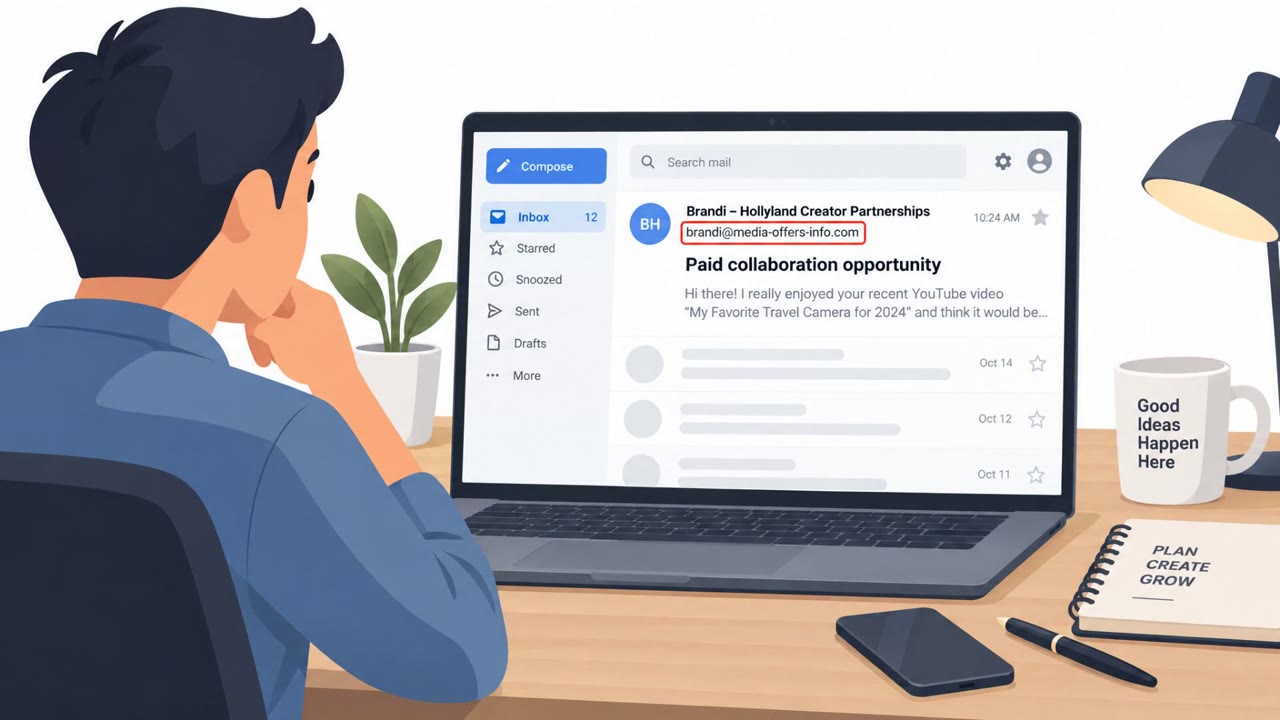
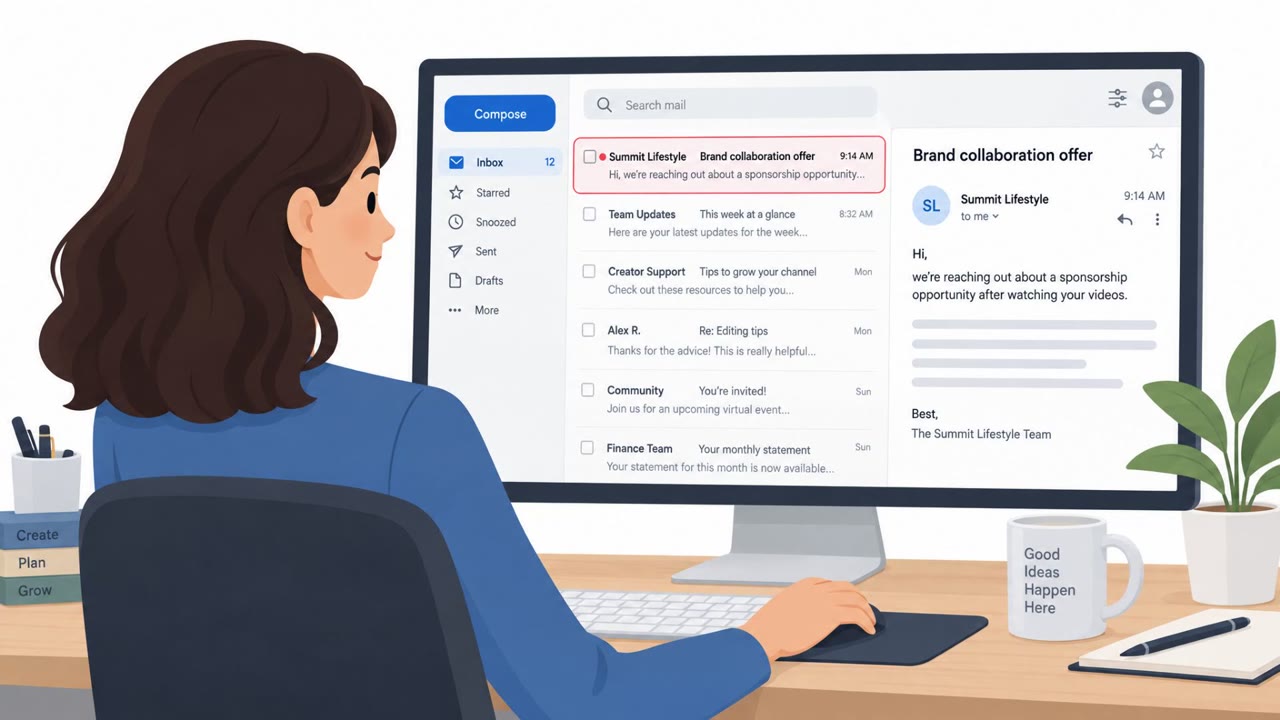
- Attackers pose as well-known brands offering sponsorships and send personalized emails referencing the creator’s own videos.
- Victims are directed to a polished fake “collaboration platform” that shows metrics, logos, and an earnings calculator, and pulls public channel data to appear legitimate.
- The scam culminates in a fake or abused Google sign-in step framed as “channel verification,” capturing the password and one-time verification code.
- ESET observed changing platform names/domains (MATCHY/SCOUTY/TUBIVE) indicating a repeatable, modular campaign.
- At least one victim reported attackers changing recovery options and generating new backup codes to lock the owner out.
Who’s being targeted
- Commonly targeted roles: YouTube creators, Influencer/creator partnerships teams, Social media managers, Marketing teams, Executive assistants supporting public-facing accounts.
- Affected industries: Media and content creation, Influencer marketing, Social media creators.
- Attack channels: email, website.
- Impersonated: A legitimate brand (e.g., Hollyland / Nike / Spotify) and its ‘collaboration platform’, A ‘Sign in with Google’ verification flow on a fake sponsorship platform, A sponsorship ‘agency’ (e.g., ‘Creoventura’) claiming brand partnerships.
Awareness takeaways
- Independently verify sponsorship offers using official brand contact info, don’t reply to the email or use its links.
- Treat polished ‘collaboration platforms’ as untrusted until you verify the domain and who owns/operates it.
- Be extra cautious with ‘Sign in with Google’ (or other SSO) prompts; confirm the login page is on the real provider domain before entering credentials or codes.
- If you suspect compromise, act quickly: review recent logins/devices, recovery info, and third-party access; then reset credentials and strengthen MFA/passkeys.
Red flags to watch for
- Sender email address is not from the real brand’s domain
- Brand-new or throwaway-looking domains for the ‘collaboration platform’ (e.g., MATCHY/SCOUTY/TUBIVE)
- The site uses familiar logos and metrics but ultimately pushes you to sign in and provide a one-time code
- Unexpected request to provide a one-time code to a third-party site
- SSO sign-in prompt not clearly on the provider’s real domain
- Overly polished site that doesn’t withstand deeper checks (links, company details, ownership)
- Brand publicly denies affiliation with the agency
- Company identity details don’t match official registers
- Social icons link to generic platform homepages instead of real profiles
Read the video transcript
Scammers are going after YouTube creators’ Google accounts by posing as big brands offering sponsorships. By sending personalized emails that reference your own videos, they push you to a slick ‘collaboration platform’ on domains like MATCHY, SCOUTY or TUBIVE, showing your channel stats and an earnings calculator. Right up until the moment you’re asked to ‘Sign in with Google’ to verify channel ownership, and to type in your one-time code. Do that here, and you’ve just handed over your whole Google account. Here’s your move: if a brand deal sends you to a site that wants a Google login, stop and open a fresh tab, go to accounts.google.com yourself and only sign in there, never through the collab link.