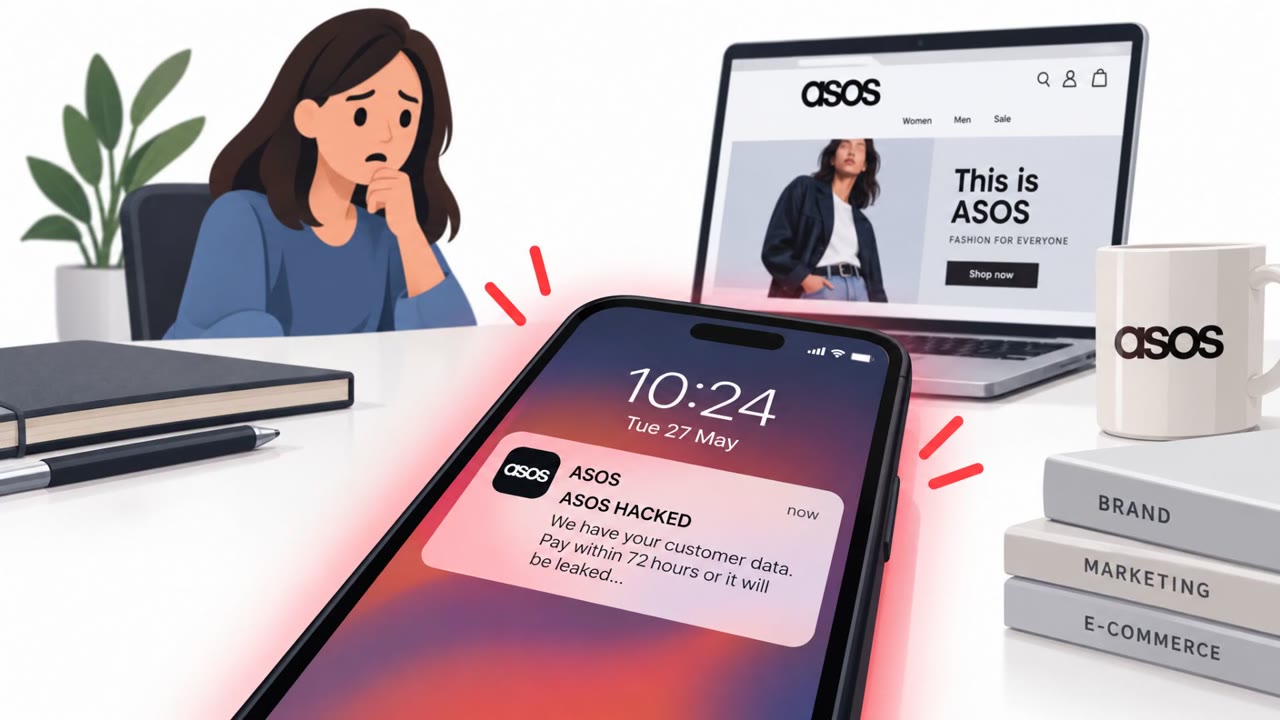
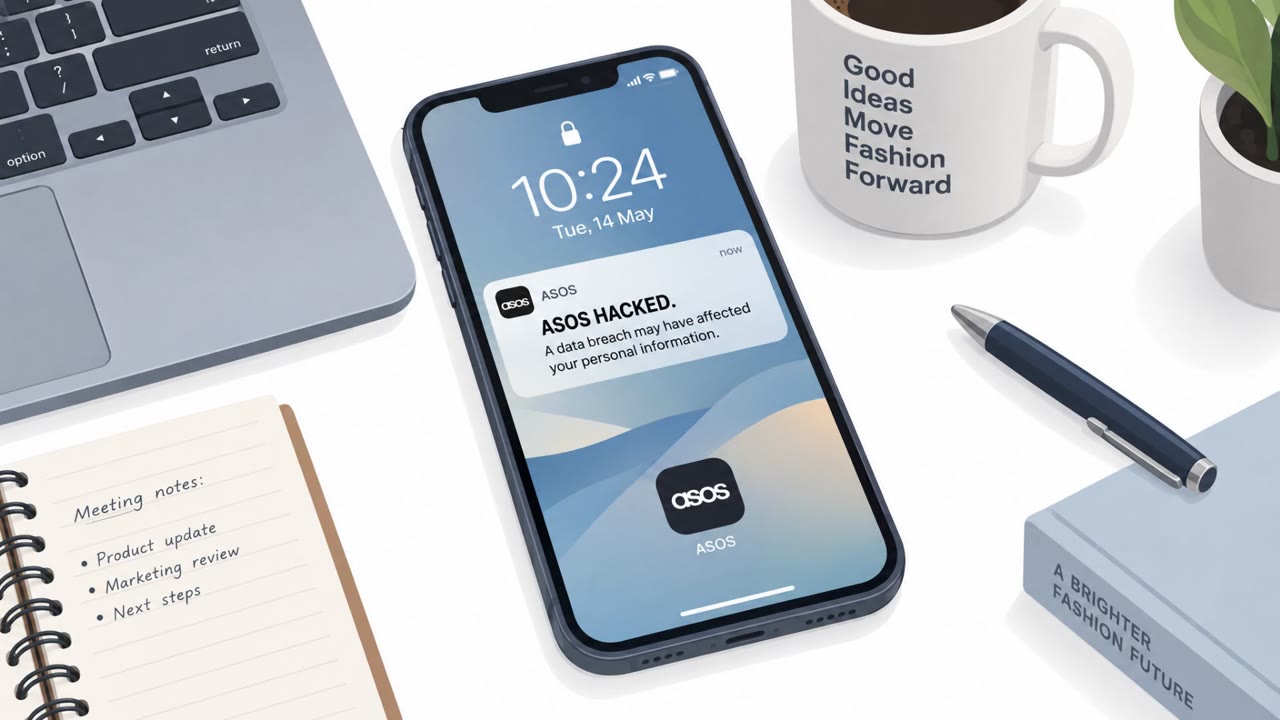
A ransomware crew that compromised retailer Asos used the company’s own mobile app push notifications to send an extortion message directly to customers. The message claimed the attackers had fully compromised Asos’s Snowflake environment and threatened to leak data if the company didn’t engage. This is a real example of attackers using trusted customer communication channels to apply pressure and shape the narrative.
What Happened
A ransomware crew that compromised retailer Asos used the company's own mobile app push notification capability to send an extortion message directly to customers. The notification read, "Dear Asos DPO and IT, we have fully compromised the Snowflake instance. Engage with us, or we will leak it." Instead of contacting the company privately, the attackers broadcast the threat through a channel customers already trust.
Why This Worked
The attack succeeded because it repurposed a legitimate, trusted communication channel for an entirely different purpose. Customers who receive push notifications from a retail app expect order updates or promotions, not ransom demands. By exploiting that trust, the attackers guaranteed visibility and created immediate pressure on Asos. As one source observed, direct-to-consumer ransomware demands apply pressure to the impacted company by involving the public in what would otherwise be a private negotiation.
The Narrative Angle
The message was also designed as a piece of propaganda. It referenced internal roles like the DPO and IT team, giving the impression of insider knowledge, and it tried to cast the hacked company as the villain for not engaging in the extortion demands. This framing shifts blame toward the victim organization rather than the attackers, which is a deliberate pressure tactic that security and communications teams should anticipate.
What to Watch For
- Unexpected ransom or extortion language delivered through a customer notification channel
- Messaging that creates urgency or public pressure, such as threats to leak data if the company does not respond
- References to internal roles or systems (like a DPO or a specific data platform) inside a message visible to customers
It remains unclear from available reporting how the Snowflake instance was initially compromised, which underscores the importance of not jumping to conclusions about root cause during an active incident.
Building Organizational Resistance
Security, IT, privacy, communications, and executive teams should prepare in advance for this kind of scenario:
- Treat alarming messages sent through trusted channels as potentially attacker-driven once a compromise is suspected, and verify through official status pages and internal incident response processes before reacting.
- Build a communications playbook that anticipates attackers messaging customers directly and framing the victim as responsible for any harm.
- Train privacy, IT, and security staff to recognize extortion tactics that leverage third-party platforms, such as cloud data warehouses, so that technical and public-facing responses can be coordinated quickly and accurately.
Key findings
- Attackers used Asos app push notifications to send a ransomware/extortion message to customers.
- The message claimed the attackers had “fully compromised the Snowflake instance” and threatened data leakage.
- This tactic pressures the victim organization by involving customers and framing the victim as responsible for any leak.
- It is unclear from the article how the Snowflake instance was initially compromised.
Who’s being targeted
- Commonly targeted roles: Security, IT Operations, Privacy/DPO, Incident Response, Customer Support, Communications/PR, Executive leadership.
- Affected industries: Retail, E-commerce.
- Attack channels: website.
- Impersonated: Ransomware crew (using the company’s own app notification capability).
Red flags to watch for
- Unexpected ransom/extortion language delivered through a customer notification channel
- Message tries to create urgency and public pressure (“Engage with us, or we will leak it”)
- References internal roles (DPO/IT) in a notification visible to customers
Frequently asked questions
How did attackers send the extortion message to Asos customers?
The attackers used Asos's own mobile app push notification feature to broadcast an alert directly to customers, claiming they had compromised the company's Snowflake instance.
Why would attackers message customers directly instead of just the company?
Direct-to-consumer extortion messages apply public pressure on the victim organization and attempt to frame the company as responsible for any resulting data leak.
Was it clear how the Snowflake instance was initially compromised?
No, the article notes it is unclear how the Asos Snowflake instance was initially compromised.
What should teams watch for after this kind of incident?
Treat alarming messages sent through trusted channels like apps or portals as potentially attacker-driven, and verify any such claims through official status pages and internal incident response processes.
Read the video transcript
Imagine this: your company app suddenly pushes a message to every customer saying, “Dear DPO and IT, we’ve fully compromised the Snowflake instance. Engage with us, or we will leak it.” That really happened at Asos. A ransomware crew broke in, then used Asos’s own app push system to blast a ransom note to customers, claiming they’d taken over the Snowflake environment and blaming the company for not paying. Here’s the trick: it looks like a normal, trusted app alert, but the language is pure extortion, urgent threats to leak data, calling out internal roles like “DPO and IT” in a customer-facing message, and pushing a narrative that the company is the villain if it doesn’t “engage.” If you ever see ransom or extortion language coming from our own apps or portals, don’t reply or improvise, immediately capture a screenshot and escalate it through our incident response channel so security can take over the messaging.