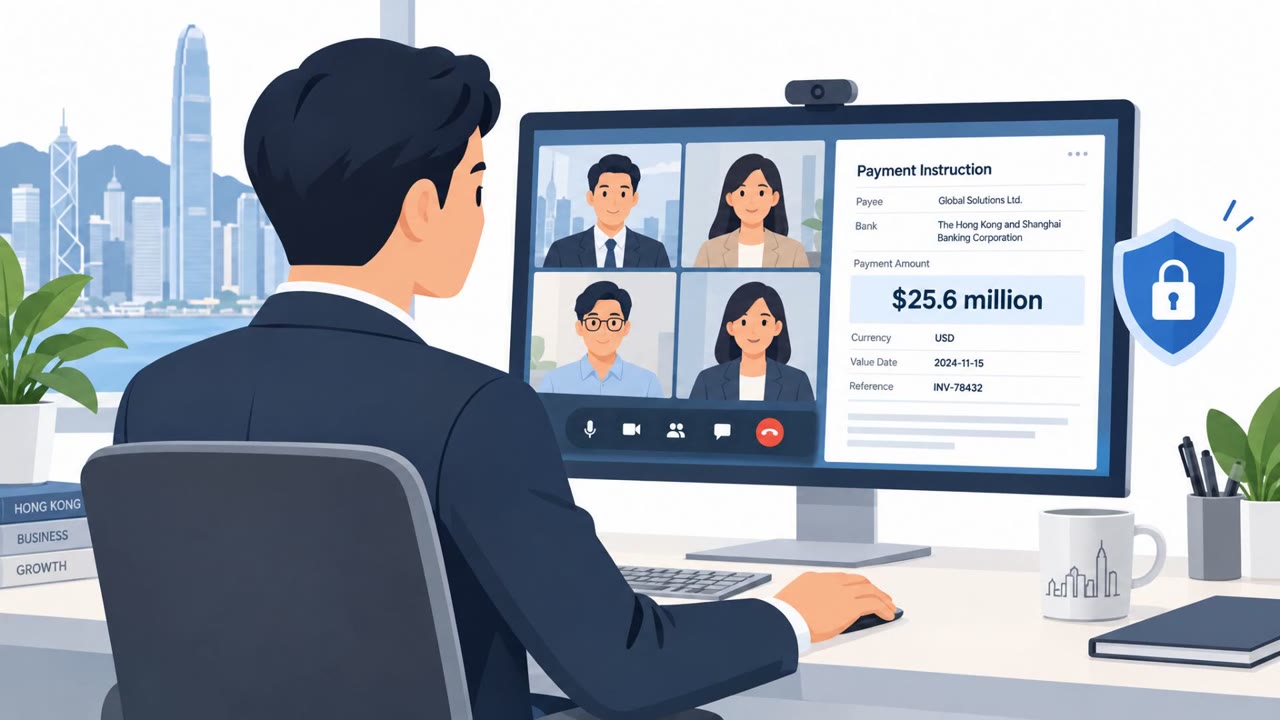
Employers are encountering fraudulent job candidates who use real-time face swaps and cloned audio to pass remote interviews, then send a different person to onboarding. The article describes this as a real and growing hiring-fraud problem, especially for high-access technology and defense roles, and urges companies to verify identity beyond the initial interview.
How the attack worked
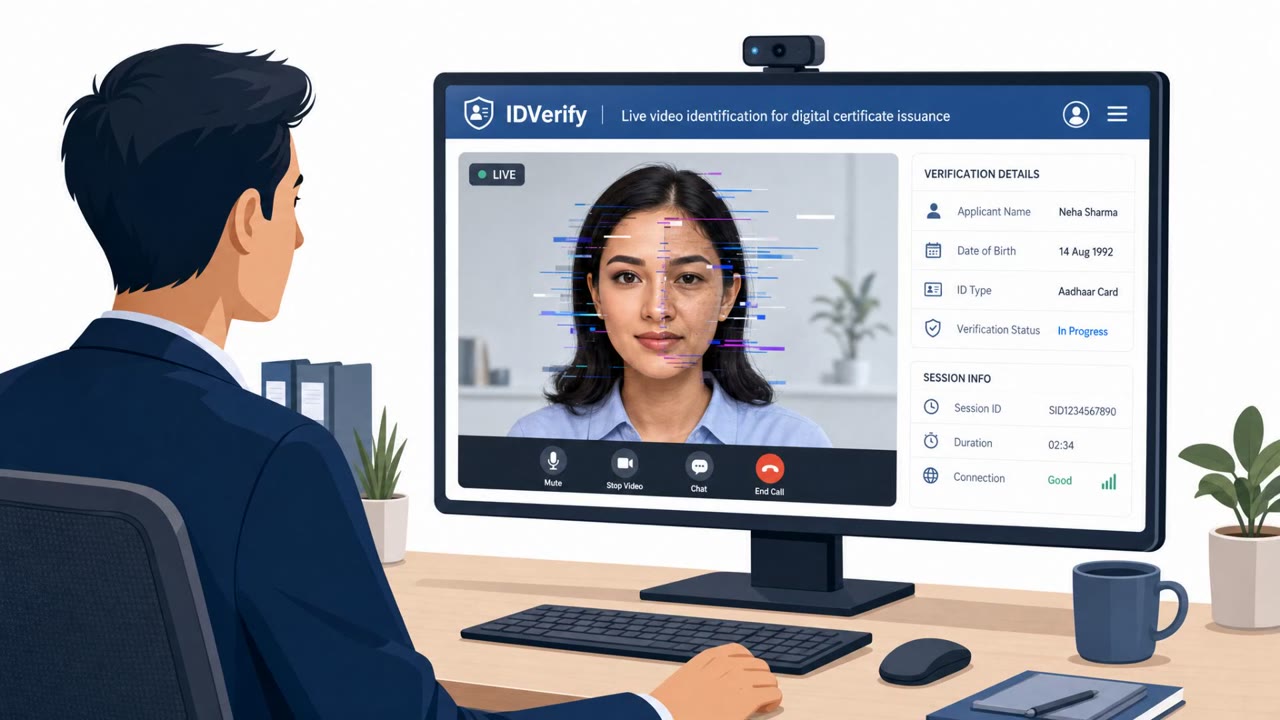
A fraudulent applicant uses real time video face swapping and cloned audio during a remote technical interview to appear as a qualified candidate. The interview goes well, the role is offered, and the apparent candidate is hired. At onboarding, a completely different individual shows up to actually perform the job. This pattern specifically targets high paying, high access roles in technology and defense, where the payoff for gaining employment under a false identity is highest.
Why it succeeded
The scheme exploits a structural gap rather than a single technical flaw. Human resources teams verify identity during hiring, then hand off security responsibility to IT once the person is onboarded. No single team owns identity assurance across the full employment lifecycle, so a mismatch between the interviewed person and the onboarded person can pass through unnoticed. The findings describing “ghost candidates” note this is becoming a building consensus among identity and biometrics practitioners, not an isolated incident. Survey data cited in the article found that 98 percent of respondents had experienced candidate fraud firsthand, and 42 percent of those cases were only discovered after the person was already hired.
What to watch for
- Noticeable changes in appearance or voice between interview stages
- A candidate who resists live identity checks or video based onboarding verification
- A different individual arriving for onboarding than the person who completed the interview
- Delayed discovery of identity mismatches, since many cases surface only weeks or months after hiring
How to build resistance
Organizations can reduce exposure by closing the handoff gap between HR and IT and by requiring continuous identity verification rather than a single check during the interview stage. Concrete steps include:
- Confirming that the person who completes onboarding is the same person who was interviewed, especially for remote or high access roles
- Treating unusual video or audio behavior in interviews as a trigger for an approved identity verification step rather than dismissing it as a connectivity issue
- Making HR, IT, and onboarding teams jointly accountable for identity assurance instead of treating verification as HR's responsibility alone
- Building in post hire review processes, since a meaningful share of fraud cases are not caught until after the person is already working
The underlying recommendation is not to buy a detection tool for every stage of hiring, but to establish a unified, accountable identity assurance process spanning pre hire, onboarding, and post employment stages. This mirrors identity misuse techniques tracked under MITRE ATT&CK technique T1656, where an adversary relies on an impersonated identity to gain trusted access.
Key findings
- The article describes “ghost candidates” using live face swaps and cloned audio to pass remote technical interviews and obtain sensitive roles.
- Hypr’s cited survey found that 98 percent of respondents had experienced candidate fraud firsthand.
- Forty-two percent of reported candidate-fraud cases were discovered only after hiring.
- A different person may appear at onboarding after an apparently ideal candidate completes the interview process.
- The article identifies handoffs between HR and IT as a major gap in managing employment identity assurance.
Who’s being targeted
- Commonly targeted roles: Recruiters, HR teams, Hiring managers, Technical interviewers, IT and identity teams, Onboarding teams, Security leadership.
- Affected industries: Technology, Defense, Human resources and recruiting, Staffing, Healthcare.
- Attack channels: website.
- Impersonated: A seemingly legitimate job applicant.
Red flags to watch for
- The candidate’s appearance or voice changes noticeably between interview stages.
- The candidate resists live identity checks or an in-person/video onboarding verification.
- A different individual appears for onboarding than the person who completed the interview.
Frequently asked questions
What is a ghost candidate in hiring fraud?
A ghost candidate is a fraudulent job applicant who uses real-time face swaps and cloned voice technology to pass remote interviews, then sends a different person to actually fill the role.
How often is candidate fraud caught before hiring?
According to the cited survey, 42 percent of reported candidate fraud cases were only discovered after hiring, meaning more than half were caught earlier but a significant portion slipped through.
Why does hiring fraud succeed even with interviews?
The article points to a gap between HR and IT, where HR handles identity verification during hiring and then hands off security responsibility to IT, leaving no continuous check across the employment lifecycle.
What roles are most targeted by ghost candidates?
High-paying, high-access technology and defense roles are specifically named as targets, since these positions give fraudulent hires valuable system or data access.
Read the video transcript
Your best interview candidate might not be the person you hire. A ‘ghost candidate’ says, ‘I’m excited to discuss my experience.’ A live face swap and cloned voice carry them through a technical interview for a high-access role. Then someone else shows up for onboarding. That’s the gap: HR checked the interview; IT meets the new hire. Watch for a changed face or voice. Before granting access, match the onboarding person to the interview using your approved identity check.