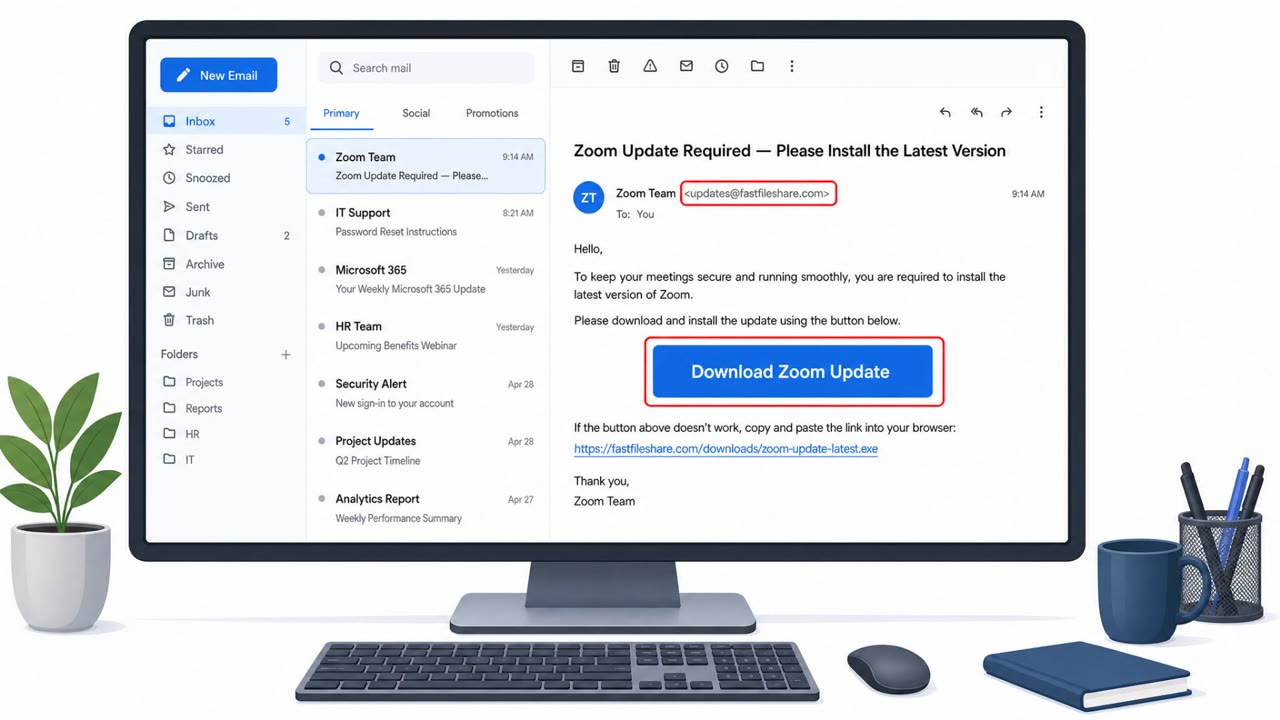
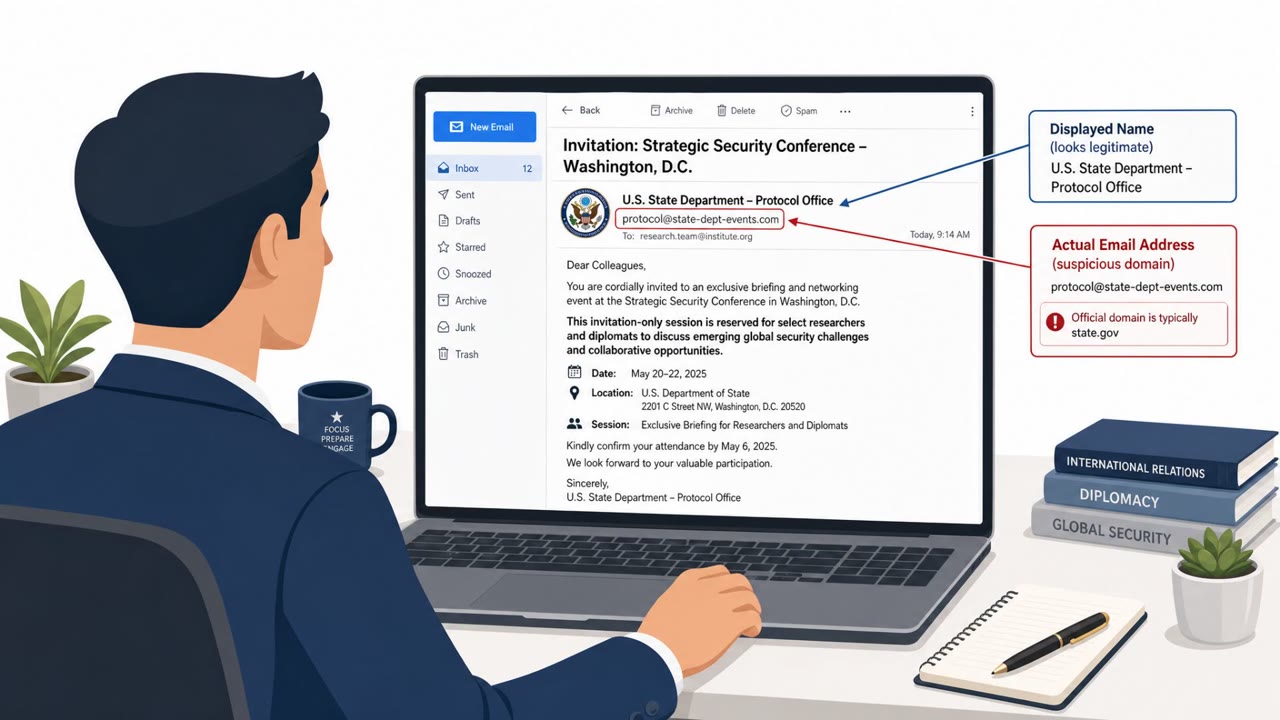
CERT-UA reports a Sandworm-linked group (UAC-0145) is using fake CAPTCHA checks on compromised websites to persuade Ukrainian visitors to run PowerShell commands that infect their own computers. The campaign also includes Android attacks where victims are sent trojan APK “security tools” via messaging apps, resulting in a backdoor that steals files, contacts, and location.
How the Attack Worked
CERT-UA has linked this campaign to UAC-0145, described as a sub-cluster within Sandworm. The core technique relies on compromised websites showing a fake CAPTCHA verification screen. Instead of clicking a checkbox, visitors are instructed to open a terminal and run a PowerShell command to "prove" they are human. That command can download and save a file, such as a VBS script, into the Windows Startup autorun directory, giving the attacker persistence on the victim's own machine. Follow-on PowerShell tooling then performs reconnaissance of the infected host.
A second track of the campaign targets Android users. Victims receive APK files through messaging apps, presented as security tools. Installing the APK delivers a full backdoor known as COWARDDUCK, which can collect contacts, targeted file types from common folders, and real-time location data, exfiltrating this information using services like the Dropbox API.
Why It Succeeded
The attack succeeds because it exploits a routine, low-attention moment: passing a CAPTCHA. Most users are conditioned to click through verification prompts quickly without scrutiny. By dressing the instruction as part of that familiar flow, attackers get victims to execute the infection step themselves rather than relying on an attachment or exploit. At least 10 compromised websites were used between June and July 2026, with traffic filtering and dynamic page modification so the fake CAPTCHA is shown selectively, which helps the pages blend in and avoid broad detection. The Android lure works similarly by borrowing the credibility of the phrase "security tool."
What to Watch For
- A CAPTCHA or "security check" that asks you to open a terminal or run a command
- Instructions to copy and paste PowerShell or terminal commands from a website
- Unsolicited APK files sent through messaging apps, especially ones claiming to be security tools
- Apps requesting broad access to files, contacts, or location shortly after installation
- Websites that behave differently depending on who is visiting
How to Build Resistance
Organizations should train staff, especially general and administrative employees plus mobile and field staff, that legitimate CAPTCHAs never require running commands. Any prompt to paste text into a terminal from a website should be treated as a likely malware delivery attempt and reported to IT. For mobile users, reinforce that software, including anything labeled a security tool, should only be installed from approved app stores or MDM channels, never from a messaging app link. Building this awareness helps staff recognize both the website-based ClickFix style lure and the Android APK lure used in this campaign.
Key findings
- Activity attributed to UAC-0145, described as a sub-cluster within Sandworm linked to Russia’s GRU.
- Victims are lured via compromised websites showing a fake CAPTCHA that instructs them to run a PowerShell command.
- Example outcome of the command: downloading/saving a VBS file into the Windows Startup autorun directory (persistence).
- PowerShell tooling (e.g., SCOUTCURL) performs host reconnaissance after infection.
- Attackers also distribute malicious Android APKs via messaging apps, disguised as “security tools,” installing the COWARDDUCK backdoor.
- Android backdoor steals contacts, targeted file types from common folders, and real-time geolocation; uses Dropbox API for exfiltration and may use legitimate sites (steamcommunity[.]com) as part of command retrieval infrastructure.
- Campaign included at least 10 compromised sites (June–July 2026) and used traffic filtering/cloaking and dynamic page modification to show CAPTCHAs selectively.
Who’s being targeted
- Commonly targeted roles: All employees, Executives, Mobile/field staff, IT helpdesk (triage/reporting), Security awareness training participants.
- Affected industries: Government, Public sector, Organizations in Ukraine.
- Attack channels: website, smishing.
- Impersonated: Website CAPTCHA / ‘security check’ page, Mobile security / ‘security tool’ provider.
Red flags to watch for
- A CAPTCHA should never require running commands on your computer
- Instructions to use PowerShell/Terminal to ‘verify’ are highly abnormal
- Website behavior changes based on visitor (cloaking/dynamic content)
- Unsolicited APK sent over chat rather than official app store
- App is presented as a ‘security tool’ but asks for broad access (files/contacts/location)
- Pressure to install quickly outside normal IT process
Frequently asked questions
How does the fake CAPTCHA attack work?
Attackers compromise websites to display a fake CAPTCHA verification that instructs visitors to run a PowerShell command in the terminal, which then downloads malware such as a VBS file placed in the Startup autorun directory.
Why would a CAPTCHA ask someone to run a command?
It should not. A real CAPTCHA never requires running PowerShell or terminal commands, and any instruction to do so on a website is a strong sign of a social engineering attack designed to infect the visitor's own machine.
What is the Android component of this campaign?
UAC-0145 also distributes Android APK files via messaging apps disguised as security tools, which actually install a backdoor called COWARDDUCK that can steal contacts, files, and real-time geolocation.
Who is being targeted by this campaign?
CERT-UA reports the activity targets Ukrainian users, including general staff, operations and administrative personnel, and mobile or field employees using Android devices.
Read the video transcript
Imagine this: you open a trusted site, and instead of a normal CAPTCHA, it tells you to run a PowerShell command. That’s a real tactic from UAC-0145, a Sandworm-linked group: fake CAPTCHA on a compromised site, telling Ukrainians to copy a PowerShell line that quietly drops a VBS file into Startup and runs tools like SCOUTCURL to scout the machine. Same campaign on phones: a chat message sends an APK called a 'security tool.' You install it, it’s actually the COWARDDUCK backdoor, quietly pulling contacts, documents, and real-time location, then syncing it out via Dropbox. A CAPTCHA or message that tells you to run a command or install an APK is the trap. Your move: stop, close it, and report it to security immediately, never copy commands or install tools from chat or random sites.