ClickFix is a real social-engineering technique that uses fake CAPTCHA checks, browser errors, and security prompts to persuade users to run malicious commands themselves. A victim is told to copy and paste a command into the Windows Run box, which can lead to password theft, remote access, or ransomware. The article cites real campaigns involving Lumma, Vidar, StealC, and the Interlock ransomware group.
Key findings
- ClickFix persuades victims to execute a malicious command themselves instead of exploiting a software vulnerability.
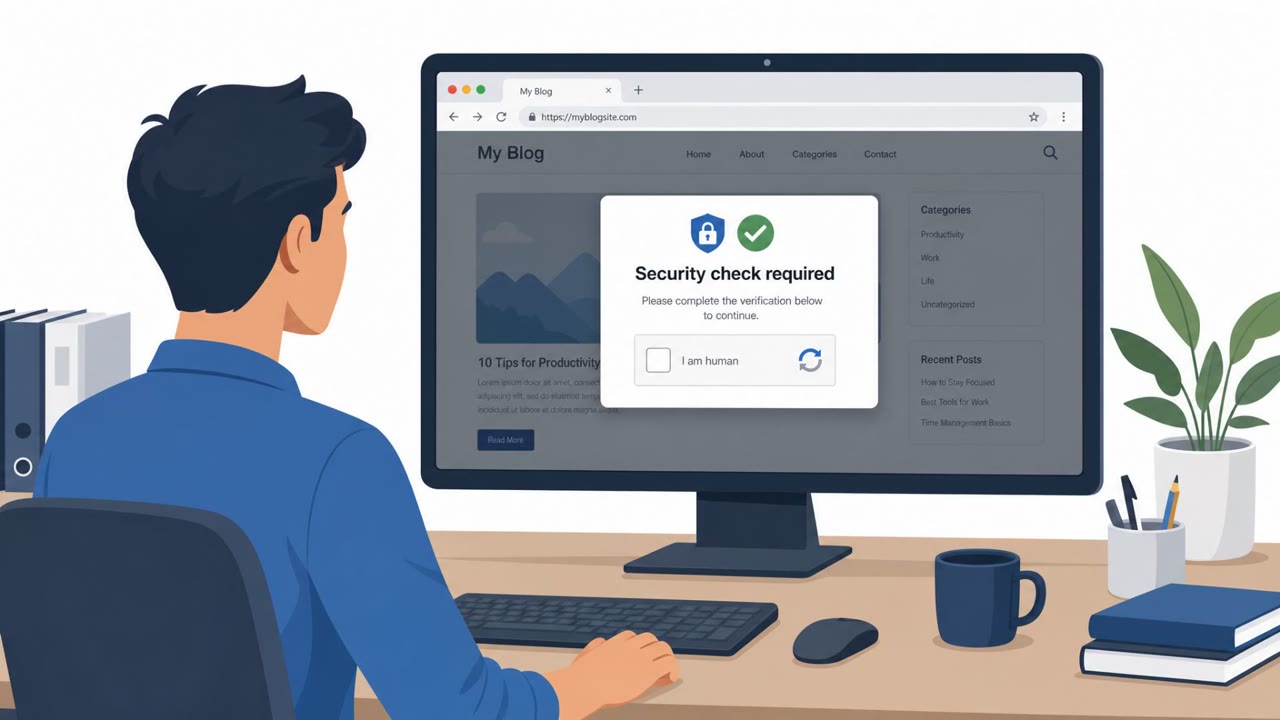
- A typical fake CAPTCHA copies a malicious command to the victim's clipboard, then instructs them to open Windows Run with Windows + R, paste with Ctrl + V, and press Enter.
- Microsoft reported that ClickFix represented 47% of initial-access attacks flagged in Defender Experts notifications, compared with 35% for phishing.
- CrowdStrike reported a 563% increase in incidents using fake CAPTCHA lures in 2025 compared with 2024.
- Documented ClickFix outcomes include delivery of Lumma, Vidar, and StealC information stealers, remote-access tools, and Interlock ransomware.
- Stolen browser cookies and authentication tokens can allow attackers to access accounts without a password or another MFA prompt.
Who’s being targeted
- Commonly targeted roles: All employees, Windows users, Remote and hybrid workers, Help desk and IT support staff, Security operations teams.
- Affected industries: Cross-industry, Government, Private sector.
- Attack channels: website.
- Impersonated: A website CAPTCHA or human-verification service, Browser support, operating system, or device security warning, A CAPTCHA or website verification service.
Awareness takeaways
- Never paste or run a command because a website, CAPTCHA, pop-up, or browser warning tells you to do so. Report the page instead.
- Treat instructions to press Windows + R, Ctrl + V, and Enter as a major warning sign when they come from a webpage.
- Do not assume a CAPTCHA, browser error, or security alert is legitimate just because it appears on a familiar-looking webpage.
- If you ran a suspicious command, report it immediately; security teams should isolate the device and revoke potentially stolen sessions and tokens.
Red flags to watch for
- A CAPTCHA asks the user to open the Windows Run dialog.
- A website instructs the user to paste or execute a command.
- The verification process requires keyboard shortcuts rather than a normal checkbox or image challenge.
- An unexpected browser error or security warning asks the user to run a command.
- The page creates urgency around fixing a device or loading issue.
- A supposed verification or repair step uses copied clipboard content.
- The purported CAPTCHA requires pasting text into Windows Run.
- The pasted content is unusually long or includes an unexplained verification ID.
- The page asks the user to execute a command rather than complete a standard CAPTCHA challenge.
Read the video transcript
A CAPTCHA says, “Verify you are human.” Then it asks for Windows + R. That’s ClickFix. Clicking the button secretly copies a command. The page tells you to open Windows Run, paste with Ctrl + V, and press Enter. Here’s the giveaway: a real CAPTCHA checks the webpage, not your Windows Run box. That pasted command can install password stealers like Lumma, or Interlock ransomware. Website asking you to run a command? Don’t paste it. Report the page to security.