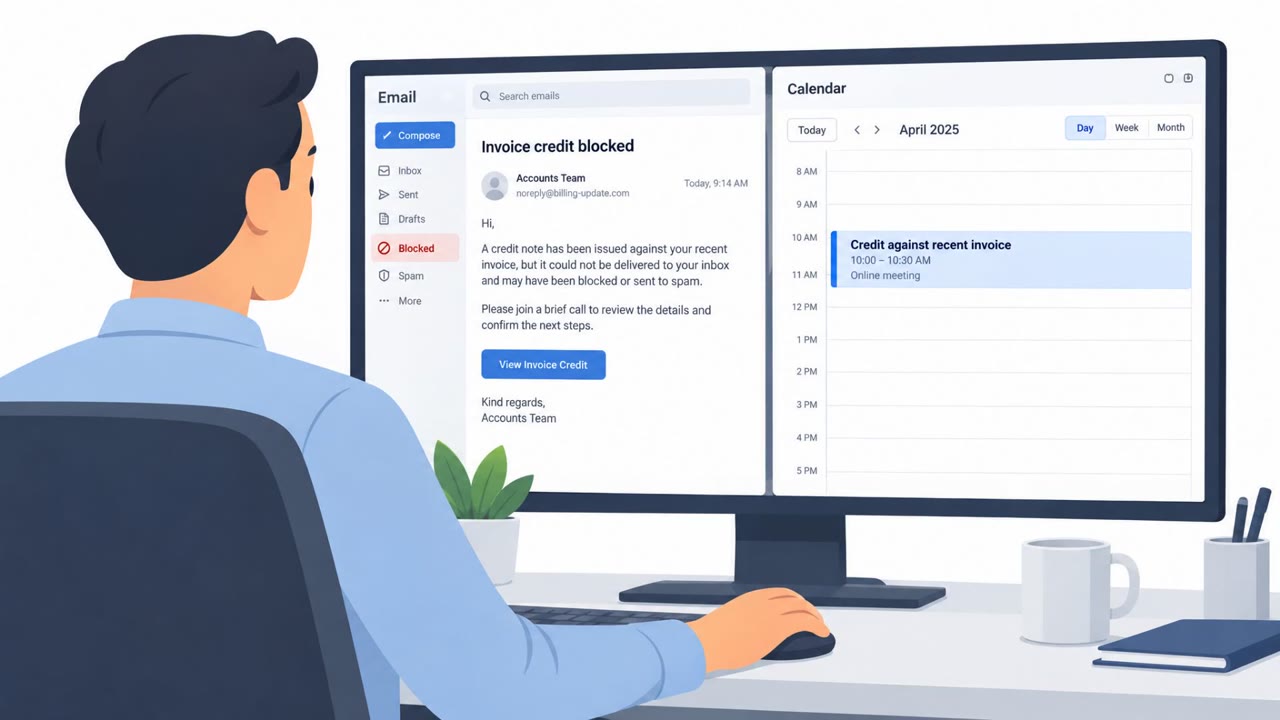
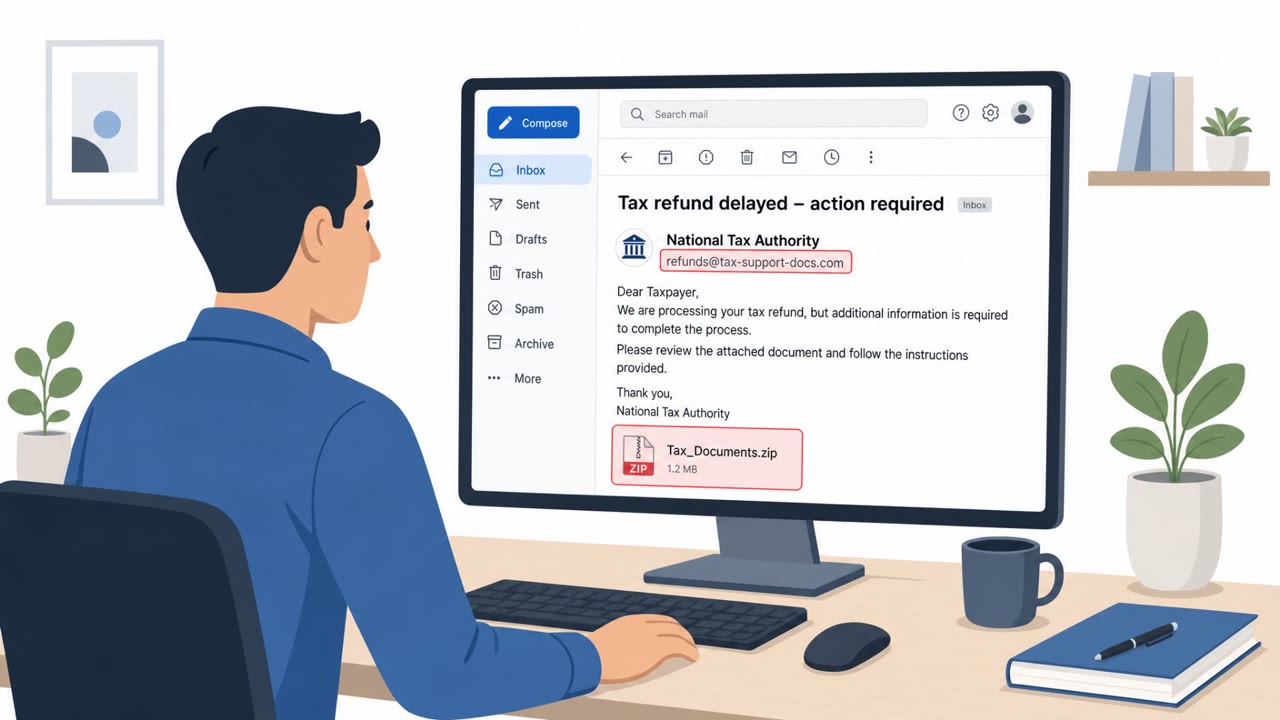
Attackers are using fake copyright complaints and pirated-software activators to trick people into downloading ZIP files that install OXLoader malware. The malware can lead to password theft, remote control of a Windows computer, and further malware downloads. The strongest employee-facing warning signs are unexpected infringement notices, files with double extensions, and any request to run a crack or activator.
How the attack worked
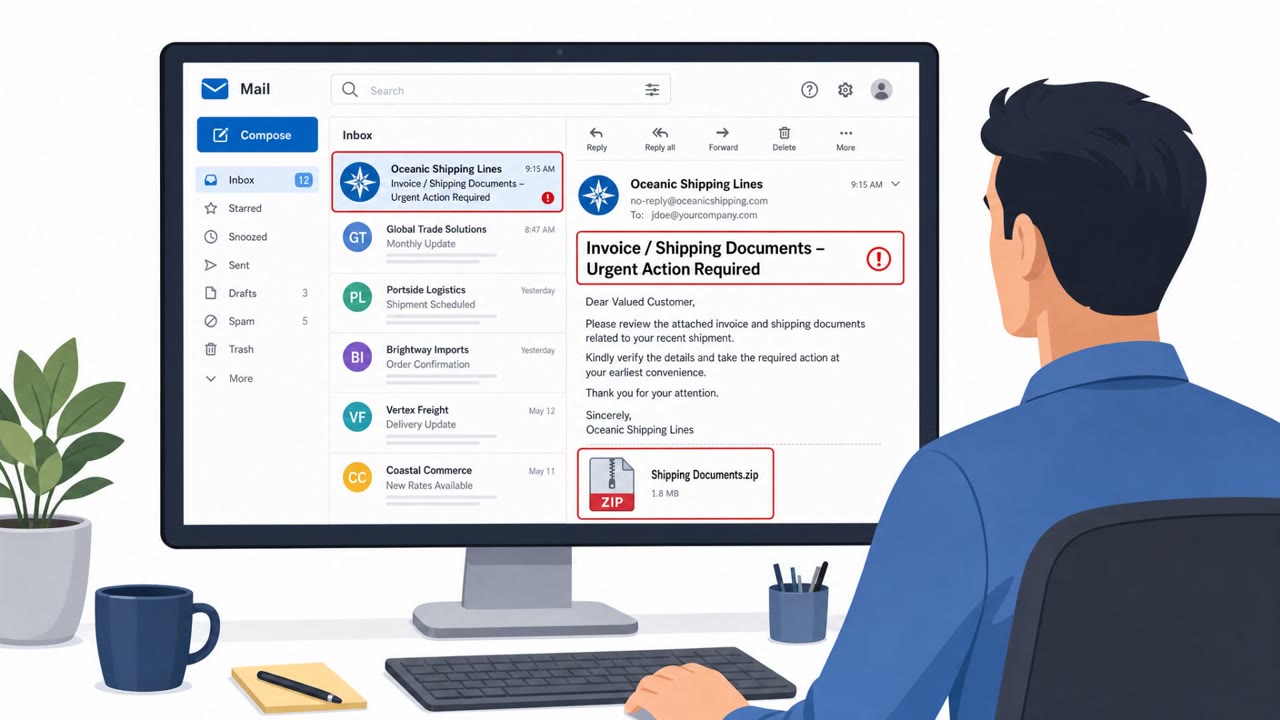
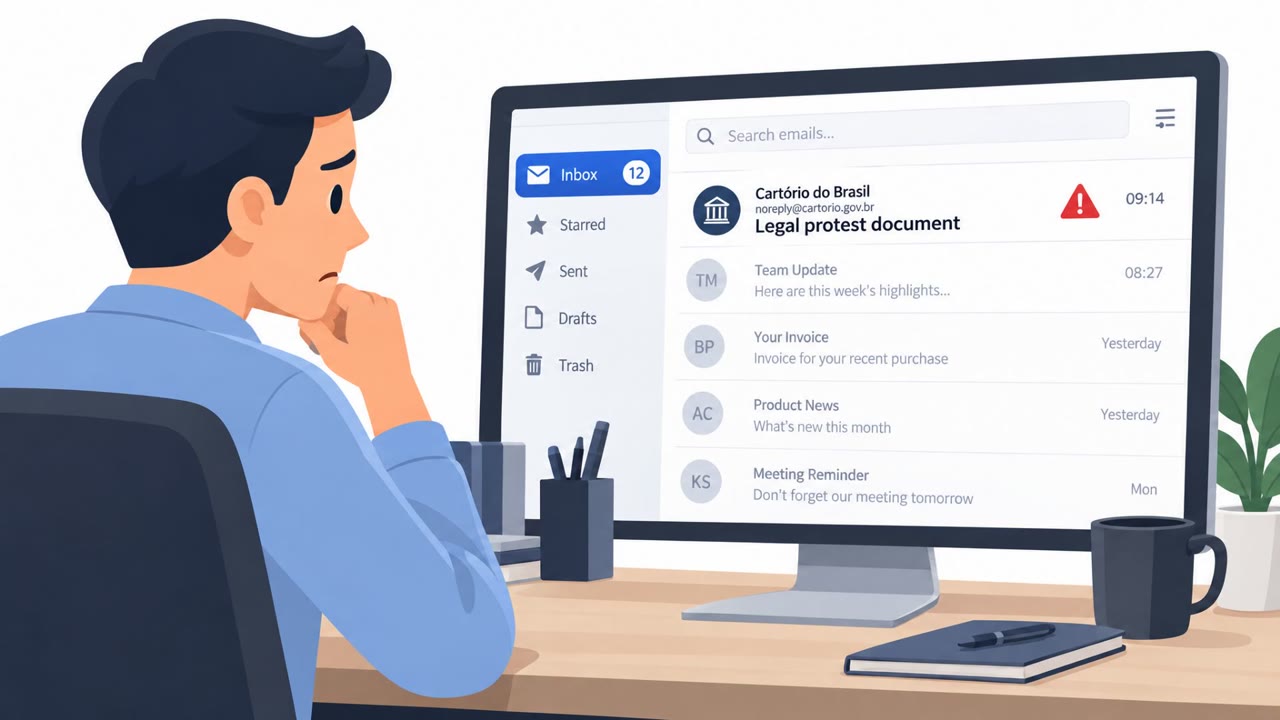
Attackers behind OXLoader used two main pretexts to get employees to download and run malicious files. One approach relied on fake copyright or complaint notices, including emails with an attached PDF that claimed unauthorized copying of brand intellectual property and prompted the recipient to download and run a ZIP file. Other campaigns used ZIP archives named "Evidence_of_Violation.zip" hosted on Google Sites, or fake software activators and cracks hosted on GitLab. In both cases, running the downloaded file begins an infection chain that uses DLL hijacking, and a decoy document or fake PDF may open to maintain the illusion that nothing is wrong.
Why it succeeded
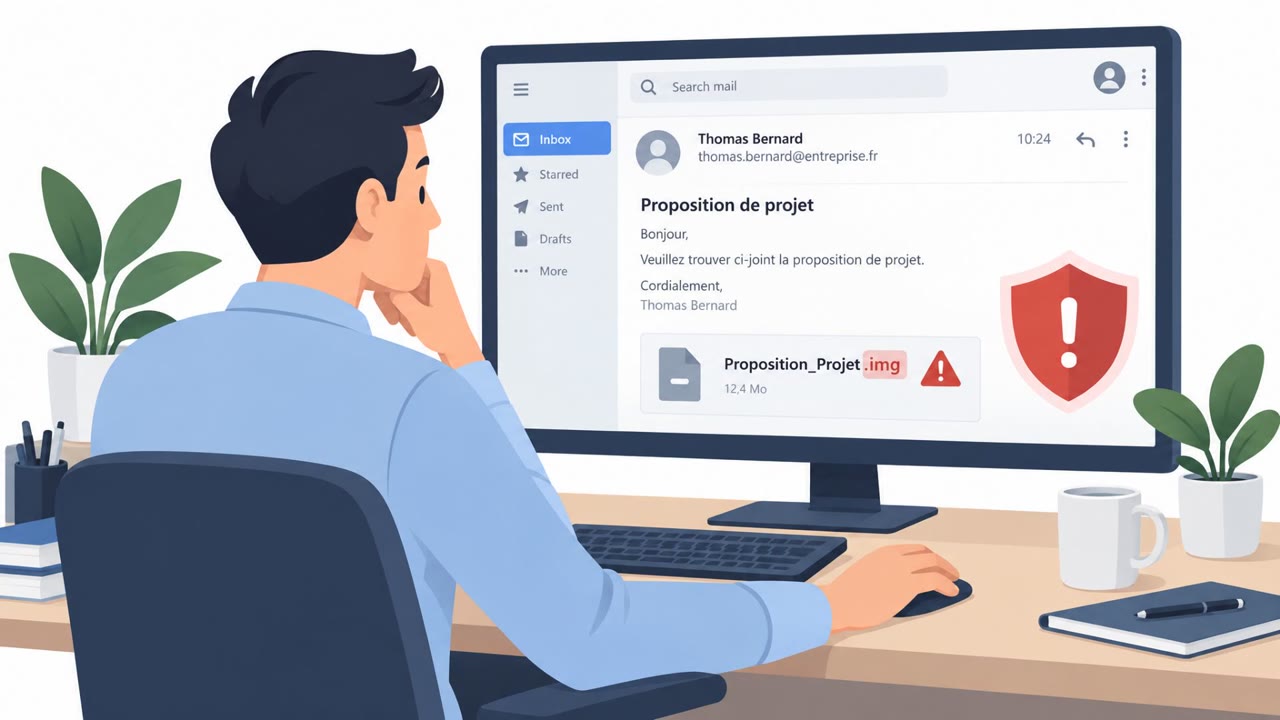
The copyright and legal-complaint pretext works because it creates urgency and fear, pushing recipients to act before verifying the claim. The software activator pretext works because it offers something the user already wants, free access to paid software, while skipping normal procurement channels. Both pretexts rely on disguising executables as ordinary files. Malicious files were given long filenames and double extensions, such as "Travel_Point_Conditions.docx.exe" and "evidence_of_violation.docx.exe," so a file that looks like a Word document is actually a program.
What to watch for
- Unexpected emails or messages alleging copyright infringement, policy violations, or legal complaints that ask you to download and run an attached or linked file.
- ZIP archives, especially ones with urgent or threatening names, that contain files you were not expecting.
- Files presented as documents (.docx, .pdf) that actually end in .exe, or filenames that are unusually long.
- Offers of free software activators or cracks hosted on code repositories or general file-sharing sites rather than official vendor sources.
How to build resistance
- Treat unexpected copyright or legal complaints as untrusted until the sender and case are verified through known contact details, rather than clicking links or opening attachments in the message itself.
- Always check the full file extension of a downloaded file before opening it. A document icon does not guarantee the file is actually a document.
- Obtain software only through approved company processes and official vendor sources, and avoid using cracks or activators on any work device.
- When extracting a ZIP archive, pay attention to whether all expected files appear, and be cautious if something seems missing or unexpected files are present.
These behaviors reflect the techniques described in this campaign and align with known social engineering tactics such as phishing via attachment (T1566.001), phishing via link (T1566.002), and user execution of malicious files (T1204.001, T1204.002).
Key findings
- OXLoader is a malware loader that has delivered Remcos, OverLord, PureRAT, Lunex Stealer, LOLD, and Hermes.
- Attackers used fake copyright or complaint notices, including an email with a PDF attachment that prompts the recipient to download and run a ZIP file.
- One campaign used ZIP archives named "Evidence_of_Violation.zip" hosted on Google Sites.
- Malicious files were disguised with long filenames and double extensions, including "Travel_Point_Conditions.docx.exe" and "evidence_of_violation.docx.exe".
- Other campaigns used fake software activators and cracks hosted on GitLab.
- The resulting malware can steal saved browser passwords and data, provide remote access, or download additional malware.
Who’s being targeted
- Commonly targeted roles: All employees, Legal and compliance teams, Marketing and creative teams, Procurement, IT and help desk staff, Developers, Employees responsible for software installation or purchasing.
- Affected industries: Cross-industry Windows users, Organizations handling intellectual property or copyright complaints, Organizations with employees downloading unauthorized software.
- Attack channels: email, website.
- Impersonated: Copyright complainant or intellectual-property enforcement representative, Evidence or complaint portal, Unofficial software-activation provider.
Red flags to watch for
- An unexpected allegation of copyright infringement creates urgency and fear.
- The PDF directs the recipient to download and run a ZIP archive rather than providing case details through a trusted channel.
- The downloaded archive may contain executables disguised with document-style names or double extensions.
- The archive name uses a threatening allegation to encourage immediate action.
- The supposed Word document is actually an executable with a ".docx.exe" double extension.
- The download is hosted on a public site rather than a verified legal or business contact's domain.
- Software cracks and activators bypass legitimate licensing and are a common malware delivery method.
- The download comes from a code-hosting platform rather than the software maker.
- An activator should never require users to run unfamiliar executables or DLL files.
Frequently asked questions
What is OXLoader?
OXLoader is a malware loader that has been used to deliver Remcos, OverLord, PureRAT, Lunex Stealer, LOLD, and Hermes, which can steal browser passwords and data, provide remote access, or download additional malware.
How are fake copyright notices used to spread OXLoader?
Attackers send emails with an attached PDF claiming unauthorized copying of brand intellectual property, prompting recipients to download and run a ZIP file that starts the infection chain through DLL hijacking.
How can I tell if a downloaded file is actually malware?
Check the full file extension rather than trusting the icon or displayed name. Files disguised as Word or PDF documents with a double extension such as .docx.exe or .pdf.exe are actually executables.
Are software cracks and activators risky?
Yes. In this campaign, fake software activators and cracks hosted on GitLab were used as another delivery method for OXLoader, so downloading them can compromise a device.
Read the video transcript
“Unauthorized copying of brand intellectual property.” That email wants your attention. Its PDF sends you to Google Sites for Evidence_of_Violation.zip. Inside, the supposed Word document is evidence_of_violation.docx.exe. Run it, and OXLoader starts installing malware. That second extension is the giveaway: .docx.exe is a program, not a document. OXLoader can bring password stealers or remote access. Fake activators on GitLab use the same trap. Got an unexpected copyright complaint? Don't run its files. Verify the claim using contact details you already trust.