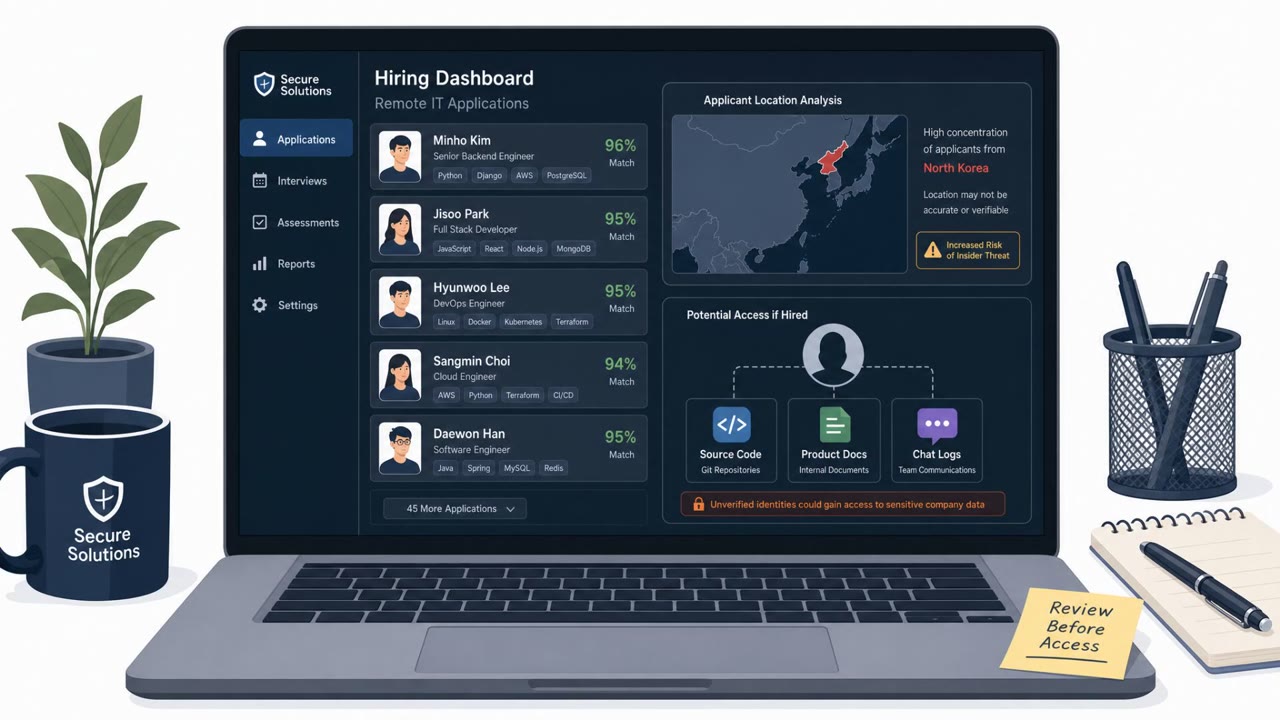
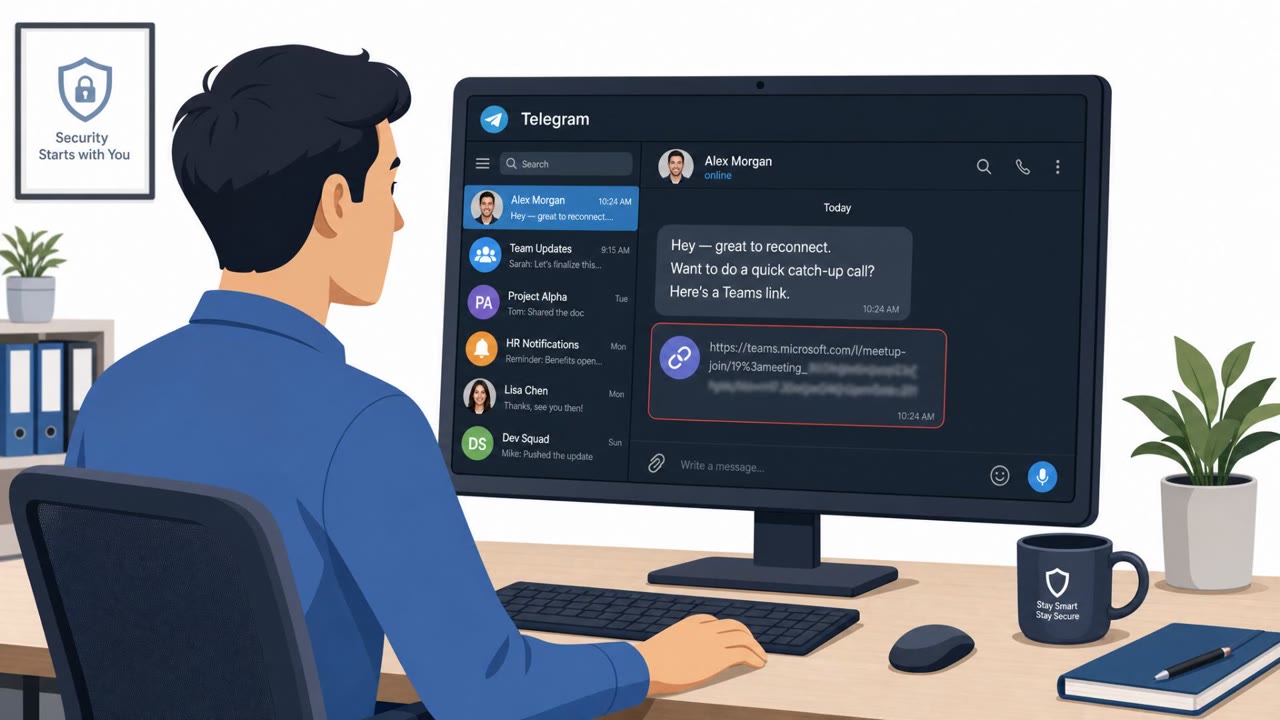
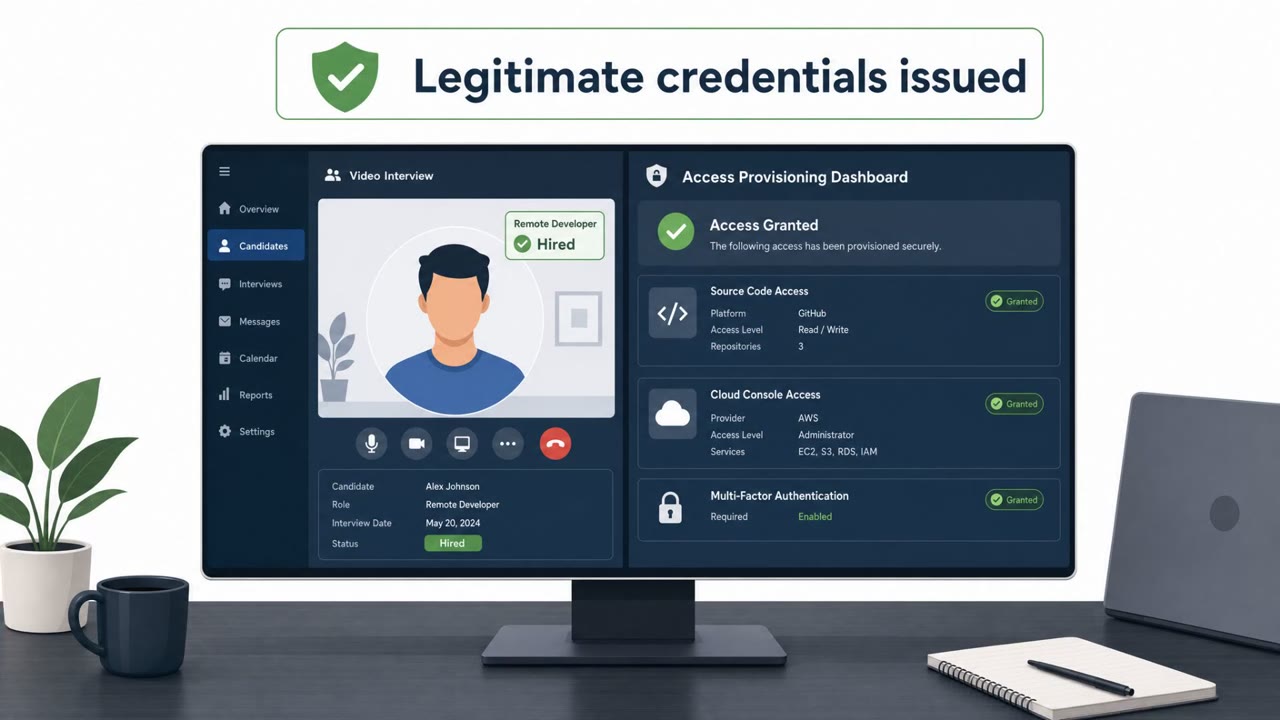
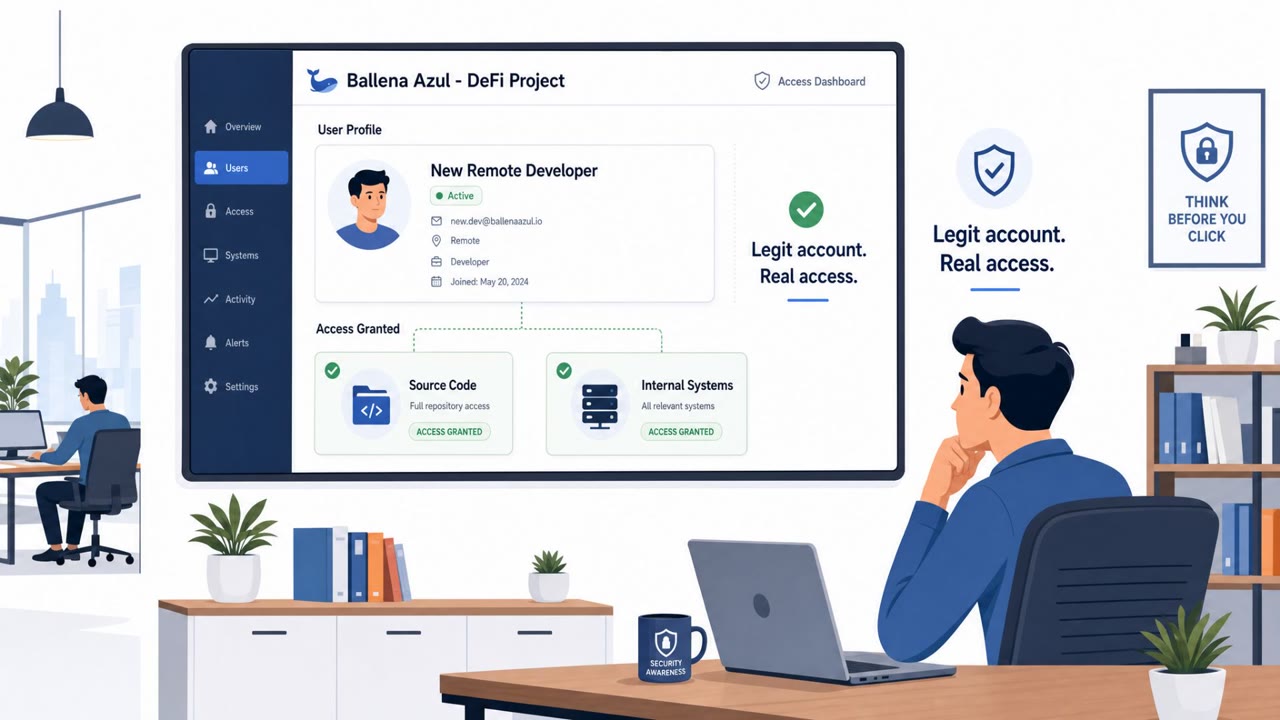
A suspected North Korean IT worker allegedly got hired by Consensys (MetaMask’s parent) using an alias and contributed to MetaMask’s core wallet code for about a month. The person was later removed, and Consensys says an investigation found no stolen assets, no data theft, and no malicious code shipped. The case highlights a realistic “fake contractor / fake identity” hiring workflow that security teams can simulate and train against.
What happened
A suspected North Korean IT worker allegedly used the alias "Tyler Knapp" to get hired by Consensys, MetaMask's parent company, as a consultant. The individual contributed to MetaMask's core wallet code for about a month before being identified and removed. Consensys says its investigation found no misappropriation of assets or data and no malicious code deployed. The person has also been linked to the GitHub username "imyugioh" and was reportedly flagged earlier on a public tracking site for known Lazarus Group operatives.
How the access was gained
The case followed a pattern security teams increasingly need to plan for: a contractor is introduced through a trusted channel, quickly onboarded, and given access to sensitive repositories before independent verification is complete. According to Consensys's General Counsel, the individual "was introduced to us through an existing relationship with a reputable third-party service provider." This kind of introduction can create a false sense of assurance, since the trust placed in the referring party substitutes for direct identity verification of the person being hired.
Why this type of attack succeeds
- Reliance on third-party introductions can reduce the perceived need for independent background checks
- Contractors can receive repository and code contribution access quickly, before vetting is complete
- Aliases and inconsistent identity details (like mismatched GitHub handles) may not be reconciled during onboarding
- Public indicators, such as known operative tracking resources, may exist but go unchecked during hiring
What to watch for
- Contractors or new hires introduced by a third party without an independent identity check
- Developer identities that don't cleanly reconcile across platforms, such as GitHub usernames versus stated names
- Rapid onboarding that grants meaningful code or repository access before vetting is finished
- Absence of a documented process for checking hiring candidates against known threat-actor indicators
How to build resistance
- Require independent verification of contractor identity even when introduced by a trusted third party
- Incorporate checks for known indicators of state-linked IT worker schemes into hiring and onboarding workflows
- Limit new contractor access to what is strictly necessary and monitor it closely in the early period
- Maintain a clear incident response path so access can be terminated immediately and an investigation launched if risk signals emerge
- Reconcile identity details, including online handles and aliases, before granting repository or codebase access
Key findings
- A developer allegedly posed under the alias “Tyler Knapp” and was hired by Consensys as a consultant, contributing to MetaMask code for about a month.
- The person was linked to the GitHub username “imyugioh” and was reportedly flagged earlier on a public Lazarus Group operative tracking site.
- Consensys says it terminated access quickly and found “no misappropriation of assets or data” and “no malicious code deployed.”
- The article suggests a breakdown (or gap) in vetting: a claim that a “proper background check” would have caught the suspected identity earlier.
Who’s being targeted
- Commonly targeted roles: Engineering leadership, Recruiting / HR, Procurement / Vendor management, Security / GRC, Open-source program office (OSPO) / GitHub admins.
- Affected industries: Cryptocurrency / Web3, Financial technology (FinTech), Software development / open-source ecosystems.
- Attack channels: github.
- Impersonated: External consultant developer using the alias “Tyler Knapp”.
Red flags to watch for
- Identity presented under an alias rather than a verifiable legal identity
- Reliance on introduction via a third party without independent verification
- Contractor quickly receiving access to sensitive codebases
Frequently asked questions
What happened in the MetaMask fake developer case?
A developer allegedly used the alias "Tyler Knapp" to get hired by Consensys, MetaMask's parent company, as a consultant and contributed to MetaMask code for about a month before being removed.
Did the fake developer steal any data or funds from MetaMask?
Consensys says its investigation found no misappropriation of assets or data and no malicious code deployed.
How was the suspected fake identity introduced to Consensys?
The individual was introduced through an existing relationship with a reputable third-party service provider, according to Consensys's General Counsel.
What red flags should hiring and vendor teams watch for?
Watch for identities presented under aliases rather than verifiable legal identities, reliance on third-party introductions without independent verification, and contractors quickly receiving access to sensitive codebases.
Read the video transcript
Imagine this: a fake developer slips into the MetaMask wallet codebase under a totally made‑up name. They say, “Hi team, I’m Tyler Knapp, introduced by your third‑party provider, ready to start on the MetaMask repo.” GitHub handle? “imyugioh”, already listed on a public site tracking suspected DPRK IT workers. Consensys caught it fast, cut access, investigated, and confirmed no assets or data were stolen. But here’s the scary part: a fake identity still got a month of core wallet access because an intro from a “reputable” partner felt safe enough. Your move: before any contractor touches a sensitive repo, match their real legal identity to their online handles, GitHub, aliases, everything, or their access doesn’t go live. No match, no access.