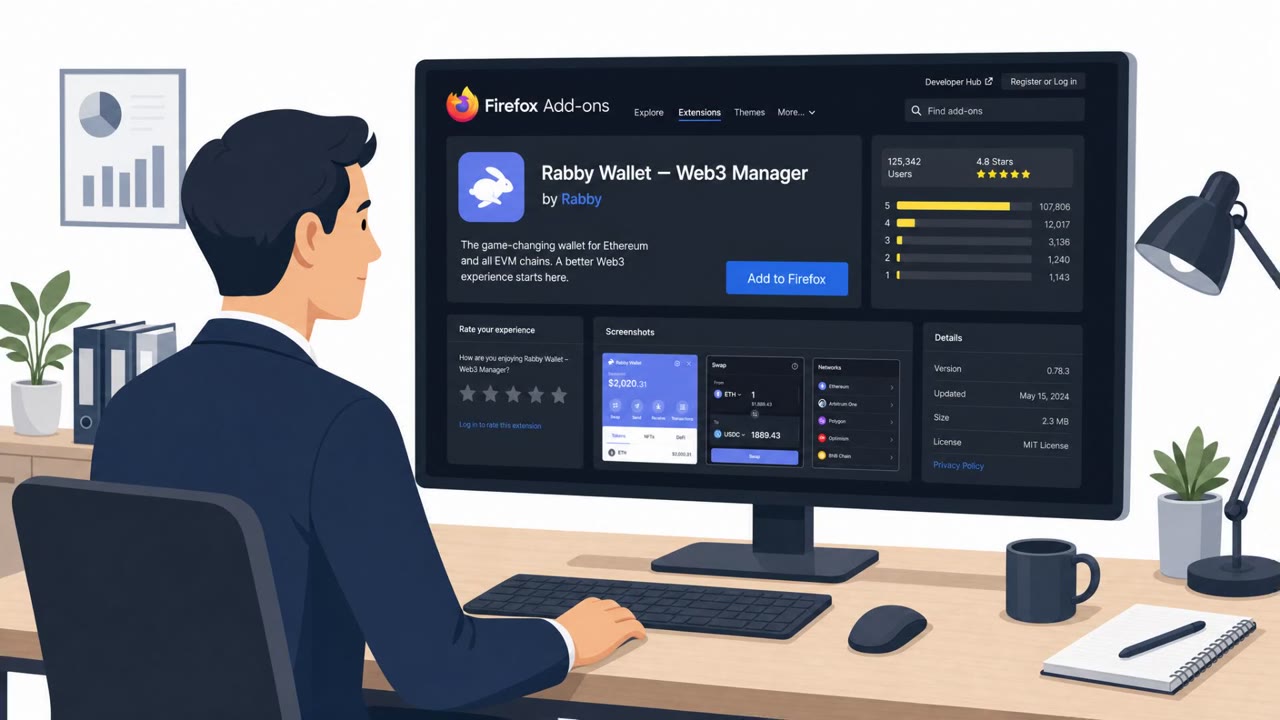
Researchers found 16 malicious Firefox browser extensions pretending to be Rabby or OKX crypto wallets. When a user imports a wallet, the fake add-ons capture the recovery phrase/private key and send it to attacker-controlled Cloudflare Workers, enabling wallet takeover and theft.
Key findings
- 16 malicious Firefox extensions masqueraded as Rabby Wallet and OKX Wallet to steal wallet recovery phrases and private keys.
- The extensions intercept secrets specifically "during wallet import flows" and attempt to exfiltrate them to attacker-controlled Cloudflare Workers.
- Most of the add-ons contacted the "*.icy-star-f45c.workers[.]dev" domain; researchers assess it as a continuation of an earlier wave with reused infrastructure and logic.
- Mozilla removed the extensions as of Oct 5, 2026; users who entered real phrases/keys should assume compromise and move assets from a clean system.
Who’s being targeted
- Commonly targeted roles: Finance, Executives, Crypto/treasury operations, IT (endpoint/browser management), All employees who install browser extensions.
- Affected industries: Cryptocurrency/Web3, Financial services, Consumers/End users, Technology (browser extension ecosystems).
- Attack channels: website.
- Impersonated: Rabby Wallet or OKX Wallet (look-alike Firefox extension).
Awareness takeaways
- Treat wallet recovery phrases/private keys like crown jewels, never enter them into an unverified browser extension, even if it looks like a known brand.
- If a user entered a recovery phrase/private key into a suspicious wallet extension, assume compromise and rotate immediately (new wallet from a clean device, then move funds).
- Organizations should audit and limit browser extensions in managed environments and watch for suspicious extension behavior/exfiltration.
Red flags to watch for
- Wallet extension name/ID looks unusual or unrelated to the brand (random tool-like names).
- Extension requests your recovery phrase/private key during an import flow inside a look-alike interface.
- Network activity to unrelated infrastructure (e.g., Cloudflare Workers domain) after entering the phrase/key.
Read the video transcript
You search Firefox add-ons for Rabby or OKX Wallet, click install, and think, "Cool, legit wallet set up." But 16 fake Firefox extensions copied Rabby and OKX. When you hit "Import wallet" and type your recovery phrase, they quietly grab it and send it off to icy-star-f45c.workers.dev. Aha moment: real wallets don’t need your seed phrase in some random Firefox add-on with a weird name and zero history. If you typed a real phrase into something like that, assume that wallet’s gone. Your move: if you ever entered a recovery phrase or private key into a Firefox wallet add-on you’re not 100% sure about, stop using that wallet, create a new one on a clean device, and move your funds now.