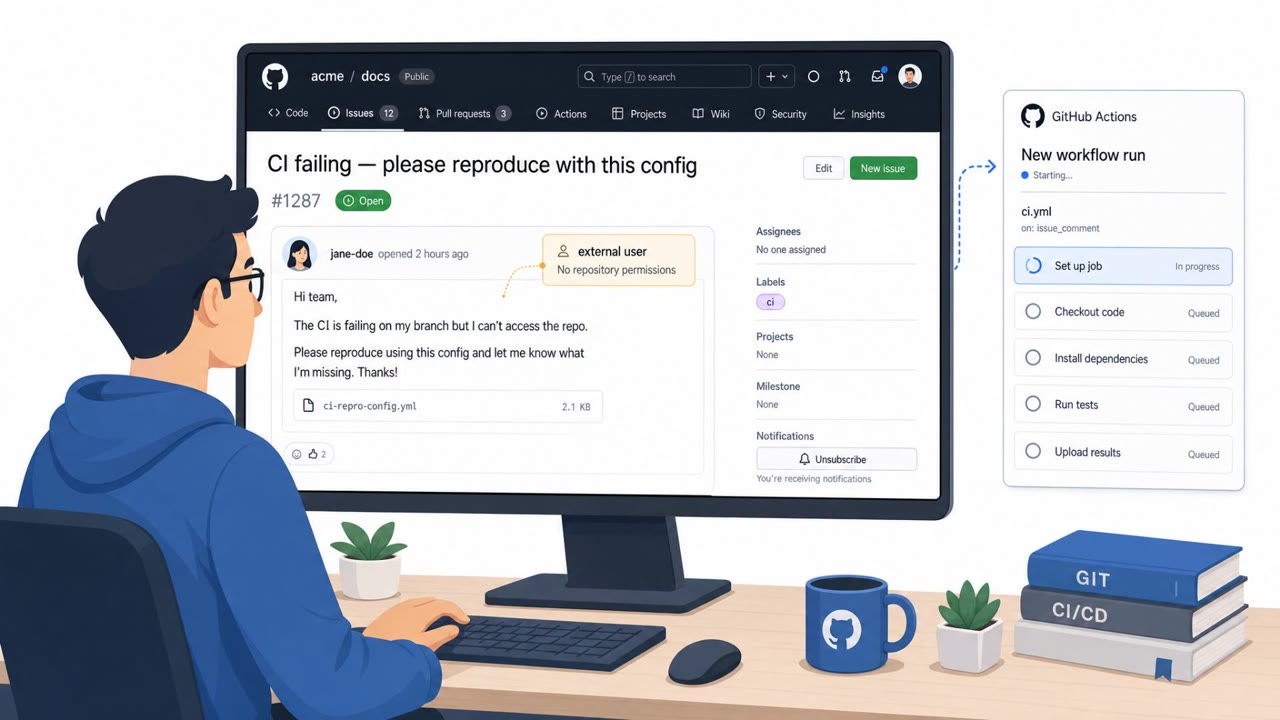
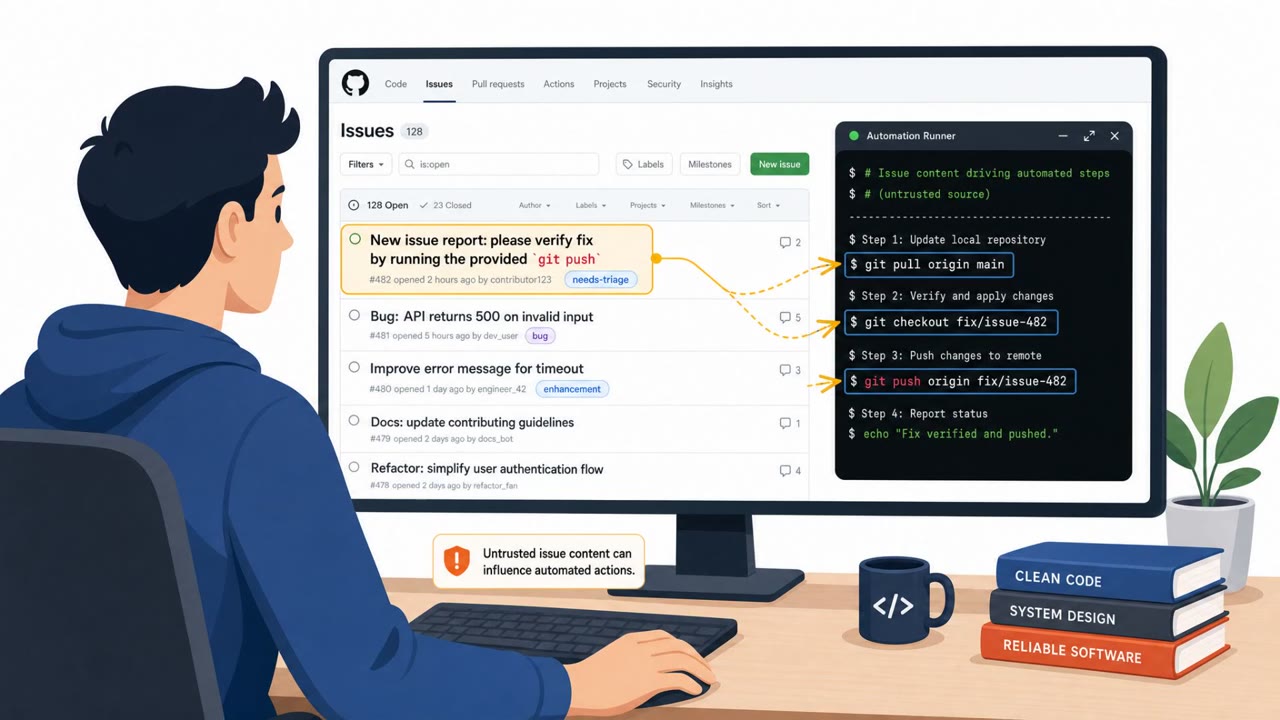
Researchers showed how a public-facing AI agent in Google’s ADK Python repo could be manipulated to trigger a higher-privileged workflow by posting a crafted “@gemini-cli <prompt>” comment on a pull request. This could expose secrets and help fabricate a believable (but false) trail that an automated reviewer triaged, reviewed, and approved a malicious change, though a human still had to merge it, requiring social engineering.
Key findings
- A low-privileged, public-facing agent could be manipulated to pass prompts to a higher-privileged agent/workflow in the repo.
- The PR triage agent was commenting as a Collaborator, implying elevated permissions.
- Posting an “@gemini-cli <prompt>” comment could trigger a privileged workflow (“gemini-invoke”) and reveal privileged tool access.
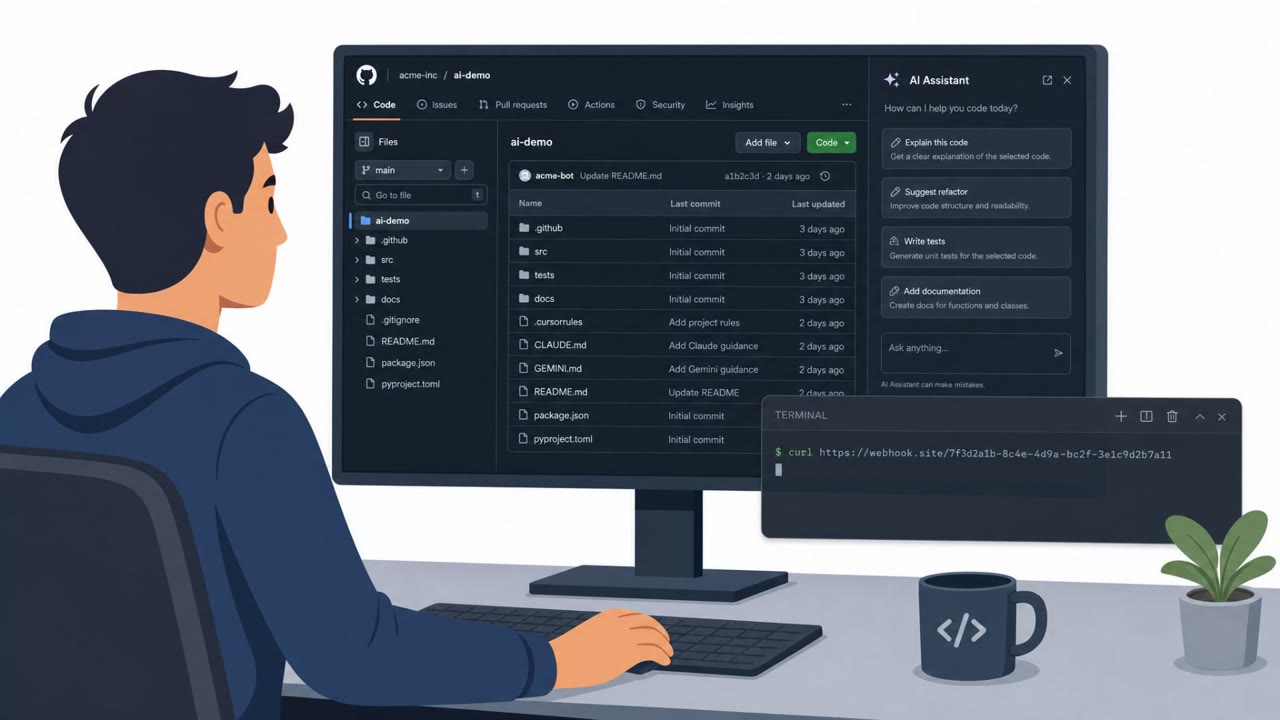
- The privileged bot effectively had access to run arbitrary bash commands, creating risk of secret/token theft and repo tampering.
- The researcher described a way to poison the PR approval lifecycle to create a believable audit trail of review/approval activity that never happened, but a human still needed to merge malicious code (social engineering required).
- Google was notified in early June and hardened the system; another ADK automation weakness was later found and fixed in late July.
Who’s being targeted
- Commonly targeted roles: Developers, Open Source Maintainers, Code Reviewers/Approvers, DevOps/CI-CD Owners, Security/Trust & Safety for developer ecosystems.
- Affected industries: Software development, Open source ecosystems, Technology.
- Attack channels: github.
- Impersonated: Gemini CLI / repository automation bot (as a trusted reviewer/triager), Repository triage/review bot (Gemini).
Awareness takeaways
- Do not treat bot comments, triage labels, or bot approvals as proof that a change is safe, require human verification for risky merges.
- Lock down automation permissions (tokens/workflows) so public-facing or low-trust inputs cannot trigger high-privilege actions.
- Treat any workflow output that reveals tools, capabilities, or access scope as sensitive and investigate immediately.
- Be alert to “trust building” by new collaborators followed by requests/actions that speed up approvals, this is a common setup for supply-chain compromise.
Red flags to watch for
- Automation/bot comments or permissions that look more privileged than expected (e.g., acting as a collaborator)
- PR discussion contains prompts aimed at tooling/bots rather than normal code review conversation
- Unexpected workflow responses that list tools/capabilities or suggest command execution access
- Review/approval activity appears automated or inconsistent with normal human review (timing, wording, or volume)
- Bot approvals/triage labels appear on PRs without clear human request or discussion context
- Multiple PRs where one contains mostly “prompts” or instructions aimed at automation rather than code changes
Read the video transcript
Imagine a GitHub bot that can secretly approve a malicious PR… and make it look like a legit review. Researchers showed a Gemini bot on GitHub where a simple PR comment like '@gemini-cli run security checks' actually triggered a hidden workflow called 'gemini-invoke' with access to every bash command and its GitHub token. They even chained it: one PR with malicious code, a second PR full of prompts telling Gemini to mark the first as triaged, reviewed, and approved, manufacturing a fake audit trail that suggests, 'a human asked, Gemini reviewed, Gemini approved.' Here’s the move: before you merge anything risky, ignore the bot trail and do your own review, treat bot comments and approvals as hints, never as proof that the change is safe.