Judicial Phish Delivers XWorm in Colombia

GB Hackers · High sophistication
Last updated October 28, 2026

A real phishing campaign targeted Colombian organizations with Spanish-language messages posing as administrative or judicial correspondence. The emails used script attachments disguised as documents and pressured recipients to open them, ultimately delivering XWorm malware through hidden PowerShell and a reusable loader.

Key findings

  • Colombian organizations received Spanish-language phishing emails that urged prompt attention and mimicked judicial or administrative correspondence.
  • The malicious attachments were VBScript and JavaScript files named to look like documents, encouraging recipients to run scripts.
  • Opening the attachment led to concealed PowerShell activity and loading of a .NET component that delivered XWorm.
  • The same .NET loader was found in a separate UK-linked case, but the report says this demonstrates loader reuse rather than proving the same attacker.
  • The malware can collect system and user information and supports commands for downloads, shell execution, plugins, webcam capture, and other actions.

Who’s being targeted

  • Commonly targeted roles: Administrative staff, Legal and compliance teams, Public-sector employees, Executive assistants, Document-processing staff, All email users.
  • Affected industries: Government and public-sector organizations, Judicial and administrative organizations, Organizations in Colombia, Organizations in the United Kingdom.
  • Attack channels: email.
  • Impersonated: A Colombian judicial or administrative organization.

Awareness takeaways

  • Treat unexpected script attachments as dangerous, even when their file names appear to describe an official document or legal notice.
  • Do not let urgency override verification. Independently confirm unexpected judicial or administrative messages through a known contact channel before opening an attachment.
  • Check the real file type before opening an attachment; a .vbs or .js file is not a normal court, administrative, or business document.
  • Report suspicious document-themed emails promptly, because opening the attachment can trigger hidden malware delivery rather than display a document.

Red flags to watch for

  • The attachment is a VBScript or JavaScript file rather than a normal document.
  • The message creates urgency by asking for prompt attention.
  • A supposed official correspondence asks the recipient to execute a script.
Try Mirage

Mirage safely runs attacks like this one against your own team, so you find out what happens before a real adversary does.

Get a demo
Read the video transcript

A judicial notice lands in your inbox: urgent attention required. It looks like official Colombian correspondence. But the attachment isn't a document: it's a .vbs or .js script, named to look like a legal notice. That's the trick: opening it runs code, not a document. Hidden PowerShell loads a .NET component that delivers XWorm, which can collect information and run commands. Unexpected court notice with a .vbs or .js attachment? Report the email without opening it.

Categories

Similar attacks

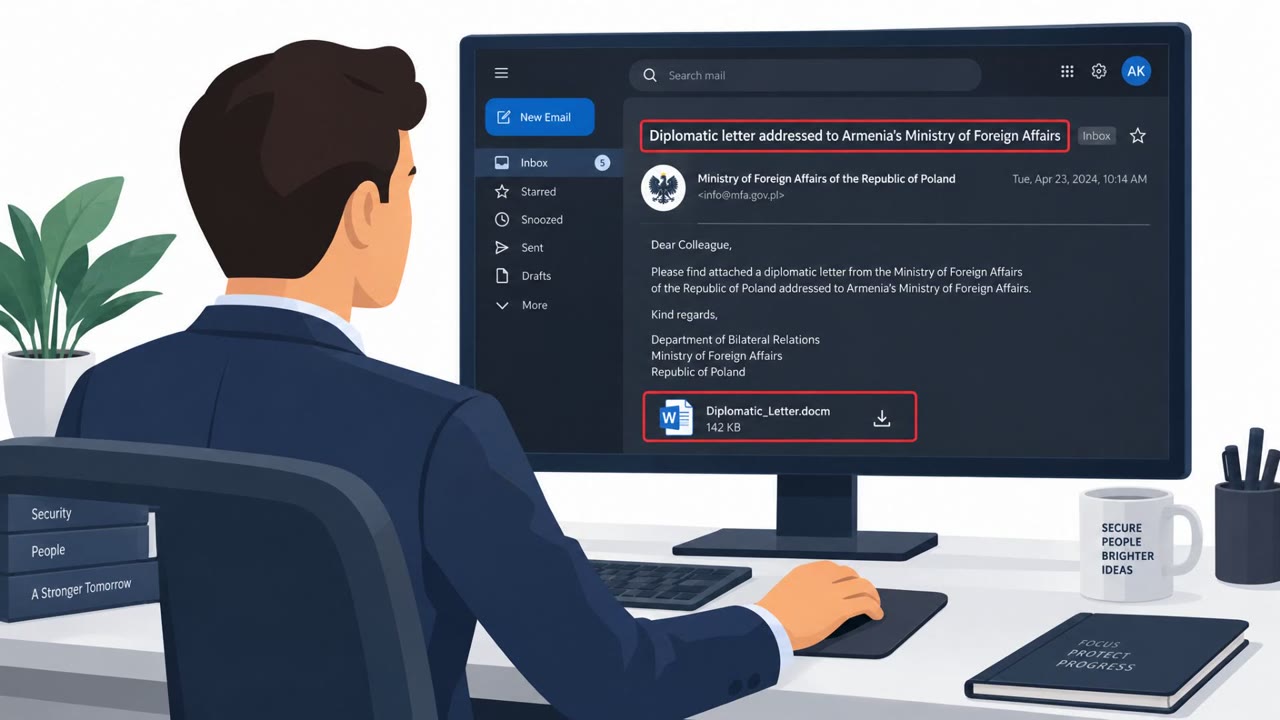
Silent Lynx Phishes CIS Govs With Decoy Documents

Silent Lynx Phishes CIS Govs With Decoy Documents

Researchers report that the threat actor Silent Lynx ran multiple real-world spear‑phishing campaigns against government organizations across Central Asia and the wider CIS region. Victims were lured with official-looking documents (e.g., diplomatic letters, airspace applications, and oil refinery…

October 15, 2026
Star Blizzard’s RedFlick Phish Uses VHDX Trap

Star Blizzard’s RedFlick Phish Uses VHDX Trap

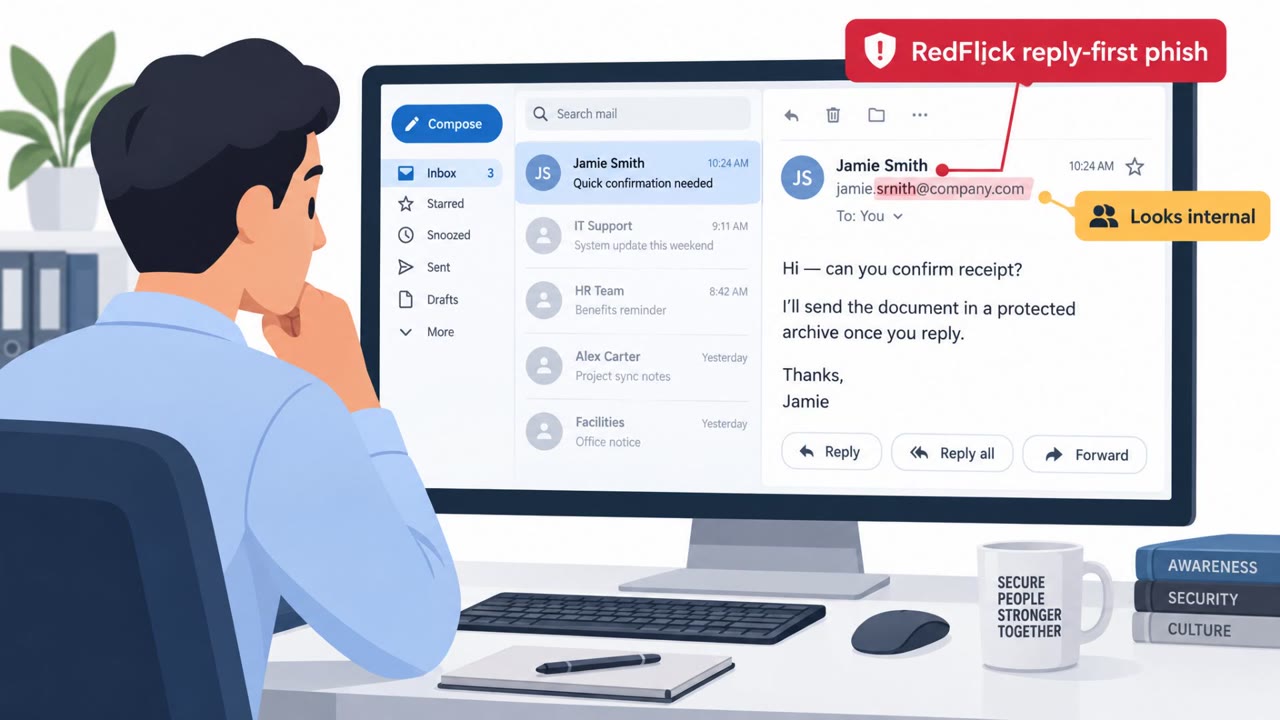
Microsoft reports real-world Star Blizzard phishing campaigns where victims who engage with an initial email receive a follow-up message containing a password-protected ZIP/RAR attachment. The attachment chain hides a malicious shortcut disguised as a PDF, opening a decoy file while quietly…

September 30, 2026
Fake Teams Support Chats Open Door to Ransomware

Fake Teams Support Chats Open Door to Ransomware

Attackers are using Microsoft Teams external chat to pose as internal IT support staff, often after overwhelming employees with email subscription messages. They persuade victims to join a voice call, approve remote-control tools, or run commands, with some incidents ending in malware infections…

October 27, 2026
Phishers Hide Lua Malware as “.TTF Font”

Phishers Hide Lua Malware as “.TTF Font”

A real, ongoing phishing campaign is tricking recipients into opening malicious archives that appear to contain harmless TrueType font files (.ttf) but actually hide a Lua-based loader. Once executed, the loader uses stealthy, mostly in-memory techniques to install remote access trojans and…

July 16, 2026
Silent Lynx Lures CIS Officials With Fake Diplomacy Docs

Silent Lynx Lures CIS Officials With Fake Diplomacy Docs

Researchers tracked Kazakhstan-nexus group UAT-6275 (TAG-193) targeting government organizations across Central Asia and the wider CIS using convincing decoy documents tied to diplomacy and energy. The campaigns used malicious files (macro-enabled Word docs, shortcuts, and a WinRAR exploit) to…

October 15, 2026
Fake FedEx Invoice Delivers Sirius Backdoor

Fake FedEx Invoice Delivers Sirius Backdoor

Attackers sent Korean-language emails posing as FedEx tax invoices to pressure billing and payment staff into opening a ZIP attachment. The attachment contains a blank-looking PDF that asks the recipient to approve a security prompt, allowing hidden commands to launch malware on Windows.

October 27, 2026