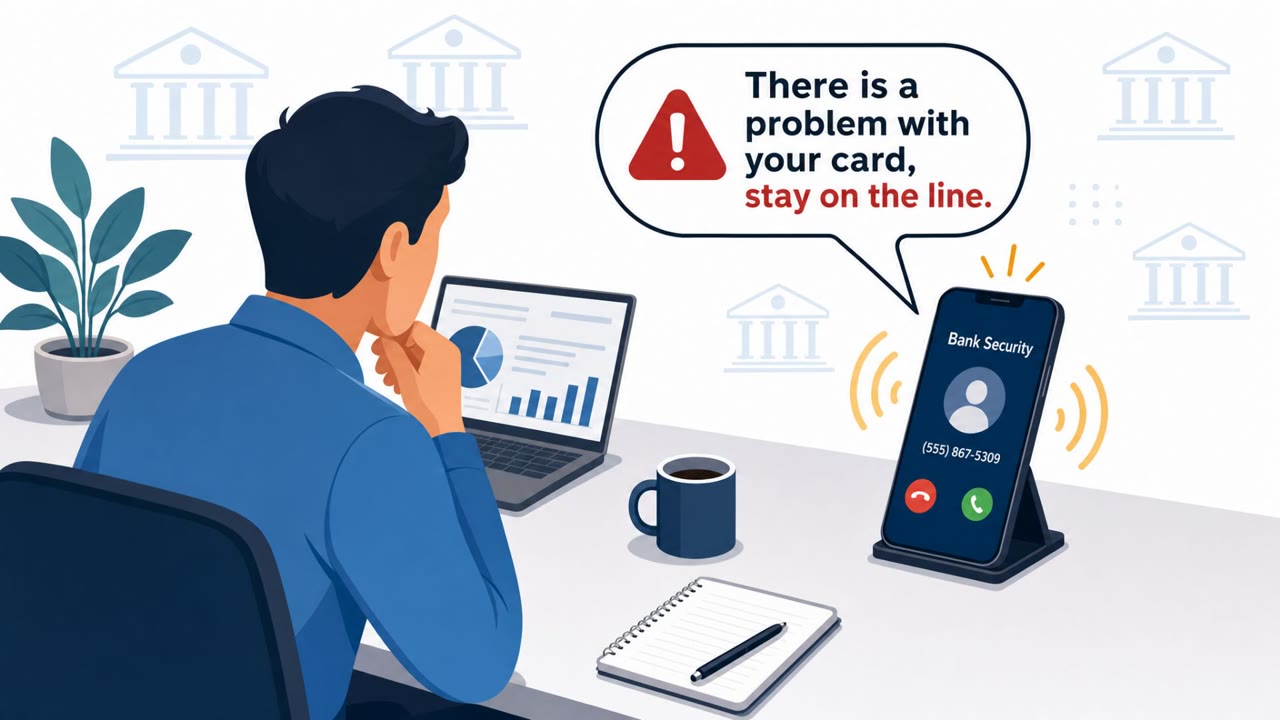
Researchers report a sharp rise in scam victims at hundreds of financial institutions, with many scams starting on mobile devices. The article walks through a real scam session where a victim, guided by a phone call and remote access software, nearly sent a high-risk transfer to a new payee. It also highlights how scammers coach victims to ignore bank warnings.
Key findings
- Reported victims of employment scams “more than tripled” (258% rise) across “more than 370 banks and other financial institutions in 21 countries.”
- “Nine of every 10 scam sessions now start on a mobile device.”
- A documented scam session involved an active phone call, remote access software, and behavior consistent with the victim reading payment details aloud to a scammer.
- Scammers coach victims to resist bank intervention: “The bank will try to stop you. Don’t listen to them. They don’t understand.”
- Financial sextortion targets minors with relatively small demands (e.g., “$100, $200 or a gift card”) but severe impact.
Who’s being targeted
- Commonly targeted roles: Fraud operations, Retail banking / branch staff, Contact center agents, Digital banking product owners, Customer education / communications teams.
- Affected industries: Banking, Financial services, Fintech / P2P payments.
- Attack channels: vishing.
- Impersonated: Unspecified scammer on an active phone call (identity not stated), Unspecified scammer on the phone (identity not stated).
Awareness takeaways
- Train staff and customers that scammers often instruct victims to ignore bank warnings; treat that as a major red flag and slow the transaction down.
- Add awareness messaging: never stay on a phone call while setting up a new payee or sending money, hang up and verify using a trusted number/channel.
- Educate teams to treat first-time beneficiaries and out-of-pattern transfer amounts as high-risk indicators that warrant extra verification.
- Include financial sextortion in awareness programs for families/younger customers: small dollar demands can still be high-risk and urgent.
Red flags to watch for
- Pressure to ignore the bank’s warnings or intervention
- Victim is on an active phone call while performing the transfer
- Transfer goes to a first-time beneficiary and is “well outside the customer’s history”
- Typing account numbers in unusual chunks with pauses (as if reading aloud)
- Unusual delay/idle time during sensitive steps
- Repeated tapping in the same place during review (possible confusion or coercion)
Read the video transcript
You’re on your phone, in your banking app, and a voice says: “The bank will try to stop you. Don’t listen to them. They don’t understand.” That’s a real scam script. Nine out of ten of these now start on mobile. The caller keeps you on the line, walks you through adding a brand-new payee, even has you type the account number in little chunks as they read it out. Here’s the tell: you’re on a live call, sending money to a first‑time beneficiary, for an amount way outside normal, and the app pops up warnings you’re being scammed, but the voice tells you to ignore them. If you’re ever on a call and they want you to move money or set up a new payee, here’s the rule: hang up immediately, then call your bank back using the number on their official site or app.