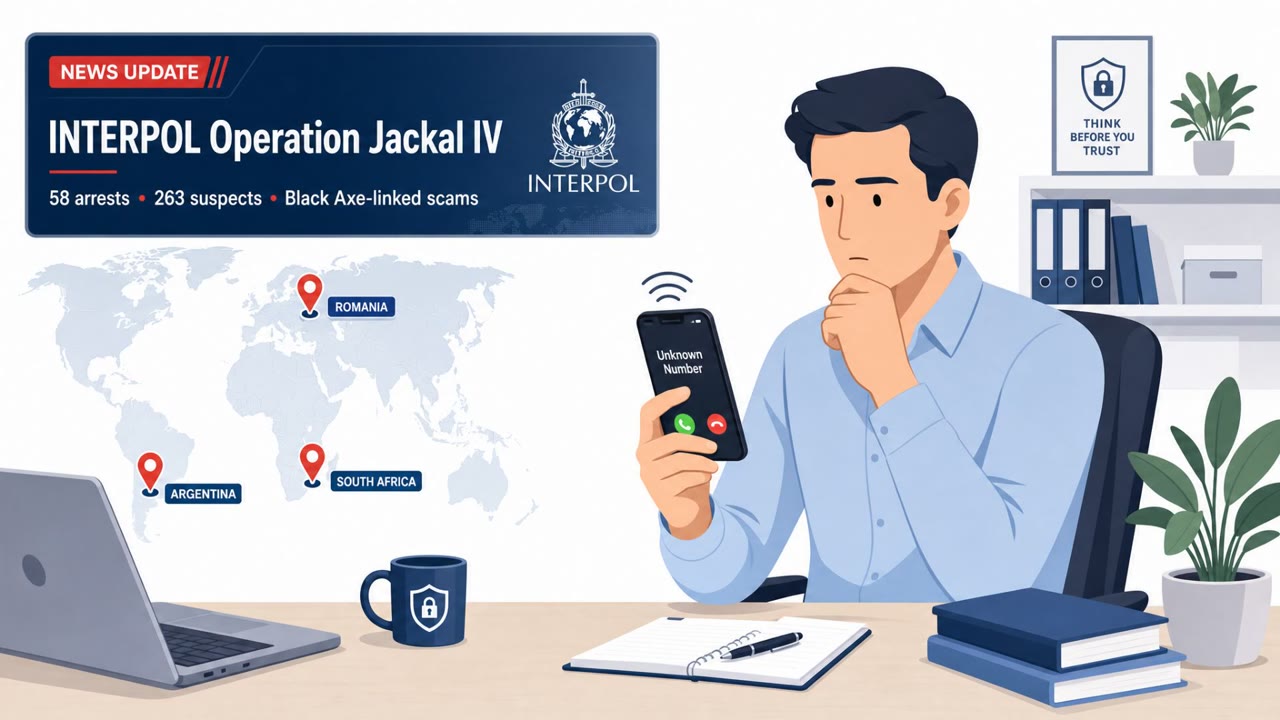
Interpol said an eight-month operation across 22 countries led to 58 arrests tied to cyber-enabled financial fraud, including romance scams, cryptocurrency/investment scams, and business email compromise. Authorities described how scammers build trust with victims (including minors) on social and gaming platforms, then pressure them into paying money through threats or fake investments.
What the operation uncovered
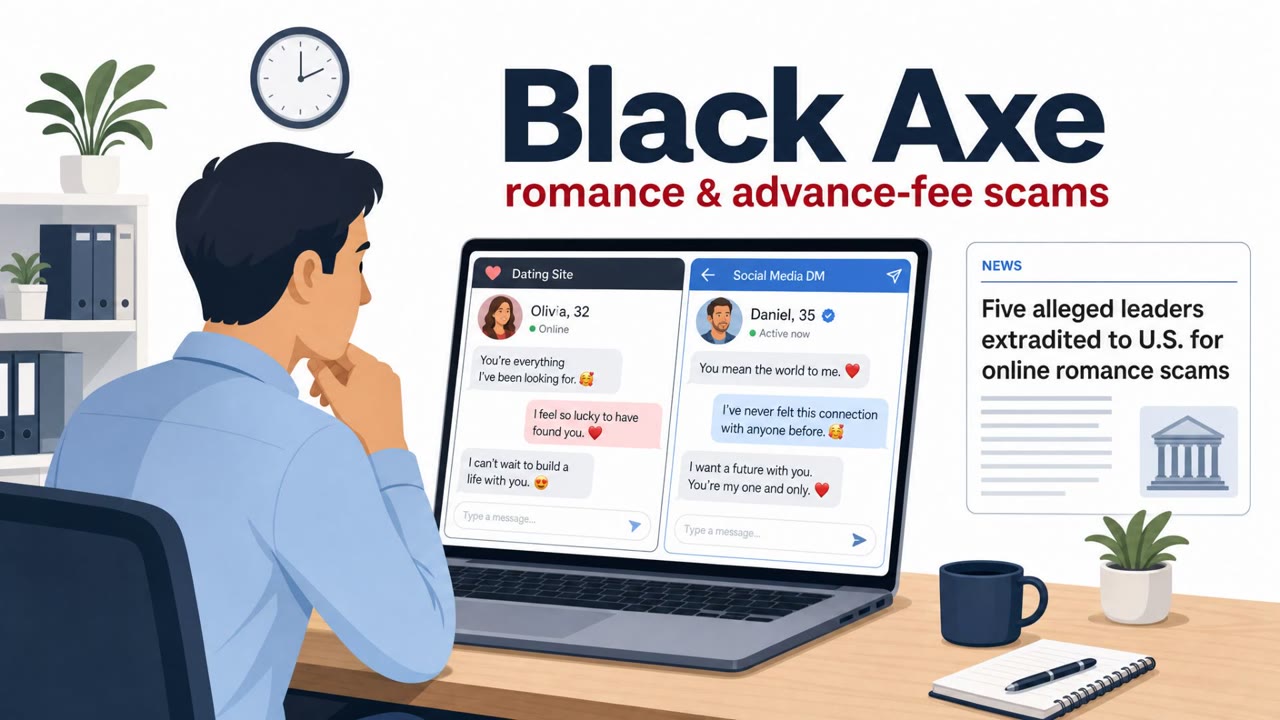
Interpol's eight-month Operation Jackal IV spanned 22 countries and resulted in 58 arrests connected to cyber-enabled financial fraud. The cases covered a wide range of schemes, including romance scams, cryptocurrency and investment fraud, business email compromise, and sextortion targeting minors. Interpol attributed a significant share of this activity to groups like Black Axe, which it said run romance scams, crypto and investment scams, and BEC fraud at scale.
How the scams worked
The operation revealed several distinct but related patterns:
- In South Africa, raids targeted a group running romance and investment scams aimed at elderly victims in English-speaking countries, resulting in 39 arrests and roughly $2.7 million seized.
- In Romania, eleven people were arrested for allegedly running a cryptocurrency investment scam through a call center. Investigators found $166 million in stolen and laundered funds held in electronic wallets tied to the operation.
- Separately, Interpol flagged a rising trend of sextortion aimed at minors on social media and gaming platforms, where attackers build trust with a young person before pressuring them to share intimate images, then threaten to release those images unless paid.
These schemes share a common structure: an attacker builds a relationship or credible-sounding pitch, then escalates to a payment demand under emotional or financial pressure.
Why these approaches succeed
Romance and investment scams work because they exploit trust built over time rather than a single moment of deception. Call center operations add a layer of apparent legitimacy, since a live voice offering a cryptocurrency opportunity can feel more credible than an email or text. Sextortion schemes exploit shame and fear, pushing victims, often minors, toward quick payment to avoid embarrassment rather than reporting the incident.
What to watch for
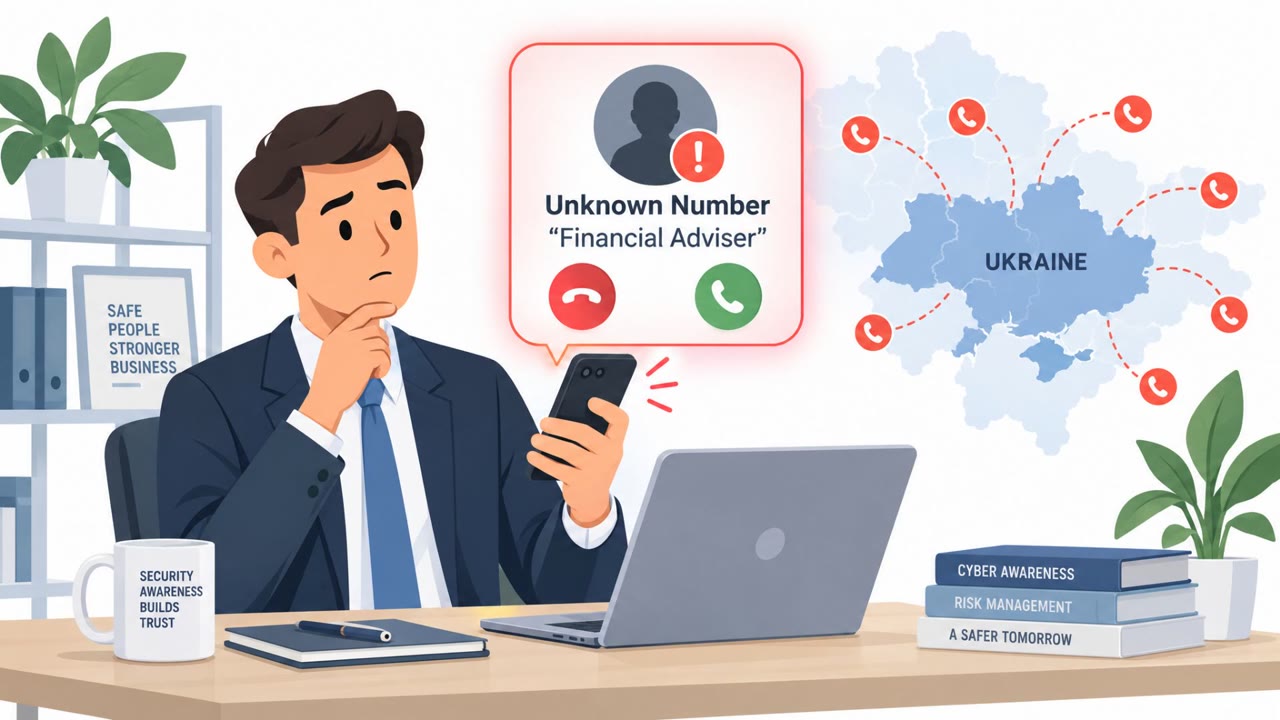
- Unsolicited investment calls or messages promising high returns, especially involving cryptocurrency.
- Online relationships that escalate quickly toward requests for money or intimate images.
- Threats to release private content unless a ransom is paid.
- Payment instructions that route through cryptocurrency wallets instead of regulated financial accounts.
Building resistance
Organizations and families can reduce exposure by treating unsolicited investment offers as high-risk until independently verified, and by encouraging a
Key findings
- Operation Jackal IV (Nov 2025–Jun 2026) involved law enforcement in 22 countries and resulted in 58 arrests.
- Interpol said groups like Black Axe are responsible for “a significant share of the world's cyber-enabled financial fraud,” including romance scams, crypto/investment scams, and BEC.
- South Africa raids targeted a group running romance and investment scams aimed at elderly victims in English-speaking countries; 39 arrests and about $2.7M seized.
- Romania arrests were tied to a “cryptocurrency investment scam operation through a call center,” with investigators finding $166M in stolen/laundered funds in electronic wallets.
- Interpol highlighted a trend of sextortion targeting minors via social media or gaming platforms using trust-building and blackmail for ransom.
Who’s being targeted
- Commonly targeted roles: All employees, Finance teams (BEC and payment fraud awareness), Executives (high-value fraud targets), Customer support / call center staff (recognizing scam patterns), Parents/guardians and school communities (if organization supports youth programs).
- Affected industries: Consumers/General public, Finance (cryptocurrency/investment fraud), Elder care/senior populations (targeted victims), Education (minors targeted online).
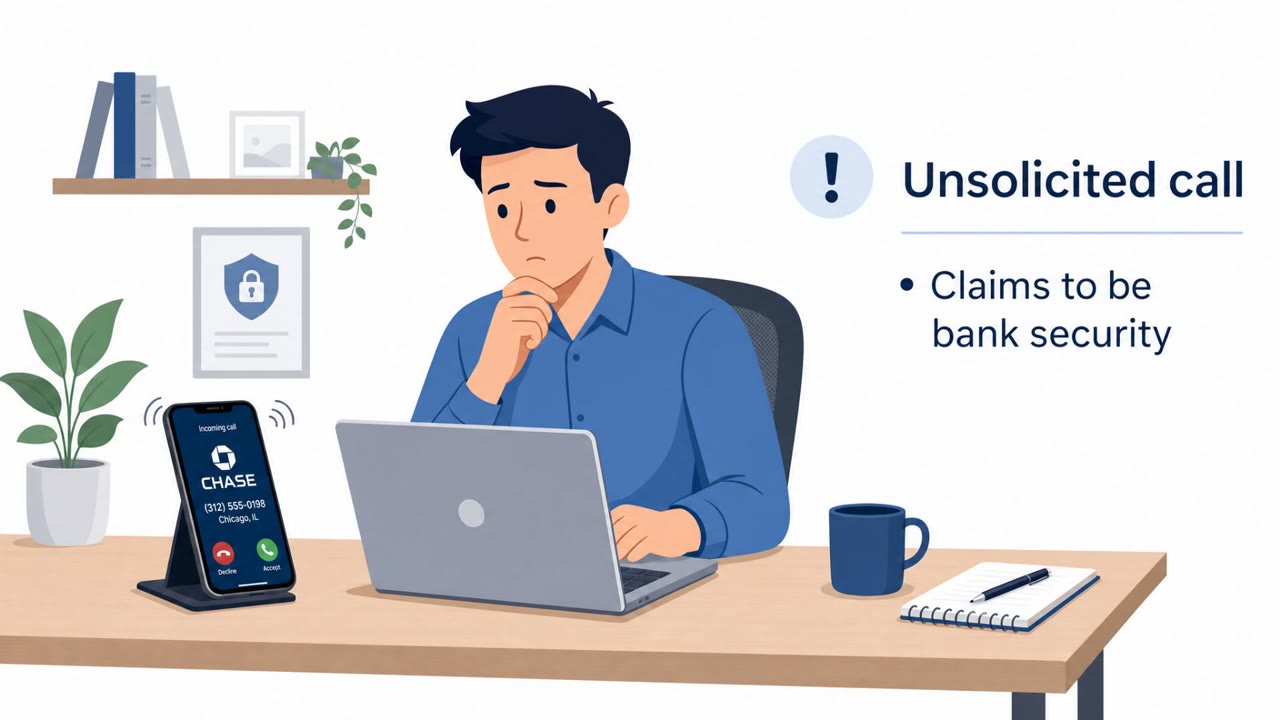
- Attack channels: website, vishing.
- Impersonated: A peer/friend met on a social media or gaming platform, Crypto ‘investment advisor’ calling from an ‘investment firm’.
Red flags to watch for
- Online contact quickly pushes for intimate images
- Threats to expose private content unless paid
- Pressure to pay urgently to avoid embarrassment
- Unsolicited investment call promising high returns
- Pressure to move money quickly
- Payment instructions involving crypto wallets rather than regulated accounts
Frequently asked questions
What was Operation Jackal IV?
It was an eight-month international law enforcement operation across 22 countries that led to 58 arrests tied to cyber-enabled financial fraud, including romance scams, cryptocurrency and investment scams, and business email compromise.
How do sextortion scammers target minors?
Interpol found that groups contact children on social media or gaming platforms, build trust with them, and urge them to share intimate photographs before threatening to release the images unless a ransom is paid.
How did the Romanian cryptocurrency scam operation work?
Eleven people were arrested in Romania for allegedly running a cryptocurrency investment scam through a call center, and investigators discovered $166 million in stolen and laundered funds held in electronic wallets tied to the operation.
Why are unsolicited investment pitches considered high risk?
Interpol linked groups like Black Axe to a significant share of the world's cyber-enabled financial fraud, much of it delivered through romance scams, crypto and investment pitches, or BEC fraud, making unsolicited offers a common entry point for loss.
Read the video transcript
Interpol just busted a global scam ring, 58 arrests, call centers and chat accounts built to do one thing: steal money through trust. One arm was a Romanian call center pushing fake crypto investments, investigators found about 166 million dollars sitting in their electronic wallets. Another arm was sextortion: someone you met on a game or social app says, 'You can trust me, send an intimate photo,' then flips to, 'Pay now or we share this with everyone.' If you get an unsolicited crypto pitch or pressure around intimate images, your move is simple: hang up, stop chatting, and verify using a trusted number or adult you know in real life.