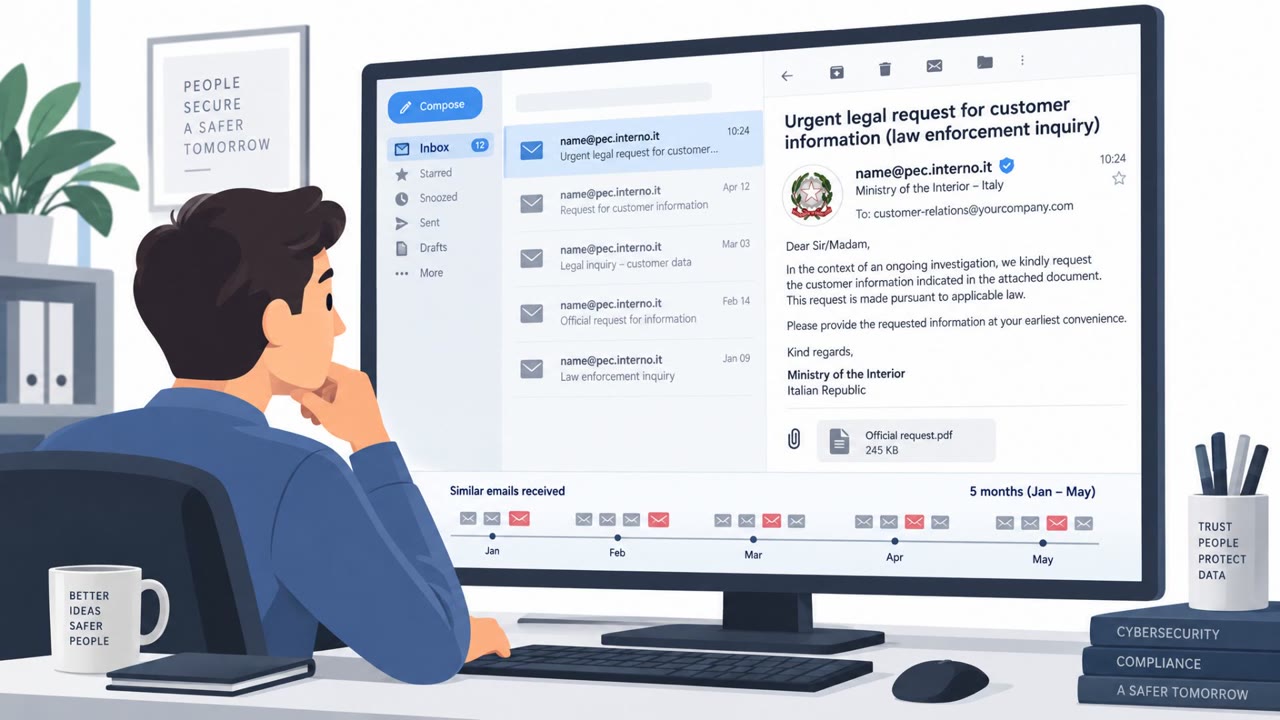
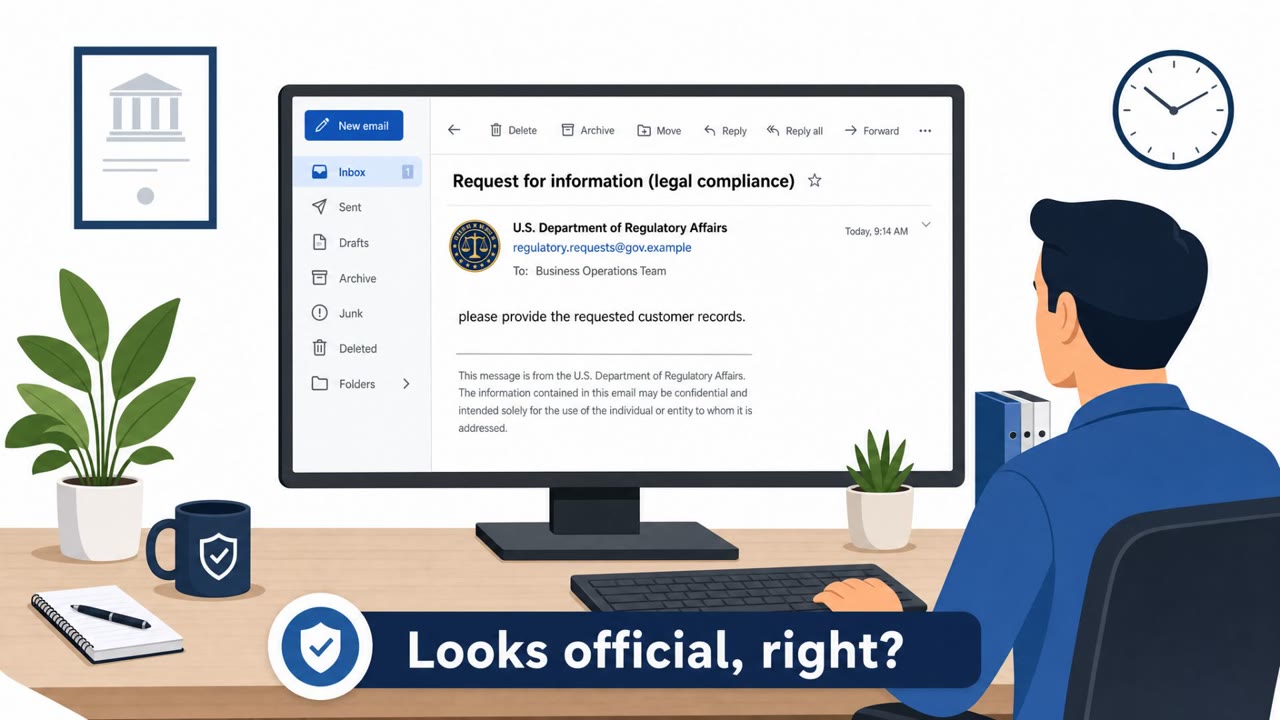
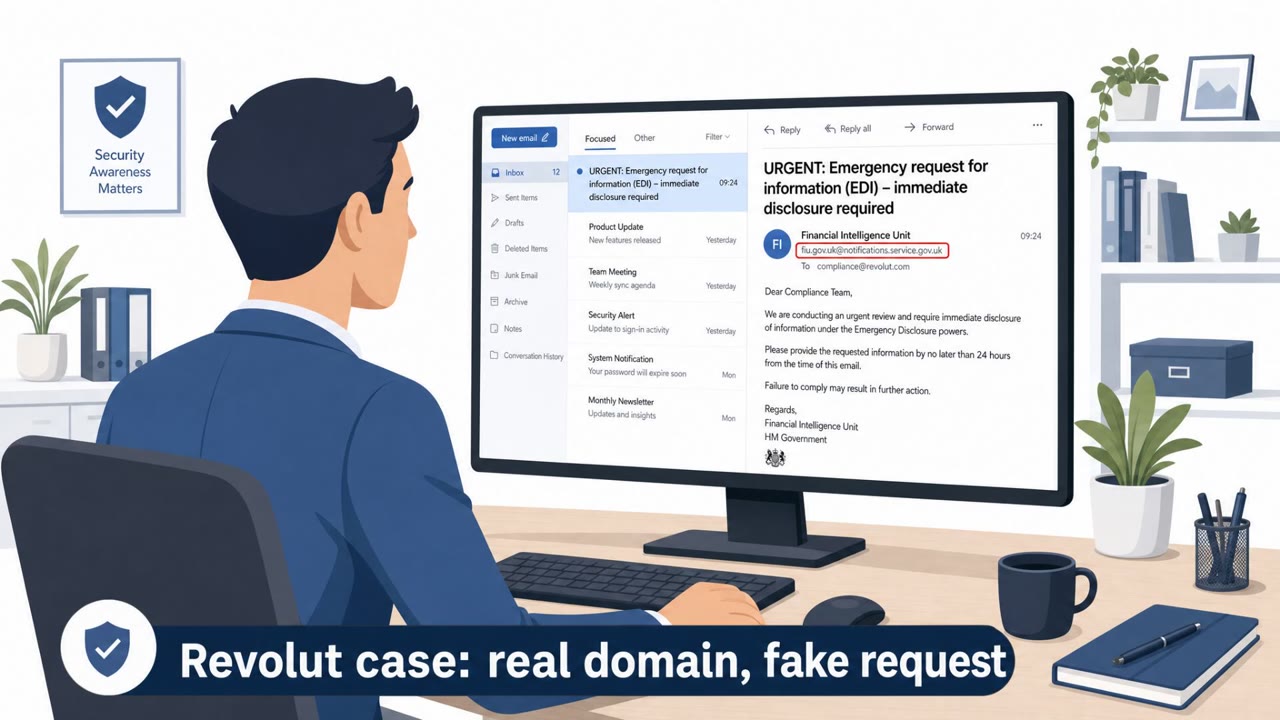
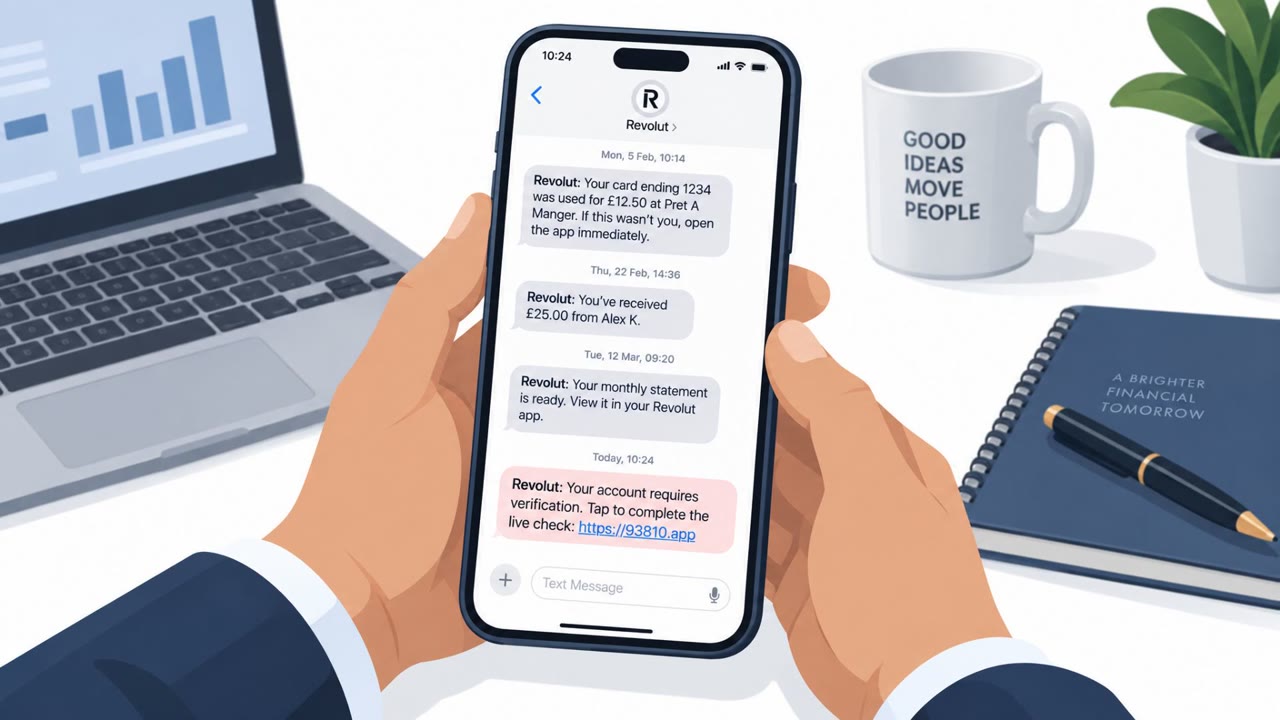
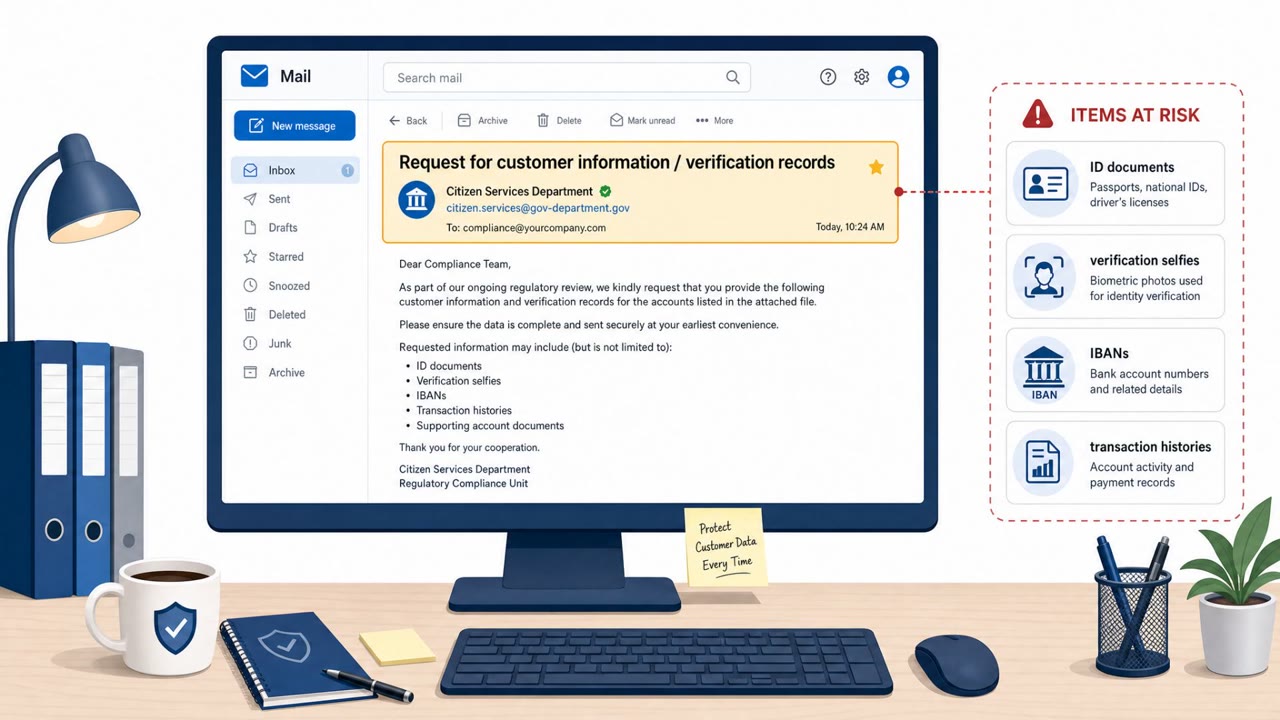
Attackers used a compromised government email account to pose as authorities and request customer records from Revolut. Employees believed the requests were legitimate and voluntarily sent sensitive customer information, exposing data for nearly 700 people. The incident highlights how “trusted” email domains can bypass normal skepticism unless requests are independently verified.
How the Attack Worked
Attackers gained access to a stolen or compromised government email account and used it to impersonate law enforcement or government authorities. They contacted Revolut employees requesting customer records, including identity documents, banking information, and transaction history. Because the email came from a legitimate-looking government domain, employees believed the request was authentic and responded by sending the requested data. According to Revolut, the threat actors did not need to compromise any internal systems since employees voluntarily shared the information.
Why It Succeeded
The attack worked because staff conflated authentication with authorization. A familiar or official-looking email domain was treated as sufficient proof that a request was legitimate, without any separate verification step. This is a common weakness in organizations where official request handling flows through a shared inbox with little oversight from the security team. Attackers reportedly communicated with the company over an extended period, requesting large volumes of sensitive data without triggering additional scrutiny.
What to Watch For
- Requests claiming to be from law enforcement or government agencies that ask for broad datasets such as ID documents combined with full transaction history.
- Urgency framed around "official" or legal matters, designed to discourage employees from slowing down to verify.
- Requests handled entirely through email with no independent confirmation, especially when the request comes through a general or shared inbox.
- Sensitive data release processes that rely solely on the sender's domain as proof of legitimacy.
How to Build Resistance
Organizations handling customer identity and account data can reduce exposure to this type of social engineering by treating sensitive data releases with the same scrutiny as high-value financial transactions. Recommended steps include:
- Require out-of-band verification for any government or law enforcement request, using a publicly listed agency phone number or an authenticated portal rather than replying to the original email thread.
- Add a mandatory second approver for any release involving identity documents or full account history.
- Give the security operations center visibility into the official request queue, and log all such requests so they can be reviewed and monitored.
- Train compliance, legal, customer support, and fraud teams to recognize that a legitimate-looking domain is not, by itself, sufficient authorization to release sensitive data.
This case illustrates that even organizations without a technical breach can suffer significant data exposure when trust in a familiar communication channel replaces independent verification.
Key findings
- Threat actors used a stolen/compromised government email account to impersonate authorities and request customer data from Revolut.
- Revolut said employees complied because they believed they were corresponding with government officials, and the attackers did not need to compromise Revolut’s internal systems.
- Alleged attackers claimed Revolut shared highly sensitive data (ID documents, banking info, crypto transaction records) affecting nearly 700 individuals.
- Attackers said they communicated with Revolut for months and threatened to sell the data unless a $3 million ransom was paid.
- Experts emphasized out-of-band verification and a two-person authorization step for sensitive data releases, even when requests appear to come from legitimate government domains.
- A common weakness is that official request handling is often a shared inbox with little SOC visibility or alerting when sensitive data is sent externally.
Who’s being targeted
- Commonly targeted roles: Compliance, Legal, Customer Operations / Support, Fraud & Investigations, Security Operations Center (SOC), Executive leadership (CISO/GC).
- Affected industries: Financial services / FinTech, Any organization handling customer identity and account records, Compliance and legal operations teams.
- Attack channels: email.
- Impersonated: Government authorities / law enforcement (via a real government email domain).
Red flags to watch for
- Relies on ‘real’ government email domain as the only proof of legitimacy
- Pushes urgency/expectation of speed due to ‘law enforcement’ context
- Requests unusually broad datasets (ID documents + full transaction history) over email
Frequently asked questions
How did attackers get Revolut employees to share customer data?
Attackers used a stolen or compromised government email account to impersonate authorities, and employees complied because they believed they were corresponding with real government officials.
Did the attackers breach Revolut's internal systems?
No, Revolut said the threat actors did not compromise any internal systems. All the data was leaked because employees voluntarily shared it after being deceived.
What should organizations do to prevent similar incidents?
Experts recommend out-of-band verification using a trusted phone number or authenticated portal, plus requiring a second approver before releasing identity documents or full account history.
Why is this attack considered dangerous despite low technical complexity?
It succeeded by exploiting trust in a legitimate-looking government email domain rather than any technical vulnerability, showing that authentication alone should not be mistaken for authorization.
Read the video transcript
Imagine an email from a real government address asking for customer IDs and bank records… would you say no? At Revolut, attackers stole a government email account, posed as authorities for months, and staff voluntarily sent IDs, banking info, even crypto records for nearly 700 people. The only ‘proof’ was that familiar government domain plus urgency. No one stopped to verify out-of-band or get a second approver before sending huge data dumps over email. Your move: if an email asks for IDs or full account history, even from a real .gov, pause and verify it through a trusted phone number or portal before you send anything.