TfL Breach Sends Fake Photocard Emails

Infosecurity Magazine · Medium sophistication
Last updated November 19, 2026

Unauthorized actors used Transport for London’s own system to send emails to Oyster Photocard customers asking them to create an account they already had. The incident may have exposed account details for about 265,000 customers, creating a credible opportunity for follow-on phishing messages that appear to come from TfL.

Key findings

  • Unauthorized actors sent emails from TfL’s system to Oyster Photocard customers on November 16.
  • The emails asked customers to create an account even though they already had a Photocard account.
  • TfL estimated that around 265,000 Photocard customers may have had account details compromised.
  • TfL said passwords, bank or payment-card details, and customer journey information were not accessed based on its current assessment.
  • TfL advised all Photocard customers to change their password, security question, and security answer, and to change reused passwords on other services.
  • The incident could enable convincing phishing emails or text messages impersonating TfL.

Who’s being targeted

  • Commonly targeted roles: Public transport customers, Students, Parents and guardians, Customer service teams, Digital account holders.
  • Affected industries: Public transportation, Passenger transit.
  • Attack channels: email.
  • Impersonated: Transport for London (TfL) Photocard service.

Awareness takeaways

  • Treat an unexpected request to create or re-create an existing account as suspicious, especially when it arrives without you initiating the process.
  • Do not use links in unexpected TfL messages; independently visit the official TfL website or use known customer-service contact details to verify the request.
  • Change passwords promptly after a service reports an account-data incident, and change the password anywhere else it was reused.

Red flags to watch for

  • The recipient already has a Photocard account, making a new-account request unexpected.
  • The message is unsolicited and asks the customer to take account-related action.
  • Customers should verify unexpected account messages through TfL’s official website or customer-service channels rather than using message links.
Try Mirage

Mirage safely runs attacks like this one against your own team, so you find out what happens before a real adversary does.

Get a demo
Read the video transcript

Already have an Oyster Photocard? This email says, ‘Create your TfL Photocard account.’ Here’s the twist: on November 16, unauthorized people sent these emails through TfL’s own system. A genuine-looking sender doesn’t make the request genuine. Around 265,000 customers may have had account details exposed. That could make later TfL-looking emails or texts more convincing. The giveaway here? You never asked to set up a new account. Don’t use the email link. Open TfL’s official website yourself to check the request.

Similar attacks

Deepfake Calls Drive $400M Crypto Theft

Deepfake Calls Drive $400M Crypto Theft

The FBI says North Korea-linked BlueNoroff actors used stolen trusted accounts, deepfake video calls, and fake Zoom or Teams meeting links to steal more than $400 million in cryptocurrency. Victims were invited to discuss investments, shown a convincing fake meeting with familiar people, then told…

November 13, 2026
Fake IT Calls Steal Microsoft 365 Access

Fake IT Calls Steal Microsoft 365 Access

Microsoft reports a real-world campaign where attackers call or text employees’ personal phones while posing as internal IT. Victims are pushed to “update” passkeys/MFA/SSO and click a link to a fake Microsoft sign-in page, letting attackers get into Microsoft 365 and quietly pull email and files…

September 10, 2026
CEO Fraud and Fake Invoices Fuel BEC Losses

CEO Fraud and Fake Invoices Fuel BEC Losses

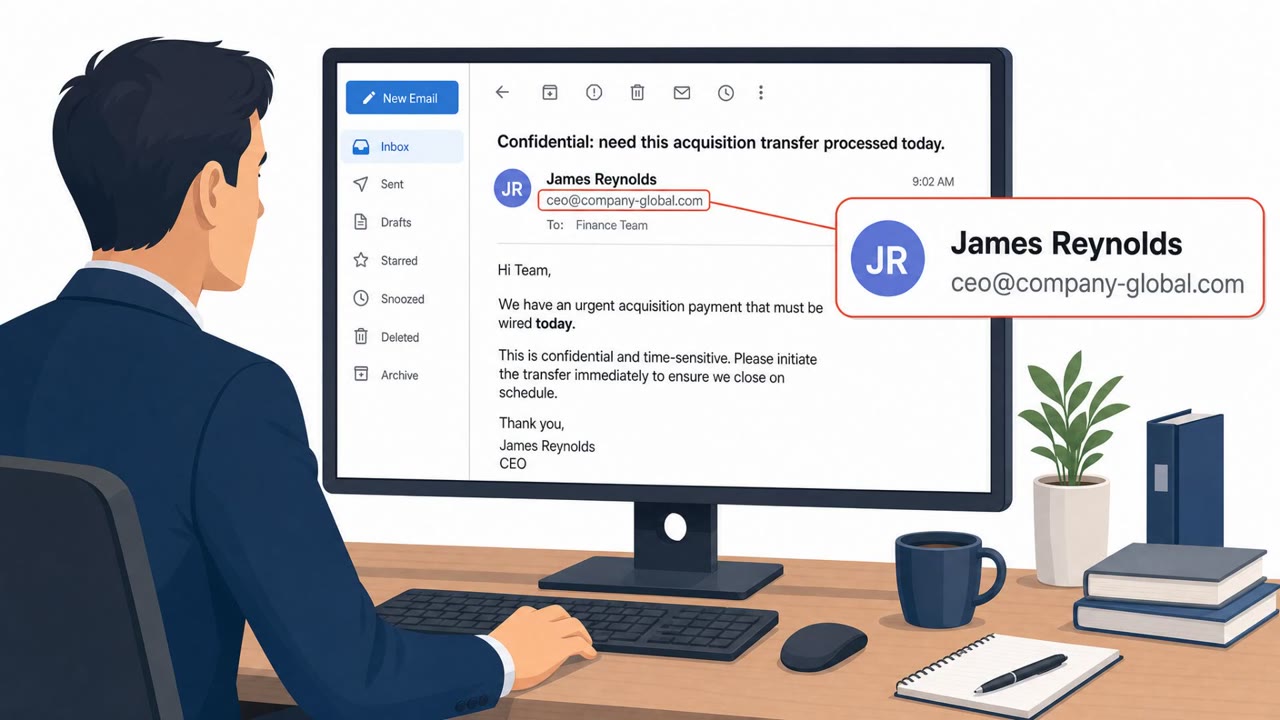
This article explains how business email compromise (BEC) scams work when attackers impersonate executives or suppliers to request urgent wire transfers, bank-detail changes, or credentials, often without malware or links. It cites real, high-loss cases (including Google/Facebook and aerospace…

August 21, 2026
Phishing Link Could Plant a Rogue ChatGPT Agent

Phishing Link Could Plant a Rogue ChatGPT Agent

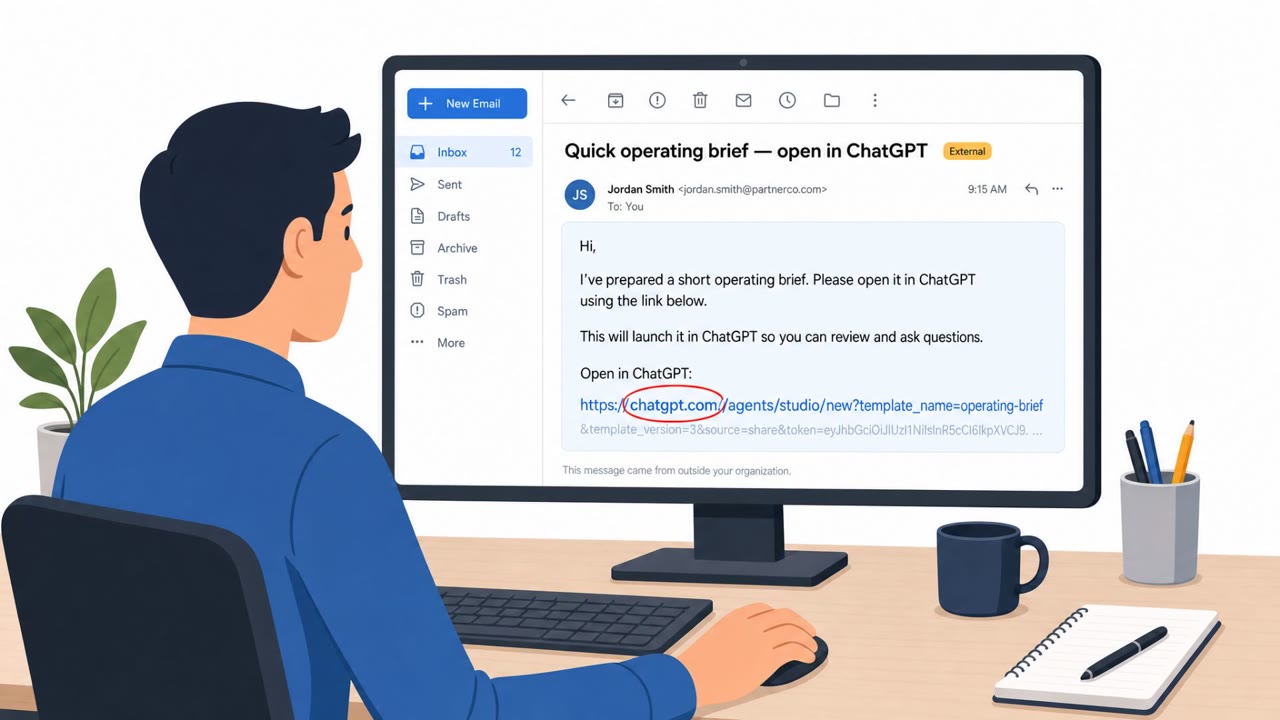
Researchers described a now-patched flaw ("AgentForger") where a single benign-looking ChatGPT link could silently create and publish an attacker-controlled Workspace Agent inside a company. If an employee was already logged in and had connected apps (like email, Drive, Slack, or Teams), the agent…

July 24, 2026
Fake Zoom Calls Steal Crypto With Stolen Faces

Fake Zoom Calls Steal Crypto With Stolen Faces

North Korean-linked attackers used fake Zoom or Microsoft Teams meetings to pressure cryptocurrency and Web3 workers into installing a malicious “update.” The criminals secretly recorded victims in a fake meeting waiting room, then replayed that genuine video to impersonate them and lure their…

November 19, 2026
Fake Recruiters Push ClickFix Backdoor Lures

Fake Recruiters Push ClickFix Backdoor Lures

Google reported that the MIDNIGHT NEPTUNE threat group used fake recruiter profiles to direct targets to ClickFix lures. The campaign combined a trusted job-recruitment pretext with a prompt that led victims to run attacker-provided actions, ultimately enabling deployment of the SOMBERMEME backdoor.

November 16, 2026